AI-Powered OSINT in Practice: A Learning Path and Tool Guide for CS Professionals

A practical AI learning path for CS-background OSINT analysts covering computer vision, VLMs, and Agent frameworks.
This article explores how OSINT practitioners with computer science backgrounds can leverage AI to automate intelligence tasks. It covers the key technical domains — computer vision, multimodal VLMs, and AI Agents — along with a structured learning path and practical open-source tools like YOLO, SAM, and Grounding DINO for building AI-driven OSINT systems.
When OSINT Meets AI: A Real Engineering Problem
On Reddit, an OSINT practitioner with a computer science degree and 8 years of programming experience raised a highly representative question: how do you get AI to handle open-source intelligence (OSINT) tasks on your behalf?
Open-Source Intelligence (OSINT) refers to the systematic collection, analysis, and application of data from publicly available sources. These sources include social media, satellite imagery, public databases, news outlets, and more. Traditional OSINT is heavily reliant on manual analysis, and as data volumes explode, AI-assisted analysis has become the central evolutionary direction of the field.
The practitioner outlined several concrete use cases:
- Using map data to detect all yellow trees within a given area
- Converting natural language descriptions like "an intersection with two trees next to a red house" into map coordinates
- Continuously tracking a specific target in video footage — for example, "keep your eye on that red car"
These needs may sound exotic, but they precisely target the core capability boundaries of computer vision and multimodal AI. For someone with solid programming skills, the question isn't "can it be done?" — it's "which direction should I approach from?"
What Technical Knowledge Does AI-Driven OSINT Require?
Core Direction: Computer Vision
All three use cases above are fundamentally computer vision problems, making it the top learning priority.
Object detection, semantic segmentation, and object tracking are the three foundational tasks in computer vision. Object detection locates and classifies objects within an image; semantic segmentation assigns a category label to every pixel for finer-grained understanding; object tracking maintains identity for the same object across consecutive frames, which is central to video analysis.
- Detecting yellow trees: This involves a combination of object detection, semantic segmentation, and remote sensing image analysis. Satellite and aerial map data processing is a specialized subfield — remote sensing images often contain multispectral channels beyond human visible range (such as infrared and near-infrared), and vegetation analysis typically relies on dedicated indices like NDVI (Normalized Difference Vegetation Index). General-purpose models often require specific adaptation, adding extra complexity.
- Tracking a red car: A classic object tracking task that requires maintaining recognition of the same target across consecutive video frames, involving techniques like MOT (Multi-Object Tracking).
- Description to coordinates: The most complex of the three, combining vision-language multimodal understanding and requiring the model to both comprehend natural language and locate corresponding visual elements within an image.
Supporting Capability: Multimodal LLMs and VLMs
The requirement to "map a text description to coordinates" is exactly what today's Vision-Language Models (VLMs) excel at. VLMs achieve semantic alignment between natural language and visual content through joint training on massive image-text pairs — the core mechanism connects an image encoder (e.g., ViT) with a language decoder (e.g., Transformer) via an alignment layer, enabling the model to understand instructions across modalities. Closed-source models like GPT-4V and Gemini represent the commercial frontier, while open-source alternatives like LLaVA and Qwen-VL allow engineers to deploy locally and fine-tune for custom use — particularly valuable for OSINT scenarios involving sensitive geospatial data.
From a higher vantage point, the questioner's vision is essentially to build an intelligent Agent capable of understanding natural language instructions and executing search and tracking operations across geospatial and visual data.
What Mathematical and Theoretical Foundations Are Needed?
With a CS degree and years of programming experience, languages like Python aren't the barrier. What genuinely needs reinforcing is the mathematical foundation underlying deep learning.
Mathematical Prerequisites
| Domain | Importance | Core Content |
|---|---|---|
| Linear Algebra | ★★★★★ | Matrix multiplication, eigenvalues, vector spaces — foundation for understanding convolution and tensor operations |
| Calculus | ★★★★☆ | Chain rule and gradients — the mathematical essence of backpropagation |
| Probability & Statistics | ★★★★☆ | Loss functions, Bayesian thinking, model uncertainty |
| Optimization Theory | ★★★☆☆ | How gradient descent, Adam, and other optimizers work |
These mathematical tools aren't purely theoretical. Matrix multiplication in linear algebra is the mathematical essence of convolution operations and attention mechanisms; understanding tensor shape transformations is critical for debugging models. The chain rule in calculus is the theoretical foundation of backpropagation. Probability theory runs through all of machine learning — the cross-entropy loss function is fundamentally an information-theoretic measure, and confidence thresholds and NMS (Non-Maximum Suppression) in object detection both rely on probabilistic thinking. For engineering-oriented learners, rigorous mathematical proofs aren't necessary, but sufficient intuition to understand model behavior and troubleshoot issues is essential.
Core Deep Learning Architectures
- CNNs (Convolutional Neural Networks): The cornerstone of computer vision — a must-know. CNNs efficiently extract spatial hierarchical features from images through local receptive fields and weight sharing, and form the early backbone of detection models like YOLO.
- Transformer Architecture: The core of modern multimodal models, from ViT to various VLMs. In 2020, ViT (Vision Transformer) broke CNN's inductive bias limitations by splitting images into fixed-size patch sequences fed into a Transformer. Modern mainstream vision models (such as SAM and Grounding DINO) adopt hybrid CNN-Transformer or pure Transformer designs, balancing local detail and global context understanding.
- Primary Framework: PyTorch is the first choice for both research and engineering — start here.
A Learning Path for OSINT Practitioners
Stage 1: Build a Deep Learning Theory Foundation
Start with classic courses: Andrew Ng's Deep Learning Specialization covers the full chain from neural network basics to CNNs; Stanford's CS231n focuses specifically on computer vision with greater depth. Both are well-suited for learners with programming backgrounds who lack AI theory.
Stage 2: Get Hands-On with Mature Open-Source Tools
For engineering-oriented learners, there's no need to build from scratch. The following tools are ready for immediate use:
- YOLO series (YOLOv8 recommended): An out-of-the-box object detection framework that can be fine-tuned to detect specific objects (e.g., yellow vegetation, specific vehicle types) with minimal effort. YOLO's core idea is to reframe detection as a single-pass regression problem, achieving an excellent balance between speed and accuracy. YOLOv8 supports transfer learning fine-tuning on custom datasets — just a few hundred annotated images are enough to train a specialized detector for a specific target, greatly lowering the customization barrier in OSINT scenarios.
- SAM (Segment Anything Model): Meta's open-source "segment anything" model that achieves zero-shot segmentation of arbitrary objects through large-scale pretraining on 11 million images and 1 billion masks. Users can guide the model using clicks, bounding boxes, or text prompts, enabling powerful image segmentation when combined with text prompting.
- Grounding DINO / GroundingDINO+SAM: Grounding DINO combines the DINO visual foundation model with a BERT language encoder to detect objects in images using arbitrary natural language descriptions, with no predefined category list required. The pipeline formed by chaining these two together is currently the most powerful open-source solution for "text-driven visual segmentation," almost perfectly suited to the OSINT need of "find targets from descriptions."
Stage 3: Integrate and Build an OSINT Agent
An AI Agent is an autonomous system that perceives its environment, plans actions, and calls external tools to complete complex tasks. The ultimate goal is to use a large language model as the "brain," visual tools as "execution modules," and an Agent framework (such as LangChain or custom tool-calling logic) to orchestrate a complete system:
- User inputs a natural language instruction (e.g., "Find all timestamps where a red SUV appears in the video")
- The LLM understands and decomposes the task
- Corresponding vision models are called to perform detection or tracking
- Coordinates, timestamps, or annotated results are returned
LangChain is currently the most widely used Agent orchestration framework, providing standardized interfaces for tool calling, memory management, and multi-step reasoning chains. For OSINT systems, the advantage of the Agent pattern is the ability to handle complex queries requiring multi-step, multi-tool collaboration, rather than simple single-model calls. This is the mainstream paradigm of current AI Agents and closely mirrors the real vision of "AI-driven OSINT."
Realistic Expectations: What's Ready Now vs. Still Being Solved
The use cases described span multiple difficulty levels — it's important to distinguish between them:
Relatively mature scenarios ready for rapid deployment:
- Detecting and tracking common objects like cars and buildings: off-the-shelf models with light fine-tuning can achieve usable results
- Single-target tracking in video: mature algorithms and well-developed toolchains are available
Higher-difficulty scenarios requiring specialized investment:
- Identifying "yellow trees" in satellite imagery: remote sensing image processing faces unique challenges absent from ordinary computer vision — image resolution spans from sub-meter commercial satellite data to the tens-of-meters range of public data, and appearance variations across time, weather, and seasons make model generalization difficult. Open-source datasets (e.g., SpaceNet, DOTA) and pretrained models (e.g., GeoSAM) focused on remote sensing are developing rapidly, but the ecosystem remains immature, requiring specialized annotated remote sensing datasets and domain knowledge. General-purpose models yield limited results.
- Precisely converting complex spatial descriptions into coordinates: still on the research frontier; current VLMs show unstable performance on spatial reasoning, and reliability expectations should be kept in check.
The pragmatic strategy is: start with mature scenarios to build experience, then progressively advance toward frontier requirements, rather than immediately chasing an idealized all-capable system.
Summary
For OSINT practitioners with a CS background, the path toward "AI-driven intelligence analysis" is fairly clear: computer vision as the backbone, multimodal large models as extended capability, supported by the theoretical grounding of linear algebra and probability theory.
The good news is that the open-source community already provides powerful ready-made tools like YOLO, SAM, and Grounding DINO, allowing engineers to quickly build working prototypes without starting from the ground up. For practitioners with cross-domain skills, this may well be the most valuable technical dividend of the AI era.
Key Takeaways
Related articles
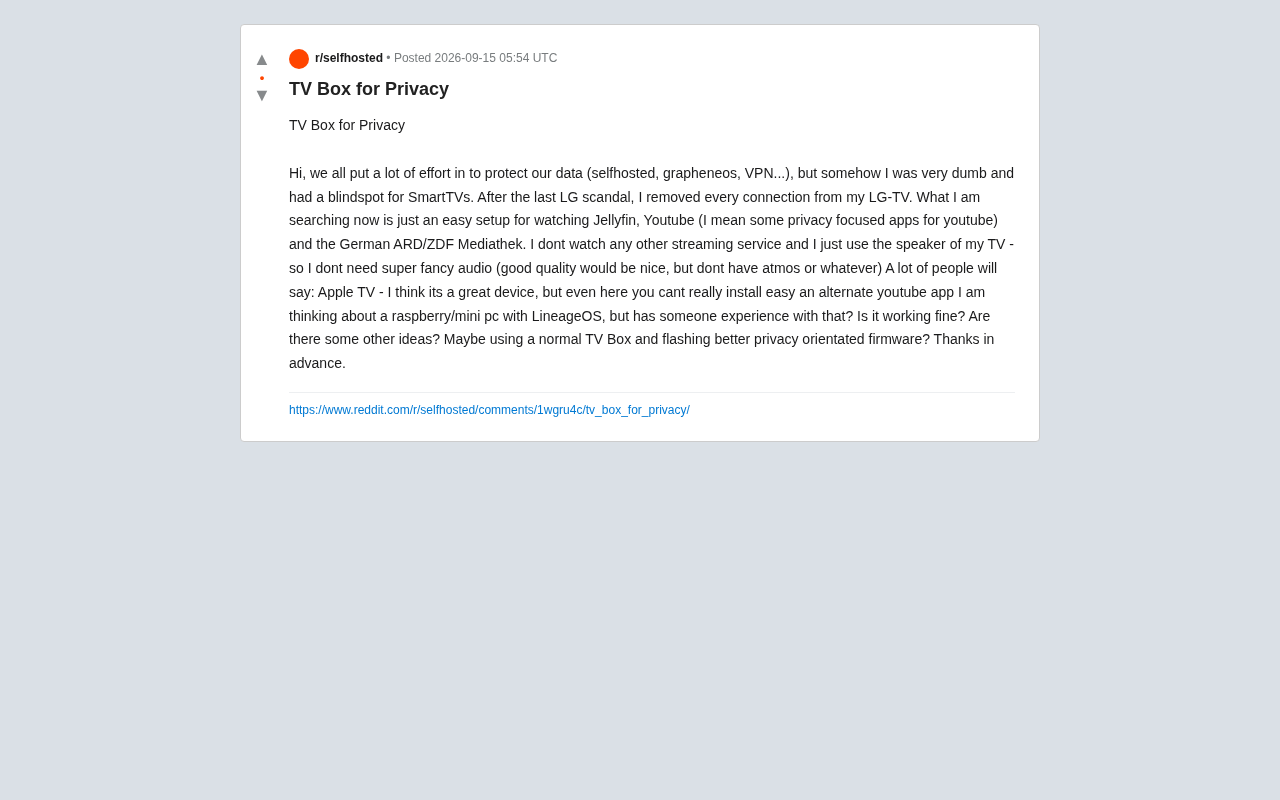
Building a Privacy-First TV Box: Escape Smart TV Data Surveillance
Smart TVs are a hidden privacy risk. Compare Apple TV, Raspberry Pi LineageOS, LibreELEC, and flashed Android boxes to build a privacy-first TV setup for Jellyfin and YouTube.
Volvo XC60 and XC90 PHEV Upgrades Push Electric Range Close to Full EV Levels
Volvo unveils upgraded PHEV versions of the XC60 and XC90, targeting electric-only range well beyond the industry average of 30–50 miles to redefine what plug-in hybrids can offer.
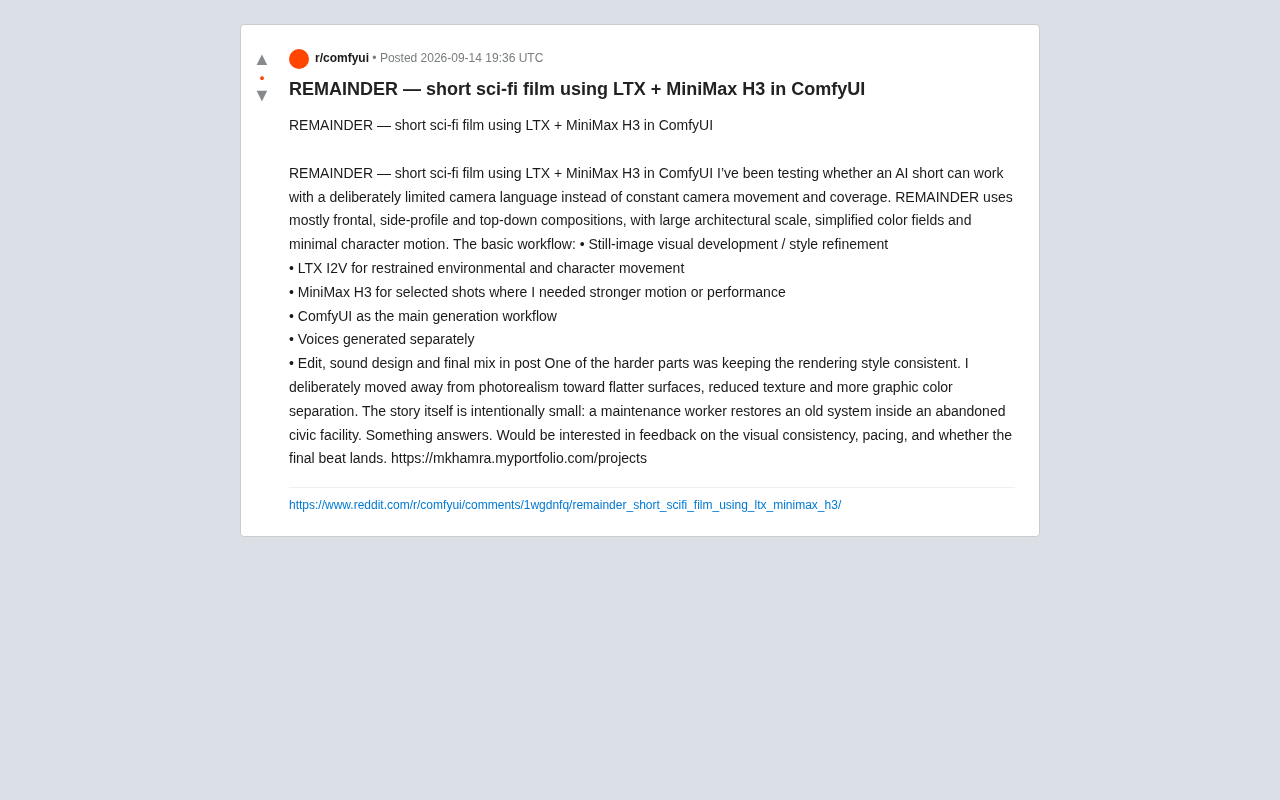
Building an AI Sci-Fi Short with LTX + MiniMax H3: Restrained Cinematography in ComfyUI
Sci-fi short REMAINDER uses LTX, MiniMax H3, and ComfyUI with restrained cinematography and flat aesthetics to solve visual consistency in AI filmmaking.