AI Progress Compressed Exponentially: Recursive Acceleration from Years to Milliseconds

A recursive acceleration manifesto captures the AI era's felt rhythm but lacks data support—distinguish perceived from physical acceleration.
The article dissects the viral Twitter manifesto that "a year of progress is compressed into a few months," arguing it is a rhythm manifesto rather than a predictive model. The sense of acceleration rests on three pillars: shortening model iteration cycles, high-frequency engineering toolchain shifts, and instant information spread. But recursive compression hits hard limits: compute and energy are slow variables, verification and trust costs resist compression, and human/organizational absorption speed is a ceiling. The rational approach is to treat it as a mood sample, distinguish rhythms across demo, product, and infrastructure layers, and acknowledge acceleration without worshipping it.
When "a year of progress" gets compressed into "a few months"
A passage recently circulating on Twitter captures the sense of acceleration in AI with striking bluntness: "A year of progress now happens in a few months. A few months of progress will start happening in a few days. A few days of progress will soon happen in a few hours." The passage then recurses all the way down to minutes, seconds, milliseconds, microseconds, and even smaller units of time.
This isn't a specific benchmark chart, nor an official roadmap from any lab—it's a felt distillation of the current pace of technology. It resonates because many people genuinely sense that the same "one year" now contains a density of model capability changes, tool iterations, and engineering paradigm shifts that is nothing like a few years ago.
The value of this passage isn't in precise prediction, but in turning "acceleration" from a vague adjective into a structure that can be interrogated level by level: if the cycle of progress really is continuously compressing, where does the compression end? And where are the bottlenecks?

Recursive compression: a rhetorical device, or a description of a trend?
What the passage is actually saying
The original structure is very neat: each sentence drops the previous time unit by one level, from years → months → days → hours → minutes → seconds → milliseconds → microseconds, ending with an ellipsis implying it continues. It gives no specific numbers, cites no research, and doesn't specify whether "progress" refers to model capability, product iteration, or paper output.
In other words, this is a pure rhythm manifesto. Its persuasiveness comes from the sense of rhetorical escalation, not from data. Understanding this is important—treating it as a predictive model would be over-interpretation, but treating it as a record of the era's mood is just right.
Why this kind of statement has traction right now
Because over the past few years, the AI field has indeed experienced a kind of "time perception distortion": the intervals between new models, new tools, and new paradigms have visibly shortened, and many teams have barely digested the last wave before the next is already on the way. The original passage amplifies this distortion to the extreme through recursion, and readers instinctively map their own experience onto it—"that does seem right."
This is also what makes it clever as social media content: it doesn't need argument, only the evocation of consensus.
Three real pillars of the acceleration narrative
Although the original passage offers no evidence, there are several widely perceived realities behind why this kind of statement spreads in tech circles.
The iteration cycle of model capability is shortening
Going from "one generation of models lasts a year or two" to "a clear leap every few months" is a shared observation among many practitioners. Public exchange of training methods, data mixes, and post-training strategies is getting faster, and the window from paper to broad reproduction of an effective technique is narrowing. This directly shortens the "perception cycle" of capability progress.
Post-training refers to a series of optimization steps performed after large-scale pre-training, including supervised fine-tuning (SFT), reinforcement learning from human feedback (RLHF), direct preference optimization (DPO), and others. Its core role is to make the base model better follow instructions, align with human preferences, and improve performance on specific tasks. Post-training has become an important source of the sense of acceleration because it requires far less compute than pre-training, and its methods iterate quickly with a low barrier to reproduction. An effective post-training technique often goes from paper release to widespread community adoption in just a few weeks, which directly shortens the perception cycle of model capability leaps.
Toolchains and engineering paradigms switch faster
AI coding, Agent frameworks, context management solutions—these engineering-level things update even more frequently. For developers, what really affects daily work isn't model parameters, but "whether yesterday's workflow still holds today." This high-frequency switching is the main source of the feeling that "things change every few days."
Agent frameworks refer to the toolkits for building intelligent agents around large language models, with typical examples including LangChain, LlamaIndex, AutoGen, and others. These frameworks provide abstraction layers for task planning, tool calling, memory management, and multi-agent collaboration, enabling developers to quickly build AI applications that can autonomously execute complex tasks. Their update frequency is extremely high, with new paradigms emerging almost every month (e.g., from ReAct to Plan-and-Execute, then to multi-Agent orchestration). For developers, this means workflows can become outdated frequently, and it is one of the main technical sources of the feeling that "things change every few days."
Information dissemination itself is accelerating
The spread of an idea, a demo, or a failure case is now nearly instantaneous on social platforms. Progress may not truly happen by the millisecond, but discussion about progress is indeed spreading at millisecond speed. Part of the acceleration narrative is manufactured by the speed of dissemination itself.
It's important to stay clear-headed here: perceived acceleration ≠ physical acceleration. Rising information density amplifies the subjective feeling that "things are changing fast," but that doesn't mean underlying capabilities are truly improving at the same multiplier.
Where are the boundaries of recursive acceleration?
The most radical part of the original passage is that it implies compression can continue indefinitely. From a technical reality standpoint, this recursion will encounter at least several hard constraints.
Physical and compute constraints
Training and inference are limited by compute supply, energy, and chip capacity—these are slow variables measured in months or even years. Model capability can leap quickly, but the infrastructure expansion supporting those leaps cannot recurse down to milliseconds.
The cost of verification and trust won't disappear
For a capability improvement to go from "usable" to "trustworthy" requires evaluation, alignment, and real-world validation. This part of the cost is hard to compress to the same order of magnitude as generation speed. The faster progress comes, the more verification tends to become the bottleneck.
Alignment refers to the technical process of ensuring that AI system behavior is consistent with human intent, values, and safety requirements, covering instruction following, refusal of harmful content, honesty, and other aspects. Alignment is hard to compress because it requires extensive human annotation, red-team testing, and repeated evaluation, and as model capabilities improve, new failure modes keep emerging. Generating an answer takes only milliseconds, but verifying whether it is trustworthy, safe, and reliable in edge cases often takes days or even weeks. This asymmetry is the fundamental reason why "the faster the progress, the more verification becomes the bottleneck."
Human absorption speed is one of the ceilings
The speed at which organizations, processes, regulations, and user habits update is far slower than model iteration. Even if technology progresses in units of "days," the pace at which society digests it may still be "years." This is also why many people marvel at how fast progress is while feeling that deployment is slow.
How to rationally view this kind of "rhythm manifesto"
Treat it as a mood indicator, not a predictive tool
The best use of this passage is as a sample of the era's mood: it precisely expresses the tech community's collective sense of acceleration. But it doesn't, and cannot, provide a timeline. Any calculation that treats it as "after a certain year, progress will be measured in seconds" is an extrapolation the original doesn't support.
Focus on which layer the "compression" is happening in
Progress cycles differ enormously across layers: the demo layer may be measured in days, the product layer in months, the infrastructure layer in years, and the social adoption layer over even longer periods. Talking about "acceleration" by mixing different layers easily creates illusions. The truly valuable judgment is to distinguish which layer you work in and how much that layer's rhythm has actually changed.
Keep skepticism about "infinite recursion"
The progression from years to microseconds is rhetorically beautiful, but the difficulty of each level of compression isn't linear. The further you go, the harder the constraints. Treating it as a reminder—stay sensitive to change—is more appropriate than treating it as a prophecy.
Conclusion: the sense of acceleration is real, the timeline is fake
This Twitter content has no data and no argument, yet its recursive sentence structure cuts the rhythm of the AI era sharply enough. What deserves to be taken seriously is the genuine felt sense that "cycles are compressing"; what doesn't deserve to be taken as fact is the implicit timeline running all the way to microseconds.
For practitioners, a more practical stance might be: acknowledge acceleration, but don't worship it; stay sensitive to change at every layer, while remaining skeptical of "infinitely fast."
One-line Summary
A recursive acceleration manifesto that precisely captures the felt rhythm of the AI era, but lacks data support and requires a rational distinction between perceived and physical acceleration.
Paragraph Summary
The article analyzes the recursive manifesto circulating on Twitter that "a year of progress is compressed into a few months," pointing out that it is essentially a rhythm manifesto rather than a predictive model. The sense of acceleration has three real pillars: shortening iteration cycles of model capability, high-frequency switching of engineering toolchains, and instantaneous information dissemination. But recursive compression faces hard boundaries: compute and energy are slow variables, verification and trust costs are hard to compress, and the absorption speed of humans and organizations forms a ceiling. The rational use is to treat it as a sample of the era's mood, distinguish the different rhythms of the demo layer, product layer, and infrastructure layer, and acknowledge acceleration without worshipping it.
Related articles
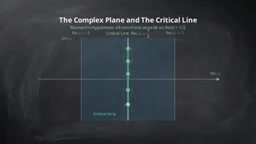
AI and Humans Team Up to Crack a 167-Year-Old Math Puzzle: Has the Riemann Hypothesis Been Solved?
A 167-year-old Riemann Hypothesis breakthrough? Human mathematicians provide a blueprint, AI coordinates 60 sub-agents to generate 17 million lines of proof code, then formally verified by Lean and compressed to 76,000 lines. This article analyzes the complete path and controversies of this human-AI collaboration.

AI Proves the Riemann Hypothesis? The Mathematical Revolution and Controversy Behind 170,000 Lines of Code
Anthropic mathematician uses AI to complete a machine-verified proof of the Riemann Hypothesis—17 million lines of Lean code shake the math world. A human team releases an all-human proof the same day, sparking debate over machine verification versus human understanding and AI's changing role in science.

Did AI Really Prove the Riemann Hypothesis? Mathematician Claims Cloud AI Model Cracked a 167-Year-Old Mystery
A mathematician claims a cloud AI model proved the 167-year-old Riemann Hypothesis. We explain prime distribution, what the hypothesis really says, and whether to trust the claim.