AI Project Memory Systems: Building a Continuously Accumulating Context Architecture in Four Stages

A four-stage guide to building a sustainable, verifiable project memory system for AI Agents.
Stronger models don't automatically mean better experiences—the real bottleneck is context management. This article walks through four stages of evolving an AI project memory architecture: project descriptions, progressive disclosure via Skills, autonomous intra-memory, and three production guardrails for traceability, permissions, and portability.
Why Are Models Getting Stronger While the Experience Isn't Improving?
From GPT to Claude, and on to various Agent tools, models' reasoning and writing capabilities keep iterating. But many people have noticed a paradoxical phenomenon: AI is getting smarter, yet the user experience isn't improving noticeably alongside it.
The core of the problem doesn't lie in the model itself, but in context management. As one content creator on Bilibili pointed out: a model's capability determines what AI "can do," while a project's context determines "why it does it and how it should do it." New models are indeed a level above in reasoning and writing, but they don't know your project's goals, don't understand your working methods, and won't automatically deepen their understanding of your project as versions upgrade.
So every time you start a new conversation, AI starts from scratch as if it has amnesia—it doesn't get stuck, instead it will "proceed very smoothly from the wrong premise," which is precisely the most dangerous part. To solve this problem, we need to build a continuously accumulating, verifiable project memory system for AI. This article breaks down the four stages of this architecture's evolution.
Stage One: Project Description—Bringing the Agent into a Real Working Environment
For an Agent, the most practical starting point is often not a complex database, but a short project description that anyone can open.
Before an Agent begins working, you need to hand it the project's most core information: project goals, current progress, confirmed decisions, sources of reference material, and so on. This document can simply be written in natural language—short and clear—yet it can deliver the most critical information all at once before a task begins.

This step seems basic, but it actually changes the Agent's role positioning—it transforms from a "general-purpose Agent" into "your project Agent," entering a working environment with rules, a directory, and history. In practice, after entering, different AI tools first read a unified entry point, then read the current work, and finally enter a specific project.
But after long-term use, this document inevitably runs into a problem: it keeps getting longer. Today you add a decision, tomorrow you record an insight, the day after you add a process, until it eventually becomes a dozen-page-long document. This is what's called context bloat—the Agent has to read through all of it before each startup, wasting enormous amounts of time and tokens on information irrelevant to the current task.
Stage Two: Progressive Disclosure—Organizing Contextual Knowledge with Skills
The approach to solving context bloat is straightforward: don't make the Agent read all the information in one gulp, but rather have it read the directory first, find the parts relevant to the current task, and then precisely retrieve the full description. This is the core logic of "Progressive Disclosure."
Here we introduce a concept that has been quite active in recent years—the Skill. Most people understand a Skill as "installing a new feature for the AI," but in a long-term working system, its more important value lies in organizing context. A Skill represents a set of reusable procedural knowledge: what to understand first when encountering a certain type of task, in what order to execute, which tools to use, and what to ultimately deliver.
There's a clever analogy: when AI reads a Skill, it doesn't see all the content, but rather a very thin catalog. Just like walking into a library, we don't read every book before deciding which one to borrow. Instead, we find the shelf, find the category, look at titles and summaries, and only pull down and read the ones we find relevant. Skills let the Agent know where knowledge is stored and retrieve the right part at the right time.
A complete knowledge system might include different Skills for content diagnosis, benchmark analysis, PPT storyboarding, video synthesis, and so on. Methods keep accumulating while each task doesn't have to bear the full load. But a new problem arises: which knowledge counts as a Skill, and how to organize it, still largely depends on human decisions. Progressive disclosure solves efficiency, but doesn't solve how knowledge grows naturally.
Stage Three: Intra-Memory—Letting Experience Grow Continuously Through Practice
Experience in real work is only exposed while a task is underway. Users can't write out all the rules at once; much information is continuously discovered and supplemented during actual execution. Therefore, a long-term system can't have only a manually preset description—it should also allow for continuous modification and accumulation through practice.
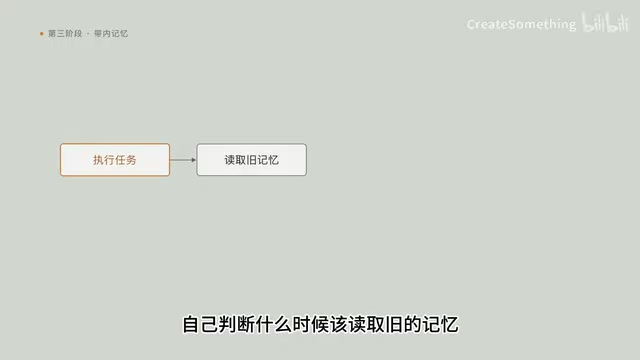
This mechanism is called "Intra-Memory." It's different from manually telling AI "please remember this"—the initiative for judgment is handed to the Agent. During execution, the Agent autonomously judges: when to read old memories, and when new experience worth preserving appears.
For example, when an Agent discovers that a certain test command keeps failing, it can proactively leave a correction record; when a user corrects it on something, it will write this preference or judgment into a reusable rule description. After completing a task, the Agent autonomously writes documents, updates contextual memory, and puts the new working method back in its corresponding place. At this point, memory is no longer a static knowledge base but becomes an active system continuously accumulated and editable through practice, and AI truly produces the effect of "continuous learning."
But autonomous writing immediately brings a fatal hidden danger: Will the Agent write errors into the system as if they were experience?
Stage Four: Three Guardrails—Preventing the Spread of Erroneous Memory
In simple tasks, an Agent's errors can be discovered and corrected by humans in time. But in multi-Agent or complex collaborative environments, one erroneous memory might be read by numerous subsequent tasks and continuously spread as fact. An Agent summarizes an incorrect pattern from a chance failure, and subsequent Agents don't verify but directly follow suit—the error then expands from one conversation to all future conversations.
What's even trickier is that both humans and Agents might lose track: When was this rule written? Which conversation did it come from? Was it explicitly confirmed, or inferred by the model itself? For this reason, we need to introduce three guardrails in production environments.

Guardrail One: Version Control (Traceability)
Every memory modification should be able to answer: which conversation did this content come from, who proposed it, why did it enter the long-term system, and how to roll back when a judgment error occurs. The core function is Traceability—tracing from a piece of memory back to the original conversation. It's recommended to use Git to save local files, and major experiential judgments cannot be autonomously written by the Agent—they must go through human confirmation. This resolves a critical misconception: a piece of text being written into a Markdown file does not mean it automatically gains the status of "truth."
Guardrail Two: Tiered Permission Management
Not every Agent should have equal permissions over all memory. The reviewed knowledge base is read-only for most Agents, a certain Agent's temporary workspace can be freely written to, and different approval rules should be set between team-level and project-level memory. The focus of permission design is on limiting the scope of error spread. The practical approach is: executing Agents can update project status and process files, but major product directions, platform priorities, and long-term operational judgments must be confirmed by humans before being written into decision files.
Guardrail Three: Memory Portability
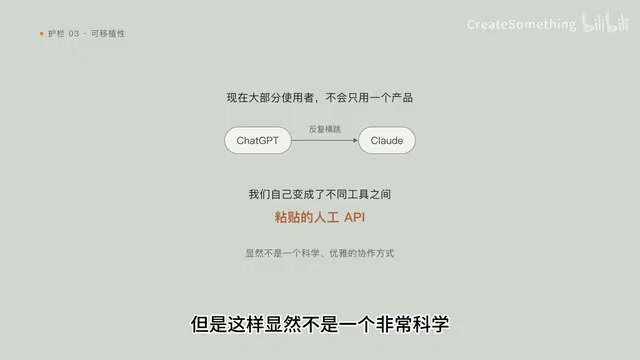
The context users accumulate over the long term is extremely valuable and shouldn't be locked into a single product. In reality, many people repeatedly switch between ChatGPT and Claude, becoming "human APIs" copying and pasting between tools—this is clearly not efficient enough. The solution is to place all context documents in local shared files, letting different tools read the same files and states; clients can be swapped at any time, but long-term memory remains unaffected. Portability isn't just about conveniently migrating data—it fundamentally determines whether this accumulated capability belongs to the user or to a specific product.
Applicable to Both Programming and Non-Programming Work
It's worth emphasizing that this AI project memory method isn't only applicable to Coding Agents. Content creation scenarios apply equally well: different AI tools enter the same set of local files, first reading the entry point, then the current work, and finally entering the specific project; long-term facts are stored in unified memory rather than bound to a specific client; different tasks are managed by different Skills, without needing to load everything each time; major judgments are confirmed by humans, and executing Agents only update local process files. Tools like Codex and Claude share the same source of truth, and can both be swapped and collaborate.
Once this verifiable context system is built, human attention can shift from "repeatedly explaining project progress" to the core problems that truly require human judgment.
Conclusion: What Widens the Gap Is "How You Use It"
The collaboration between AI and humans is still at a very early stage. The context management problems individual users encounter become more complex and more dangerous in enterprise-level collaboration. The entire industry is seeking a stable, reproducible methodology.
But one thing can be confirmed: once model capabilities reach a certain level, what truly widens the gap will be how we use them—how to transform a model's raw capabilities into a system architecture with continuous, stable output. Project descriptions, progressive disclosure, intra-memory, and three guardrails are precisely the solutions forced out by practical problems along this evolutionary path, each step traceable and grounded.
Related articles
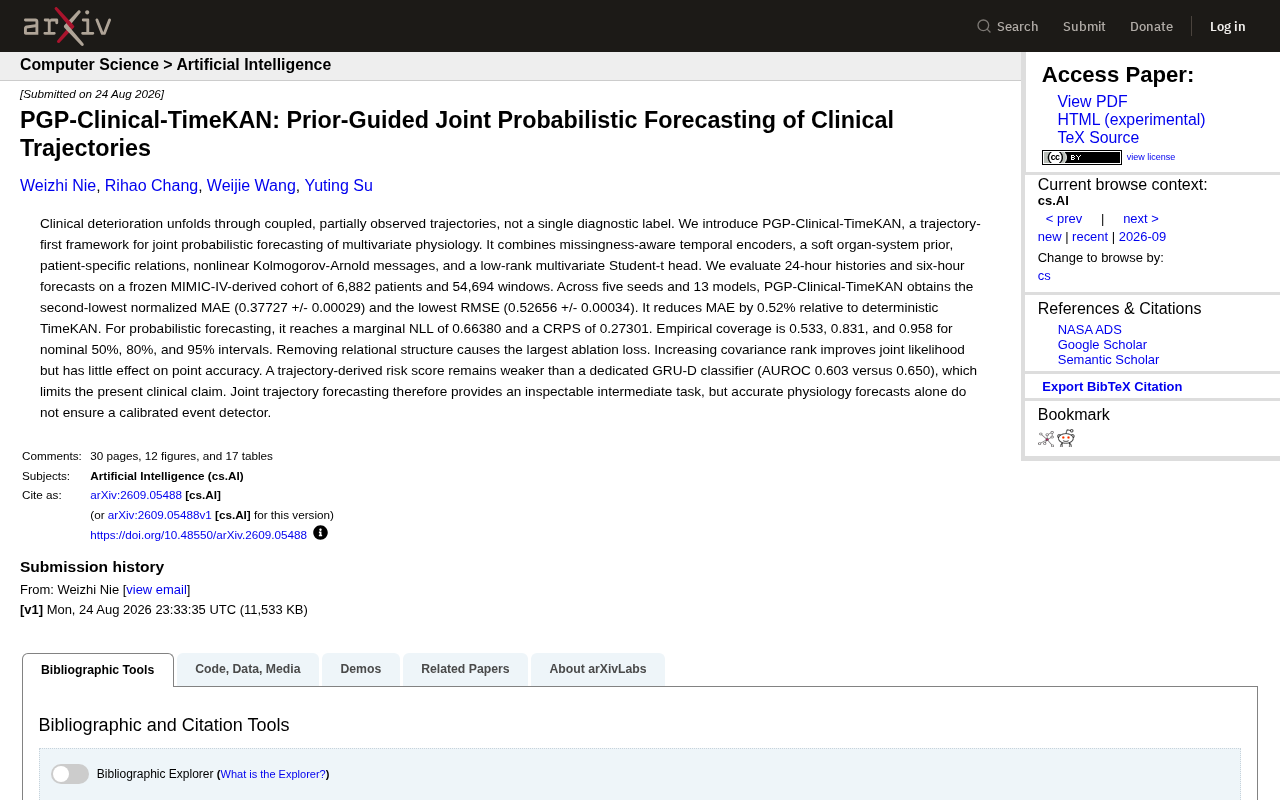
PGP-Clinical-TimeKAN: A Detailed Guide to the Multivariate Physiological Indicator Joint Prediction Framework
An in-depth analysis of the PGP-Clinical-TimeKAN framework for joint probabilistic prediction of multivariate physiological indicators, covering trajectory-first paradigm, KAN message passing, MIMIC-IV validation, and ablation studies.
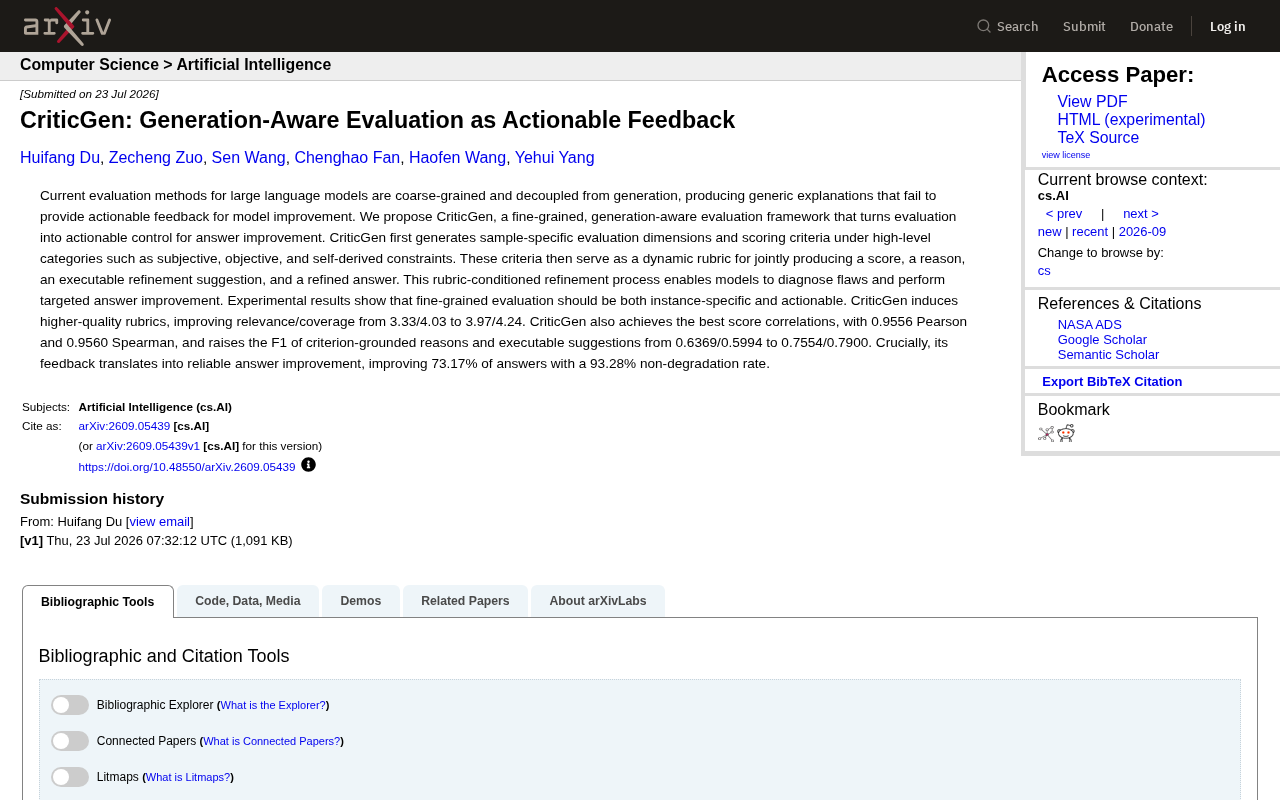
CriticGen: A New Framework That Transforms AI Evaluation into Actionable Improvement Feedback
CriticGen proposes a generation-aware evaluation framework that transforms AI assessment from passive scoring to an active optimization loop, achieving 73.17% answer improvement and 93.28% non-degradation rate.
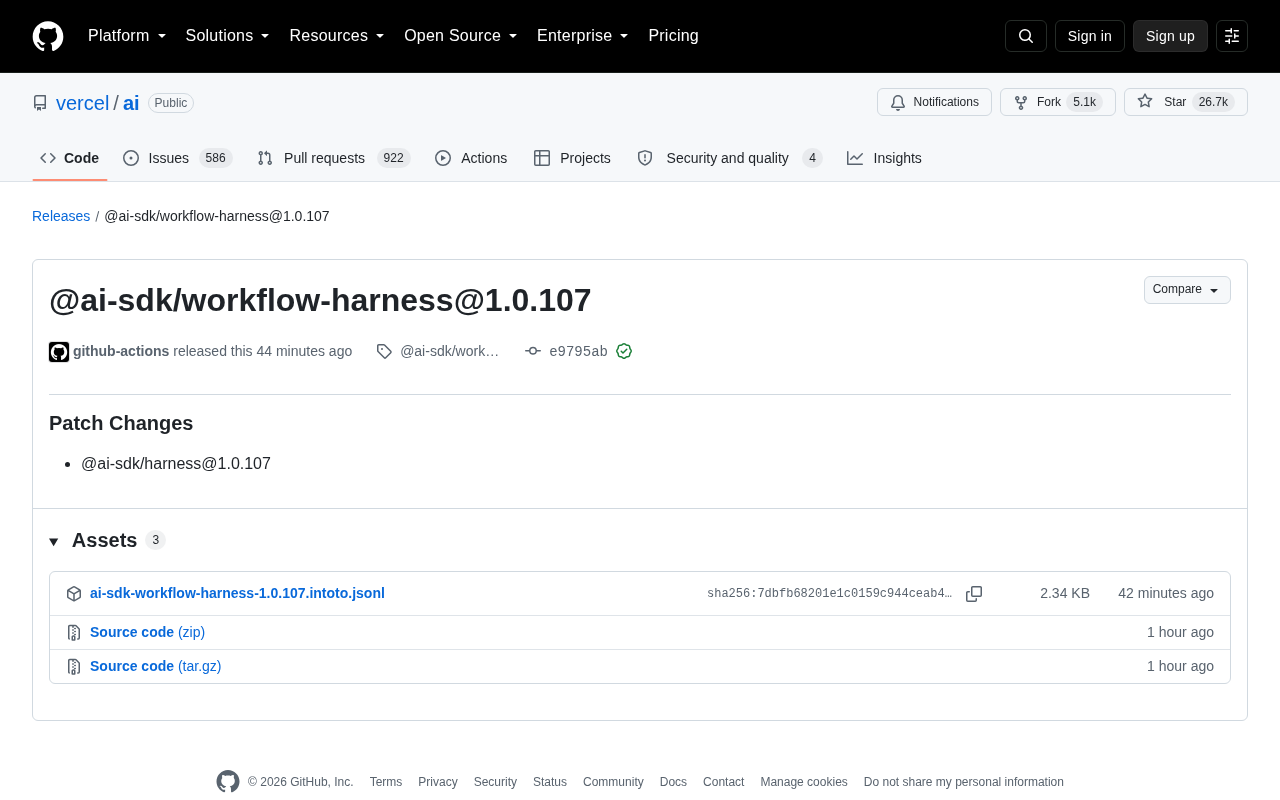
Vercel AI SDK workflow-harness Update Analysis
Deep analysis of Vercel AI SDK workflow-harness 1.0.107 update: architecture design, engineering practices, and developer value for building reliable AI apps.