AI Real-Time Generative Simulation: A New Kind of Game Experience

AI-generated real-time audiovisuals steered by users are redefining the boundaries of game experiences.
This article analyzes an emerging concept: a simulation system where AI generates audio and content in real time while users steer it interactively. It represents a paradigm shift from pre-made game content to runtime dynamic generation. The piece breaks down three core elements—real-time responsiveness, generated audio, and user steering—while identifying stability, compute cost, and controllability as the key challenges standing between early demos and mature products.
What Is a "User-Steered Real-Time Generative Simulation"?
A tweet from the tech world floated a concept rich with imaginative potential: a simulation system where AI generates audio in real time and users steer the experience in real time — described as "a new kind of game experience."
Behind that brief description lies one of the most cutting-edge intersections of generative AI and interactive entertainment. In traditional games, visuals, sound effects, and world logic are all pre-designed by development teams and hard-coded into the software. A "real-time generative simulation," by contrast, aims to have AI dynamically produce content at the very moment a player acts — every input potentially triggering an immediate, synthesized visual, audio, and logical response.



The Paradigm Shift: From "Pre-Made Content" to "Real-Time Generation"
For decades, games have essentially been carefully designed deterministic systems. Art assets, soundtracks, and level logic are all locked in at launch, and player freedom is confined to whatever framework the designers envisioned.
Generative simulation takes a fundamentally different approach. It delegates part of the content-production responsibility to an AI model running at runtime: when a user "steers" the system, the AI doesn't pull pre-existing clips from an asset library — it synthesizes content on the fly based on the current state. The original description specifically highlights "generated audio" as a key dimension, meaning that not just visuals but even sound could be created by the model in context, rather than played back from a pre-recorded track.
The significance of this shift is profound: the game world moves from a "finite set of possibilities" toward a "near-infinite dynamic space." Player actions are no longer about selecting from a menu of options — they're more like carrying on a conversation with a continuously evolving system.
Early explorations in this direction are already underway. Google DeepMind's Genie (2024) attempted to learn interactive world models from video; teams like World Labs and Decart are pursuing the "World Model" route — having neural networks directly simulate physical laws and environmental feedback rather than relying on rule-based engines. On the audio side, companies like ElevenLabs and Stability AI have already released models capable of synthesizing sound effects and music from prompts in real time. The convergence of these technical trajectories is precisely what makes "real-time generative simulation" a concept worth taking seriously.
It's worth noting that "Procedural Generation" has long existed in gaming — titles like No Man's Sky and Dwarf Fortress rely heavily on algorithms to generate terrain and events at runtime. The fundamental difference with AI-driven generation is that content is produced by data-driven neural networks rather than pre-defined rules, giving it far greater generalization capacity in theory.
Why "Real-Time" and "User-Steered" Are the Key Terms
Three core elements in the original framing deserve unpacking: real-time, generated audio, and steered by the user.
Real-time is the biggest technical hurdle. Generative models typically require significant compute time, while gaming demands millisecond-level responsiveness. Generating content as you play imposes extreme requirements on model inference speed and latency control.
Generated audio extends the frontier of AI creativity. Compared to image generation, which is relatively mature, real-time, coherent, context-matched audio generation is considerably harder — it must maintain consistency across the time dimension and avoid jarring discontinuities.
User-steered is what distinguishes this from "AI-generated video" and preserves the most essential quality of games: interactivity. The user's intent drives where the simulation goes; the AI translates that intent into perceivable audiovisual experience.
The main technical approaches the industry currently uses to address real-time inference latency include: model distillation (compressing large models into lightweight versions), streaming decoding (outputting as generation proceeds rather than waiting for a complete result), and dedicated inference hardware (such as NVIDIA's TensorRT optimizations or NPUs designed specifically for inference).
In audio generation, the continuity challenge is especially acute — models need to maintain hidden state across time steps to ensure that pitch, rhythm, and ambient atmosphere transition smoothly when players switch actions, rather than cold-starting each generation cycle. This places significant demands on autoregressive models' context window management.
The Real-World Challenges Ahead
As compelling as the concept is, there's a considerable gap between a tweet demo and a mature product.
Stability and coherence in real-time generation is the primary concern: can AI-generated content remain logically consistent over extended play sessions without visual glitches or audio dropouts? Compute cost is equally significant — real-time inference consumes far more hardware resources than playing back pre-made content. And controllability remains the perennial challenge of generative systems: how do you ensure player inputs produce expected, predictable responses rather than random or erratic outputs?
It should be noted that the original post is a brief conceptual demonstration with no detailed disclosure of specific technical implementation, model architecture, or product form. This analysis is therefore based on broader trends in this direction rather than a review of any particular product.
The "controllability" problem in generative systems is typically addressed through two mechanisms: reinforcement learning alignment (RLHF/RLAIF), which nudges model outputs closer to human expectations; and deterministic constraint layers, which apply rule-based filtering on top of neural network outputs to ensure core game logic (collision detection, win/loss conditions, etc.) isn't disrupted by generated content. For highly open-ended real-time steering scenarios, however, striking the right balance between "giving players enough freedom" and "preventing model outputs from exceeding expected boundaries" remains an open problem with no widely accepted solution.
On the compute side, joint real-time video and audio generation demands extremely high memory bandwidth, making cloud-based inference the likely dominant approach in the near term. Local deployment at scale will depend on continued improvements in on-device chip performance.
Closing Thoughts: The Next Frontier of Interactive Entertainment?
Regardless of what the final form looks like, "real-time generative simulation + user steering" represents an exciting direction for generative AI in entertainment. It blurs the line between "playing a game" and "co-creating with AI," and hints at a future where interactive experiences no longer depend on massive pre-built content libraries — but are instead created by models on demand, at runtime.
What that tweet demonstrated may be only an early prototype of this trend. But it clearly outlines one compelling possibility: games that aren't designed in advance, but generated in the moment.
Related articles
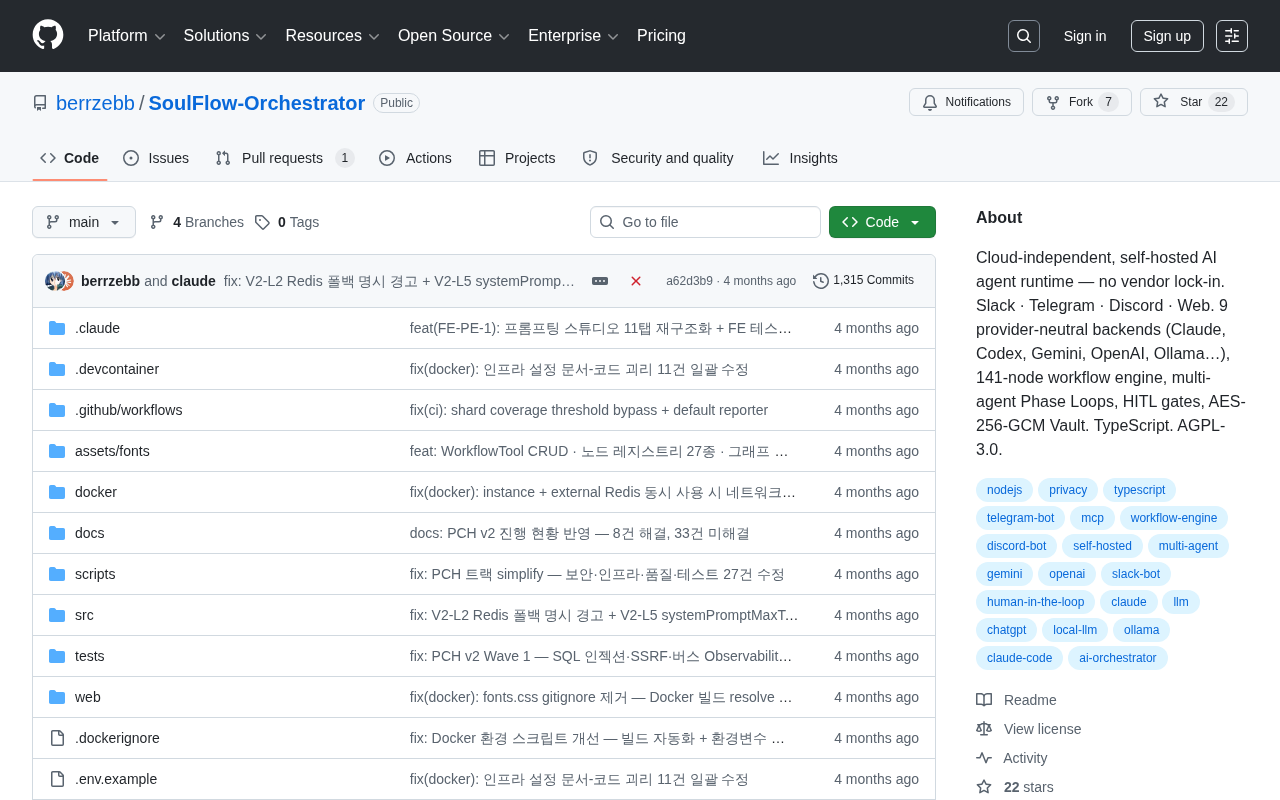
SoulFlow-Orchestrator: A Self-Hosted, Vendor-Lock-In-Free AI Agent Runtime
SoulFlow-Orchestrator is an open-source, self-hosted AI agent runtime with no vendor lock-in. Supports 9 neutral backends (Claude, OpenAI, Ollama), 141-node workflow engine, multi-agent loops, and HITL gates.
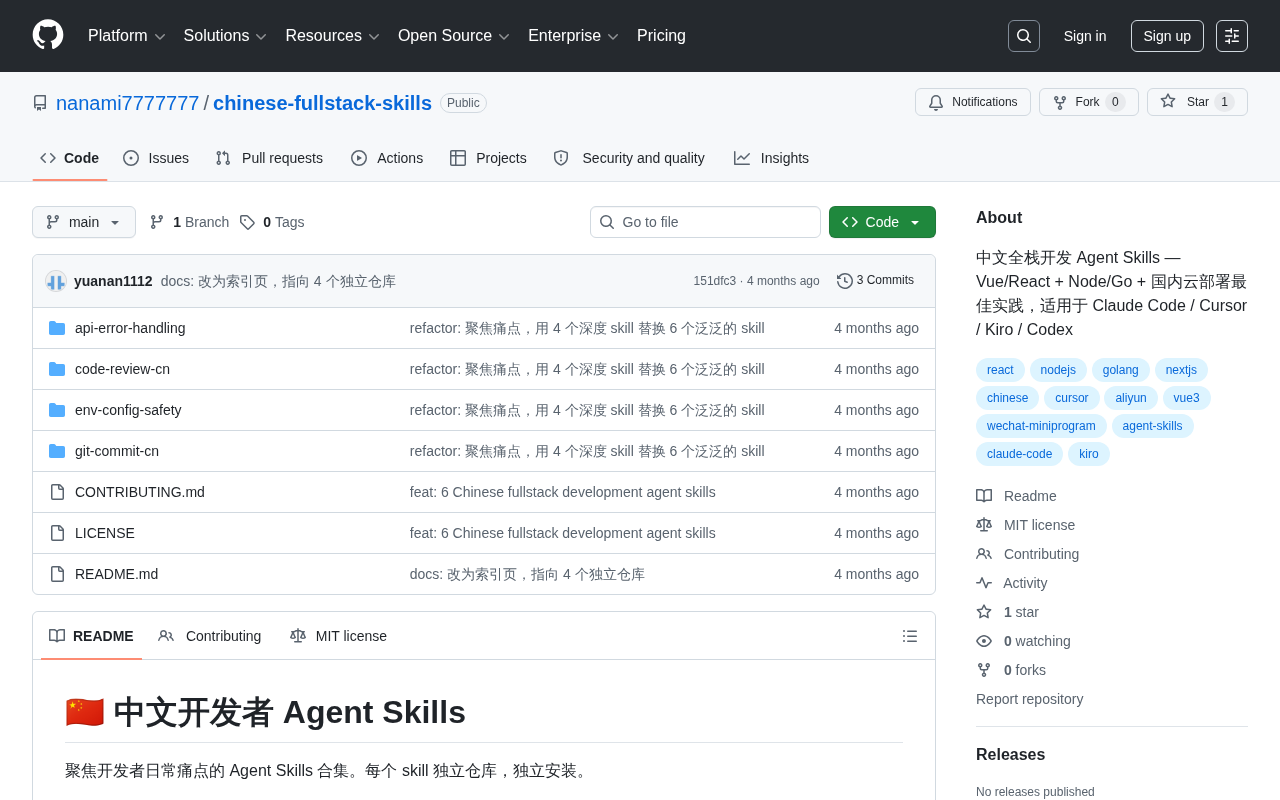
Chinese Full-Stack Agent Skills: A Skill Library Tailored for Domestic AI-Assisted Development
chinese-fullstack-skills is an Agent Skills library for Chinese full-stack development, covering Vue/React, Node/Go, and domestic cloud deployment best practices. Compatible with Claude Code, Cursor, Kiro, and Codex.

Paradigm Memory: A Local-First Memory System for AI Coding Assistants
paradigm-memory is a local MCP memory tool for Claude Code, Cursor, and Cline. It uses SQLite local storage, zero cloud, full audit trails, and a navigable cognitive map instead of bloated context files.