AI SDK Svelte 5.0.170 Patch Update: Dependency Upgrades and Stability Improvements
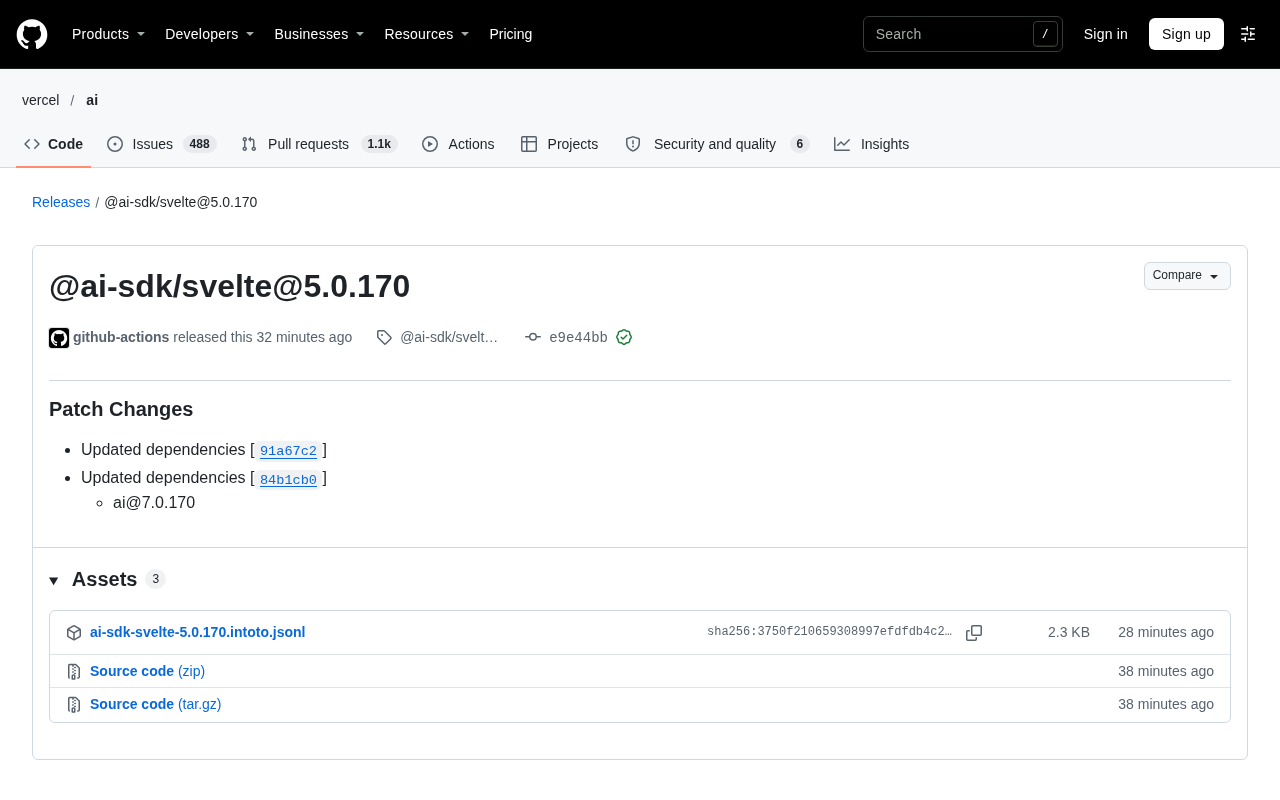
@ai-sdk/svelte releases 5.0.170 patch, synchronizing the ai core package to 7.0.170.
This article analyzes the @ai-sdk/svelte@5.0.170 patch update. This version was automatically released by GitHub Actions with signature verification, and the core change is upgrading the dependent ai package to 7.0.170, with no new features or breaking changes. The article points out that this dependency synchronization helps keep the Svelte adapter layer aligned with the core package version, avoiding compatibility issues. For developers, the upgrade cost is low, but it is recommended to focus on testing streaming generation, tool calls, and error handling scenarios. The article also discusses the AI SDK's high-frequency minor version release strategy and recommends using tools like Dependabot or Renovate to automate dependency updates and gain stability benefits at low cost.
Introduction: A Small but Important Patch Update
The AI SDK ecosystem continues to evolve, and the Svelte adapter package has reached version 5.0.170. Although this is a patch release, such updates often play a critical role in dependency synchronization and underlying fixes. According to the official GitHub release information, @ai-sdk/svelte@5.0.170 was automatically published by github-actions, with signature verification passed, and the core change is the updating of dependencies.
This article will analyze the update from three dimensions: the content of changes, technical implications, and developer upgrade recommendations, to help you transition smoothly in your projects.
Change Analysis: A Dependency-Driven Minor Version
Patch Update Details
The release notes explicitly list Patch Changes: dependencies were updated, involving two commits (91a67c2 and 84b1cb0), and the ai package was upgraded to version 7.0.170. This "dependency upgrade equals release" pattern is very common in the AI SDK monorepo, aiming to keep each framework adapter layer aligned with the core package version and avoid compatibility issues caused by version drift.
It is worth noting that this update introduces no new features or breaking changes and is a typical maintenance release. For production environments, such updates carry low risk, but it is still recommended to verify them in a test environment before merging.
The ai package is the core package of the Vercel AI SDK, providing a unified API for interacting with models, including functions such as generateText, streamText, and generateObject. @ai-sdk/svelte is the adapter layer for this core package under the Svelte framework, typically exporting reactive utilities like useChat that connect the core package's streaming capabilities with Svelte's reactivity system. Since the adapter layer does not reimplement core logic but directly calls the ai package, the versions of both must be kept in sync. When the ai package releases a patch, the adapter package also follows with a release to ensure that only one version of ai exists in the dependency tree, avoiding runtime behavior differences caused by version inconsistency.
The Significance of Version Alignment
As the adapter layer for the Svelte framework, @ai-sdk/svelte behavior directly depends on the core logic of the underlying ai package. Synchronizing ai to 7.0.170 means Svelte developers can continue to benefit from the latest fixes and optimizations of the core package, especially stability improvements in features like streaming responses and tool calls. Although the specific fixes are not detailed in the release notes, dependency synchronization itself is a reflection of ecosystem health.
Practical Impact on Developers
Upgrade Cost Assessment
Since it only involves dependency updates, upgrading to 5.0.170 usually requires only modifying the version number in package.json and reinstalling dependencies. If your project uses a lockfile, it is recommended to perform a full dependency tree check to ensure the ai package is also updated to 7.0.170, avoiding version conflicts.
For teams using pnpm or yarn, you can use the overrides or resolutions fields to enforce version unification and reduce the size of duplicate dependencies.
Suggested Testing Focus
Although it is a patch version, it is still recommended to focus on verifying the following scenarios after upgrading:
- Whether streaming text generation works properly (in SvelteKit's SSR scenarios)
- Whether the return structure of tool calls matches expectations
- The behavior of error handling paths (such as network anomalies, API rate limiting)
These scenarios depend heavily on the underlying ai package, and behavior may change subtly after version synchronization.
Ecosystem Perspective: Automated Releases and Traceability
The Value of Automated Pipelines
This release was completed by the github-actions bot and carries a GitHub verified signature (GPG key ID: B5690EEEBB952194). This automated process ensures traceability and consistency of releases, reducing human error. For open-source projects, signature verification provides a foundational guarantee for supply chain security, and developers can monitor anomalous commits through vigilant mode.
GPG signature verification is a commit and tag authentication mechanism provided by Git and GitHub. Publishers can sign commits or tags with a private key, and GitHub verifies the signature with the public key and displays a "Verified" badge in the interface. For open-source projects, after enabling vigilant mode, unsigned commits are marked as "Unverified", alerting maintainers. This helps prevent supply chain attacks, such as malicious users forging commit history or tampering with release content. This release was completed by the github-actions bot and carries a signature, indicating that the release process is configured with automatic signing, so developers can trust that the version indeed comes from the official CI pipeline rather than an accidental operation from a personal account.
Its Place in the AI SDK Version Strategy
The AI SDK adopts a high-frequency minor version release strategy, with each patch focusing on specific fixes or dependency synchronization. The advantage of this strategy is fine-grained issue localization and low rollback cost; the disadvantage is that version numbers grow quickly, requiring developers to establish automated dependency update mechanisms (such as Dependabot or Renovate) to keep up.
Conclusion: Small Steps, Keep in Sync
@ai-sdk/svelte@5.0.170 is a standard maintenance patch, whose core value lies in maintaining version synchronization with ai@7.0.170. For teams building Svelte applications with the AI SDK, it is recommended to incorporate such updates into the regular dependency maintenance process, combined with automated tools and targeted testing, to obtain stability benefits from underlying fixes at low cost.
In the rapidly evolving AI toolchain, keeping up with the official release cadence often ensures the long-term health of a project better than pursuing major version upgrades.
Related articles
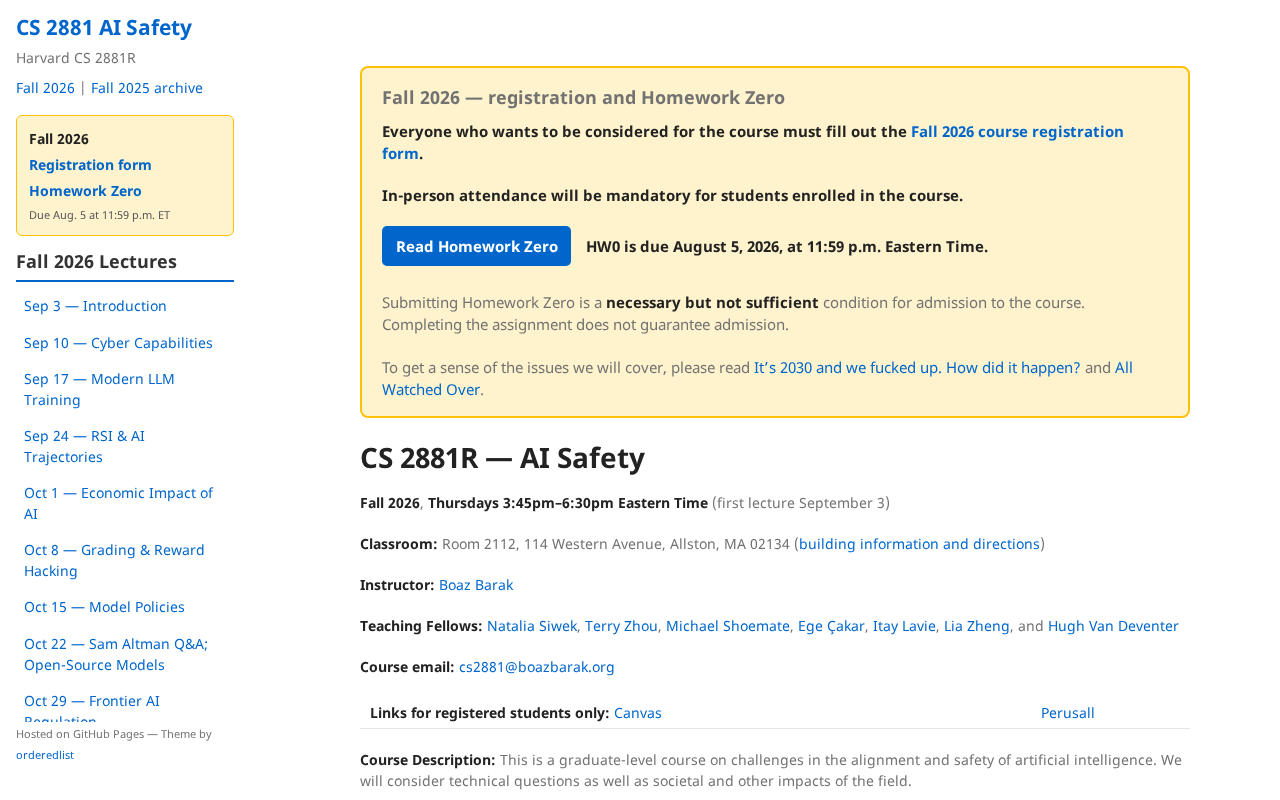
Harvard AI Safety Course CS 2881R Sparks Discussion
Harvard's CS 2881R AI Safety course was mentioned on Hacker News. This article covers the course background, core AI safety topics, and takeaways for learners, helping readers understand how top universities cultivate AI safety talent.

Expanding Your Social Circle: Friend-Making Apps Worth Trying
How to choose a friend-making app? This article reviews friendship apps like the friend-discovery platform BFF and activity-oriented Timeleft, analyzing which approach suits whom and offering practical tips on offline meeting safety and expectation management.

Why You Shouldn't Run the Hermes Agent on Your Personal Computer
Why shouldn't you run autonomous AI agents like Hermes on your personal computer? This article analyzes why agents should be deployed to a dedicated VPS instead of your primary device, from four angles: security risks, resource consumption, credential leakage, and autonomy requirements—plus the practical logic of isolated deployment.