@ai-sdk/valibot 3.0.63 Patch Release: Minor Tuning of the Vercel AI SDK Validation Layer
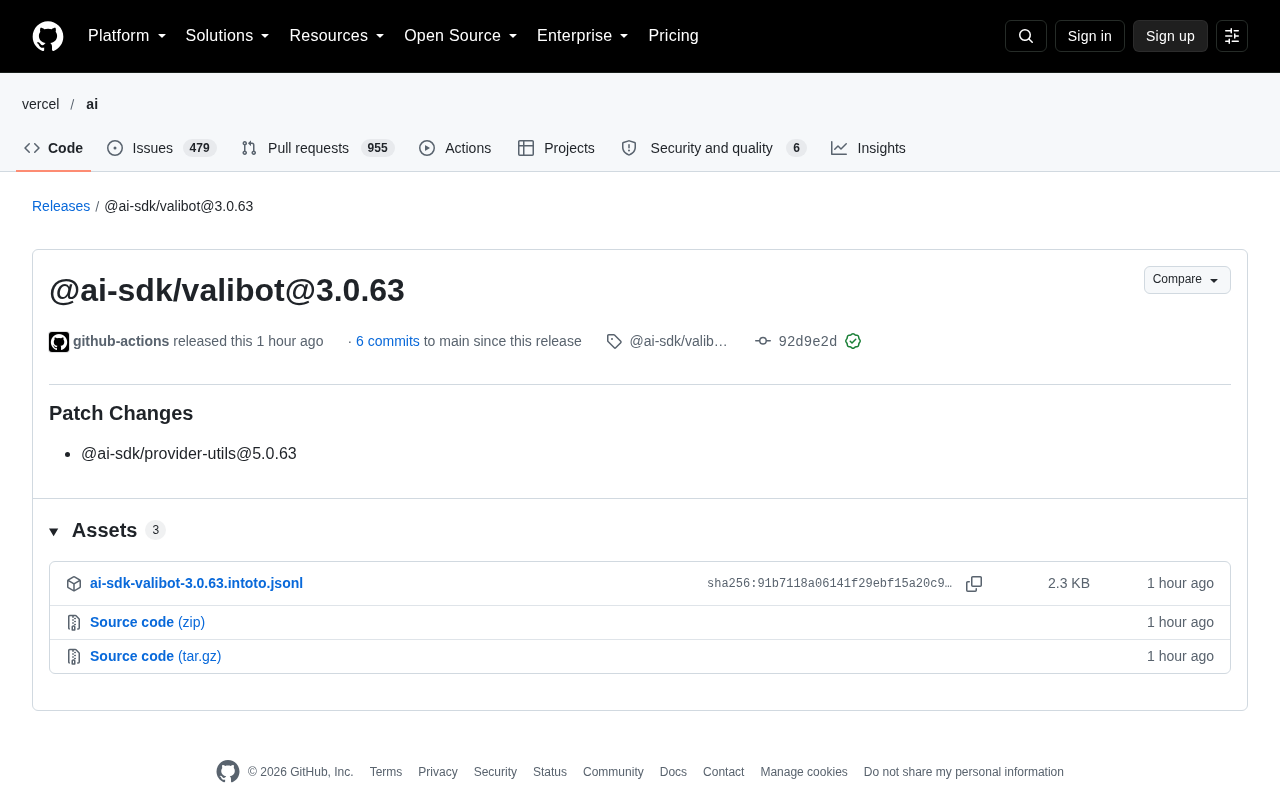
@ai-sdk/valibot 3.0.63 released, only syncing the provider-utils dependency, with no API changes.
@ai-sdk/valibot@3.0.63 was automatically released by a bot on October 19, containing a patch change of 6 commits. This update is a routine maintenance release that introduces no new public API; the only explicit change is synchronizing the underlying dependency @ai-sdk/provider-utils to 5.0.63, keeping the adapter layer on the same dependency snapshot as other packages in the AI SDK ecosystem. @ai-sdk/valibot connects Valibot validation rules to the AI SDK's tool calling and structured output flows, helping developers intercept structural errors in JSON returned by models at runtime. Upgrading this patch usually requires no code changes, but if the project locks an older version of provider-utils, peer dependency prompts may appear; it is recommended to run existing schema validation test cases in CI to confirm consistent behavior. The article also discusses the pros and cons of the AI SDK's high-frequency small-step patch strategy, advising downstream users to decide whether to follow up based on the changelog rather than the version number.
Patch Version Quietly Updated, Dependency Chain Synchronized
According to the GitHub repository release records, @ai-sdk/valibot@3.0.63 was automatically released by the github-actions bot on October 19, with a patch change comprising 6 commits. This update is a routine maintenance release that introduces no new public API; its main action is to synchronize the underlying dependency @ai-sdk/provider-utils to 5.0.63.
Judging from the version numbering cadence, the AI SDK team continues its patch-by-patch iteration strategy: each minor version carries only minimal changes, reducing the regression risk for downstream projects when upgrading.
The Role and Significance of the Valibot Adapter Layer
@ai-sdk/valibot is a schema validation adapter in the Vercel AI SDK ecosystem, responsible for connecting validation rules defined in Valibot to the AI SDK's tool calling and structured output flows. Developers use it to constrain the JSON structure returned by models, intercepting issues such as missing fields and type errors at runtime rather than validating manually after the fact.
Valibot itself is known for "tree-shakable modular validation," offering an advantage in bundle size over Zod. The fact that AI SDK maintains a separate adapter package for it shows that the official team's investment in lightweight validation solutions is ongoing—although this patch is small, it keeps the adapter layer version-aligned with provider-utils, avoiding dependency resolution splits.
Tool calling and structured output are two key patterns in modern LLM applications: the former lets the model select and invoke external functions based on user requests, while the latter requires the model to return directly parseable structured data according to a given JSON Schema. Both rely on runtime validation to ensure model output conforms to the expected format, and schema validation libraries are precisely the components that fulfill this responsibility. AI SDK allows developers to define schemas using different validation libraries (such as Zod and Valibot), then convert them into a unified internal representation through adapter packages. This adapter layer design keeps the core SDK from being bound to a specific validation library, while letting developers choose the solution with better bundle size as needed.
Peer dependencies are a declaration method in npm dependency management, indicating that the current package requires the host project to provide a specific version of a dependency rather than installing its own copy. When multiple packages share the same underlying utility library (such as provider-utils), peer dependencies prevent type mismatches or state splits caused by multiple instances of the same library. However, if the project has locked an older version, upgrading a package may trigger peer dependency warnings, requiring manual version alignment. This is also why this patch reminds downstream users to check dependency alignment.
The Practical Impact of the Patch Changes
The only explicit change item in this release is the synchronization of @ai-sdk/provider-utils@5.0.63. provider-utils is the shared utility layer for AI SDK provider adapters, covering common logic such as request construction and streaming response parsing. Bumping it to the same version number means @ai-sdk/valibot stays on the same dependency snapshot as other packages in the ecosystem.
For users, upgrading this patch usually requires no code changes; if the project has locked an older version of provider-utils, peer dependency prompts may appear, requiring a corresponding upgrade. It is recommended to run the existing schema validation test cases in CI to confirm that Valibot rules behave consistently in tool calling scenarios.
How to View High-Frequency Patch Releases
The AI SDK series of packages increments patch numbers on an almost daily basis, and the community has differing views on this. Supporters believe that small, fast steps enable quick fixes for provider compatibility issues; critics point out that the version number noise is high, making it difficult for downstream users to judge which updates are worth following. As for this release, with only dependency synchronization and no perceivable functional changes, it falls into the "upgrade as needed" category—unless you are currently troubled by a specific issue in provider-utils.
For teams building agents or structured output applications on AI SDK, a more pragmatic approach is to watch for breaking change markers in the changelog rather than chasing every patch number.
Related articles

M&M's Spent Millions Replacing Artificial Blue Dye — Why Is It So Hard?
Mars spent millions trying to replace artificial blue dye in M&M's with spirulina, but thick material clogs pipes and residue risks mold, forcing a full production-line rebuild. Here's the engineering behind the reformulation.
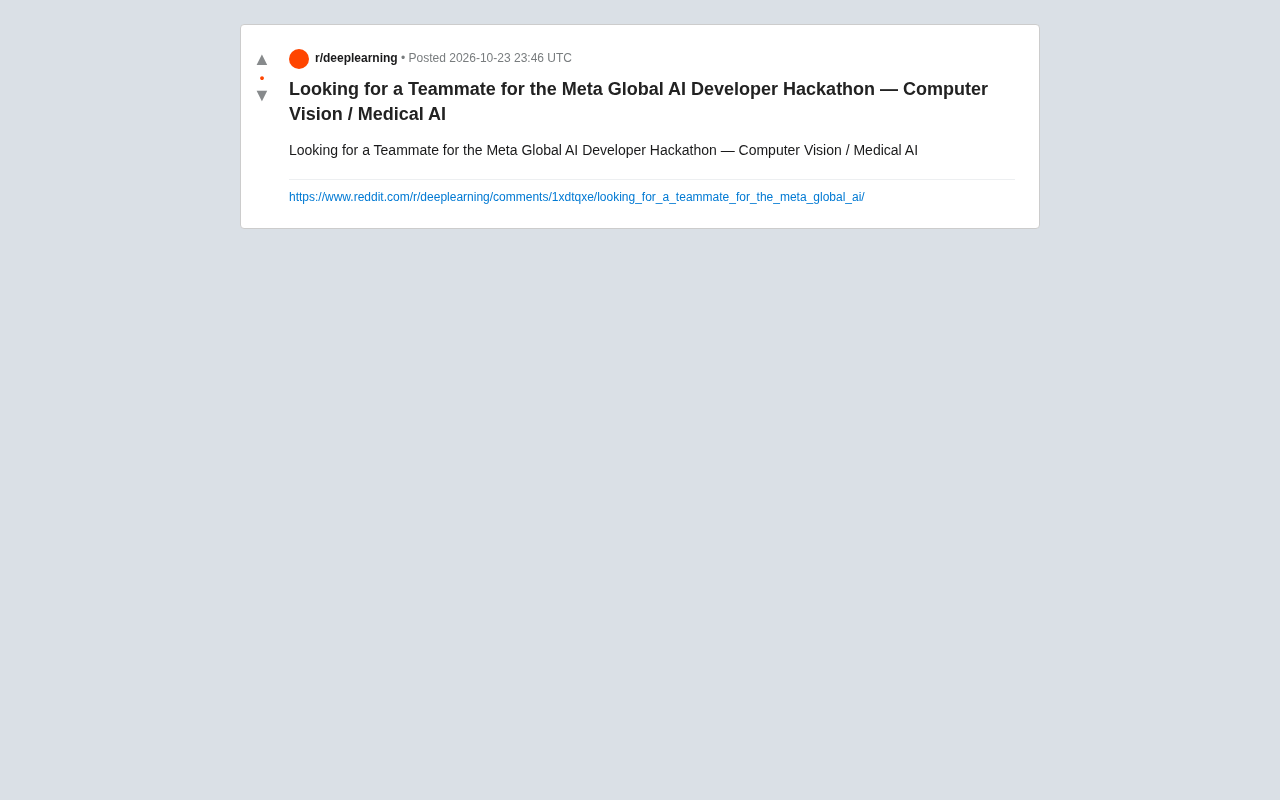
Teammate Wanted for Meta Global AI Developer Hackathon: Computer Vision & Medical AI
A Reddit developer seeks teammates for the Meta Global AI Developer Hackathon, focusing on computer vision and medical AI. This article analyzes the track logic, skills-complementarity needs, and topic selection strategy behind this teaming signal.
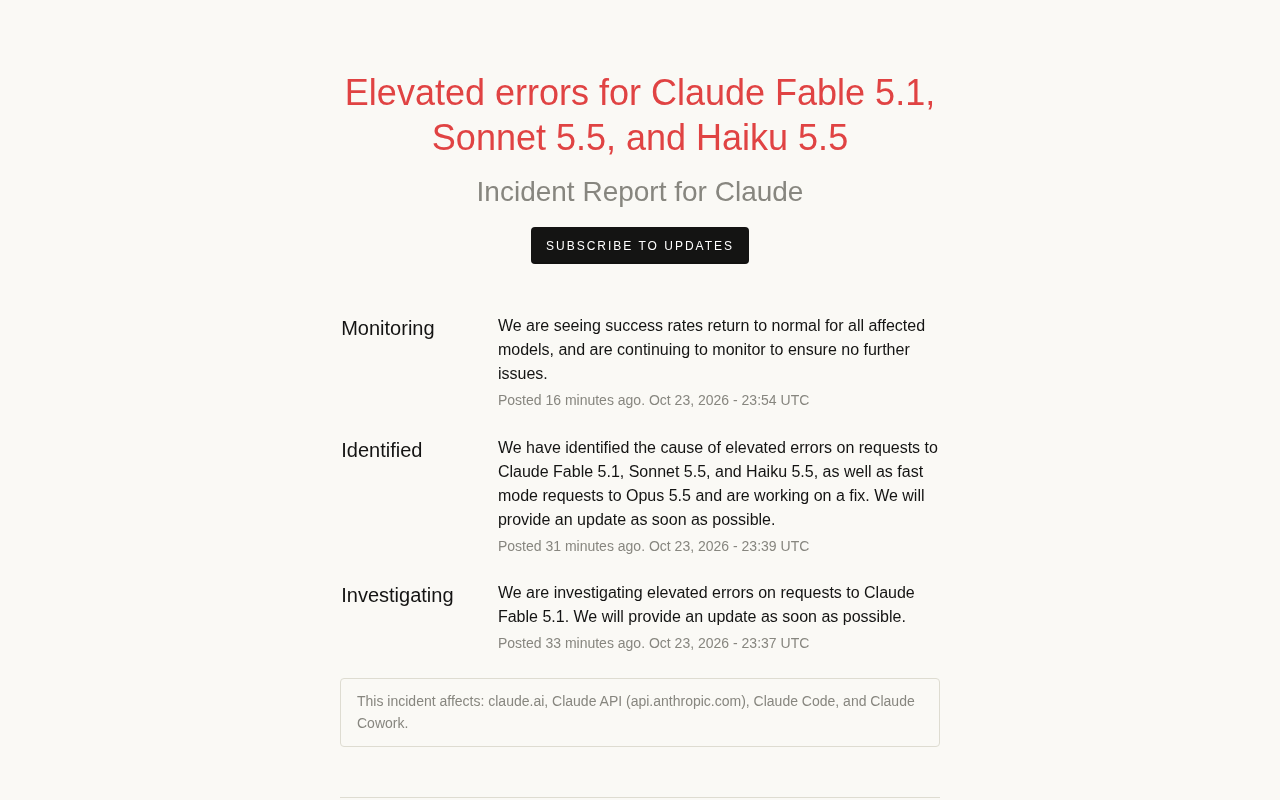
Multiple Claude Models Hit by Errors: A Postmortem of Fable 5.1, Sonnet 5.5, and Haiku 5.5
Claude Fable 5.1, Sonnet 5.5, Haiku 5.5, and Opus 5.5 fast mode saw elevated errors; Anthropic identified and resolved the issue in 17 minutes. This postmortem covers the timeline, the technical reasons for the multi-model cascading failure, and practical lessons for retry and degradation strategies.