AI SDK xAI 2.0.100 Update: Faster Validation Loading
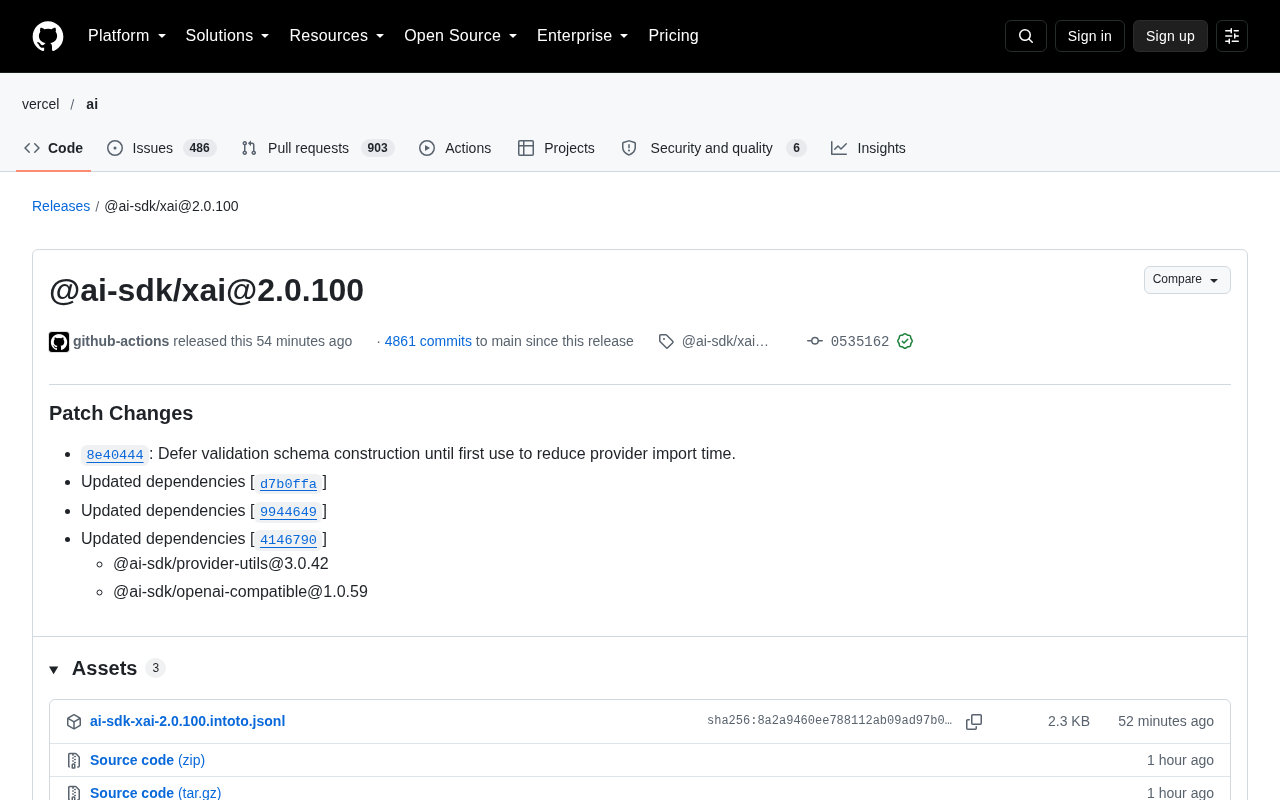
@ai-sdk/xai releases patch 2.0.100, deferring validation schema construction to shorten import time.
@ai-sdk/xai has released patch 2.0.100. The core change is deferring the construction of the validation schema until first use, reducing the provider package's import overhead and making cold starts lighter. It also updates infrastructure dependencies in sync, including @ai-sdk/provider-utils 3.0.42 and @ai-sdk/openai-compatible 1.0.59. As a patch update, external behavior is unchanged and no code changes are needed. The benefits are mainly in startup-sensitive scenarios such as Serverless functions, CLI tools, tests, and frequently restarted development servers. When upgrading, note transitive dependency compatibility and the changed validation timing on first call.
The AI SDK's xAI provider package @ai-sdk/xai has released version 2.0.100. This is a patch-level update, but it addresses an issue developers feel every day: module import speed.
According to the GitHub release page, this version was auto-published by github-actions, with commit hash 0535162 and a GitHub verified signature. Compared to feature-level changes, this update is more of a tuning pass focused on engineering experience.
Core Change: Validation Schema Deferred Until First Use
The most notable item in this patch: defer the construction of the validation schema until first use to reduce the provider's import time.
In the previous implementation, the provider package could complete construction of the validation schema during the import phase. For consumers, this meant that even when the related capabilities were not actually being called, they could still bear this initialization cost at import time. Deferring construction until the first actual use makes the import path lighter and shortens cold-start waits.
The benefits of this kind of change usually don't show up at the API level, but they are friendlier to scenarios that repeatedly import the SDK in scripts, CLIs, Serverless functions, or tests—especially in environments sensitive to cold-start costs, where eliminating one unnecessary module-level initialization can make a noticeable difference.
Judging by the version number, 2.0.100 is a patch update, indicating that the maintainers position it as an optimization that does not change external behavior rather than the introduction of new features.
Validation Schema and Lazy Initialization
In the JavaScript/TypeScript ecosystem, a schema usually refers to an object used to describe and validate data structures (such as request parameters and response formats); common implementations include Zod, Valibot, and others. When constructing schemas, provider packages often need to execute function calls, create validator instances, and even compile regular expressions—all of which incur CPU and memory overhead.
Lazy initialization is a common optimization pattern: defer the creation of expensive objects from the module loading phase until the moment they are actually accessed. It is typically implemented through getters, lazy singletons, or caching on first call. The benefit is a shorter execution time for the import path, at the cost of an extra construction overhead on first use. The gains are most obvious in scenarios where the module is imported but not yet called.
Dependencies Updated in Sync
In addition to its own changes, this release also updated three dependencies in sync:
@ai-sdk/provider-utilsupdated to 3.0.42@ai-sdk/openai-compatibleupdated to 1.0.59- Another dependency update record (commit d7b0ffa)
provider-utils and openai-compatible are infrastructure packages in the AI SDK provider ecosystem: the former carries common utility functions for providers, and the latter serves provider implementations compatible with the OpenAI API specification. The xAI provider package depends on these underlying capabilities, so aligning dependency versions with the release is standard practice.
For projects that pin dependency versions, it's worth checking during upgrade whether these transitive dependencies are compatible with existing code. Patch-level dependency updates usually carry low risk, but in monorepos or version-sensitive toolchains, it's still advisable to verify in a test environment first.
The AI SDK Provider Ecosystem and the Role of openai-compatible
The AI SDK uses a layered design: the core ai package provides a unified interface, and each model vendor is integrated through a separate provider package. @ai-sdk/provider-utils is the shared utility layer for providers, encapsulating common logic such as streaming response parsing, error handling, and schema validation; @ai-sdk/openai-compatible targets services that expose OpenAI-compatible APIs, reusing request/response format conversion logic so that each provider doesn't have to reimplement it. xAI's API is designed close to the OpenAI specification, so its provider package relies on openai-compatible as a foundation. This layering allows patch updates to underlying utilities or the compatibility layer to propagate to each provider package through the dependency tree, which also means that aligning transitive dependency versions is a routine part of the release process.
What It Means for Developers
If you are using @ai-sdk/xai in your project to access xAI's model capabilities, this update requires no code changes. It's the kind of optimization that is "better if installed, but won't error if not."
The scenarios truly worth paying attention to are projects sensitive to startup time: for example, API routes loaded on demand, edge functions that need to respond quickly, and development servers that restart frequently. With the initialization cost in the import phase reduced, performance in these scenarios will be somewhat more stable.
From a broader perspective, this also reflects that the AI SDK maintainers are continuously polishing the engineering details of provider packages. The model integration layer is often easy to overlook, but metrics such as import speed and dependency size directly affect developers' day-to-day experience.
Upgrade Recommendations
The patch version upgrade path is simple: update @ai-sdk/xai to 2.0.100 and let the package manager handle the dependency tree. If you notice abnormal validation behavior after upgrading, focus on checking the first-call path, because the timing of schema construction has changed.
Overall, this is a small but clearly targeted maintenance release, suitable for keeping up with the official release cadence.
One-line Summary
@ai-sdk/xai releases patch 2.0.100, deferring validation schema construction to shorten import time.
Paragraph Summary
@ai-sdk/xai has released patch version 2.0.100. The core change is deferring the construction of the validation schema until first use, thereby reducing the provider package's import overhead and making cold starts lighter. This version also updates infrastructure dependencies in sync, including @ai-sdk/provider-utils 3.0.42 and @ai-sdk/openai-compatible 1.0.59. As a patch update, external behavior is unchanged and no code modifications are required to upgrade. The benefits are mainly seen in startup-sensitive scenarios such as Serverless functions, CLI tools, tests, and development servers that restart frequently. When upgrading, pay attention to transitive dependency compatibility and the changed timing of validation on first call.
Related articles

M&M's Spent Millions Replacing Artificial Blue Dye — Why Is It So Hard?
Mars spent millions trying to replace artificial blue dye in M&M's with spirulina, but thick material clogs pipes and residue risks mold, forcing a full production-line rebuild. Here's the engineering behind the reformulation.
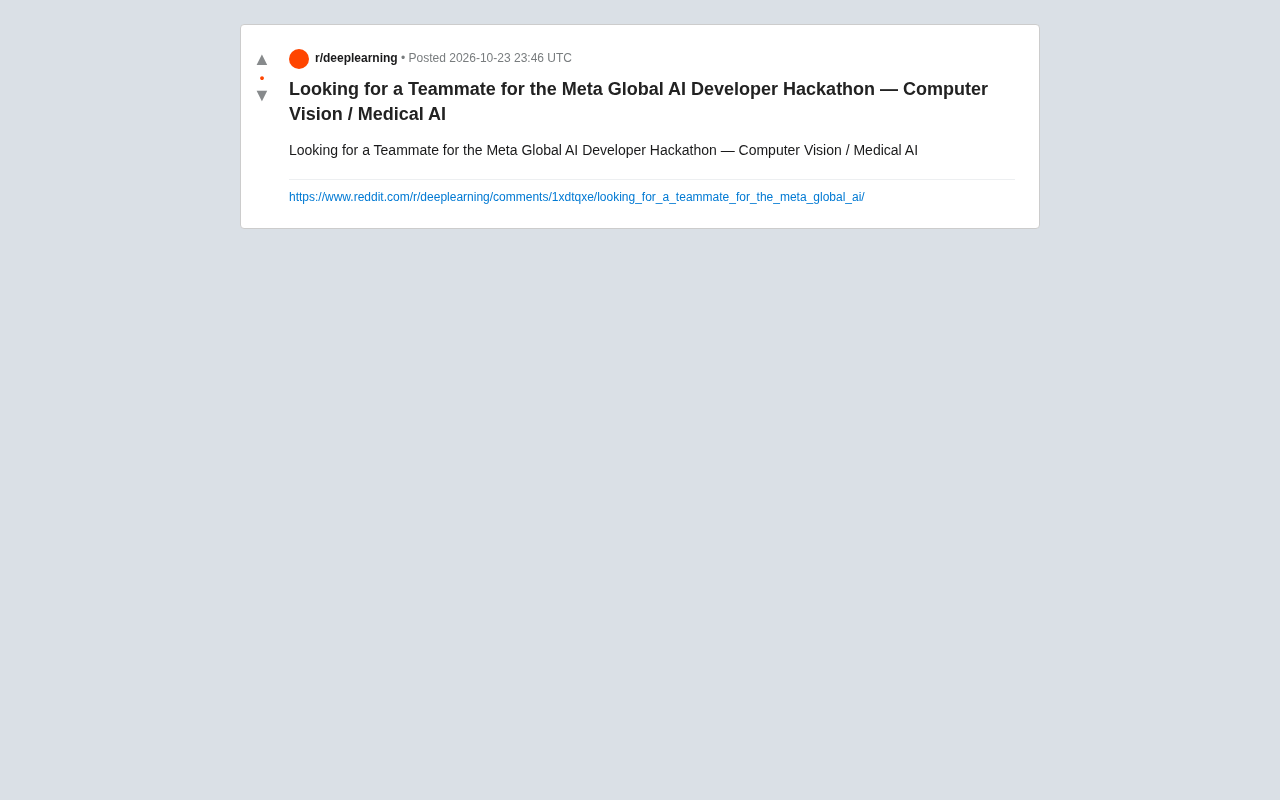
Teammate Wanted for Meta Global AI Developer Hackathon: Computer Vision & Medical AI
A Reddit developer seeks teammates for the Meta Global AI Developer Hackathon, focusing on computer vision and medical AI. This article analyzes the track logic, skills-complementarity needs, and topic selection strategy behind this teaming signal.
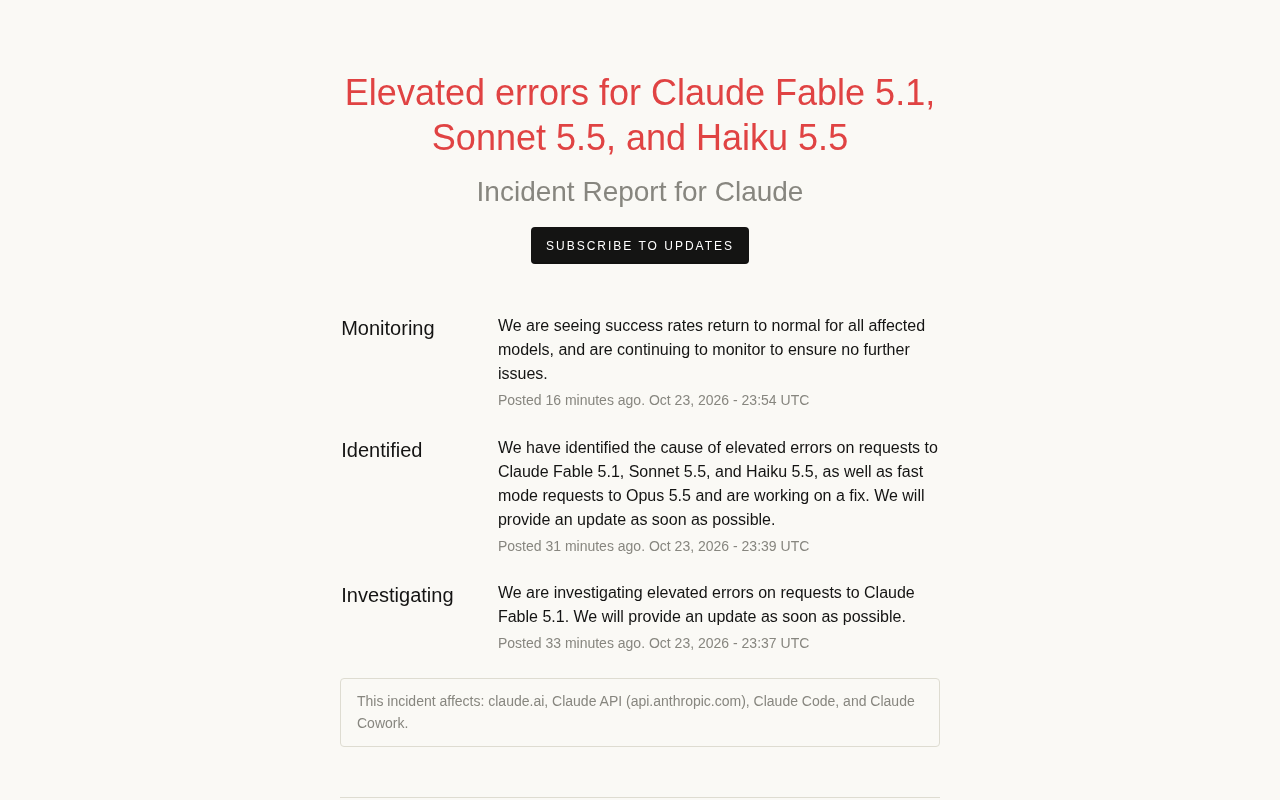
Multiple Claude Models Hit by Errors: A Postmortem of Fable 5.1, Sonnet 5.5, and Haiku 5.5
Claude Fable 5.1, Sonnet 5.5, Haiku 5.5, and Opus 5.5 fast mode saw elevated errors; Anthropic identified and resolved the issue in 17 minutes. This postmortem covers the timeline, the technical reasons for the multi-model cascading failure, and practical lessons for retry and degradation strategies.