@ai-sdk/zai 3.0.31 Patch Release: Dependency Chain Updates

@ai-sdk/zai 3.0.31 is a dependency-only patch release—low risk, routine maintenance.
The GitHub Actions bot released @ai-sdk/zai 3.0.31, a patch with only dependency updates to @ai-sdk/provider-utils@5.0.60 and @ai-sdk/openai-compatible@3.0.69—no new features, API changes, or breaking changes. This package is the Vercel AI SDK adapter layer connecting Zhipu AI models to the unified interface, built on openai-compatible. The author notes such pure dependency updates are common in SDK ecosystems, and staying current ensures version alignment and reduces compatibility issues. Developers can upgrade after testing, or wait for a minor/major version.
A Typical Patch Release
The GitHub Actions bot has published @ai-sdk/zai@3.0.31, a standard patch version (Patch Changes). According to the release notes, the core change is just one sentence: update dependencies.
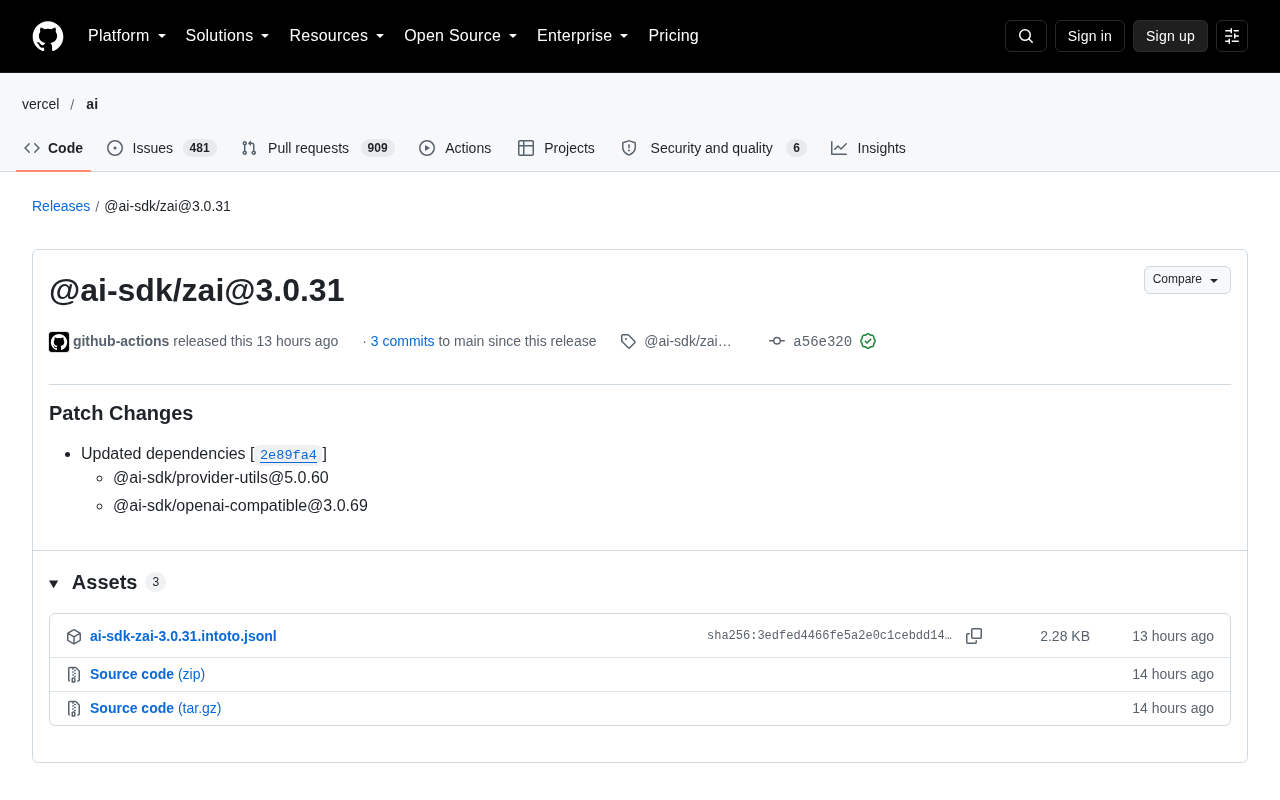
The two packages pulled in are @ai-sdk/provider-utils@5.0.60 and @ai-sdk/openai-compatible@3.0.69. No new features, no API changes, and no bug fix notes.
What This Package Does
@ai-sdk/zai belongs to the provider adapter layer in the Vercel AI SDK ecosystem, used to connect Zhipu AI's models to the unified AI SDK interface. In other words, if you're building an application with the Vercel AI SDK and want to call Zhipu's models, this package is the bridge.
Its version update pattern is also typical: the upstream provider-utils changes, then openai-compatible follows, and finally the zai adapter layer catches up. This kind of cascading dependency update is very common in SDK ecosystems.
The core design philosophy of the Vercel AI SDK is to decouple "model providers" from "application code." It defines a unified set of interfaces (such as generateText, streamText, generateObject, etc.), and the application layer only depends on these interfaces. The specifics of a given model vendor's HTTP request format, authentication method, and streaming response parsing are all handled by independent provider packages. The benefit of this architecture is that switching model providers usually only requires replacing one line of initialization code, rather than rewriting business logic. @ai-sdk/zai is one such provider package: it exposes model objects that conform to the AI SDK specification externally, and internally translates requests into a format Zhipu AI can recognize and parses the returned results. Similar packages in the ecosystem include @ai-sdk/anthropic, @ai-sdk/google, and others, which share the same abstraction, so their release cadences often move in tandem.
The Significance of Dependency Updates
A patch version that only updates dependencies may seem to carry very little information, but in the SDK ecosystem it's worth saying a few words about.
provider-utils is usually the carrier of low-level utility functions and type definitions, and its updates often mean certain compatibility fixes, type corrections, or small-scale behavioral adjustments. As a downstream adapter, zai needs to follow up to ensure consistency with upstream behavior.
openai-compatible is another signal. Zhipu AI's API is designed to be compatible with OpenAI's interface format, so @ai-sdk/zai is built on top of openai-compatible. Version changes in the latter may affect details such as request format and error handling.
For developers using this package, upgrading to 3.0.31 carries very low risk—there are no breaking changes, but it ensures that all parts of the dependency chain are version-aligned, reducing potential compatibility issues.
In the npm ecosystem, semantic versioning (SemVer) uses three numbers to define the nature of a change: the major version number indicates incompatible breaking changes, the minor version number indicates backward-compatible new features, and the patch number indicates backward-compatible bug fixes. 3.0.31 is an increment in the patch position, meaning the publisher promises that this change will not break existing usage patterns, which is why the article judges the upgrade risk to be very low. It's worth noting that the "backward compatible" promise of a patch version applies only to that package's own public API; when the content of a patch release is "update dependencies," the actual behavioral changes introduced depend on whether the upgraded dependencies honor the same promise. This is also why automated tools like Dependabot and Renovate typically auto-merge patch/minor upgrades when submitting dependency update PRs, while requiring manual review for major upgrades.
What Developers Should Pay Attention To
If you're pinned to @ai-sdk/zai in your project, whether to upgrade this type of patch version depends on your dependency management strategy. A conservative approach is to wait for the next minor or major version; if you want to keep dependencies fresh, just run your tests and upgrade.
The real thing to watch is the transitive relationship in the dependency chain: zai → openai-compatible → provider-utils. When there's a larger version jump upstream, the adapter layer may take longer to catch up. Conversely, if there's a security fix upstream, every package in this chain needs to be updated promptly.
This release doesn't come with much additional context, but judging from the version number cadence, the team is maintaining continuous dependency upkeep. For projects that depend on this package, this is routine maintenance and doesn't require excessive attention.
One-line Summary
@ai-sdk/zai 3.0.31 is a patch release that only updates dependencies—low risk, routine maintenance.
Paragraph Summary
The GitHub Actions bot has published the 3.0.31 patch version of @ai-sdk/zai, with the core change being only dependency updates involving @ai-sdk/provider-utils@5.0.60 and @ai-sdk/openai-compatible@3.0.69. There are no new features, API changes, or breaking changes. This package is the adapter layer in the Vercel AI SDK ecosystem that connects Zhipu AI models to the unified interface, built on top of openai-compatible. The author notes that this kind of pure dependency update is very common in SDK ecosystems; behavioral or type adjustments in the upstream provider-utils cascade down to the zai adapter layer, and following up ensures dependency chain version alignment and reduces compatibility issues. For developers, whether to upgrade depends on dependency management strategy—conservative users can wait for a minor/major version, while more aggressive users can upgrade after running tests. Overall, this is routine maintenance.
Related articles

M&M's Spent Millions Replacing Artificial Blue Dye — Why Is It So Hard?
Mars spent millions trying to replace artificial blue dye in M&M's with spirulina, but thick material clogs pipes and residue risks mold, forcing a full production-line rebuild. Here's the engineering behind the reformulation.
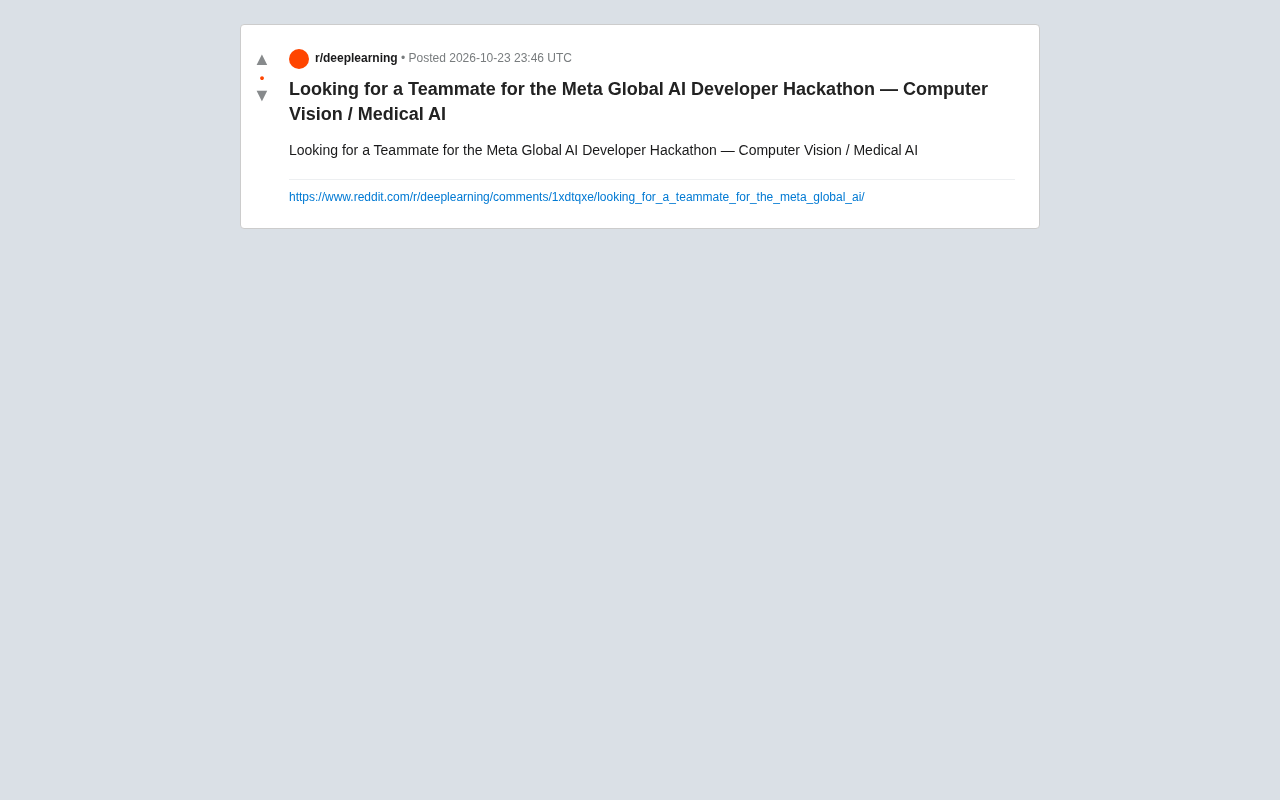
Teammate Wanted for Meta Global AI Developer Hackathon: Computer Vision & Medical AI
A Reddit developer seeks teammates for the Meta Global AI Developer Hackathon, focusing on computer vision and medical AI. This article analyzes the track logic, skills-complementarity needs, and topic selection strategy behind this teaming signal.
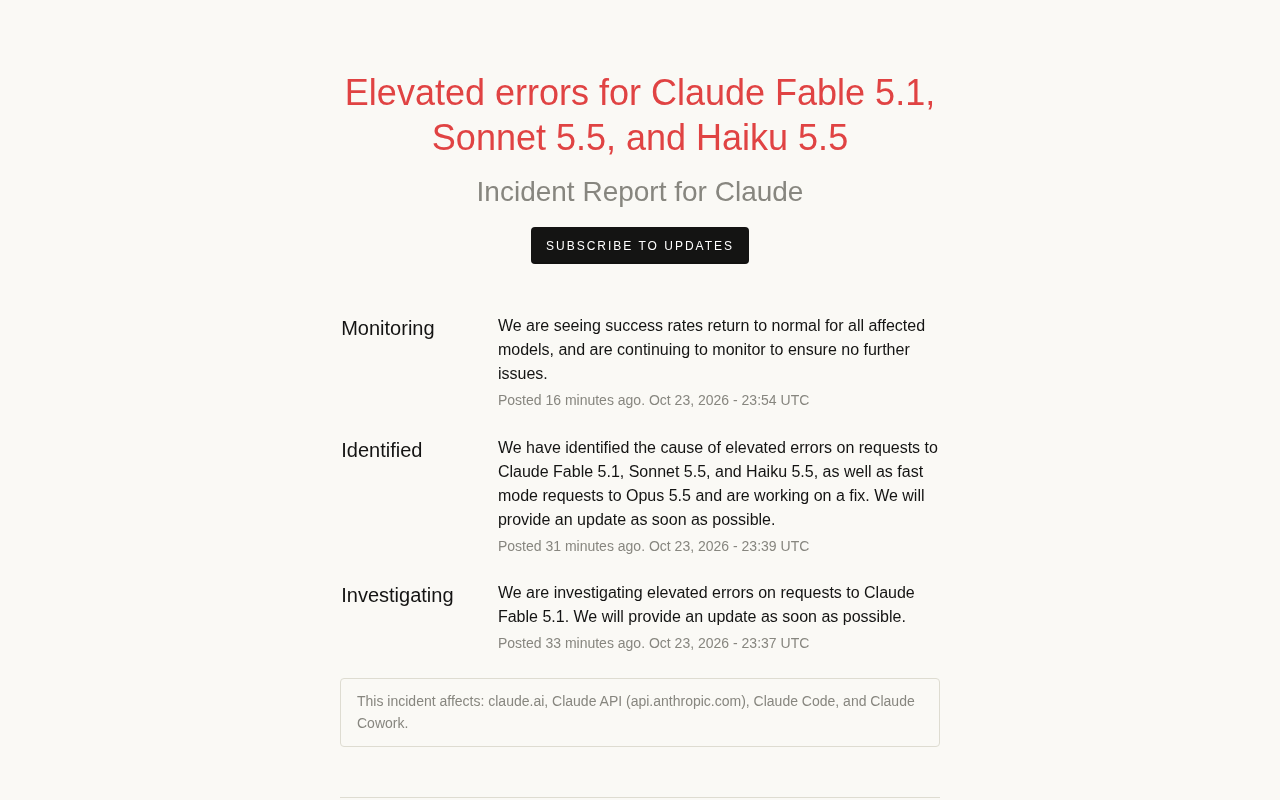
Multiple Claude Models Hit by Errors: A Postmortem of Fable 5.1, Sonnet 5.5, and Haiku 5.5
Claude Fable 5.1, Sonnet 5.5, Haiku 5.5, and Opus 5.5 fast mode saw elevated errors; Anthropic identified and resolved the issue in 17 minutes. This postmortem covers the timeline, the technical reasons for the multi-model cascading failure, and practical lessons for retry and degradation strategies.