AI Shakes the Math World: How Mathematicians Navigate the "Mathocalypse"
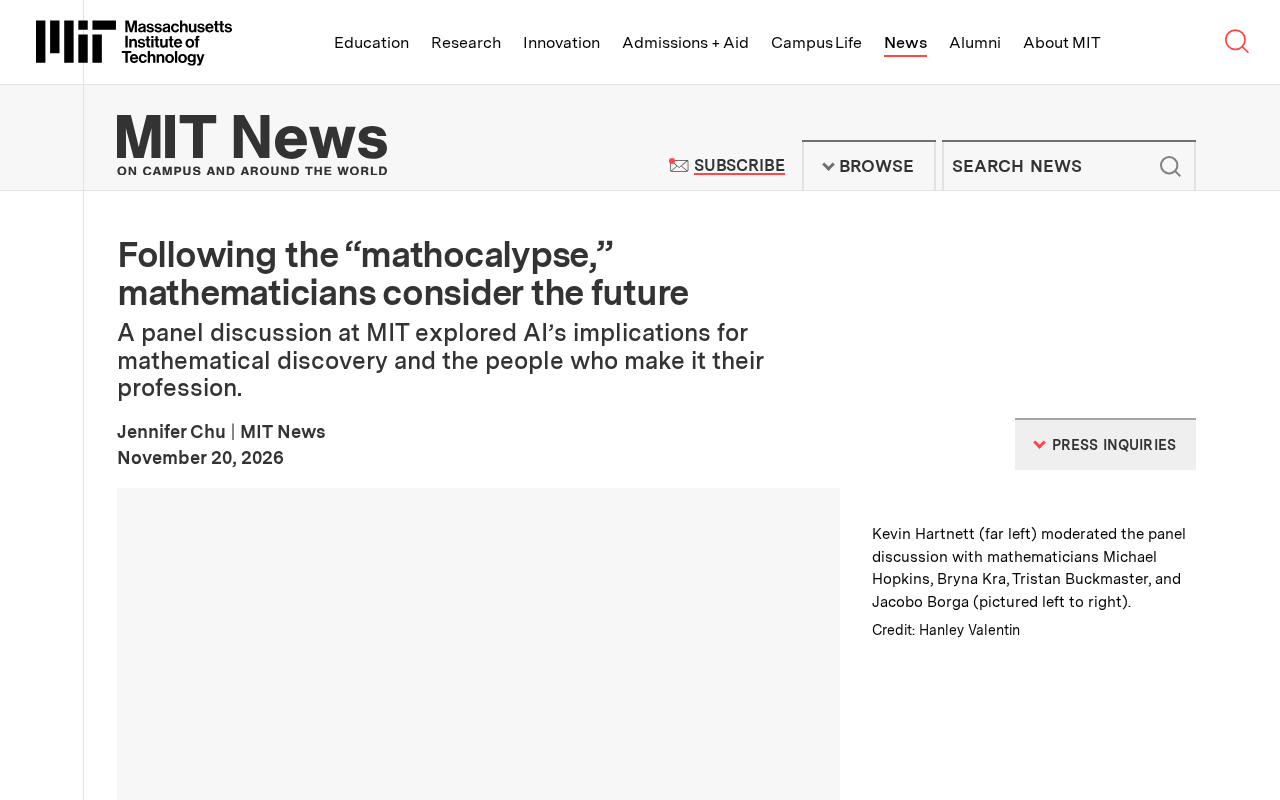
MIT symposium explores AI's impact on the mathematical profession, with mathematicians' value potentially shifting toward problem selection.
MIT recently hosted a symposium exploring the "mathocalypse"—AI's impact on mathematical discovery and practitioners. The focus is not whether AI can do math, but whether mathematics as a profession will be fundamentally changed when machines participate in or lead theorem discovery. AI is strong at searching for and verifying formal proofs but weak at posing valuable conjectures; this asymmetry means mathematicians' value will shift toward problem selection and direction judgment. Practice opportunities for young mathematicians may shrink, and graduate training and evaluation systems need redesign. The tone is not pessimistic, but sees the shock as a chance for self-examination and active participation in AI tool design.
When AI Starts Proving Theorems, Where Does Mathematicians' Anxiety Come From
A discussion dubbed the "mathocalypse" is spreading through the mathematical community. At a recent symposium hosted by MIT, mathematicians gathered to examine what artificial intelligence means for mathematical discovery and for those who practice mathematics. The focus was not merely "can AI do math," but a more personal question: when machines begin to participate in—or even lead—theorem discovery, will the shape of mathematics as a profession be fundamentally transformed?
This anxiety has a real basis. Over the past few years, advances in AI for symbolic reasoning and theorem-proving assistance have made parts of mathematics—long regarded as a stronghold of human intellect—show signs of becoming automatable. At the symposium, participants did not simply treat AI as a tool upgrade, but as an external force that could reshape the boundaries of the discipline.
Discovery and Proof: Which Part of Mathematics Is AI Changing
Mathematical work is often broken into two parts: proposing conjectures and completing proofs. The former relies on intuition and aesthetics; the latter on rigorous logic. AI's current performance across these two parts is asymmetric—it more readily demonstrates capability in searching for and verifying formal proofs, while remaining weak at "posing a good question." MIT's discussion centered on this asymmetry: if AI drastically lowers the cost of the proof stage, mathematicians' value will shift more toward problem selection and judging direction.
This also means the focus of mathematical training may need adjustment. The relative importance of pure calculation and derivation skills declines, while a holistic understanding of mathematical structures and a nose for valuable problems become scarcer abilities. Some at the symposium argued that AI will not replace mathematicians, but will redefine "what kind of mathematical work is important."
Formal proof refers to writing a mathematical proof completely in a computer-verifiable language (such as the Lean, Coq, and Isabelle proof assistants), so that every step of reasoning can be checked step by step by a machine. In contrast is the informal proof mathematicians use daily, relying on natural language and implicit consensus. The value of formal proof lies in absolute rigor and machine-checkability, but it has traditionally been extremely time-consuming. In recent years, AI has made progress in automatically searching for proof steps and filling proof gaps, significantly lowering the cost of formal proof. This is the technical backdrop to the discussion's claim that "AI lowers the cost of the proof stage": once proofs can be formalized at scale and verified by machines, the way mathematical knowledge is accumulated and reused will change.
"Posing a good question" in mathematics is often harder than solving it, because it relies on holistic intuition about the structure of the discipline, aesthetic judgment about what is worth studying, and sensitivity to cracks in existing theory. This ability is hard to codify into explicit rules, and it is precisely where current AI is weak. AI excels at large-scale search and verification under a given objective, but the choice of the objective itself—and judgments about the beauty and importance of a conjecture—still depend heavily on human mathematicians' experience and taste. The "value shift toward problem selection" emphasized in the discussion is based on this capability asymmetry: when proof becomes cheap, what is scarce is judgment about direction.
Profession and Education: Mathematicians Need to Reposition
For practitioners, the more direct impact lies in career paths. If AI can take on a large amount of technical derivation work, the "practice" tasks through which young mathematicians accumulate experience during their formative years may dwindle, posing a challenge to their skill development. Participants discussed how to design graduate training in an AI-assisted environment so that a new generation of mathematicians can use AI tools proficiently without losing independent judgment.
Another dimension raised was the evaluation system. The reputation of the mathematical community is built on the originality and difficulty of proofs; when AI can generate proofs, how to define contribution, how to assign authorship, and how to review all require new consensus. These questions have no ready answers, but the symposium made one thing clear: the mathematical community cannot wait until the shock fully arrives to begin responding.
Facing the "Mathocalypse": A More Rational Stance
The term "mathocalypse," with its apocalyptic overtones, reflects unease, but the tone of the MIT symposium was not pessimistic. Participants preferred to see the current stage as an opportunity for disciplinary self-examination: AI forces the mathematical community to answer more clearly—what is the unique value of mathematics?
Historically, the introduction of computational tools has repeatedly changed how mathematics is researched, yet has never made mathematics disappear. What is different this time is that AI intervenes in reasoning itself. The judgment conveyed by the symposium is that mathematicians need to actively participate in the design and evaluation of AI tools, rather than passively accepting external technical solutions. Only in this way can the discipline of mathematics absorb the efficiency gains brought by new technology while preserving its own standards.
One-line Summary
MIT symposium explores AI's impact on the shape of the mathematical profession, with mathematicians' value potentially shifting toward problem selection.
Paragraph Summary
MIT recently hosted a symposium examining, under the banner of the "mathocalypse," the impact of artificial intelligence on mathematical discovery and practitioners. The focus was not whether AI can do math, but whether the shape of mathematics as a profession will be fundamentally changed when machines participate in—or even lead—theorem discovery. The article notes that AI is relatively strong at searching for and verifying formal proofs but still weak at posing valuable conjectures; this asymmetry means mathematicians' value will shift more toward problem selection and judging direction. For practitioners, young mathematicians' practice opportunities may dwindle, and graduate training and evaluation systems need redesign. The symposium's tone was not pessimistic, but rather framed the shock as an opportunity for the mathematical community to examine itself and actively participate in the design of AI tools.
Related articles
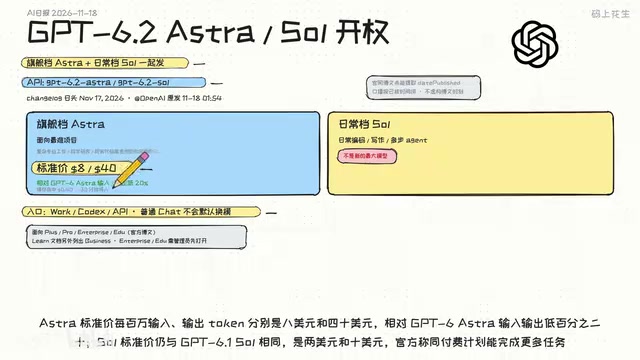
GPT-6.2 Dual-Model Launch, Qwen4-Max Goes GA, and Multiple API Updates
OpenAI launches GPT-6.2 Astra and Sol dual models, Alibaba Cloud's Qwen4-Max goes GA API, Anthropic tests linked billing, DeepSeek opens search API, plus Nov 25 offline reminders.

Why the A321XLR Accepts Higher Takeoff Weights on Ultra-Short Routes
Analyzing why airlines accept the Airbus A321XLR's higher takeoff weight even on ultra-short routes under an hour, from the perspectives of fleet commonality, RCT tank structure, and route network revenue.
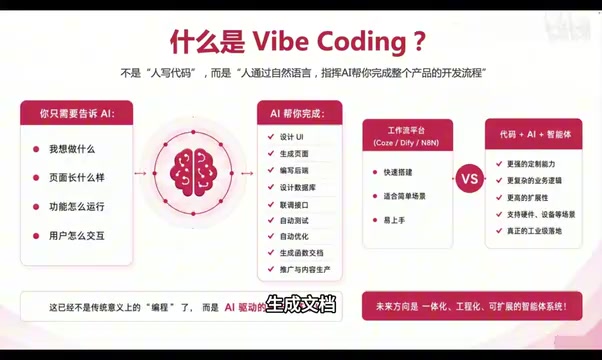
Vibe Coding Full-Stack in Practice: How One Person Builds a Commercial-Grade Product with AI
An analysis of the Bilibili course Vibe Coding Full-Stack in Practice: how one person uses AI to complete requirements analysis, frontend/backend development, MySQL databases, cloud deployment, multi-platform Mini Program execution, and AI-driven operations promotion—mastering one-person-company AI engineering product development.