AI Solo Companies: How One-Person Startups Are Achieving Million-Dollar Revenue

AI tools are enabling solo founders to build million-dollar companies without teams or venture capital.
The rise of AI tools—from LLMs and coding assistants to automation platforms—is enabling solo entrepreneurs to achieve million-dollar revenue with extreme profit margins. By leveraging composable SaaS infrastructure and AI-powered workflows, one person can now match the output of a small team. While this democratizes entrepreneurship globally, it also introduces risks like single points of failure and platform dependency.
A New Business Species Is Emerging
Throughout the history of tech entrepreneurship, building a million-dollar revenue company has typically meant assembling a team, renting an office, and managing a payroll. However, the explosive development of AI tools is rewriting this conventional wisdom. A recent hot topic on Hacker News—"The Rise of the Million-Dollar One-Person Company"—reveals an entirely new business model: solo-founder companies that operate independently yet achieve million-dollar revenue.
This isn't wishful thinking. With the maturation of large language models, automation tools, and SaaS infrastructure, individual developers and entrepreneurs now wield more leverage than at any point in history. Work that once required an entire team—from product development and customer support to marketing and financial management—can now largely be handled by AI or highly automated systems.
Notably, the maturation of SaaS infrastructure is the critical foundation enabling all of this. Over the past decade, Stripe solved payments, AWS and Vercel solved deployment and hosting, and Notion and Linear solved project management. These plug-and-play infrastructure services mean entrepreneurs don't need to build any underlying systems themselves—they simply combine various APIs like building blocks to create enterprise-grade product experiences. This "composable entrepreneurship" model has reduced startup costs from hundreds of thousands of dollars to a few hundred dollars per month in subscription fees—and this is precisely the economic prerequisite that makes one-person companies possible.
From "Unicorns" to "Lone Wolves": A New Solo Entrepreneurship Paradigm
If the buzzword of the past decade was the billion-dollar "unicorn," the keyword for the next decade might be the "lone wolf"—solo-operated, asset-light, high-margin micro-enterprises. The core of this model isn't about scaling up, but about leveraging minimal human capital to generate maximum value output.

How AI Is Reshaping the Possibilities of Solo Entrepreneurship
The ability of one-person companies to achieve million-dollar revenue is backed by the maturation and synergy of an entire AI toolchain. Understanding this is key to understanding why this trend is exploding right now.
Large Language Models: Far More Than Chatbots
The breakthrough of Large Language Models (LLMs) extends far beyond conversational interaction. Technologies represented by GPT-4, Claude, and similar models are essentially a form of general-purpose cognitive labor. They can understand context, generate structured outputs, and execute multi-step reasoning. When these capabilities are integrated into workflows via APIs, founders can delegate tasks like customer email classification and response, data analysis report generation, code review, and legal document drafting to AI. This isn't automation in the traditional sense—traditional automation could only handle repetitive tasks with clear rules, while LLMs can handle ambiguous, unstructured work that requires judgment. It's this qualitative shift in capability that fundamentally expands the scope of work a single person can cover.
Exponential Productivity Amplification
In the past, it was nearly impossible for a founder to simultaneously handle coding, design, content, and sales at a professional level. But today:
- AI coding assistants (like GitHub Copilot, Cursor) enable non-full-time engineers to rapidly build and iterate products;
- Content generation tools can batch-produce marketing copy, blog posts, and social media content;
- Customer service automation handles the vast majority of common inquiries through chatbots;
- No-code/low-code platforms lower the technical barriers to product development.
It's worth understanding the difference between GitHub Copilot and Cursor in depth—they represent two distinct philosophies of AI-assisted programming. Copilot embeds within editors as a code completion tool, primarily offering suggestions at the line and function level, ideal for accelerating the writing of known patterns. Cursor goes further—it's a complete IDE (Integrated Development Environment) designed with AI at its core, supporting contextual understanding of entire codebases, executing cross-file refactoring, generating complete feature modules from natural language descriptions, and even automatically debugging errors. For solo entrepreneurs, Cursor's "Agent Mode" is particularly crucial—it allows founders to describe requirements in product manager language while AI handles the engineering implementation, dramatically reducing the time and cognitive load from idea to prototype.
The compounding effect of these tools enables one person's output to rival that of a five-to-ten-person team. The key point is that these tools have extremely low marginal costs—most are monthly SaaS subscriptions, far cheaper than hiring full-time employees.
Profit Margins Are the True Moat of One-Person Companies
Interestingly, one-person companies often pursue not absolute revenue scale, but extreme profit margins. No employee salaries, no equity dilution, no cumbersome management hierarchies means that most revenue converts directly into the founder's income. A one-person company with million-dollar revenue and 80% profit margins may deliver more actual earnings to its founder than many higher-valued but continuously loss-making startups.
To truly understand this economic logic, consider the contrast with traditional VC-backed startup models. The latter typically follow a "burn money for growth first, then achieve profitability through scale" path, where founders may retain only 10-20% equity after multiple funding rounds. Even if a company reaches a $50 million valuation, the founder's paper wealth may be significantly reduced by terms like Liquidation Preference. Meanwhile, a one-person company with $1 million revenue and 80% margins delivers $800,000 in annual cash income directly to the founder—no exit event needed, no board to report to, and 100% decision-making authority. This "profitable by default" model was once labeled a "Lifestyle Business" in the Indie Hackers community, but as AI continuously raises the ceiling, this label is being redefined—it no longer means "small-time hustle" but rather a rational, high-return business choice.
Opportunities and Risks Behind One-Person Companies
Opportunity: AI Drives the Democratization of Entrepreneurship
The most profound significance of this trend lies in the "democratization of entrepreneurship." In the past, founding an impactful company required venture capital, team building, and substantial resources. Today, an individual with product thinking and execution ability can potentially build a substantial business with just a few hundred dollars in monthly tool subscriptions and their own time. This opens unprecedented windows for independent developers, designers, and content creators worldwide.
This democratization has particularly profound implications in the Global South. Previously, developers in India, Southeast Asia, Africa, and Latin America faced not only technical barriers but also geographic discrimination in accessing venture capital—the vast majority of VC funding is concentrated in Silicon Valley, New York, and a handful of tech hubs. The one-person company model completely bypasses the fundraising step: a developer in Nigeria can write code with Cursor, register a US company via Stripe Atlas, acquire global customers through Twitter/X, and collect multi-currency payments with Wise. The entire chain requires zero VC involvement. Trailblazers like Pieter Levels (@levelsio) have already proven that one person can build a million-dollar product portfolio from anywhere with WiFi—his products like NomadList and RemoteOK collectively generate millions in annual revenue, all operated by him alone.
Risk: Fragility and Sustainability Challenges
However, cooler heads in the discussion raise valid concerns. One-person companies are highly dependent on the founder as an individual—if the founder falls ill, burns out, or steps away, the business often cannot continue. This "single point of failure" structural risk is a vulnerability that team-based companies don't share.
Single Point of Failure is a classic concept in engineering—any single component failure in a system can cause total collapse. For one-person companies, this risk manifests across multiple dimensions: founder health risk (burnout occurs at far higher rates among solo entrepreneurs than team-based ones), platform dependency risk (a Google algorithm update could overnight destroy an SEO-dependent business), and tech stack risk (OpenAI suddenly changing API pricing or usage policies). Mature solo entrepreneurs typically mitigate these through: building diversified revenue streams rather than betting on a single product, keeping core logic on self-owned infrastructure to avoid platform lock-in, purchasing Keyman Insurance, and proactively designing stress tests around "can the business run automatically if I disappear for three months."
Additionally, over-reliance on third-party AI tools raises concerns: if a core tool raises prices, shuts down, or changes policies, the entire business chain could be impacted. Where the true moat lies is a question these companies must continuously contemplate. The answer likely is: the moat exists not at the tool layer, but in the founder's deep understanding of a specific niche market, the trust relationships built with users, and the speed of continuous iteration—these are elements of human judgment that AI cannot replace.
Conclusion: Scale Is No Longer the Only Answer
The rise of the "one-person million-dollar company" reflects a shift in values—from blindly pursuing growth and scale to pursuing efficiency, freedom, and sustainable cash flow. AI hasn't replaced entrepreneurs; it has dramatically expanded the capability boundaries of individuals.
For many people, rather than chasing fundraising, expanding teams, and bearing management pressure, it's better to build a small, beautiful, high-margin independent business. This may not produce the next trillion-dollar giant, but it's quietly reshaping how countless ordinary people define "successful entrepreneurship." With the leverage of AI, a "one-person army" is no longer a metaphor—it's becoming reality.
Related articles

Coze 3.0: From Beginner to Multi-Agent Collaboration — A Practical Guide
Coze 3.0 tutorial: covers AI Agent product categories, differences between Coze Studio, Dify, Claude Code, and more, plus multi-agent collaboration, skill store, and project management.

Who's Less Popular: Democrats or Republicans?
Who's less popular—Democrats or Republicans? An in-depth analysis of both parties' approval rating dilemmas, the Democrats' legislative quandary, and the political risks of government shutdown strategy, revealing the deeper logic of American political polarization.
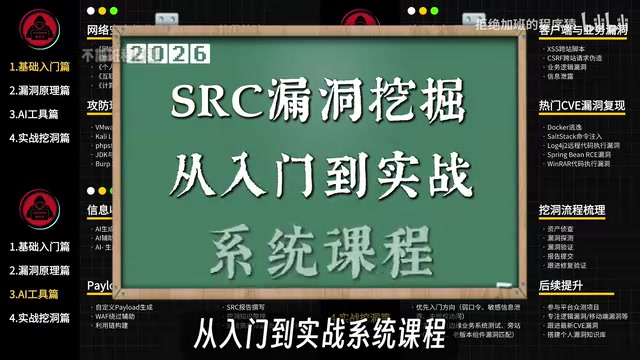
AI + Cybersecurity Beginner's Guide: From Zero to SRC Bug Bounty in Practice
A beginner-friendly AI + cybersecurity guide breaking down the core modules of an SRC bug bounty course: vulnerability principles, asset gathering, CVE reproduction, and AI tool practice.