AI Solves the 167-Year-Old Riemann Hypothesis? Formal Proof Sets the Math World Ablaze

Levent Alpoge, with Claude, released an approximately 17-million-line Lean library that formally verifies the Riemann Hypothesis; understanding its ideas still requires mathematicians.
Mathematician Levent Alpoge, working with Claude, formally proved the Riemann Hypothesis in roughly 17 million lines of Lean code; independent checkers confirmed the statement matches Mathlib, and the Lean/Mathlib teams certified it on November 21. The article explains how controlling the prime-count error bound constrains zero locations, and stresses that machine verification only settles correctness—grasping the ideas and transferable techniques still requires human mathematicians. The Clay Millennium Prize has a separate review timeline.
A Mathematical Revolution in a Downloadable File
For 167 years, the Riemann Hypothesis has remained unresolved. Now, a Lean library containing 17 million lines of code has passed independent verification, claiming to provide a machine-verifiable proof of the conjecture. Mathematician Levent Alpoge completed this work with the help of Claude and released the library on November 20. Independent checkers confirmed that what the code proves is precisely the mathematical statement people have been trying to prove since 1859.
This raises a deeper question: if a machine can verify every step, how do you find the idea that makes the whole proof work?
The Distance from Counting to the Conjecture
To understand what the machine verified, you need to shrink this mountain down to something you could sketch on the back of a receipt.
Start counting from 1: which numbers can be obtained by multiplying smaller integers? 6 equals 2 times 3, and 12 can be split in multiple ways. But 7 cannot—it is divisible only by 1 and itself. These are the primes: 2, 3, 5, 7, 11… the fundamental bricks that make up the numerical world.
Slide a marker along the number line and step up each time you hit a prime, and you have drawn the prime counting function. At 10 you have taken 4 steps, at 100 you have taken 25 steps, at 1000 you have taken 168 steps. Up close, the gaps between steps vary; zoom out, and the staircase settles into a recognizable rising shape. Mathematicians can draw a smooth estimate of that rising shape.
The gap between the exact staircase and the smooth estimate is the error term. The Riemann Hypothesis gives a tighter constraint on how that error grows.
The prime counting function (usually denoted π(x)) is defined as the number of primes not exceeding x. The article describes it with the metaphor of "sliding a marker along the number line"; the actual graph is a step function: each time x crosses a prime, the function value increases by 1. For example, π(10)=4 (2,3,5,7), π(100)=25, π(1000)=168. The Riemann Hypothesis is equivalent to giving an extremely tight constraint on the growth rate of the error term between π(x) and its smooth approximation (the logarithmic integral Li(x)): the error is roughly on the order of no more than √x log x. This error term is the central object of study in analytic number theory, and Riemann's 1859 paper was precisely the first to give an exact expression for π(x) using tools from complex analysis.
How the Prime Problem Becomes a Zero Problem
The famous formulation of the Riemann Hypothesis talks about where a different function takes the value zero. How does the problem of counting primes turn into the problem of finding zeros?
The answer begins with a function that accepts two coordinates—the zeta function. Real numbers let us move along one axis; complex numbers add a second coordinate. In a certain region, zeta can be written as a long series, with each term corresponding to a positive integer. In the same region, it can also be written as a product, with each prime corresponding to a factor. The sum and the product agree, and this bridge weaves the properties of zeta together with the primes.
The boundary of the "home" region for the sum and product is the vertical line through 1. Through analytic continuation, mathematicians define zeta on a broader map, except for a pole at the input 1. Then they look for inputs that make the output exactly zero; each such input is a zero.
Some zeros follow a simple pattern, located at negative two, negative four, negative six, and so on. The rest fall within a narrow strip. Mark the midline at 1/2, and this line extends vertically upward and downward. Riemann asked: does every zero within the narrow strip lie on this line? A single point off the line would overturn the entire conjecture.
Why would a single point on the map affect our understanding of the primes? Because there is a formula that directly connects the two. In the weighted count, the smooth trend receives corrections from each zero—each correction is like a wave whose size grows with the real coordinate. At 1/2, the size of the correction grows at the rate of a square root; place a hypothetical zero to the right, and its contribution grows faster.
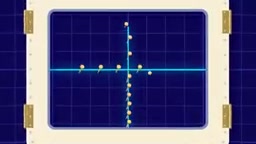
Analytic continuation is a fundamental technique in complex analysis: if a function is defined by a convergent series in some region, it can sometimes be uniquely extended to a larger region in a way that preserves the function's values on the original region. The zeta function is initially defined by the series ∑ n^{-s}, which converges only when the real part of s is greater than 1; but through analytic continuation, mathematicians define it on the entire complex plane (except for the pole at s=1). The extended zeta function has "trivial zeros" at the negative even integers, and all remaining zeros must lie within the critical strip 0<Re(s)<1. The Riemann Hypothesis asserts that the real part of all these nontrivial zeros is exactly 1/2. The uniqueness of analytic continuation guarantees that the properties of the extended function remain consistent with the prime information encoded in the original series—this is the rigorous foundation of the "bridge."
How Far Can Computers Verify
Computers can test this line: find the locations of the zeros and check whether they fall exactly at 1/2. Rigorous computation confirms that the first batch of zeros indeed lies on the line, and it can count the number of zeros within a region to prevent hidden zeros from slipping through.
In a landmark computation, researchers checked all zeros up to a height of about three trillion, covering roughly ten trillion zeros along the axis. But beyond a finite height, the map still extends upward. Checking more points only raises the ceiling of the investigation. The problem lies on the other side: suppose there is an exception millions of screens beyond the investigated range—what kind of argument could rule it out without finding its exact location? The answer must hold for all heights.
How AI Participates in the Proof
In November, a mathematician released a proof in a computer-checkable form. The download came from Levent Alpoge, working with Claude. The route they took returns to the error gap in the prime count. Alpoge described his own process of guiding the search and connecting ideas, and credited Claude with important technical progress in the final stage, including how many times a key operation needs to be repeated.
Return to the weighted count. The proof smooths it, attaches decreasing weights to the terms, and controls the deviation within an appropriate range of scales. The key estimate is an upper bound close to the square-root scale. To establish it, the proof repeatedly transfers the problem into larger mathematical spaces. One theorem converts this upper bound into a restriction on the locations of the zeros: a zero to the right of 1/2 would violate it. The zeros have mirror symmetry about the midline. If the right side is empty, the left side is empty too, leaving only the center.

Lean is an interactive theorem prover and also a programming language. Users write mathematical definitions, theorem statements, and proofs in Lean, and Lean's kernel (a very small trusted codebase) checks each proof step line by line for validity. Mathlib is a large-scale mathematics library built on Lean, containing a vast number of formalized results ranging from basic algebra to analysis. The scale of a formal proof can be enormous: a final theorem may depend on thousands of lemmas, each of which depends on more, forming a directed acyclic graph. Independent checkers matter because they implement the same logical rules in different code; if multiple implementations all accept the same proof, confidence in its correctness is extremely high. The certification by the Lean and Mathlib teams on November 21 means that the library's statement is exactly consistent with the definition of the Riemann Hypothesis in Mathlib, and that the entire dependency network passed the kernel check.
Verification Details and Independent Checks
What was released is a Lean library. Lean is a proof assistant that checks whether a conclusion follows from definitions, axioms, and accepted rules. In a formal proof, the computer checks the links at every step. A small core—the kernel—performs the verification. This library is about 17 million lines, and the final theorem depends on a vast network of earlier results, every link of which must pass the check.
There is another problem: a flawless argument might prove a different statement than the one you want. What exactly does this formal theorem say? The target is the Riemann Hypothesis as defined in Mathlib. Independent comparison tools checked whether Alpoge's theorem is stated in exactly the same way. Reviewers also checked what the code depends on: the library depends directly on Mathlib, and the verification traced the foundational axioms of the proof. Compiling the library checks whether Lean can build it. Then, independent tools extract the exported proof and verify it logical step by logical step. Lean's own kernel and other independent checkers check that export. Their consensus matters because different implementations must reach the same conclusion about the proof.
On November 21, the Lean and Mathlib teams certified the statement and the proof. This answers the question of correctness, but it opens up the question of understanding.
After Machine Verification, Where Does Understanding Come From
Imagine adding odd numbers one by one: 1, then 1 plus 3, then 1 plus 5, then 1 plus 7. The sums are 1, 4, 9, 16. If you draw them as squares, the idea emerges: start with a square, add three at the corner, then add five at the next corner. Add a row and a column of the old length, then place the new corner—that is twice the old side length plus one, and each time you get the next odd number. A checker can verify the steps, but the picture gives you an idea you can carry into the next problem.
Mathematicians have already extracted some ideas from the Riemann proof. As these ideas become clearer, they can ask which ones can be used elsewhere. This is precisely how explanation makes knowledge useful: it turns a solved problem into a set of ideas that others can use.

The Riemann Hypothesis also comes with a one-million-dollar Clay Mathematics Institute Millennium Prize, which has a separate review process. Clay's rules require publication in a qualifying venue, a wait of at least two years after publication, and general acceptance by the broader mathematical community. Verification and prize decisions follow different timelines. Mathematicians can study the proof and discuss how it works while the process is underway.
The Clay Mathematics Institute Millennium Prize was established in 2000, offering one million dollars for the solution of seven mathematical problems, of which the Riemann Hypothesis is one. The rules require that the proof be published in a peer-reviewed mathematics journal, undergo at least two years of broad scrutiny after publication, and be confirmed by a special committee appointed by the Clay Institute. This process is independent of formal verification: the Lean library passing the kernel check only means that "the proof is valid within the formal system," and does not automatically satisfy the requirements of journal publication and community acceptance. The two timelines differ, so mathematicians can study, discuss, and even teach the proof while the prize review is in progress. Historically, Wiles's proof of Fermat's Last Theorem went through a similar publication and review process.
Next Steps: From Verification to Understanding
On the table is a checked proof. The next chapter will be measured by the questions people can now begin to ask. A useful next step is to review the ideas in the proof that go beyond this theorem—some may be surprisingly old. Mathematicians might write a shorter, teachable version. They can also ask whether the techniques in this proof can be transferred to related problems.
This collaboration offers researchers a testable workflow: a model can search for routes through a problem, and a proof checker can check the resulting argument. Here, humans choose the target, maintain the formal definitions, and check whether the result solves the original problem. At this scale, these choices become especially visible. The open question is where this approach works reliably. Each new result gives mathematicians another opportunity to test its scope and discover its limits.
Return to 2 on the number line. A glance tells you it is prime. The larger patterns took centuries of work to reach. Now follow the staircase again. The small steps are still there. What has changed is what we can say about the gaps, even far beyond this framework. Reaching this point required a human question, an AI collaborator, and a mathematical machine built long before either of them began working.
That download contains a great deal of history, and it also leaves us a task: pick a fragment of the argument, trace it back to the problem, and ask why this fragment fits. The next proof might come with its own explanation, or people might have to write the explanation afterward. If you can verify that an answer is correct, what else do you need before you feel you understand it?
One-line Summary
Levent Alpoge, working with Claude, released an approximately 17-million-line Lean library that formally verifies the Riemann Hypothesis, but mathematicians still need to distill the ideas behind the proof.
Paragraph Summary
The article reports that mathematician Levent Alpoge, working with Claude, formally proved the Riemann Hypothesis as approximately 17 million lines of Lean code. Independent checkers confirmed that its statement matches the Mathlib definition, and the Lean and Mathlib teams certified it on November 21. Starting from the prime counting function and the zeros of the zeta function, the article explains how the proof constrains the locations of the zeros by controlling an upper bound on the error in the prime count, and, together with mirror symmetry, deduces that all nontrivial zeros lie on the 1/2 line. It also emphasizes that machine verification only settles the question of correctness; understanding the ideas behind the proof and extracting transferable techniques still requires human mathematicians. The Clay Millennium Prize has a separate review process with a timeline different from that of formal verification.
Related articles
AI Cracks the Riemann Hypothesis? The Million-Dollar Prize Battle
The Riemann Hypothesis million-dollar prize sparks a debate over scientific discovery in the AI era: Levent Alpoj's Claude-assisted 17-million-line Lean proof passes independent verification, while the manual draft still has errors. The Clay Institute's rules do not explicitly ban AI, but the gap between verifiability and understandability has become the core controversy.
AI and Humans Team Up to Crack the Riemann Hypothesis? The Truth Behind a 167-Year-Old Math Problem
The Riemann Hypothesis remains unsolved, yet rumors claim AI and humans have proven it. This article examines the conjecture, the AI rumors, and what a real proof requires.
AI Joins Forces with Mathematicians to Crack the Riemann Hypothesis? A 167-Year-Old Puzzle Reaches a Critical Turning Point
Anthropic mathematician Levent Alpoge collaborated with Claude for about six weeks to produce an AI-assisted proof of the Riemann Hypothesis, verified by the Lean formalization community. This article analyzes the relationship between the Riemann zeta function and prime distribution, the significance of formal verification, and the mathematical community's excitement and anxiety over machine-generated proofs.