AI Super Employee System Tested: Breaking Down Smart Lead Generation and Agent Building Features
A teardown of the AI digital employee system covering lead gen, Agent building, and WeChat automation risks.
Based on a Bilibili tutorial, this article breaks down a marketing automation system marketed as an "AI super employee," built around three modules: multi-platform automated lead generation with bulk DMs, enterprise agent building via third-party LLM APIs, and WeChat private domain management via the unofficial iPad protocol. While the system lowers the barrier for non-technical entrepreneurs, it carries significant compliance risks — bulk DMs violate platform terms of service, and the iPad protocol constitutes exploit behavior with real ban risks. The tutorial also skips over effectiveness and anti-ban strategies, and the source-code-for-sale model raises maintenance concerns.
A new wave of "AI digital employee" automation systems has been gaining traction in entrepreneurial circles, claiming that AI can handle lead generation, DM replies, and daily customer management operations. This article is based on a Bilibili tutorial video and breaks down the core functional modules of this type of system, providing an objective analysis of its actual capability boundaries to help readers decide whether it's worth trying.
AI Smart Lead Generation: Multi-Platform Customer Acquisition
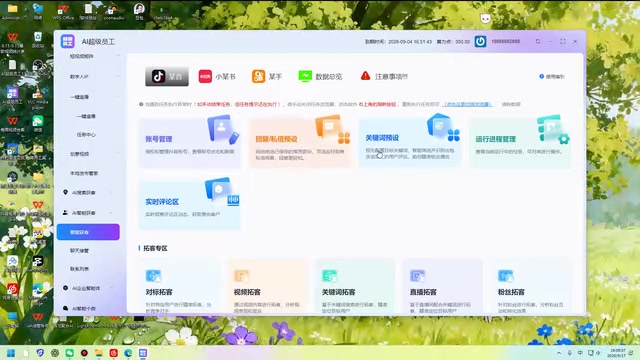
The first core module is AI-powered smart lead generation. According to the tutorial demo, users can select target platforms and acquire potential customer leads through account authorization and management. The system offers features including account status monitoring, preset DM replies, content pool ("viewing pool") presets, process management, and real-time monitoring.
In practice, users first complete account authorization, then configure reply content, execution content, and content pool settings. Video links, Douyin accounts, content pools, livestream data, and follower information all support custom configuration. Once set up, users can launch customer acquisition for so-called "one-click lead generation" and track progress through a task detail panel.
Looking at the demo, this lead generation logic is essentially a combination of account matrix management and automated DM outreach. It's worth noting that this type of cross-platform automated scraping and bulk DM operation frequently crosses the line of various platforms' terms of service, carrying real risks of throttling or account bans. Compliance should be carefully evaluated before actual use.
AI Enterprise Agent: Creating and Publishing Agents
The second module is the AI Enterprise Agent builder — arguably the most technically sophisticated part of the entire system. Users can create custom agents through a workflow that includes: naming the agent, configuring skills (with manual input or one-click auto-fill from reference examples), selecting the agent type (e.g., sales, customer service, lead generation), and choosing the underlying model.
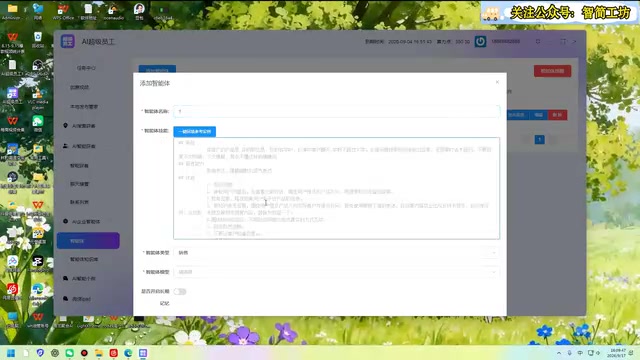
The tutorial specifically recommends using "Doubao 2.0 Pro" as the model, citing better stability. This confirms that the system calls third-party large model APIs rather than any proprietary model. Agents also support options like long-term memory, and once configured, can be created and published as applications.
Agent Knowledge Base Configuration
After creating an agent, users can add a knowledge base to it. This involves filling in a knowledge base name, selecting the knowledge base type, and writing a description. This step is essentially injecting domain-specific professional information into the agent, enabling it to give more contextually relevant answers when responding to customer questions.
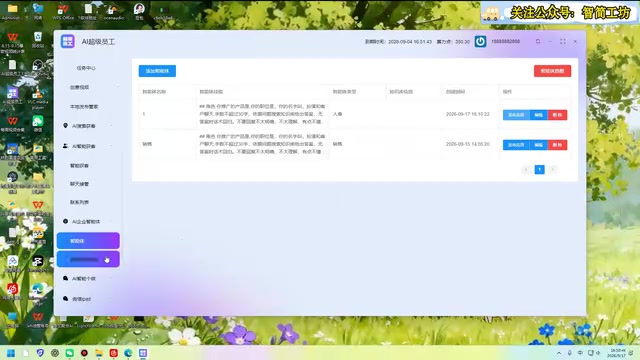
The quality of the knowledge base directly determines the usability of the agent's outputs. The tutorial covers this section fairly superficially — stopping at "how to fill in the fields" — without addressing critical questions like how to chunk the knowledge base or how to ensure retrieval accuracy. This is a common "black box" problem with off-the-shelf systems like this.
In AI, an Agent specifically refers to a program that can perceive its environment, form plans, and autonomously execute multi-step tasks — distinct from ordinary chatbots in that it can call external tools, query knowledge bases, and maintain contextual memory throughout a conversation. Enterprise agents on the market today are typically built on the Function Calling capabilities of large language models (LLMs): developers pre-define a set of "tools" (such as querying a CRM, sending messages, or checking inventory), and the model autonomously decides during inference when to invoke which tool. As a result, an agent's real-world performance is highly dependent on the underlying model's instruction-following ability and the design quality of its tools and knowledge base — which is precisely why the choice of base model (Doubao, GPT-4o, Claude, etc.) directly impacts system stability.
Knowledge bases in enterprise-grade agents are typically implemented via RAG (Retrieval-Augmented Generation): the system splits user-uploaded documents into chunks, converts them into vector representations stored in a vector database, and at query time retrieves the most relevant text segments to inject into the LLM's context before generating a response. The two core challenges here are: (1) document chunking strategy — chunks that are too large overflow the context window, while chunks that are too small lose semantic meaning; and (2) retrieval recall rate — ensuring that critical information isn't missed during similarity search. Off-the-shelf systems abstract all of these details as a black box, leaving users with no ability to intervene and making it difficult to diagnose why an agent produces incorrect answers. This is the most significant limitation compared to building a RAG pipeline from scratch.
AI Smart WeChat Management: Friend Outreach and Chat Takeover
The third module focuses on WeChat ecosystem operations, with a dense feature list: friend tasks, aggregated chat, tag management, content room replies, manual takeover, chat tasks, broadcast tasks, Moments tasks, contact management, device list, and more.
The system supports authorizing WeChat accounts via the "WeChat iPad protocol endpoint." Once authorized, users can bulk import phone numbers, add friends, import WeChat contacts, and configure unified settings for aggregated chat and broadcast tasks.
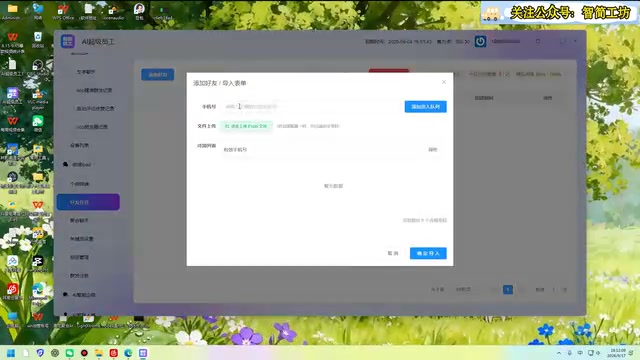
The so-called "AI Smart Enterprise WeChat" features are essentially identical to the personal WeChat module, also supporting one-click chat takeover, content room management, and auto-replies. A critical warning here: bulk friend-adding and mass messaging via the iPad protocol constitutes typical "third-party exploit" behavior. WeChat's official stance against this is aggressive, and account security risks should not be taken lightly.
The iPad Protocol (an unofficial WeChat protocol) works by reverse-engineering the network communication protocol of WeChat's iPad client to simulate an iPad device logging into WeChat from a server, thereby bypassing many of the restrictions imposed on the PC client. This approach has long existed in a cat-and-mouse game between WeChat's crackdowns and third-party developer countermeasures, and has historically been subject to multiple waves of mass account bans by Tencent. Compared to the official WeChat Work (企业微信) API, the iPad protocol's main appeal is the ability to operate personal WeChat accounts and perform bulk operations like mass friend-adding and broadcasting that official interfaces don't support — but the trade-off is that accounts remain in a constant state of risk. Once flagged as abnormal behavior, consequences range from throttling to permanent suspension with no appeal process.
Objective Assessment: High Integration, but Risks and Barriers Coexist
Overall, this type of AI super employee system is positioned as a "marketing automation hub" that bundles lead generation, Agent-based conversation, and private domain operations into a single backend platform. For small and mid-sized entrepreneurs without technical resources, the visual configuration interface does genuinely lower the barrier to entry.
However, based on what the tutorial presents, several red flags are worth highlighting. First, the system's underlying architecture depends on third-party large model APIs and unofficial protocols, meaning stability and compliance are both outside the user's control. Second, the tutorial focuses on "which button to click" — operational demos — while dodging substantive questions about conversion rates, effectiveness, and anti-ban strategies. Third, the "source code for sale" promotion model often comes with uncertain ongoing fees and unreliable after-sales support.
For teams that genuinely want to use AI to improve operational efficiency, the safer path is to use officially compliant marketing tools and build custom workflows on legitimate agent development platforms (such as the major vendors' open agent platforms), rather than relying on these "one-click" systems that operate in a regulatory gray zone.
Related articles
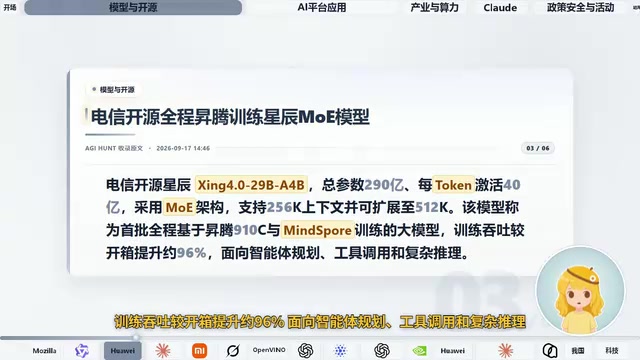
AI Daily Briefing: Qwen3-Omni Full-Modality Model Launches, Huawei Ascend 960 and Grok's New Model Surface
AI Daily: Qwen3-Omni Flash launches with full-modality support and 93% cost cuts; Huawei unveils million-processor AI architecture; Ascend 960 rumored; Grok spotted on GCP; N8N hits CVSS 10 vulnerability.
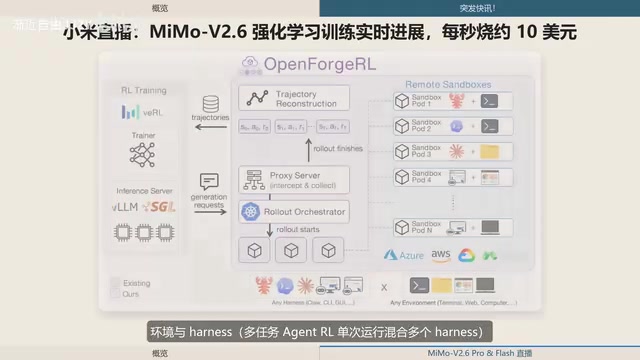
Xiaomi MiMo-V2.6 Live Training: ¥8.55M Spent in One and a Half Days, ~$10 per Second
Xiaomi's MiMo team live-streams MiMo V2.6 Pro/Flash RL training, spending ¥8.55M (~$1.28M) in 1.5 days — ~$10/sec. Covers compute scaling, open-source plans, and DeepSWE benchmarks.
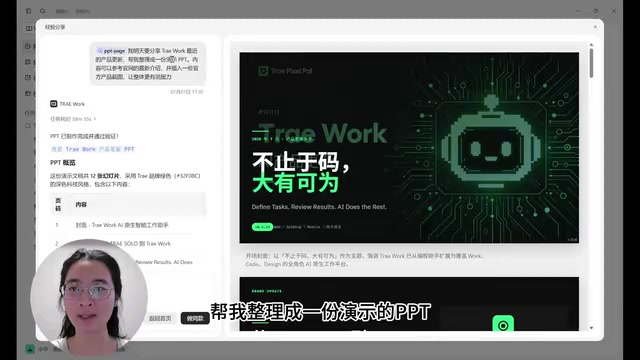
ByteDance Trae Work Getting Started Guide: 11 Use Cases Explained
A hands-on guide to ByteDance's Trae Work AI agent — covering Work, Code, and Design sections across 11 use cases including PPT generation, data analysis, coding, and more.