AI Weekly Digest: GPT-6 Dual-Model Price Cuts, Atlas Enters the Factory, Qwen-Image 2.1 Open Weights

This week's AI headlines center on cost reduction and real-world deployment across models, robotics, and hardware.
This week's AI industry news reflects two dominant themes: cutting costs and moving into real-world applications. OpenAI released GPT-6 Sol/Luna with lower API pricing; Anthropic's Claude Opus 5.5 costs ~40% less than Opus 5; Xiaomi's MiMo V2.6 introduced tiered pricing by task type. Alibaba open-sourced Qwen-Image 2.1 weights with transparency layer support (Qwen Research License — check commercial terms). Boston Dynamics' Atlas began training on parts logistics in a Hyundai plant, while NVIDIA released the Isaac ROS 5.0 dev framework. Alibaba's Yunqi Conference showcased the Qwen Book agent PC plus AI glasses and earbuds. Still on the roadmap: T-Head's PPU chip (mass production Q1 2027) and Qwen 4 (still in training).
A busy week for AI across large language models, robotics, and hardware — even over the Mid-Autumn holiday. From iterative model releases and price cuts at OpenAI and Anthropic, to Boston Dynamics' Atlas stepping into an auto plant and Alibaba dropping open weights alongside new hardware, the industry's center of gravity is shifting from "can it chat?" toward "can it cut costs?" and "does it work in the real world?" Here's a rundown of the week's most noteworthy developments.
Large Models: Stronger vs. Cheaper — Two Competing Narratives
OpenAI released two new GPT-6 variants this week — Sol and Luna — now live in ChatGPT, Codex, and the API. Both are positioned around speed and cost efficiency, with API pricing coming in below the previous generation's promotional rates. In other words, OpenAI isn't simply chasing benchmark scores this time; the pitch is "affordable and capable," making high-frequency API usage more accessible for developers.
Anthropic, meanwhile, launched Claude Opus 5.5, targeting long-horizon tasks and coding. The company claims it matches the previous flagship on most workloads while costing roughly 40% less than Opus 5. Both companies are telling the same story — more capable, less expensive — though it's worth keeping in mind that performance comparisons always come with their own test conditions. Picking a model still comes down to running it against your actual tasks, not reading the official benchmark charts.
On the domestic side, Xiaomi released the MiMo V2.6 series: a flagship reasoning variant (Pro), a high-frequency task variant (Flash), and a latency-optimized variant (Pro Ultra Speed). All three are positioned as full-multimodal models covering complex projects, large-scale inference, and real-time interaction respectively. This "tiered by task and cost" product strategy is fast becoming the standard playbook for Chinese model providers.
Alibaba also updated Qwen 3.8 Omni Flash with support for long audio/video understanding and tool calling, now available on its AI platform — though there's no announcement of open weights. The company confirmed that a larger follow-on Qwen 4 model is still in training, a roadmap item rather than a delivery.
Image Generation: Qwen-Image 2.1 Open Weights, Transparency Layer Support
Alibaba released model weights for Qwen-Image 2.1, combining image generation and editing in a single model with support for transparent backgrounds and multi-reference-image local edits. For anyone making posters, e-commerce visuals, or video assets, the most practical feature is the transparency layer — no more manual cutouts, just output assets with transparent backgrounds directly.

One thing to flag: the model card lists the Qwen Research License. Read that license carefully before use, especially for commercial applications. Open weights don't mean unrestricted use — the scope of the license is usually what determines whether a deployment is actually viable.
"Open weights" and "open source" are two distinct concepts in AI, though they're often conflated. Open source typically means training code, datasets, and model weights are all publicly available and freely modifiable and redistributable. Open weights means only the model parameter files are downloadable — training data and full code may not be disclosed, and usage terms often restrict commercial use, derivative model releases, or specific industry applications. The Qwen Research License is a custom license Alibaba designed for research contexts, generally permitting academic and non-commercial use while requiring a separate authorization for commercial deployment. When building products on open-weight models, always distinguish between "technically runnable" and "legally permitted."
Robotics: Atlas Enters the Factory, Moving from Stage to Shop Floor
Boston Dynamics activated an Atlas robot training center at a Hyundai Motor manufacturing facility in the US. Current training covers parts logistics, sorting, and placement — the goal is to familiarize the robot with real factory conditions, not to hand over an entire assembly line. The company also outlined plans for future expanded deployment and increased production capacity.
The significance here is that humanoid robots are beginning to move from flashy demo videos into actual factory tasks. The next hurdle is achieving stable, repeatable motion — which is precisely the hardest distance to cross between a demo and mass production.
NVIDIA this week released Isaac ROS 5.0, adding agentic workflows and new platform support for robot development. To be clear: it's a developer toolkit, not a new robot. Its value lies in lowering the barrier to building robotics applications.
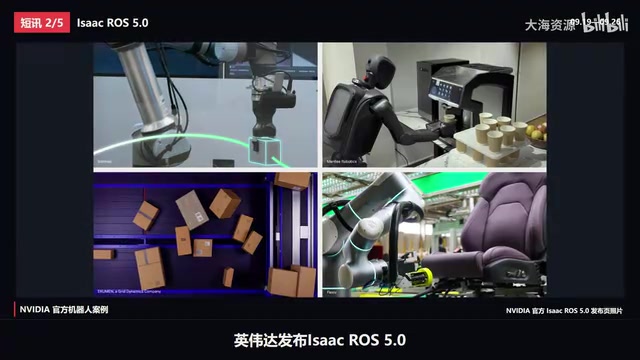
Isaac ROS (Robot Operating System) is NVIDIA's robotics software framework built on ROS 2, designed for GPU-accelerated perception, localization, and motion planning. The "agentic workflows" added in version 5.0 mean robots can now leverage task decomposition and planning capabilities similar to large-model agents, breaking down high-level instructions into concrete action sequences. The key difference from traditional robot programming: engineers previously had to hard-code rules for every task type; now the framework supports more flexible, goal-directed behavior at the architecture level. For robotics companies, the maturity of the development toolchain often determines how quickly hardware can reach production — and that speed depends heavily on how well the software layer abstracts away complexity.
AI Hardware and Devices: From Chat Windows to Wearables
Alibaba unveiled the Qwen Book agent computer at the Yunqi Conference, alongside new AI glasses, earbuds, and a recording device. Qwen Book aims to stitch together models, OS, and applications so users can locate files and edit presentations by voice; the glasses and earbuds target first-person-view recognition, translation, and on-the-go note-taking. Some devices are now available for pre-order, though retail availability dates vary.

What's genuinely worth noting in this hardware push is that AI is migrating out of the chat window and into PCs and wearables — the interaction paradigm is changing, and models are no longer confined to a dialogue box.
Alibaba also launched Qwen Intelligence for smartphone OEMs, with Honor as the first partner; related new devices are planned for a later announcement and are not yet on sale. Google added a real-time animated avatar to Gemini 3.8 Live — capable of displaying facial expressions and lip sync while speaking — available as a custom avatar in Gemini Enterprise (enterprise whitelist required). Qwen also updated its real-time simultaneous interpretation model with speaker diarization and synchronized bilingual display, with the company citing an average latency reduction from 2.8 seconds to 2.3 seconds.
Compute and Frontier Research: Chips Unveiled, Models Still on the Roadmap
Alibaba's chip division T-Head (平头哥) unveiled the PPU (Zhen 5V900) training and inference chip, with the company claiming performance three times that of the previous generation. Mass production and commercial sales are targeted for Q1 2027. This announcement is about future investment, not delivered product — the chip has been shown; commercialization takes time.
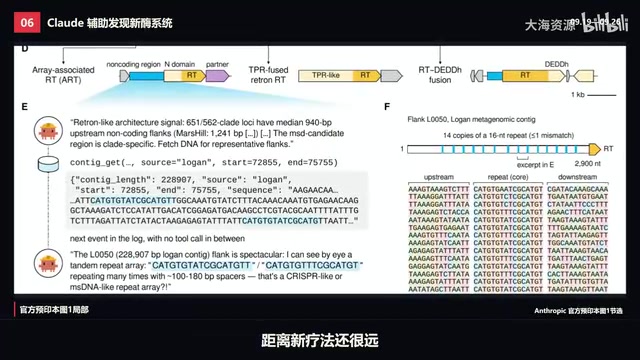
On the frontier research front, Anthropic published a life sciences result: Claude identified a new defense system with repeat sequences in large-scale DNA data, which human scientists then analyzed experimentally. The system resembles CRISPR-related mechanisms structurally, though its specific function remains unclear.
The real value of this work is that AI can help researchers sift through massive databases to surface candidates worth validating — but it's a long way from a new therapy. What it offers is a research lead, not a conclusion.
The "new defense system with repeat sequences" that Anthropic identified points to the broader research field of defense mechanisms in prokaryotes (bacteria and archaea). CRISPR was itself originally discovered as a bacterial immune system — bacteria use it to recognize and cut DNA from previously encountered viruses. Researchers have long scanned large genomic databases for sequences with similar periodic repeat structures, which often hint at systematic biological functions. AI's role here is analogous to "large-scale text retrieval plus pattern recognition": flagging statistically significant candidates in sequence volumes that would be impractical for humans to review manually, then passing them to wet lab experiments for functional validation. Going from candidate target to usable tool typically requires years of mechanistic characterization and functional verification.
Takeaway
The keywords for this week are "cost reduction" and "real-world deployment": models competing on price, image generation opening weights, robots training in factories, AI moving into wearable hardware, while chips and frontier models continue advancing along their respective roadmaps. For practitioners, the most useful stance isn't to be swept along by "stronger and cheaper" marketing — it's to evaluate against your own tasks and read the license terms carefully. That's the clearest head to keep amid this week's wave of announcements.
Related articles

M&M's Spent Millions Replacing Artificial Blue Dye — Why Is It So Hard?
Mars spent millions trying to replace artificial blue dye in M&M's with spirulina, but thick material clogs pipes and residue risks mold, forcing a full production-line rebuild. Here's the engineering behind the reformulation.
Teammate Wanted for Meta Global AI Developer Hackathon: Computer Vision & Medical AI
A Reddit developer seeks teammates for the Meta Global AI Developer Hackathon, focusing on computer vision and medical AI. This article analyzes the track logic, skills-complementarity needs, and topic selection strategy behind this teaming signal.
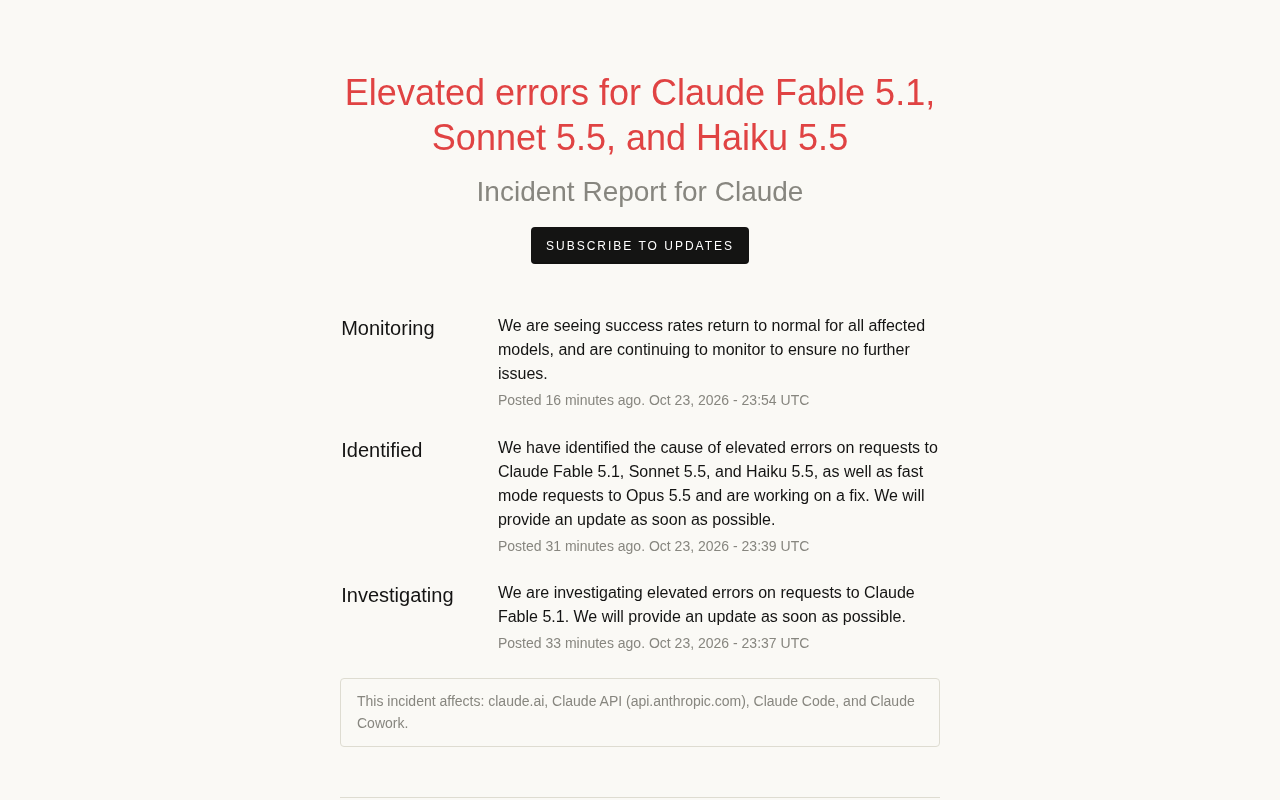
Multiple Claude Models Hit by Errors: A Postmortem of Fable 5.1, Sonnet 5.5, and Haiku 5.5
Claude Fable 5.1, Sonnet 5.5, Haiku 5.5, and Opus 5.5 fast mode saw elevated errors; Anthropic identified and resolved the issue in 17 minutes. This postmortem covers the timeline, the technical reasons for the multi-model cascading failure, and practical lessons for retry and degradation strategies.