Airline Miles Data Privacy: A Guide to Data Sovereignty and Security in the AI Era

A guide to airline miles data privacy, security, and personal data sovereignty in the AI era.
This article examines the privacy and security implications of airline miles data in the AI era. Starting from a simple data request for MileagePlus records, it explores how structured travel data serves as a valuable asset for AI-powered pricing and personalization, the rise of global data portability rights under GDPR and CCPA, and the risks users face from phishing, credential stuffing, and unauthorized AI training use — along with practical steps to protect your data sovereignty.
A Data Request That Raises Deeper Questions
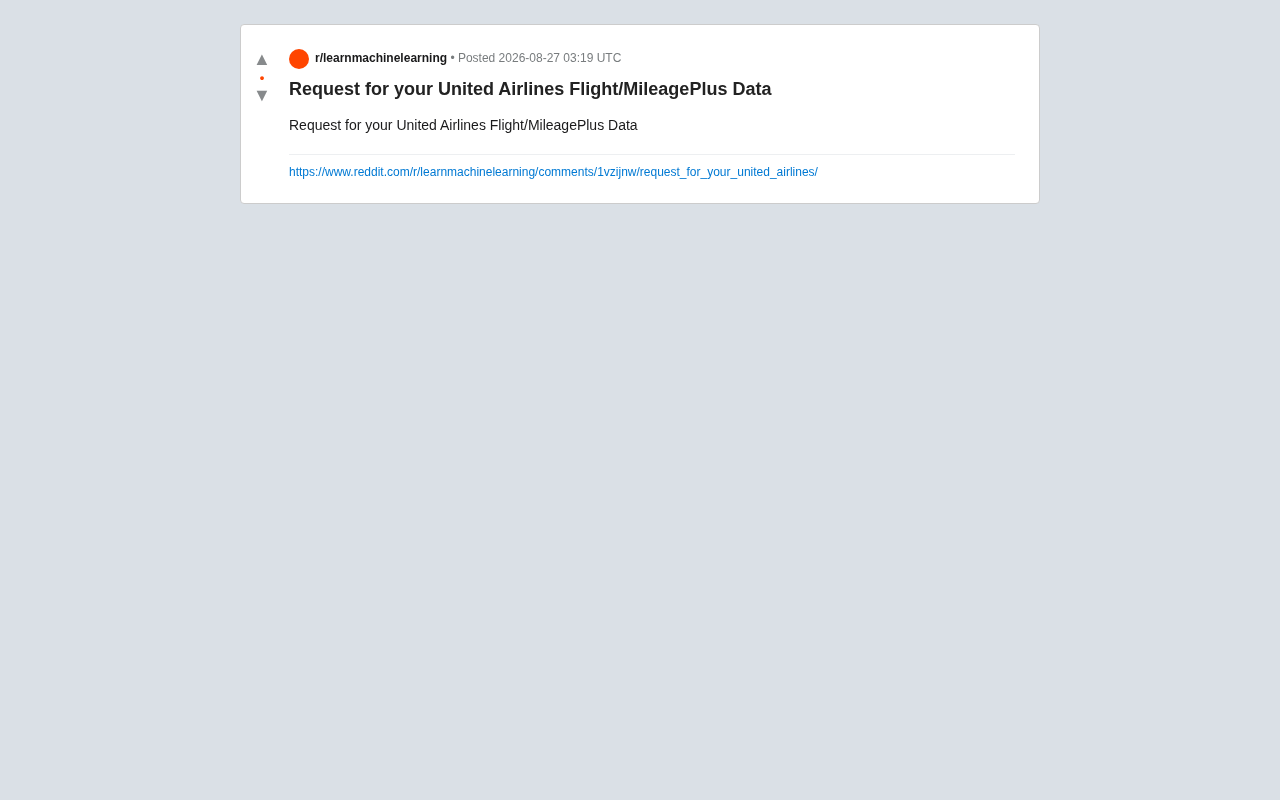
Recently, a post appeared on Reddit about "requesting United Airlines flight and MileagePlus mileage data." On the surface, it seemed like a routine user data retrieval operation. But in an era where AI and the data economy are deeply intertwined, it actually touches on a critical issue: the ownership and portability of personal data, and the potential value of that data in AI training and personalized services.
Using this as a starting point, this article takes a deep dive into the role that structured personal data like airline miles plays in AI applications, and the privacy and security concerns users must be aware of during the data request process.
Why Airline Miles Data Is Highly Valuable
A Highly Structured Behavioral Data Asset
The data accumulated by frequent flyer programs like MileagePlus is essentially high-quality user behavioral data. MileagePlus is United Airlines' frequent flyer loyalty program and one of the largest airline mileage programs in the world, with over 100 million registered members. The history of Frequent Flyer Programs (FFPs) dates back to 1981 when American Airlines launched the AAdvantage program, which quickly became standard across the global aviation industry. At their core, these programs use points-based incentive systems to retain high-value customers while accumulating massive amounts of user behavioral data.
The dimensions covered include: flight records, travel frequency, destination preferences, spending amounts, cabin class selections, and more. Notably, MileagePlus miles can be earned not only through flying but also through co-branded credit card spending, hotel stays, car rentals, and other partner channels. This means the data dimensions far exceed mere flight records — they actually paint a comprehensive portrait encompassing travel, spending, and lifestyle. Unlike the fragmented and noisy information found on social media, airline travel data is characterized by temporal continuity, standardized fields, and strong verifiability.
For AI systems, this type of data is premium material for building precise user profiles. Airlines leverage it for dynamic pricing, personalized recommendations, customer churn prediction, and other business optimizations. For individual users, exporting this data also has practical uses — it can be used for expense reimbursement, mileage value assessment, or even integration with personal AI assistants for trip analysis.
Data Portability Rights Are Gaining Global Momentum
In recent years, data protection regulations like GDPR (the EU General Data Protection Regulation) and CCPA (the California Consumer Privacy Act) have explicitly granted users the "Right to Data Portability." GDPR took effect in May 2018 and is the world's most influential data protection regulation, applying to all organizations that process personal data of EU residents, regardless of whether the organization is located within the EU. Article 20 explicitly establishes the right to data portability, requiring data controllers to provide data in a "structured, commonly used, and machine-readable format." CCPA took effect in January 2020 in the state of California, granting California residents the right to know, the right to delete, and the right to opt out of data sales, later further strengthened by the CPRA (California Privacy Rights Act) amendment.
The core difference between the two: GDPR adopts an "opt-in" model where companies must obtain explicit consent before collecting data, while CCPA uses an "opt-out" model that allows companies to collect data by default but lets users opt out at any time. Additionally, China's Personal Information Protection Law (PIPL) was implemented in 2021, and Brazil's LGPD, India's DPDP Act, and similar legislation have followed, forming a clear global trend toward data portability legislation.
The kind of "request your own data" behavior seen on Reddit is a concrete, everyday exercise of this right. As personal AI assistants become more widespread, users will increasingly want to consolidate data scattered across various platforms and hand it over to trusted AI tools for unified processing. Airline miles data is just one of many typical use cases.
How AI Leverages Airline Travel Data
Enterprise Side: Full-Chain Applications from Pricing to Fraud Prevention
From a business perspective, airlines have long deployed machine learning technology across multiple core operations:
-
Revenue Management and Dynamic Pricing: Predicting market demand based on historical booking data to adjust fare strategies in real time. Airline Revenue Management is one of the most successful commercial applications of operations research, first systematically implemented by American Airlines in the 1980s. Its core philosophy is to apply differentiated pricing to seats on the same flight — "selling the right seat at the right price to the right passenger." Traditional revenue management relied on statistical models like EMSR (Expected Marginal Seat Revenue), but today deep learning and reinforcement learning are reshaping the field: neural networks can process hundreds of feature variables (including historical booking curves, competitor pricing, holiday effects, weather data, etc.) to output optimal fares in real time. According to McKinsey estimates, advanced AI pricing systems can boost unit revenue by 2%-5% for airlines — for major carriers with annual revenues in the tens of billions of dollars, this translates to hundreds of millions in incremental profit.
-
Personalized Precision Marketing: Delivering targeted mileage redemption offers and co-branded credit card benefits based on user travel patterns.
-
Account Fraud Detection: Identifying abnormal mileage redemption activity and suspicious account login behavior.
All of these applications are highly dependent on the long-term behavioral data accumulated in account systems like MileagePlus.
User Side: The Emerging Trend of Data Self-Sovereignty
Even more noteworthy is the emerging trend of users autonomously leveraging their own data. Once users successfully export their travel data, they can achieve a variety of personalized uses:
- Using large language models to analyze personal travel habits and spending patterns
- Optimizing mileage usage strategies to maximize points value
- Combining calendar and financial data to build a personalized travel management system
Large language models (LLMs) like GPT-4 and Claude are evolving from general-purpose conversational tools into personal data analysis engines. Their key capability lies in "understanding unstructured instructions while processing structured data": users can pose complex analytical requests in natural language (e.g., "What's the trend of my business travel spending in the Asia-Pacific region over the past two years?"), and the model parses exported CSV/JSON data through code interpreters or function calls to generate visualized charts. Products like OpenAI's Custom GPTs and Google's NotebookLM have already begun to realize this paradigm. However, uploading sensitive personal travel data to cloud-based LLM services has also raised new privacy concerns, which is why locally deployed small language models (such as the Llama series) and on-device AI are becoming alternative choices for privacy-conscious users. Apple Intelligence's "Private Cloud Compute" architecture is a representative approach attempting to strike a balance between AI capability and data privacy.
This represents a viable path toward "data sovereignty returning to the individual" — data no longer serves only the platform's commercial interests but also begins to genuinely serve the user's own needs.
Privacy Risks and Security Measures in Data Requests
Beware of Data Requests from Unknown Sources
It's particularly important to note that "data requests" appearing online are not always well-intentioned. If a third party asks for your MileagePlus account information under the guise of research, analysis, or other purposes, this could conceal serious privacy risks or even phishing scams.
Airline miles are essentially a form of "quasi-currency" issued by airlines. Taking United Airlines' MileagePlus as an example, the industry generally values its miles at approximately $100-$130 per 10,000 miles, depending on the redemption method. The total global stockpile of frequent flyer miles is estimated to exceed 30 trillion points, with a theoretical value of hundreds of billions of dollars. This is precisely why mileage accounts have become high-value targets for cybercriminals. Attack methods in the underground economy include: credential stuffing (using leaked username-password combinations from other platforms to attempt logins), phishing emails (impersonating official airline notifications to trick users into entering credentials), and SIM card hijacking (taking over phone numbers to bypass two-factor authentication). Stolen miles are typically redeemed quickly for airline tickets or resold to third-party mileage trading platforms. In 2023, multiple airlines reported a year-over-year increase of over 30% in mileage fraud incidents, which has also accelerated the deployment of AI-powered anti-fraud systems in the aviation industry.
Regardless of whether the request comes from a research project, a third-party tool, or an unknown individual, users should remain fully vigilant:
- Always download your data through official channels yourself — never provide account credentials to others
- Verify the purpose and storage method of data use — require the requesting party to clearly explain the data processing workflow
- Pay attention to large-scale data collection activities — find out whether collected data will be used for AI model training
The Informed Consent Issue in AI Training Scenarios
When personal data is used to train AI models, informed consent becomes critically important. Users should clearly understand: Will my data become training material for some model? Once the data has been used, do I still retain the right to withdraw and delete it?
The informed consent issue in AI model training has evolved into a multidimensional contest involving law, ethics, and technology. From a legal perspective, GDPR Article 6 requires that data processing must have a lawful basis, with "consent" and "legitimate interest" being the two most commonly cited grounds — but the boundaries of their applicability in AI training scenarios remain disputed. In 2023, the Italian Data Protection Authority temporarily banned ChatGPT, with the core controversy centering on whether OpenAI had obtained sufficient user consent to use publicly available internet data for training.
From a technical perspective, "Machine Unlearning" is the key technical challenge for implementing the right to data withdrawal — once data has been integrated into model parameters, how to precisely remove its influence without degrading overall model performance remains an active research frontier. Current approaches being explored by the industry include: Federated Learning (where data stays local and only model parameters are shared), Differential Privacy (where mathematical noise is added to data to protect individual information), and Data Trusts (where an independent third-party institution manages usage authorization on behalf of data subjects). These issues are among the most central topics in current AI ethics discussions.
A Personal Action Guide for the Data Sovereignty Era
Although this airline miles data request may seem minor, it is a microcosm of the entire data sovereignty issue. Against the backdrop of AI's ever-growing hunger for data, every user needs to reexamine their relationship with personal data: on one hand, making good use of data portability rights to let data truly create value for themselves; on the other hand, raising security awareness to prevent privacy and digital assets from being exposed to risks during the data transfer process.
As concepts like personal AI assistants and data wallets gradually mature, finding the optimal balance between convenience and security will become a challenge that everyone needs to take seriously.
Related articles

Amphibious Transforming Drone: Beyond 100x Power Savings, What Are the Real Needs?
Is the amphibious transforming drone just a gimmick? Starting from the 100x power difference of the M4 Morphobot, explore real application scenarios and thesis topic ideas, analyzing boundary conditions where pure drones and pure ground robots both fail.

Warhound Raises $200 Million: Genetically Engineered "War Dogs" Paired with Anduril Gear
Warhound raises $200M, backed by Ben Lamm and Palmer Luckey, to genetically engineer dogs for military and law enforcement use and equip them with Anduril gear. This article analyzes its technology direction, funding logic, and ethical controversy.

Claude API Comes to Google Cloud: IAM Integration and SDK Access Guide
Anthropic hosts the full Claude API on Google Cloud with IAM-controlled permissions and unified billing. This guide covers the Vertex AI and Anthropic-hosted entry points, IAM role configuration, and SDK access.