Alfa Project Analysis: A New Approach to Combating AI Hallucinations Using Resonance Mechanisms

Alfa project uses resonance-inspired multi-path consistency to combat AI hallucinations in LLMs.
The Alfa project proposes using a "resonance" mechanism—inspired by physics—to suppress AI hallucinations in large language models. By requiring multiple independent reasoning paths to converge on the same answer before considering it trustworthy, the approach filters out unreliable outputs. While promising as a lightweight, model-agnostic solution, challenges remain including computational costs, inability to address consensus biases, and lack of public benchmarks.
AI Hallucinations: The Core Barrier to LLM Deployment
In an era where Large Language Models (LLMs) are widely deployed, the "hallucination" problem remains a formidable obstacle to real-world applications. Hallucinations refer to instances where a model outputs content that contradicts facts or is entirely fabricated, all while sounding fluent and confident. For scenarios demanding high reliability—such as healthcare, law, and finance—this tendency to "confidently spout nonsense" is potentially fatal.
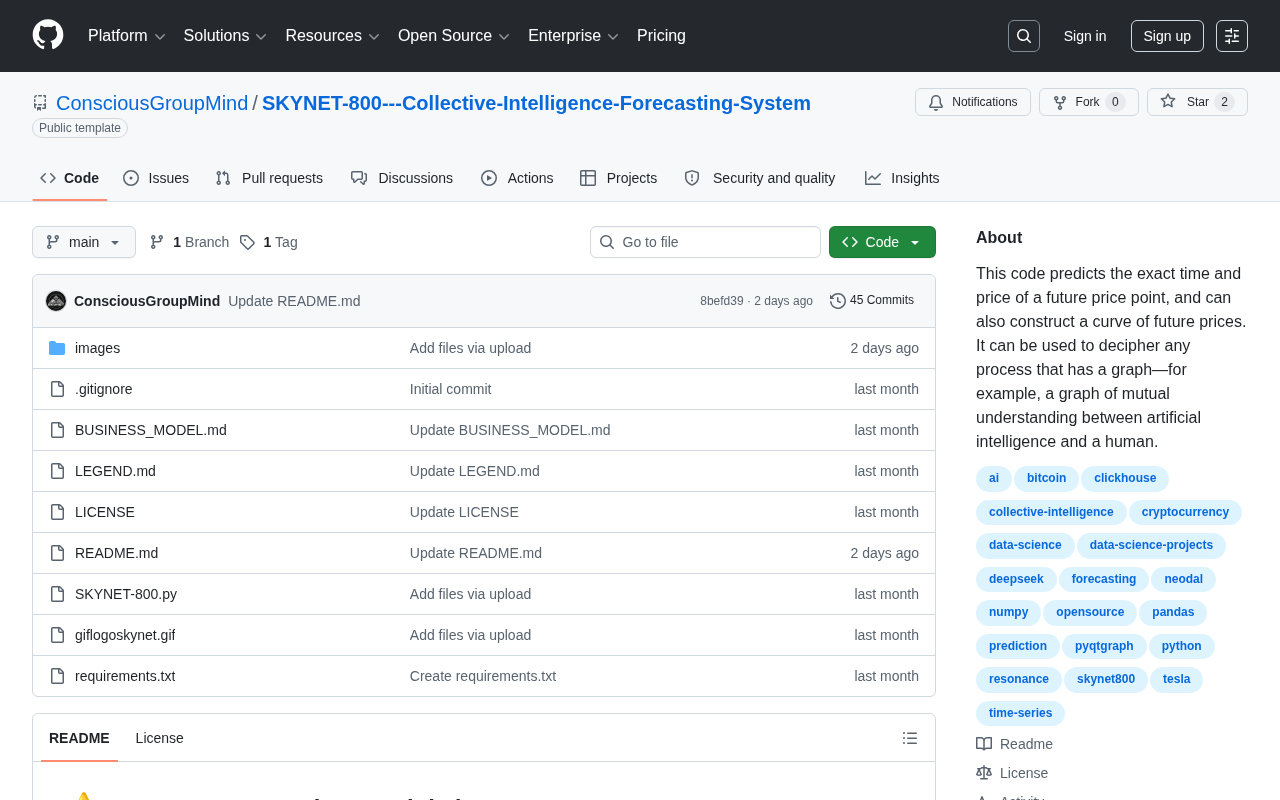
Recently, a project called Alfa appeared on Hacker News' Show HN section, with a title that directly states its ambition: "Killing AI hallucinations with resonance." Although the project is still in its early stages of community attention (4 points, only 1 comment), the approach it proposes deserves a thorough technical analysis.
It should be noted that the original source material is very limited. This article is more of a technical discussion and reasonable extrapolation centered on the core concept of "resonance-based hallucination suppression," rather than a comprehensive review of a finished product.
Root Cause Analysis of LLM Hallucinations
To understand Alfa's approach, we first need to clarify what causes hallucinations. At its core, a large language model is a probabilistic prediction system that predicts the next most likely token based on context. Specifically, the model segments input text into tokens (which can be words, subwords, or character fragments), then calculates the conditional probability distribution of the next token based on the entire existing token sequence, using the attention mechanism in the Transformer architecture. The model "attends" to different positions in the context and synthesizes this information to make predictions. This means:
- The model doesn't "know" facts—it merely fits language distributions;
- When training data lacks relevant information, or when prompts venture into unfamiliar distribution regions, the model will still "forge ahead" and generate seemingly reasonable answers;
- The randomness of single-sample generation (temperature, top-p, etc.) further amplifies uncertain outputs.
Here, temperature controls the "flatness" of the probability distribution—higher values give low-probability tokens a greater chance of being selected, making outputs more random and diverse. Top-p (nucleus sampling) restricts the model to sample only from the smallest set of tokens whose cumulative probability reaches p, preserving diversity while avoiding extremely low-probability "absurd" options. The existence of these parameters means the same input can produce drastically different outputs, and the model's apparent "confidence" doesn't always correlate with its accuracy.
In other words, hallucinations often occur where the model has internal belief inconsistencies or artificially high confidence. This insight is the starting point for many hallucination suppression techniques.
Review of Mainstream AI Hallucination Suppression Approaches
The industry currently combats hallucinations through several main approaches:
-
Retrieval-Augmented Generation (RAG): Providing the model with an external knowledge base as factual anchors. The core workflow is: when a user asks a question, the system first converts the question into a vector representation using an embedding model, then retrieves the most semantically relevant document fragments from a pre-built vector database, and finally injects these retrieved fragments as context into the LLM's prompt, allowing the model to generate answers based on specific factual evidence. RAG's advantages include dynamically incorporating up-to-date information with traceable sources, but it also faces challenges such as inconsistent retrieval quality, document chunking strategies affecting performance, and context window length limitations. Notably, RAG cannot completely prevent hallucinations—if the retrieved documents themselves contain errors, or if the model produces reasoning biases when synthesizing multiple documents, inaccurate outputs can still occur.
-
Self-Consistency: Sampling answers multiple times and selecting the majority-consistent result. This method was formally proposed by Google Research in 2022. The core idea is that for the same reasoning problem, the model generates multiple independent chains of thought through different sampling strategies, then performs majority voting on the final answers. Experiments show that correct reasoning paths tend to be "attractors"—different thinking approaches are likely to converge on the correct answer, while incorrect answers tend to scatter in different directions. This is analogous to ensemble learning in statistics.
-
Post-hoc Verification: Using another model or rule engine to fact-check outputs;
-
Uncertainty Estimation: Evaluating output reliability through metrics like token probabilities and entropy values. Common specific methods include: calculating sequence joint probability or perplexity based on token-level probabilities (logit/softmax outputs); computing the entropy of the output distribution to measure the model's "hesitation"; and semantic uncertainty methods—assessing reliability by judging the degree of semantic divergence across multiple generated answers. The Semantic Entropy method proposed by Oxford University in 2023 is a representative work in this field. It clusters semantically equivalent answers before calculating entropy, avoiding the problem of misidentifying answers that differ in surface wording but share the same meaning as "inconsistent."
Alfa's emphasis on "resonance," based on its naming logic, appears closest to a combination of approaches 2 and 4.
Alfa's Resonance Mechanism: Technical Principle Extrapolation
"Resonance" is a physics metaphor. In physics, resonance refers to the phenomenon where a system's amplitude is significantly amplified at specific frequencies—like pushing a swing, where only the right rhythm makes it go higher and higher. Applying this to AI hallucination governance, a reasonable interpretation is:
Only when multiple independent reasoning paths, multiple sampling results, or multiple perspectives "resonate" (achieve high consistency) on the same answer is that answer considered trustworthy. Conversely, if different paths yield divergent conclusions, the model is in a high-uncertainty region and is likely fabricating.
This aligns with the philosophy of self-consistency decoding—using "voting" or "consistency metrics" to filter out isolated, divergent erroneous outputs. Resonance can be seen as an evocative packaging of this idea: True signals reinforce each other, while false noise cancels out. This metaphor corresponds precisely to the coherent superposition principle in signal processing: in-phase signals (i.e., correct answers) undergo constructive interference, while random noise (i.e., hallucinated outputs) cancels out through destructive interference due to phase inconsistency.
Potential Technical Advantages of the Resonance Mechanism
If Alfa is indeed based on such a multi-path consistency mechanism, it offers the following advantages over simple single-generation approaches:
- No external knowledge base required: Unlike RAG, which depends on retrieval infrastructure, deployment is more lightweight;
- Quantifiable confidence: Resonance strength itself can serve as an interpretable reliability metric, similar to the consistency score in semantic entropy methods, providing downstream systems with a numerical basis for "how trustworthy this answer is";
- Model-agnostic: In theory, it can be applied on top of any LLM as a "filter" layer—whether the underlying model is GPT, Claude, or open-source models like Llama, enhancement can be applied at the inference level.
Sober Assessment: Limitations and Challenges of an Early-Stage Project
As a project that just debuted on Show HN with extremely limited community feedback, we should maintain a cautious stance:
First, "killing hallucinations" is an overly strong promise. In principle, consistency checks can only reduce the probability of hallucinations, not eliminate them entirely. If all of the model's reasoning paths are based on the same erroneous "consensus bias," they will "resonate" to produce a consistent but incorrect answer. Such consensus bias stems from systematic biases in training data—if certain misinformation is heavily repeated in the training corpus (e.g., widely circulated pseudoscientific claims, outdated medical knowledge), all of the model's reasoning paths will build on this incorrect premise, ultimately outputting incorrect conclusions consistently. In cognitive science, this is called "knowledge hallucination," which is fundamentally different from "random hallucination" that can be filtered through multiple sampling. Knowledge hallucination is essentially a flaw in the model's world model, requiring intervention from external factual sources (such as knowledge graphs or authoritative databases) to correct. This also explains why the industry generally considers RAG and consistency methods to be complementary rather than substitutive.
Second, the computational cost issue. Multi-path sampling means several times the inference overhead. In production environments, balancing reliability against latency and cost is an engineering challenge that any such approach cannot avoid. For example, if 5 independent samples are needed for reliable consistency assessment, inference costs increase at least 5-fold, and latency increases significantly (unless parallel inference is employed, which introduces GPU memory and concurrency pressure). In large-scale online service scenarios, every millisecond of latency and every cent of cost are critical considerations.
Third, lack of publicly available validation data. Currently, there are neither benchmark test results nor third-party evaluations, and its actual effectiveness remains to be observed. The tech community has always been vigilant about "silver bullet" claims, and this is a rational norm in early Show HN discussions. In the hallucination detection field, commonly used evaluation benchmarks include TruthfulQA (testing whether models will repeat common misinformation), HaluEval (a dataset specifically designed for hallucination detection), and FActScore (fine-grained factual accuracy assessment by decomposing long texts into atomic facts). Any system claiming to effectively suppress hallucinations should provide reproducible quantitative results on these recognized benchmarks.
Conclusion: The Right Direction for AI Reliability Research
Alfa's emergence reflects a healthy industry trend: more and more developers are no longer satisfied with simply getting models to "run," but are focused on solving the core pain point of reliability. While the "resonance" metaphor is novel, what lies behind it is most likely an engineering implementation of approaches already validated by academia, such as self-consistency and multi-path consistency.
For practitioners concerned with AI reliability, projects like this are worth continuous monitoring—not because they have already solved hallucinations, but because they represent attempts in the right direction. True value will ultimately be validated by open benchmark tests, real-world deployment results, and community reproduction.
Notably, hallucination governance is evolving from single methods toward systematic solutions. Future best practices will likely combine multiple approaches: using RAG to provide factual anchors, consistency checks (such as "resonance" mechanisms) to filter random hallucinations, uncertainty estimation to provide confidence scores, supplemented by human feedback loops (RLHF/RLAIF) to continuously optimize model calibration. In this multi-layered defense framework, each method has its irreplaceable role.
On the long road to "eliminating hallucinations," any exploration that advances toward explainable, quantifiable confidence is a meaningful step forward.
Related articles

Bilibili's Hit Dify Tutorial: A Practical Guide to Building 20+ AI Apps from Scratch
A distilled guide to Bilibili's top-rated Dify tutorial: Windows + Docker deployment, MySQL connection, five app types, model integration strategy, and publishing.

Agent Skills Beginner's Guide: From Concepts to Multi-Agent Collaboration in Practice
A comprehensive guide to Agent Skills: core concepts, components, the importance of Description, standardization, beginner learning paths, and multi-agent collaboration.

One Neuron Detects Both Cats and Cars? We Reproduced It and Found a New Explanation
The cat-car neuron reinterpreted: researcher Cammarata argues it distinguishes pointy from round, not cats from cars. We reproduced the experiment and found the new explanation holds on most inputs—but cars are the exception. The interpretability debate continues on language models.