Alibaba Cloud Bailian Token Plan Real-World Test: Seven Days' Quota Gone in Three Hours
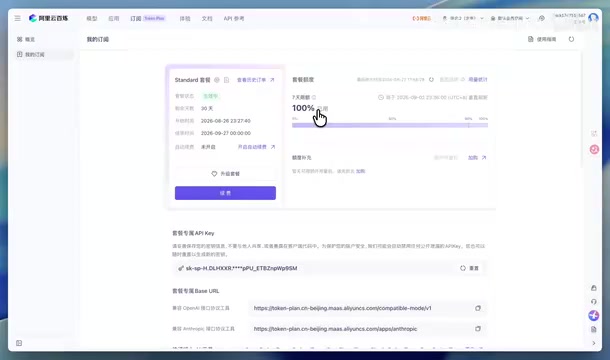
Developer burns 7-day Bailian Token Plan quota in 3 hours, exposing AI billing transparency issues.
A Bilibili creator purchased Alibaba Cloud Bailian's ¥139 Token Plan and, during a nighttime 50%-off window, exhausted the entire seven-day quota in just over three hours — consuming 124 million tokens. Strangely, the cache hit rate was 99%, which should have dramatically reduced consumption. When he asked Bailian engineers how token usage broke down across models, they couldn't provide a clear answer. The creator's other plans (Kimi K2, etc.) showed no similar behavior. The heavy usage stemmed from a video transcript browser extension app. The incident highlights the need for billing transparency and usage monitoring before subscribing to AI token plans.
An Unexpected Token Plan Pitfall
Alibaba Cloud Bailian recently launched a Token Plan subscription service, offering monthly token quotas for model API calls — theoretically helping developers keep costs under control. But one Bilibili content creator's hands-on experience has exposed some hidden risks in how these plans work in practice.
This creator was trying Bailian's Token Plan for the first time, purchasing a mid-tier package priced at ¥139. What drew him in was a highlighted perk: the Qwen3.8 Max model offers a 50% discount during nighttime hours (10 PM to 8 AM the next morning). Hoping to make the most of the deal, he kicked off intensive API testing after dark.
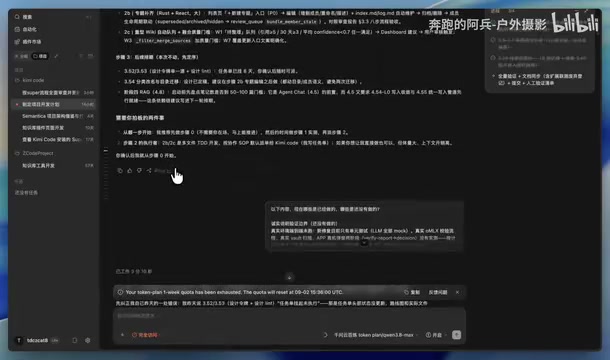
The result was anything but expected — starting at 11:45 PM and ending at 3:09 AM, in just over three hours, the entire seven-day quota for the plan had been completely exhausted.
124 Million Tokens Burned at Breakneck Speed
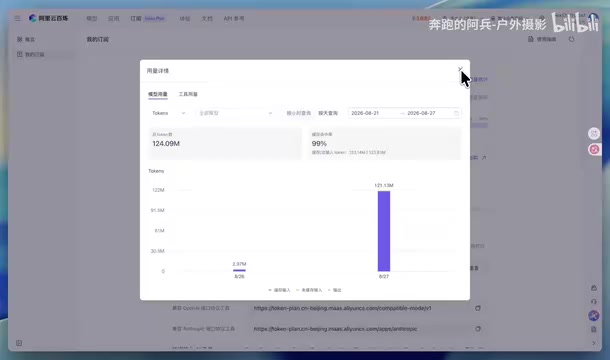
According to the usage statistics, the total consumption reached 124 million (1.24 × 10⁸) tokens — and this happened with a cache hit rate of 99%.
A 99% cache hit rate means the vast majority of requests should have been reusing cached results at minimal cost. Yet the token counter kept climbing at an alarming rate. The creator described this as "unimaginable" and raised a pointed question: if this is what happens during the 50%-off nighttime window, how fast would consumption run during full-price daytime hours?
For context, the creator mentioned he had also used Token Plans from other providers — including Kimi K2 and a Alipay-affiliated model subscription — and never encountered this kind of runaway quota burn. This naturally raises the question: is the problem with how he's using the service, or with the plan's billing logic itself?
Cache Hit mechanisms are a common optimization technique in large model API services: when an incoming request's input (especially the System Prompt or repeated context) closely matches a previous request, the provider can reuse the pre-computed KV cache, reducing compute overhead. Platforms typically charge a lower rate for cache-hit tokens — in some cases offering discounts of 75–90% on input tokens. In theory, a 99% cache hit rate means nearly every request is taking the "shortcut," and actual billing should be dramatically lower than full computation. However, there's a subtlety that's easy to overlook: cache hits reduce the per-request rate, not the absolute token count. If call frequency is very high and each request carries a long context (such as a complete video transcript), total token usage will still accumulate rapidly. Furthermore, how platforms define "cache hit" and structure billing rules varies significantly. On some platforms, cached tokens still count against your quota — just at a discounted rate, rather than being truly "free." This is likely the key reason why a near-perfect cache hit rate still resulted in such rapid quota depletion in this case.
Questions About Billing Transparency
What made things even more confusing was the opacity around billing details. When the creator asked Bailian's engineers how token consumption was distributed across different models within the Token Plan, they couldn't give a clear answer.
This is a critical issue. Token Plans typically cover multiple models, each with its own token pricing and input/output ratios. If even the official engineering team can't explain how quota consumption breaks down by model, users have no way to understand where their credits are actually going — or how to optimize their calling strategies to manage costs.
For developers building products on top of APIs, this kind of "black box" billing means budgets can spiral out of control at any moment. Before subscribing to a plan, it's essential to understand the billing rules, per-model pricing, and whether there are any monitoring or alerting mechanisms for abnormal consumption.
Token Plans are a prepaid model that large model service providers have rolled out in recent years. Users purchase a set token quota upfront and draw down from it based on actual usage within a validity period. Compared to pay-as-you-go pricing, plans typically carry both a total quota cap and an expiration date — once you exceed the limit, you need to purchase more or wait for the next cycle. Multi-model shared-quota Token Plans also introduce the issue of model conversion rates: the number of "billable tokens" consumed per call for a given model may not equal the actual number of text tokens processed. For example, a high-capability model might consume quota at a 1:2 ratio or higher. If a platform doesn't publish its conversion rules for each model, users have no way to estimate true consumption speed, and budget management becomes entirely guesswork. This information asymmetry is especially pronounced right now, as model capabilities iterate rapidly and plan structures change frequently.
The Real Use Case Behind the Numbers
The reason the creator was making such intensive API calls is that he's building an app on Bailian. The core feature of this app is a browser extension called a "video review panel."
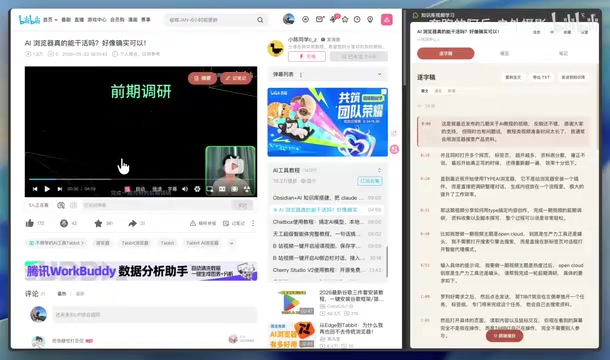
Specifically, when a user is watching a long video and clicks "Review" in the installed extension, a panel appears alongside the video and displays real-time content summaries (verbatim transcripts) for each segment as playback progresses. This lets users quickly understand what each part of a video covers, making early-stage research, information gathering, and script writing much easier.
The feature also supports sending transcripts to a knowledge base and is compatible with platforms including Douyin and Xiaohongshu. It's easy to see why an application like this — one that needs to transcribe, summarize, and structure large amounts of video content — would be a heavy token consumer by nature. High-frequency calls with long text inputs can accumulate staggering usage totals in a very short time.
A Few Reminders for Developers
While this is a single case, the issues it surfaces are worth considering for any developer thinking about subscribing to an AI model plan:
- Don't be lured by discounts: The nighttime 50%-off deal looks attractive, but if it drives excessive usage, the "savings" can quickly turn into a trap.
- Watch out for the cache-billing disconnect: Burning through quota rapidly despite a 99% cache hit rate suggests the billing logic may not work the way you'd intuitively expect — verify this proactively.
- Demand billing transparency: Before subscribing, ask for clear pricing rules for each model. If the official team can't answer that question, proceed with extra caution.
- Set up usage monitoring: For high-frequency applications, always configure usage caps and alerts to prevent your quota from being silently drained while you're not watching.
It's worth noting that this article is based on a single creator's personal testing experience, and whether his usage approach was optimal remains an open question. The specific cause of the consumption also awaits further clarification from the official team. But real-world cautionary experiences like this are precisely the kind of signal most worth paying attention to when evaluating the value of an AI service.
Related articles
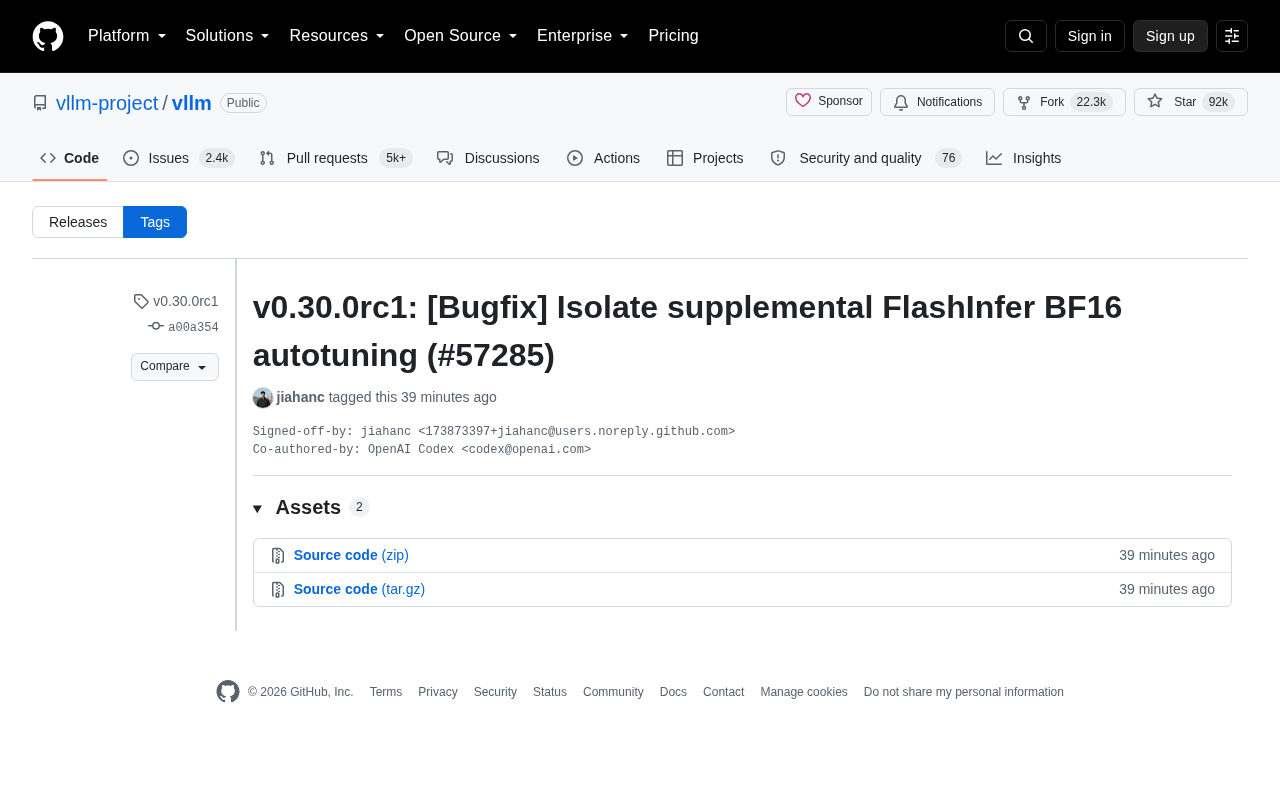
vLLM v0.30.0rc1 Released: Isolates FlashInfer BF16 Autotuning Logic
vLLM v0.30.0rc1 release candidate fixes FlashInfer BF16 autotuning isolation (PR #57285). Learn the technical background and its impact on inference deployment.
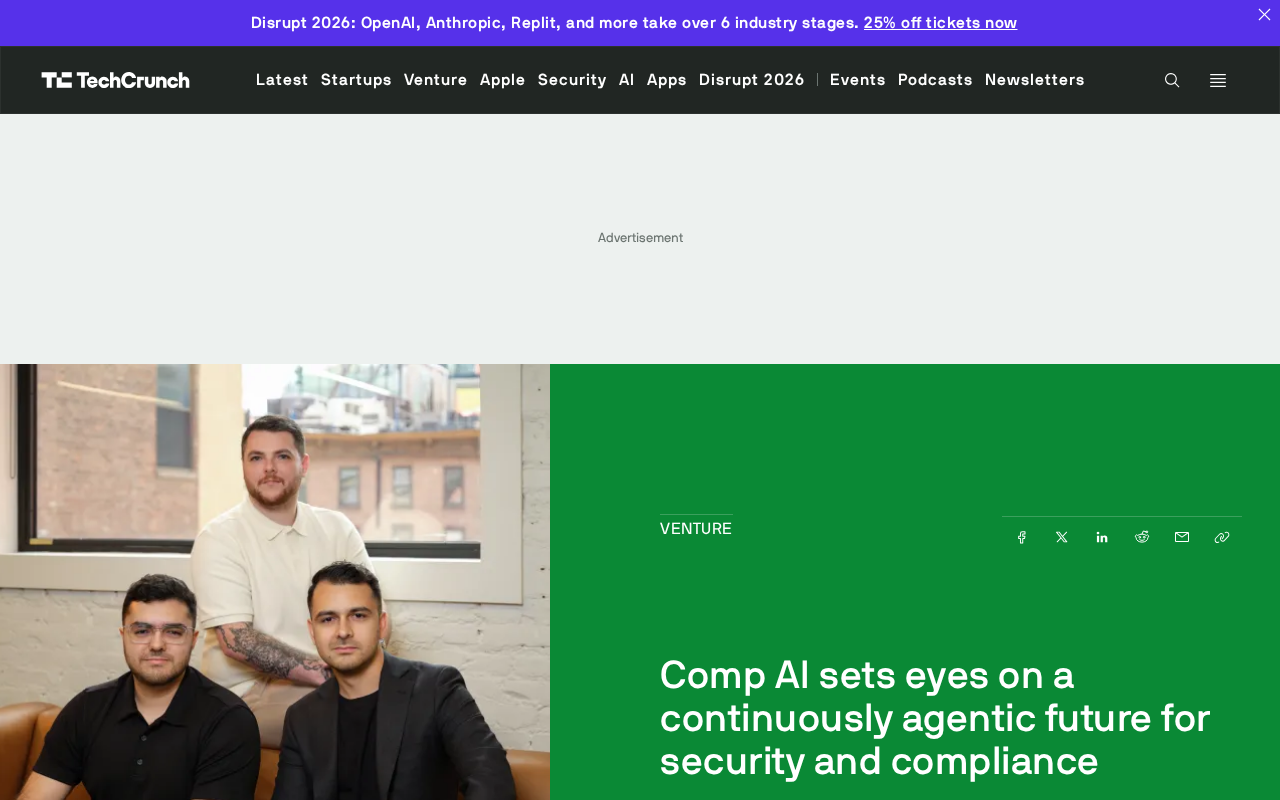
Comp AI Raises $34M Series A, Bets on Agentic Security Compliance
Comp AI raises $34M Series A led by Roo Capital and Grand Ventures, betting on "continuously agentic" AI to transform compliance from periodic audits into real-time monitoring.
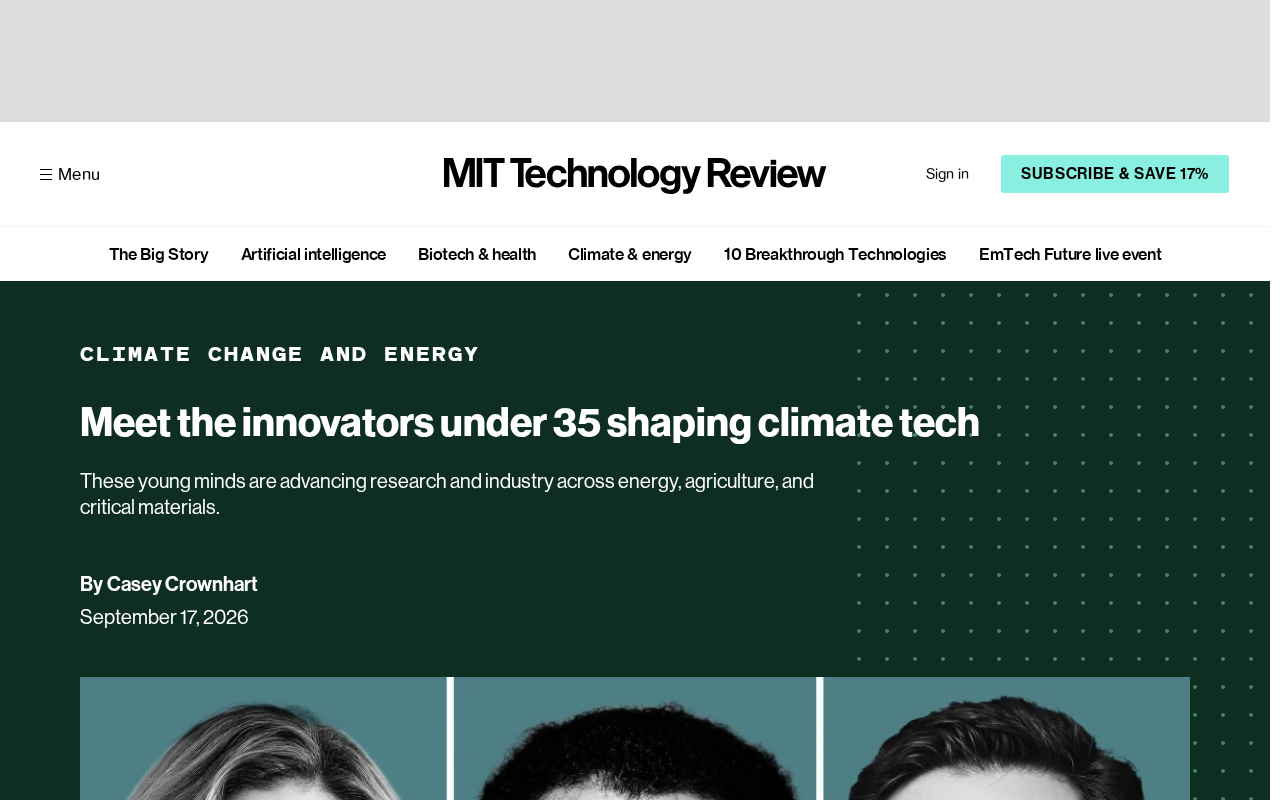
MIT Technology Review's 35 Innovators Under 35: A Climate Tech Edition Explained
MIT Technology Review's latest 35 Innovators Under 35 list focuses on climate tech, spotlighting nine young global innovators. Here's what the list means and why it matters.