Comp AI Raises $34M Series A, Bets on Agentic Security Compliance
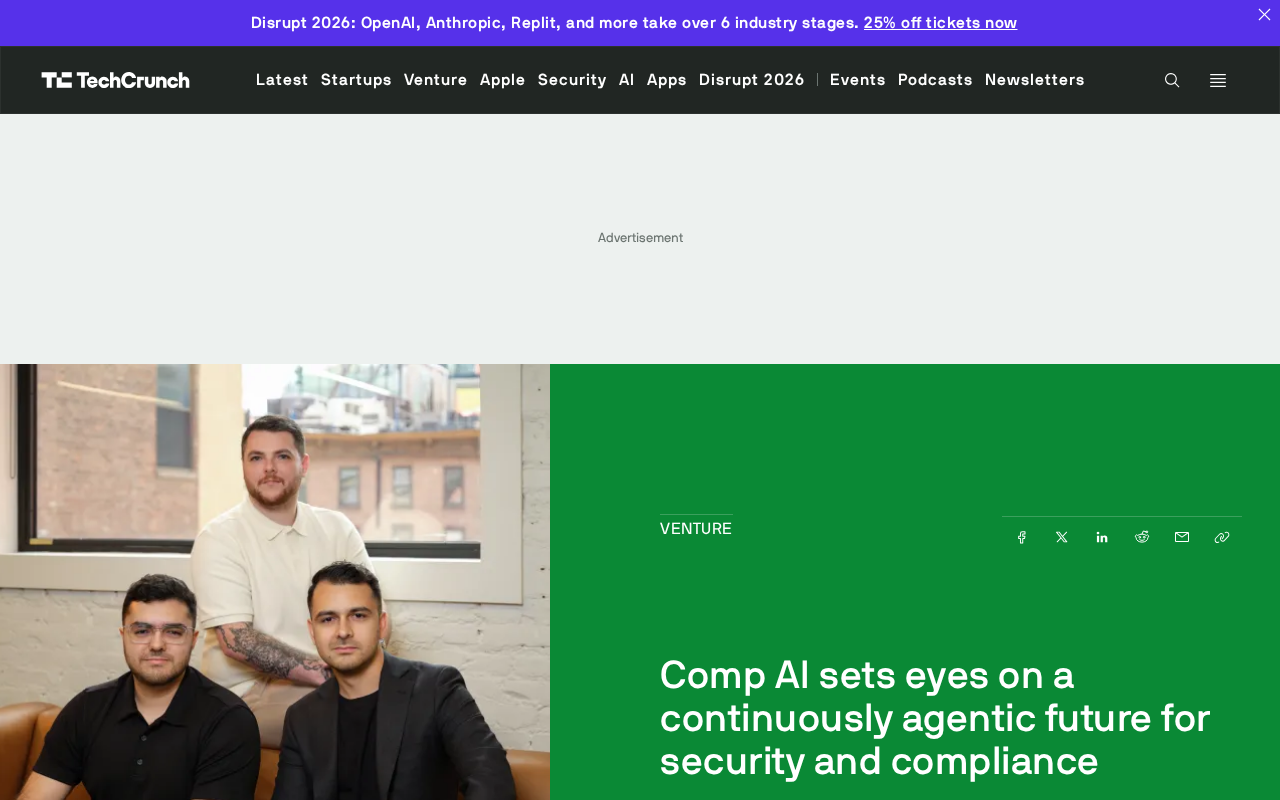
Comp AI raises $34M Series A to turn enterprise compliance from periodic audits into continuous AI-agent monitoring.
Cybersecurity compliance startup Comp AI has closed a $34 million Series A led by Roo Capital and Grand Ventures. The company's core thesis is building a "continuously agentic" compliance system: rather than relying on the periodic manual audits required by certifications like SOC 2 and ISO 27001, AI agents run continuously in the background to detect configuration drift, flag compliance risks, and auto-generate audit evidence — shifting compliance from periodic snapshots to continuous recording. The space already has well-funded incumbents like Vanta and Drata, and Comp AI is betting on autonomous agent execution as its differentiator. However, product details and customer cases remain limited, and the reliability and accountability of agents in high-stakes compliance scenarios remain open industry challenges.
Comp AI Closes $34M Series A
Cybersecurity and compliance startup Comp AI has announced a $34 million Series A funding round, led by Roo Capital and Grand Ventures. The capital will fuel the company's continued investment in security and compliance automation — and signals that investor appetite for "agentic" security tools is heating up.
For a startup focused on enterprise compliance, a $34 million Series A reflects strong investor confidence in both its technical direction and market potential. Compliance is a non-negotiable requirement for virtually every mid-to-large enterprise, yet traditional compliance processes rely heavily on manual audits, documentation, and cross-system reconciliation — a costly and error-prone approach.
What "Continuously Agentic" Actually Means
Comp AI's core vision is to build a "continuously agentic" future for security and compliance. This phrase points to a new paradigm: rather than treating compliance as a one-time or periodic audit activity, AI agents run continuously in the background, monitoring an organization's security posture and compliance status in real time.
"Agentic" typically refers to AI systems with a degree of autonomous decision-making and execution — systems that can take proactive action in response to changing conditions, rather than passively waiting for human instruction. In the context of security compliance, this means a system that can automatically detect configuration drift, identify potential violations, generate audit evidence, and even remediate issues autonomously within defined authorization boundaries.
From Periodic Audits to Continuous Monitoring
Traditional compliance certifications — such as SOC 2 and ISO 27001 — typically operate on a quarterly or annual cycle, requiring organizations to concentrate their preparation efforts around the audit window. The problem with this model is that between two audits, an organization's actual security posture may have already drifted significantly. The continuously agentic approach aims to close this gap, transforming compliance from "taking a snapshot" into "recording a continuous video."
SOC 2 is an auditing standard developed by the American Institute of CPAs (AICPA), primarily aimed at SaaS and cloud service companies, evaluating their controls across five dimensions: security, availability, processing integrity, confidentiality, and privacy. ISO 27001 is an information security management system certification published by the International Organization for Standardization, with broader applicability and strong adoption across European and Asia-Pacific markets. Both certifications share a common challenge: companies must demonstrate to external auditors that their security controls remained effective throughout a specific time window — and gathering that evidence is enormously labor-intensive. Industry estimates suggest that preparing for a SOC 2 Type II certification typically takes 3 to 9 months and involves collecting evidence across dozens to hundreds of control points. This "compliance vacuum between audits" has become a widespread vulnerability in enterprise security management, and it's the core pain point that automated compliance tools are trying to solve.
Market Context and Competitive Landscape
Security compliance automation is not a new category — Vanta, Drata, and others have already established strong market positions in this space. Comp AI is differentiating itself by centering its identity on "agentic" capabilities, betting that the maturation of generative AI and autonomous agent technology will enable a meaningfully different product experience beyond what existing players offer.
Continued capital flowing into this direction also serves as indirect evidence that enterprise software is undergoing a broader AI agent-driven transformation. Compliance is, in theory, an ideal domain for AI automation: the rules are well-defined and the processes are highly standardized.
Vanta was founded in 2018 and is currently valued at approximately $1.6 billion. It focuses on automating SOC 2, ISO 27001, and similar certification processes by integrating with tools like AWS, GitHub, and Okta to automatically collect compliance evidence. Drata was founded in 2020 and has raised over $300 million, with a positioning closely resembling Vanta's — both have built substantial customer bases among small-to-midsize tech companies. Secureframe, Sprinto, and others are also active in this space. Most incumbents' core model is "automated evidence collection + compliance dashboards," which has dramatically reduced the cost of compliance compared to manual auditing, but still largely serves to assist human decision-making. Comp AI's emphasis on the autonomous execution capabilities of agents theoretically means the system doesn't just collect evidence — it proactively identifies issues and triggers remediation actions. That's the key narrative the company is using to differentiate itself from existing competitors.
Questions Worth Asking
It's worth noting objectively that publicly available information remains focused primarily on the funding announcement itself. Details about Comp AI's specific product capabilities, technical implementation, and customer case studies are still limited. The reliability, explainability, and accountability of AI agents operating in high-stakes compliance scenarios remain industry-wide challenges. The higher the degree of automation, the more carefully organizations must consider the compliance risks that arise when something goes wrong.
How the company ultimately translates its "continuously agentic" vision into verifiable product value — and whether it can build a genuine technical moat against well-established competitors — will be the key factors in assessing its long-term potential.
Related articles
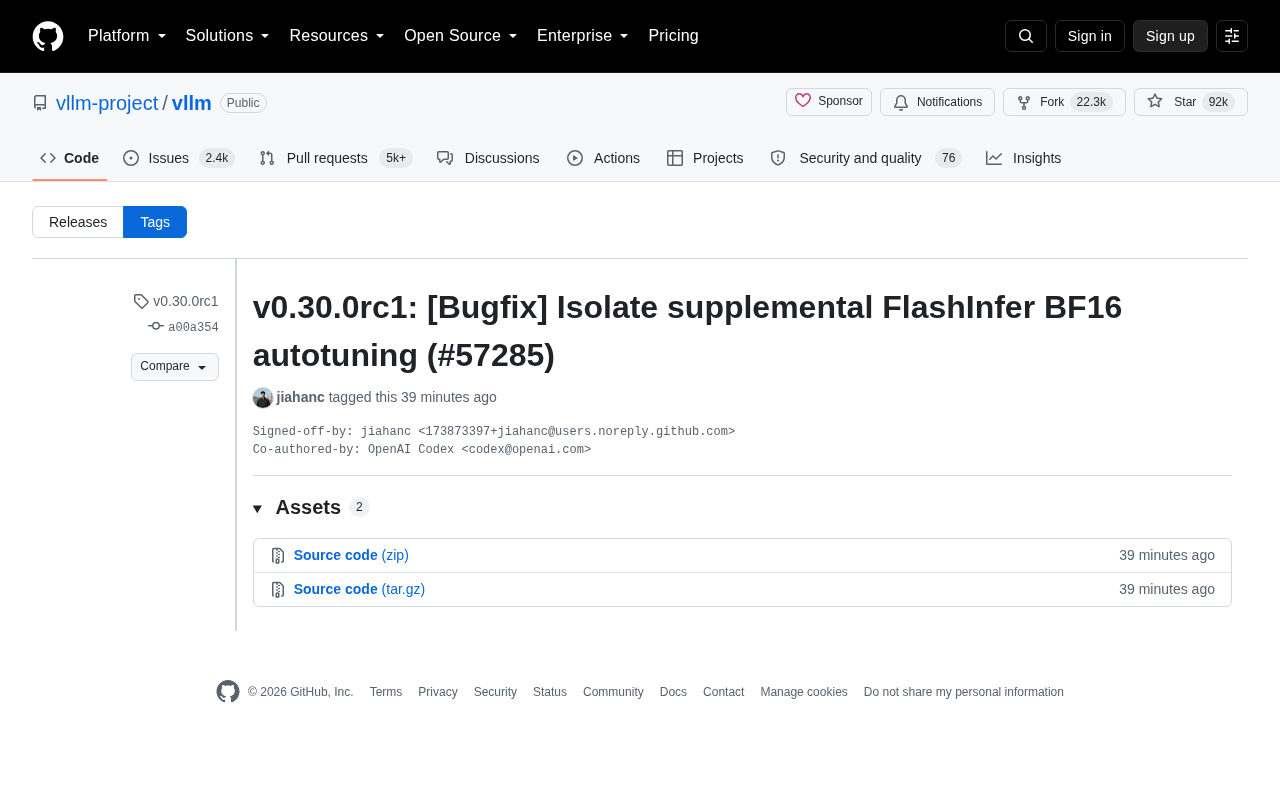
vLLM v0.30.0rc1 Released: Isolates FlashInfer BF16 Autotuning Logic
vLLM v0.30.0rc1 release candidate fixes FlashInfer BF16 autotuning isolation (PR #57285). Learn the technical background and its impact on inference deployment.

MIT Technology Review's 35 Innovators Under 35: A Climate Tech Edition Explained
MIT Technology Review's latest 35 Innovators Under 35 list focuses on climate tech, spotlighting nine young global innovators. Here's what the list means and why it matters.

Ollama Cloud Deep Dive: One Subscription to Run DeepSeek, GLM, and More Open-Source Models
Ollama Cloud revamped with transparent per-token pricing and no service fees. One subscription runs DeepSeek, GLM, Kimi, Qwen & 20+ open-source models. Great time-zone perks for China users.