Alibaba's Qwen LLM Powers BMW iX3: A New Phase in Smart Cockpit Competition
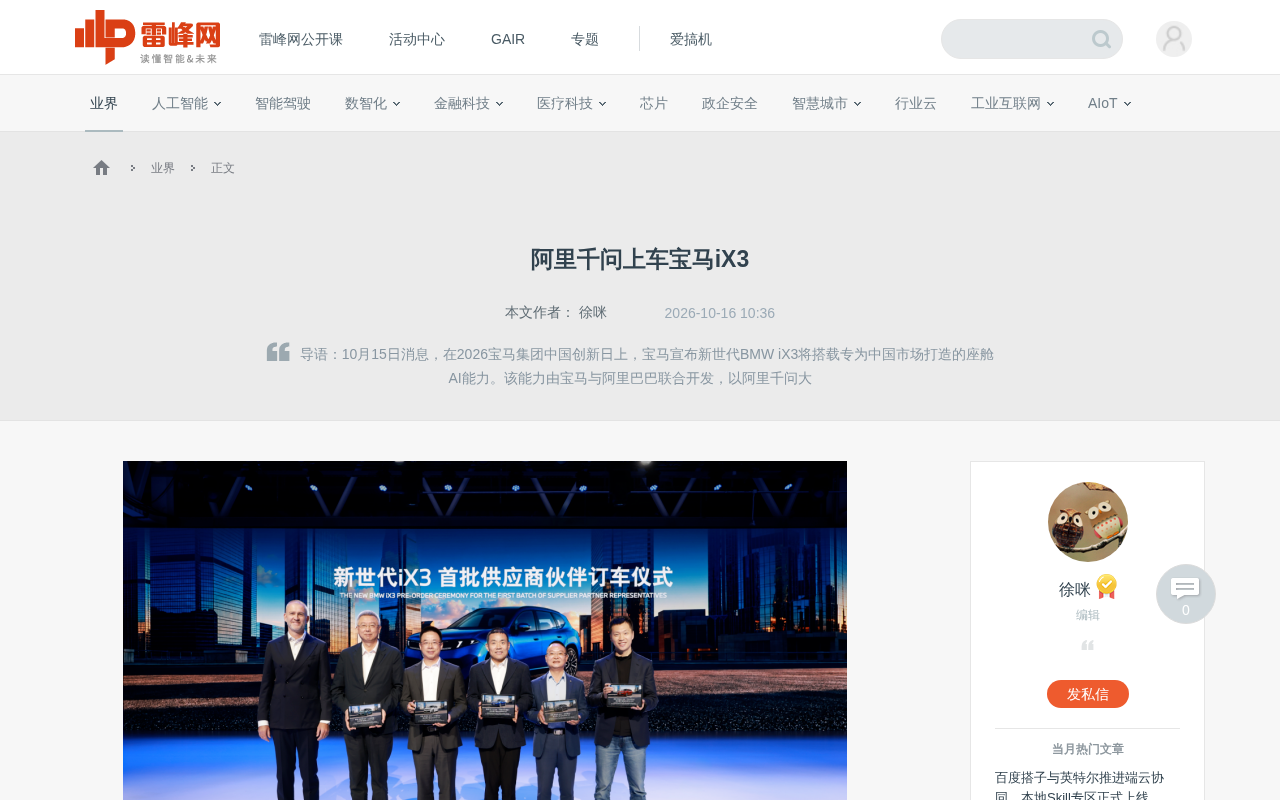
BMW iX3 will feature Alibaba Qwen cockpit AI, marking a shift in smart cockpit competition from parameters to contextual understanding.
At its 2026 China Innovation Day, BMW announced that the next-generation iX3 will feature cockpit AI powered by Alibaba's Qwen, with Banma handling applications and vehicle-side integration, ultimately integrated into the BMW Intelligent Personal Assistant. The collaboration uses a layered division of labor: Alibaba provides the LLM foundation, Banma handles vehicle-side integration, and BMW retains the assistant entry point and brand experience. Alibaba Cloud has ranked first in China's automotive public cloud IaaS market for five consecutive years, with nearly 30 automakers conducting autonomous driving R&D on its platform. Smart cockpit competition is shifting from parameters like voice wake-up speed and dialogue turns to depth of scenario understanding and experience granularity, with the real test being automotive-grade engineering performance after mass production delivery.
At its 2026 China Innovation Day, BMW dropped something of a bombshell: the next-generation BMW iX3 will feature a cockpit AI capability built specifically for the Chinese market, powered at its core by Alibaba's Qwen LLM, with Banma handling cockpit applications and vehicle-side integration, ultimately integrated into the BMW Intelligent Personal Assistant.
This is not a simple voice assistant upgrade. Embedding an LLM into the cockpit foundation of a luxury brand signals that the competitive logic of automotive cockpits is shifting from "screen size and interaction layers" to "model capability and contextual understanding."
Why BMW Chose Qwen Instead of Going Fully In-House
Luxury automakers have long faced a dilemma in intelligentization: full-stack in-house development takes too long and costs too much, and localized experiences in the Chinese market are hard to solve remotely by a German team; directly purchasing third-party solutions risks "homogenizing" the brand experience. BMW's choice this time is a middle path—using Alibaba's Qwen as the AI foundation, Banma for the application layer and vehicle-side integration, while BMW retains control of the Intelligent Personal Assistant as the user touchpoint.
This division of labor is quite clever. The LLM layer goes to Alibaba because Qwen has been extensively validated in Chinese-language contexts, multi-turn dialogue, and tool calling; Banma handles vehicle-side integration because it has accumulated years of experience in in-vehicle operating systems and application ecosystems; BMW retains the assistant entry point, ensuring brand identity and user relationships are not diluted.
Alibaba Group Vice President and Alibaba Cloud Intelligence Group CTO Li Feifei's statement confirms this logic: "Alibaba will start from user scenarios to make the next-generation BMW smart cockpit smarter and more natural." The keyword is "user scenarios"—the truly hard part of putting LLMs into cars has never been about getting a demo to work, but about achieving "predictability" in high-frequency scenarios like navigation, climate control, entertainment, and vehicle control.
What Does "LLM as AI Foundation" Mean
The "AI foundation" mentioned in the article refers to using a large language model like Alibaba's Qwen as the general underlying layer for the entire cockpit's intelligent capabilities, rather than for just a single function. Traditional in-vehicle voice assistants typically use a rule-based architecture of "intent recognition + preset commands," requiring users to speak phrases close to templates to trigger corresponding actions. After integrating an LLM, the cockpit can understand more colloquial, vaguer, and even contextually referential expressions, and possesses multi-turn dialogue and external tool-calling capabilities (such as adjusting AC, checking navigation, controlling the vehicle). On top of this foundation, the application-layer integration built by Banma can ground these general capabilities into specific in-vehicle scenarios.
Why "Tool Calling" Is a Key Metric for Automotive Deployment
The article mentions that Qwen has been validated in "tool calling." Tool Calling / Function Calling means the model doesn't just generate text replies, but can output structured instructions to call external interfaces—for example, converting "I'm a bit cold" into a specific action to adjust the AC temperature. For the cockpit, this capability directly determines whether the AI "can chat" or "can get things done," and is also the core differentiator between LLMs and traditional voice assistants.
Alibaba's Trump Card in the Automotive Cloud Market
This collaboration is not an isolated event. IDC data shows that in the second half of 2025, Alibaba Cloud ranked first in China's automotive public cloud IaaS market with a 42% share, maintaining the top position for five consecutive years. Nearly 30 automakers and autonomous driving solution providers conduct autonomous driving R&D on Alibaba Cloud, with actual PPU usage exceeding 100,000 cards.
These numbers explain an easily overlooked fact: before entering the cockpit, Alibaba had already embedded itself into automakers' tech stacks in areas including autonomous driving R&D, model training, software development, and manufacturing. Cockpit AI is just the layer closest to users in its automotive industry footprint, with cloud, computing power, and model training platforms supporting it underneath.
For automakers, this means choosing Qwen is not just choosing a dialogue model, but accessing a full-stack AI infrastructure already proven in the automotive industry. This sense of trust that "the foundation has already been validated" is often more persuasive in B2B decisions than model benchmark scores.
What Are Automotive Public Cloud IaaS and "PPU"
Public cloud IaaS (Infrastructure as a Service) means automakers don't need to build their own data centers, but instead rent computing, storage, and network resources from cloud providers. The "China automotive public cloud IaaS market" tracked by IDC measures automakers' procurement share of cloud infrastructure, reflecting cloud providers' underlying penetration in the automotive industry.
The "PPU" mentioned in the article is Alibaba Cloud's self-developed AI accelerator chip (Parallel Processing Unit), used for LLM training and inference. "Actual usage exceeding 100,000 cards" means a considerable scale of autonomous driving and model training tasks run on Alibaba Cloud's accelerator card clusters. Understanding this helps grasp the article's logic: Alibaba first secured automakers' computing foundation in training and autonomous driving, then extended upward to the cockpit user touchpoint, forming a complete chain from cloud to edge.
The Next Round of Smart Cockpit Competition: Scenarios, Not Parameters
Qwen debuting in BMW iX3 sends a signal more worth pondering than the collaboration itself.
Over the past two years, smart cockpit competition has focused on metrics like voice wake-up speed, continuous dialogue turns, and "what you see is what you can say." But once LLMs bring basic dialogue capabilities to the same level, differentiation shifts to the depth of understanding of specific scenarios: can it, when a user says "I'm a bit cold," simultaneously assess the outside temperature, current AC mode, and passenger position to deliver an action that requires no second confirmation?
This is precisely the experience granularity that luxury brands care about most. BMW's willingness to put Qwen into its Intelligent Personal Assistant shows it recognizes that Qwen's Chinese scenario understanding has reached a level capable of carrying brand experience. For Alibaba, landing a flagship client like BMW will also give it a powerful reference point in negotiations with other joint-venture and domestic brands.
The real focus is on actual performance after deployment. Putting LLMs into cars is easy, but running stably under automotive-grade constraints, network fluctuations, and users' high demands for "certainty" tests Alibaba and Banma's engineering capabilities on the vehicle side. The collaboration announcement is just the starting point—user feedback after mass production delivery will be the first report card in this cockpit competition.
Why "Automotive Grade" Is a Hard Threshold
The article concludes by emphasizing "automotive-grade constraints," which is the key background for understanding the difficulty of putting LLMs into cars. Automotive Grade means components and software must meet stricter standards than consumer electronics, including wider operating temperature ranges, longer service life, vibration resistance, electromagnetic compatibility, and functional safety requirements. For cockpit AI, this is compounded by unstable network conditions while driving, hard requirements for response latency, and users' expectations of "certainty"—a phone assistant giving a wrong answer can be re-asked, but vehicle control commands must be reliable. This is why stably deploying cloud LLM capabilities to the vehicle side is far more difficult than getting a demo to work.
One-line Summary
BMW iX3 will feature Alibaba Qwen cockpit AI, marking a shift in smart cockpit competition from parameters to contextual understanding.
Paragraph Summary
At its 2026 China Innovation Day, BMW announced that the next-generation iX3 will feature cockpit AI powered by Alibaba's Qwen, with Banma handling applications and vehicle-side integration, ultimately integrated into the BMW Intelligent Personal Assistant. The collaboration uses a layered division of labor: Alibaba provides the LLM foundation, Banma handles vehicle-side integration, and BMW retains the assistant entry point and brand experience. The article notes that Alibaba Cloud has ranked first in China's automotive public cloud IaaS market for five consecutive years, with nearly 30 automakers conducting autonomous driving R&D on its platform, providing underlying trust for cockpit AI. Smart cockpit competition is shifting from parameters like voice wake-up speed and dialogue turns to depth of understanding of specific scenarios and experience granularity. The real test lies in automotive-grade engineering performance after mass production delivery.
Related articles

M&M's Spent Millions Replacing Artificial Blue Dye — Why Is It So Hard?
Mars spent millions trying to replace artificial blue dye in M&M's with spirulina, but thick material clogs pipes and residue risks mold, forcing a full production-line rebuild. Here's the engineering behind the reformulation.
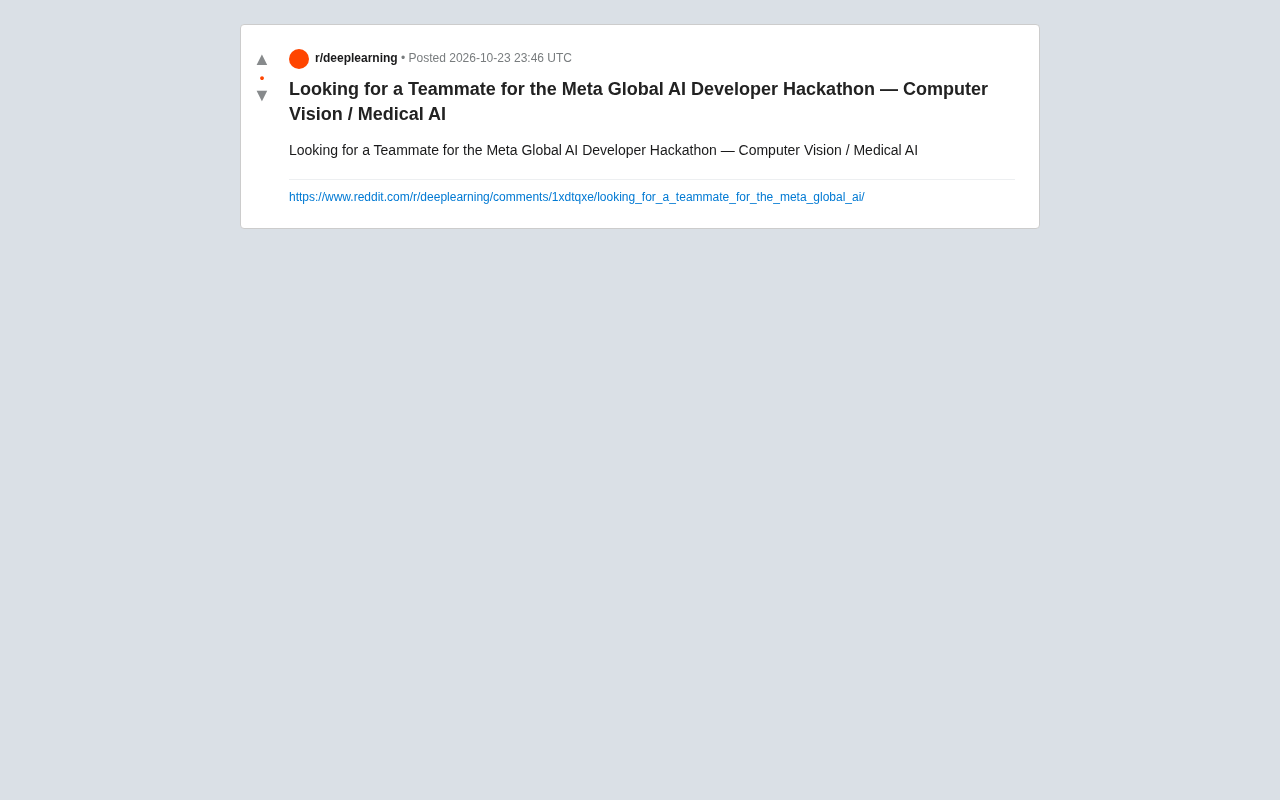
Teammate Wanted for Meta Global AI Developer Hackathon: Computer Vision & Medical AI
A Reddit developer seeks teammates for the Meta Global AI Developer Hackathon, focusing on computer vision and medical AI. This article analyzes the track logic, skills-complementarity needs, and topic selection strategy behind this teaming signal.
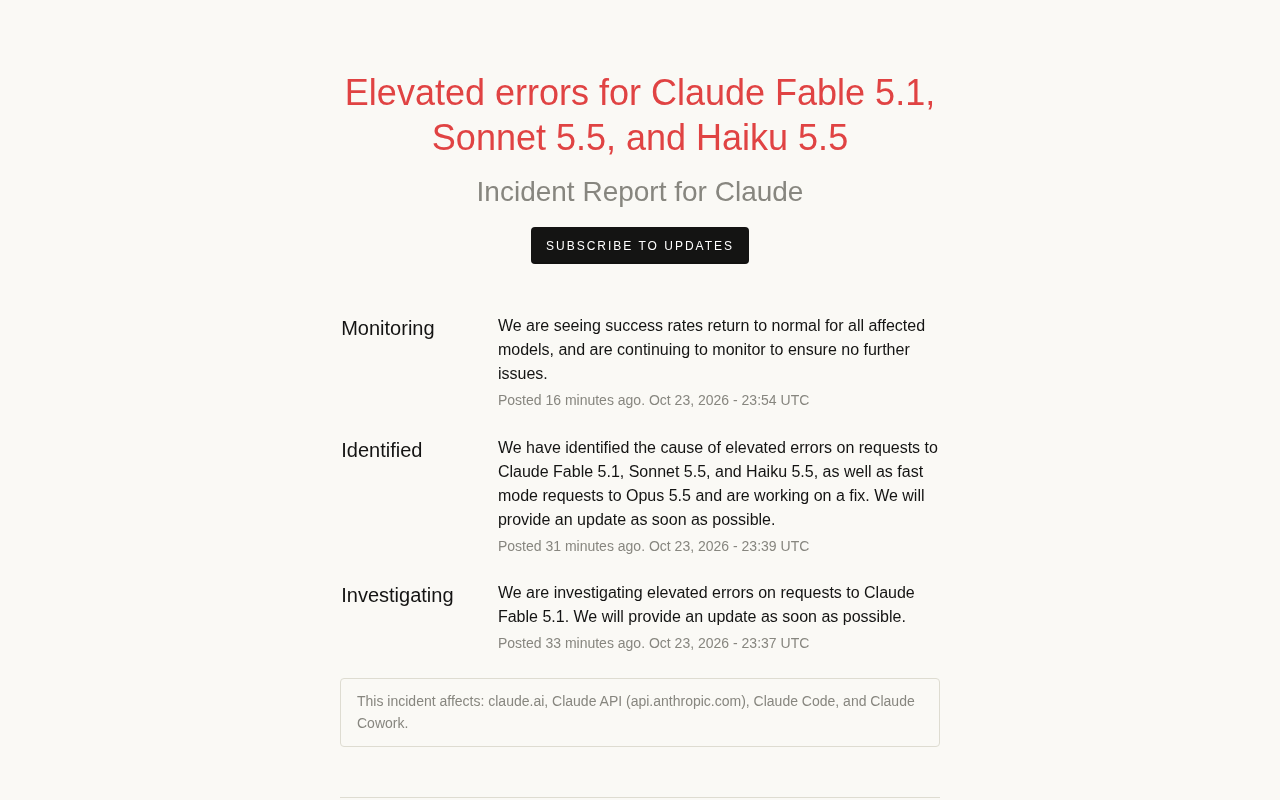
Multiple Claude Models Hit by Errors: A Postmortem of Fable 5.1, Sonnet 5.5, and Haiku 5.5
Claude Fable 5.1, Sonnet 5.5, Haiku 5.5, and Opus 5.5 fast mode saw elevated errors; Anthropic identified and resolved the issue in 17 minutes. This postmortem covers the timeline, the technical reasons for the multi-model cascading failure, and practical lessons for retry and degradation strategies.