Altman: Taking OpenAI Public This Year Would Be 'Ill-Advised'
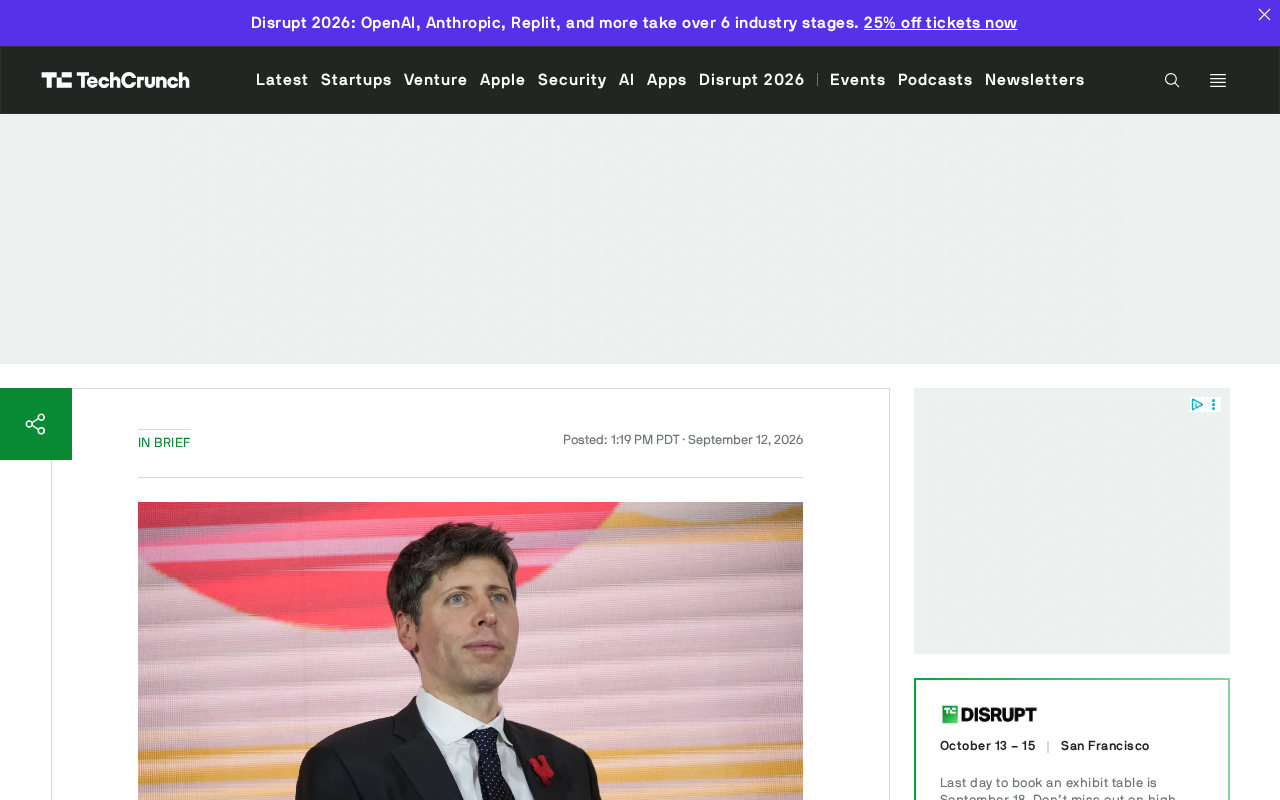
Altman confirms OpenAI filed IPO paperwork confidentially but says going public this year would be 'ill-advised.'
OpenAI CEO Sam Altman has stated clearly that while the company has confidentially submitted IPO-related filings with the SEC, launching a public listing this year would be 'ill-advised.' The statement simultaneously confirms that IPO preparations are underway while signaling no near-term listing — a deliberate show of strategic restraint. Altman cited an immature business model, a complex equity and governance structure, and the structural tension between public market short-termism and OpenAI's long-term AGI mission. The confidential filing, a standard US pre-IPO practice, gives OpenAI full flexibility to accelerate or hold back as conditions evolve. This posture carries broader significance for the AI industry, reflecting a collective caution among top-tier AI companies about the current timing of capitalization.
IPO Rumors and the Official Response
OpenAI CEO Sam Altman has offered a clear public stance on the IPO question that has been generating ongoing speculation: despite the company having confidentially filed the relevant paperwork for an initial public offering, OpenAI will not move forward with a public listing this year. He stated plainly that pursuing a public offering at this point would be an "ill-advised" decision.
What made this statement particularly noteworthy is that it simultaneously confirmed two seemingly contradictory pieces of information. On one hand, OpenAI is genuinely preparing for a public listing — confidentially submitting the filing is itself a significant signal. On the other hand, company leadership has explicitly ruled out ringing the bell anytime soon. This "two steps forward, one step back" posture reflects the careful approach this most closely watched AI company in the world is taking on its path to capitalization.
Why "Ill-Advised"?
From a corporate governance and business maturity standpoint, Altman's judgment has an internal logic. OpenAI is still in a phase of rapid growth paired with enormous capital expenditure. Its business model, path to profitability, and the complex equity structure involving strategic investors like Microsoft have yet to fully crystallize. Going public before these fundamentals stabilize could expose the company to short-term market volatility and quarterly earnings pressure — ultimately constraining the freedom it needs for long-term R&D investment.
For a company that is still defining the frontier of technology, maintaining a relatively private capital structure means greater strategic flexibility. Altman has repeatedly emphasized OpenAI's long-term mission of achieving artificial general intelligence (AGI), and public markets' appetite for near-term returns often creates structural tension with that kind of high-investment, long-horizon technological vision.
What Does a Confidential Filing Actually Mean?
It's worth noting that a "confidential filing" is both a compliant and common practice. It allows a company to engage with regulators and complete preliminary reviews without disclosing financial details publicly — meaning that when a company does decide to go public, it can move quickly. In other words, this move by OpenAI looks more like "loading the gun" than pulling the trigger.
This approach gives the company substantial flexibility: once market conditions, business scale, or governance structures reach the desired state, it can launch a public offering within a relatively short window. When conditions aren't right, it can simply hold its position. Altman's statement is effectively expectation management — acknowledging the long-term possibility of going public while drawing a clear line around the near-term "not yet."
Implications for AI Industry Capitalization
As the leading force behind the generative AI wave, OpenAI's capital market moves serve as a bellwether for the entire industry. Countless AI startups are currently wrestling with when and how to enter the public markets. Altman's cautious stance sends a signal: even the highest-valued, most high-profile AI company believes a public listing at this stage may not be the optimal choice.
This reflects the broader realities facing the AI industry as a whole — rapid technological iteration, massive capital consumption, and business models that are still being worked out. For investors, understanding this kind of restraint — the ability to go public, but choosing not to — matters more than chasing the next IPO headline. OpenAI's choice may well become a reference point for other leading AI companies as they calibrate their own capitalization timelines.
Takeaway
Altman's statement that going public this year would be "ill-advised" clearly defines OpenAI's near-term capital path: preserve the option for a future public listing, but refuse to act prematurely when the timing isn't right. For outside observers, a confidential filing and an explicit denial of a near-term IPO are not contradictory — together, they represent the rational cadence of capital management from a mature tech company. Whether and when OpenAI ultimately goes public will continue to depend on the evolution of its business maturity, governance structure, and the broader market environment.
Related articles
Geopolitical Bias Compared Across Three AI Models: GPT-5.2, Claude, and Qwen Tested
An open-source project compares GPT-5.2, Claude Opus 4.6, and Qwen 3.5 Plus on sensitive Greek geopolitical topics. We break down its methodology, limitations, and why LLM neutrality audits matter.
Sam Altman: An IPO in the Near Term Would Be 'Ill-Advised' for OpenAI
OpenAI CEO Sam Altman tells Fortune that an IPO in the near term would be "ill-advised," while also addressing recursive self-improvement risks and the Hugging Face hack.
AI Coding Model Benchmark Tool: GPT-5.3 Codex vs. Claude Opus 4.6 — Which One Wins?
The open-source project ai-coding-benchmark-zyt benchmarks GPT-5.3 Codex vs. Claude Opus 4.6. This article explores its methodology, value, and developer guidance.