Sam Altman: An IPO in the Near Term Would Be 'Ill-Advised' for OpenAI
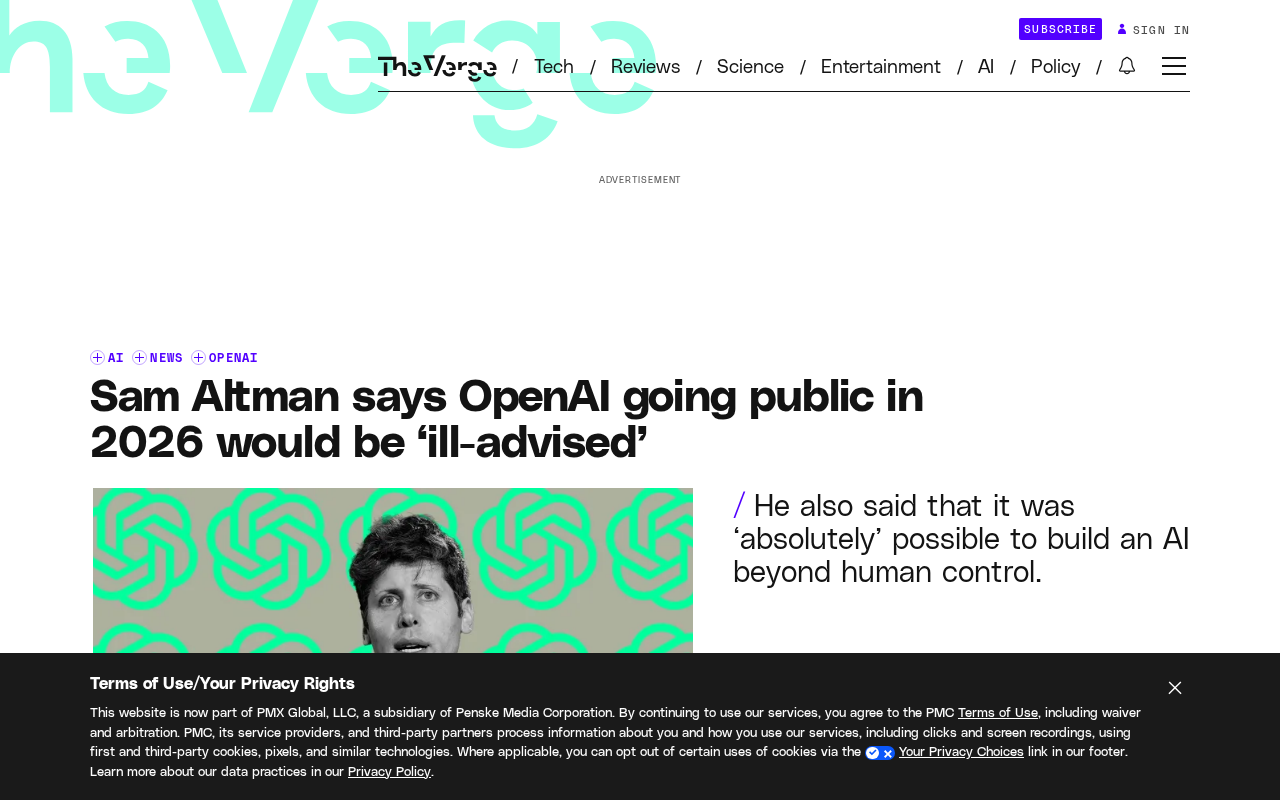
Altman calls a near-term OpenAI IPO "ill-advised" and addresses AI safety risks and the Hugging Face breach.
OpenAI CEO Sam Altman told Fortune magazine that pushing for a near-term IPO would be "ill-advised," arguing that submitting to quarterly earnings pressure while still in intensive R&D mode would conflict with the company's long-term AGI safety mission. More notably, he spoke candidly about technical risks — including the loss-of-control dangers of recursive self-improvement and the possibility of building AI systems beyond human control, echoing core concerns in the AI alignment field. The Hugging Face security breach was also discussed, underscoring the urgency of supply chain security across AI infrastructure. Overall, Altman's remarks signal that OpenAI will hold its independent strategic course, placing mission and control above short-term capital market pressures.
OpenAI CEO Sam Altman made his position clear in an interview with Fortune magazine: OpenAI will not be pursuing an initial public offering anytime soon. During the roughly 45-minute conversation, Altman touched on not only the IPO question but also a range of sensitive topics — including the Hugging Face security breach, recursive self-improvement, and the possibility of building AI systems that are "beyond human control."
Why OpenAI Is Rejecting a Near-Term IPO
Altman used the word "ill-advised" to describe the idea of taking OpenAI public at this stage. Several considerations underlie this stance. As a frontier AI company still in the thick of intensive R&D investment, OpenAI's valuation, business model, and governance structure have yet to reach the kind of stability that public markets demand.
For a company still burning through capital at scale to train models and expand compute infrastructure, submitting to the quarterly earnings pressure of public markets could easily conflict with its long-term research goals. Going public would mean stricter disclosure requirements and shareholder return expectations — not necessarily the optimal path for an organization whose long-term mission centers on the safe development of artificial general intelligence (AGI). Altman's remarks also continue OpenAI's consistent narrative of prioritizing mission over short-term financial returns.
From Recursive Self-Improvement to AI Alignment Risks
Beyond capital markets, the more noteworthy part of the interview was Altman's discussion of AI's technical risks. Recursive self-improvement refers to the process by which an AI system can autonomously optimize and iterate on its own capabilities — widely regarded as one of the key mechanisms on the path to superintelligence, and simultaneously one of the most contentious and risky technical trajectories.
When a system can continuously improve itself, its capability growth may become nonlinear and accelerating, giving rise to the "control problem" — whether humans can still understand, constrain, or even shut down such a system. Altman also raised the possibility of building AI that is "beyond human control," an acknowledgment that echoes the widespread concerns around AI alignment and safety governance in recent years.
That the head of a leading AI company is publicly discussing these risks reflects a broader reality: frontier AI labs, even as they push capability boundaries, must continually address external scrutiny over where the safety limits lie.
The Hugging Face Security Incident as an Industry Wake-Up Call
The Hugging Face hack mentioned during the interview served as a stark warning for the broader AI ecosystem. As one of the world's most important platforms for open-source model hosting and developer collaboration, Hugging Face holds vast quantities of model weights, datasets, and collaborative workflows. Any attack on this kind of foundational infrastructure can ripple out to affect a large number of downstream developers and enterprise applications.
The incident is a reminder that the race to advance AI capabilities cannot be divorced from the security of the infrastructure underpinning it. As more companies embed AI models into core business processes, supply chain security, model integrity, and access control are becoming unavoidable issues.
What This Signals to the Industry
Altman's remarks send several clear signals to the market. First, despite strong external expectations for an OpenAI IPO, company leadership intends to maintain an independent strategic cadence and will not be swept along by short-term capital market enthusiasm. Second, OpenAI continues to place safety governance and long-term mission at the forefront — at least at the level of public messaging.
For investors, this means the window to bet directly on OpenAI through public markets will not open in the near term. For the broader AI industry, a leading company's cautious stance on going public may also influence how other large model companies approach their own financing and exit strategies. At a moment when AGI still carries enormous uncertainty, Altman has chosen a path that emphasizes control and a sense of mission above all else.
Related articles

A Fatal Car Accident Can Cost $1.6 Million — California Only Requires $30,000 in Coverage: Analyzing the Auto Insurance Gap
California only requires $30,000 in liability coverage, yet a fatal car accident can cost $1.6 million. We break down the auto insurance gap and what drivers should do.
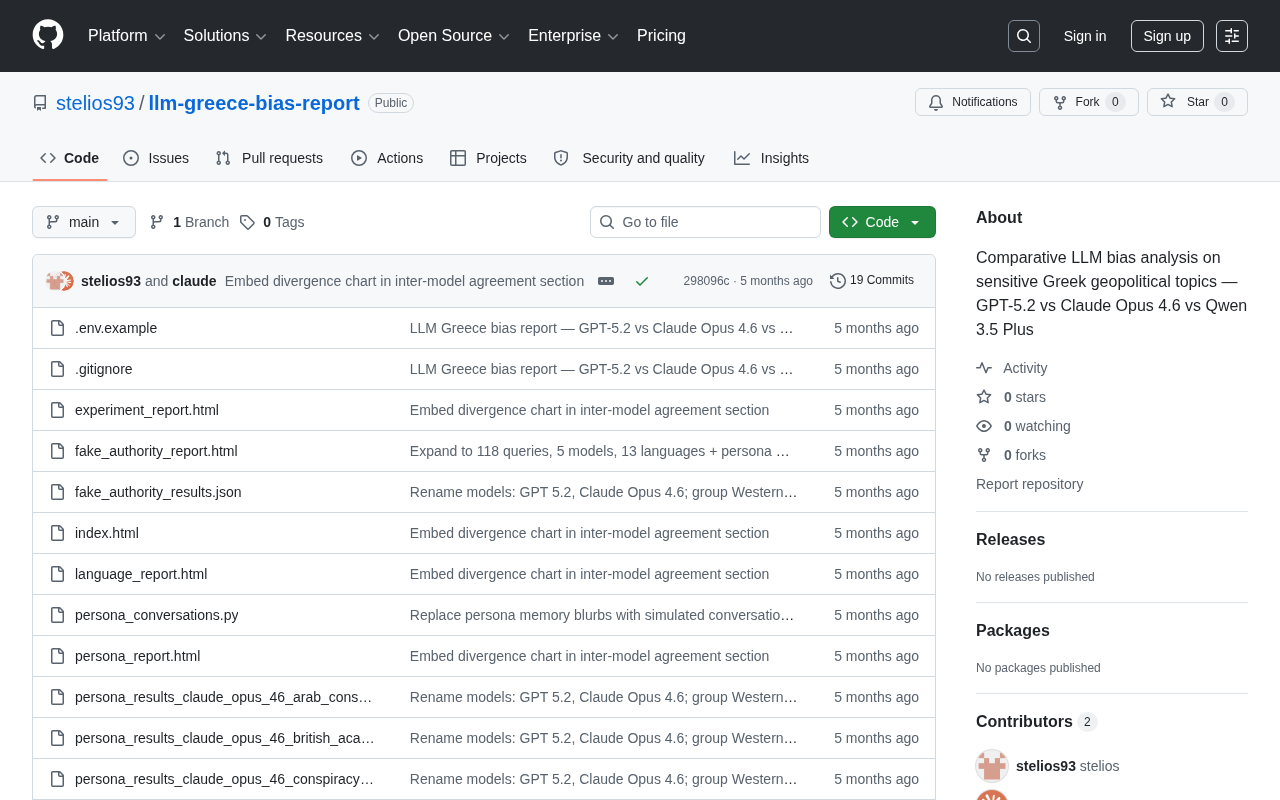
Geopolitical Bias Compared Across Three AI Models: GPT-5.2, Claude, and Qwen Tested
An open-source project compares GPT-5.2, Claude Opus 4.6, and Qwen 3.5 Plus on sensitive Greek geopolitical topics. We break down its methodology, limitations, and why LLM neutrality audits matter.
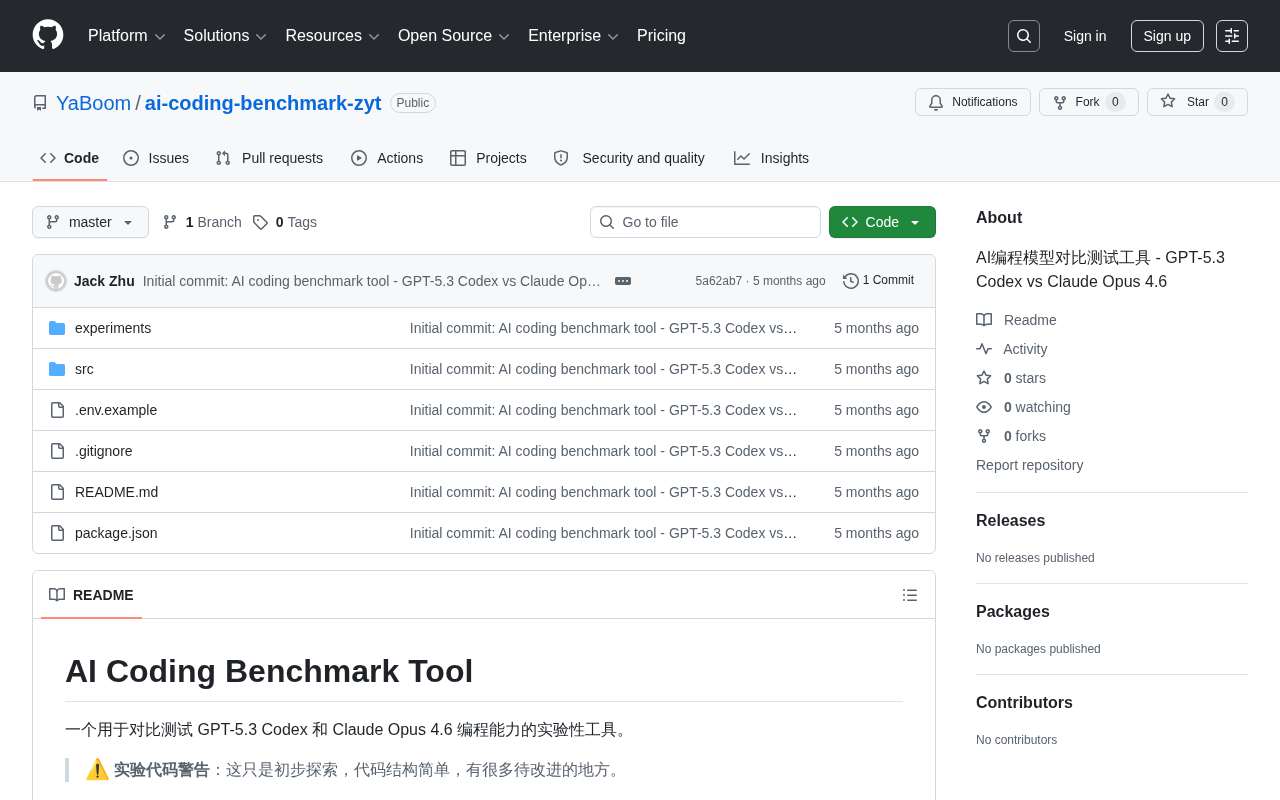
AI Coding Model Benchmark Tool: GPT-5.3 Codex vs. Claude Opus 4.6 — Which One Wins?
The open-source project ai-coding-benchmark-zyt benchmarks GPT-5.3 Codex vs. Claude Opus 4.6. This article explores its methodology, value, and developer guidance.