Amy Poehler's Pizza Interview: From Cooking Fears to Healing Pizza Trauma
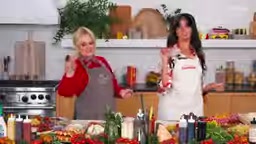
Amy Poehler and Geraldine Viswanathan talk cooking confidence, generational memories, and media naturalness while making pizza.
On the New York Times Cooking channel, actors Amy Poehler and Geraldine Viswanathan have an honest conversation while making pizza. Geraldine shares her pizza peel "trauma" and flour mistake, while Amy offers her "low-risk, high-reward" cooking philosophy. They chat from pineapple pizza to generational food memories like the "almond mom" phenomenon, share hometown foods and mall culture, feed a sourdough starter together, and discuss kitchen tools and Thanksgiving prep tips. The conversation extends to on-set collaboration and changes in media interviews, emphasizing that cooking doesn't need to be perfect—what matters is trying and being authentic.
In a special episode of the New York Times Cooking channel, actors Amy Poehler and Geraldine Viswanathan put on aprons and chatted about cooking, hometowns, and on-set anecdotes while making pizza. This wasn't just a pizza lesson—it was an honest conversation about "kitchen confidence."
Pizza Making: A High-Stakes Surgery
For Geraldine, making pizza is no easy task. She admitted she made pizza as a kid but "it's been a while," and she's always had "pizza peel trauma"—the dough always sticks to the peel. Amy joked from the side: "Today we're going to heal that trauma."
As Geraldine carefully slid the pizza into the oven, she described it as being like surgery: "This is stressful, like doing surgery. Get in, get in!" She also admitted she'd used the wrong flour before, not using semolina flour. According to analysis from Bilibili creators and YouTube channels, this detail reveals a common mistake many home cooks make—flour choice directly affects the texture of the pizza base.
Amy shared her cooking philosophy on the side: "Cooking is low-risk, high-reward. People think of it as too high-stakes. You just do it by yourself, no one's watching. If it doesn't turn out well, don't tell anyone. But if it does, you feel like a genius."
Semolina flour is a coarse flour milled from durum wheat, with a higher protein content and a yellowish color. In pizza making, it's often sprinkled on the pizza peel or work surface as an anti-stick layer, because its coarse granule structure reduces the contact area between dough and surface, and it doesn't burn as easily at high temperatures like regular flour. Using the wrong flour (such as substituting regular all-purpose flour) leads to dough sticking to the peel, a burnt bottom, or a gummy texture. Additionally, semolina is also commonly used for making pasta; its unique texture and flavor make it a staple for professional pizzaiolos.
Ingredients and Generational Memory
The two had completely different topping choices. Amy's pizza had tomato, mozzarella, artichokes, and mushrooms; Geraldine boldly chose pineapple, tomato, and olives, and used pesto as the base sauce. Amy exclaimed: "Break your stereotypes about pizza—pizza can be anything."
The conversation turned to generational food memories. Geraldine mentioned her generation's obsession with avocado, while Amy quipped about the "almond mom" phenomenon—dieting moms who made almonds suddenly ubiquitous. This generational observation of food trends elevates cooking beyond mere technique, making it a carrier of cultural memory.
"Almond mom" is a cultural meme that has become popular on social media in recent years, originating from a video in which a mother suggested her daughter eat a few almonds to stave off hunger and control her weight. It refers to mothers influenced by diet culture who habitually substitute a small handful of nuts for meals, reflecting generational conflicts over food, body image, and health concepts. This phenomenon is closely tied to the low-fat diet craze of the 1980s-1990s, when fat was demonized and nuts like almonds were marginalized—only to make a comeback thanks to advances in nutritional science. Amy's quip is a humorous deconstruction of this kind of food anxiety.
Hometown Flavors: From Pub Schnitzel to Mall Culture
When asked what she'd take the other to eat in her hometown, Geraldine said she'd take Amy to a pub for schnitzel with beer, plus the "fire engine" she drank as a kid—a mix of lemonade and red syrup. Amy mentioned Boston's Indian food and seafood, but both agreed that the most important social venue of their upbringing was the mall. "In our generation, malls would kick teens out, but everyone was hanging out at the mall," Geraldine recalled.
This sharing of hometowns and upbringing lets audiences see a real side of the two actors beyond the screen.
Kosher turkey refers to turkey processed according to Jewish dietary laws (kashrut). The process includes salting to remove blood, a step similar to dry brining that makes the meat more flavorful and the skin crisper. As a result, even non-Jewish consumers often choose kosher turkey for Thanksgiving cooking, because it's essentially a "pre-brined" turkey that simplifies preparation for home cooks. This tip is widely circulated in food circles, and Amy's mention leverages the added culinary value of kosher certification.
Sourdough and Kitchen Tools: A Way of Life
In the latter half of the show, the two also fed a sourdough starter together and named it "Bella." Geraldine admitted she too got hooked on sourdough baking during the pandemic, but "bread is hard, I have a lot to learn." Amy shared her love of kitchen tools, especially the microplane and tongs, and revealed she got her co-star Antonia Thomas hooked on small tongs too.
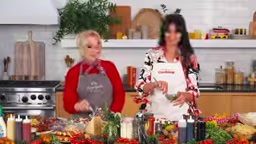
Speaking of Thanksgiving, Geraldine, as an Australian, admitted she usually "flees the country" because "it feels a bit weird." Amy showed her Virgo side, detailing her preparation starting the Monday before Thanksgiving, including making cranberry sauce, stuffing, and pie ahead of time. She also shared a practical tip: buy a kosher turkey, because it's usually pre-brined.
Sourdough starter is a mixture of flour and water that undergoes natural fermentation by capturing wild yeasts and lactic acid bacteria from the environment, forming a stable microbial community. It needs to be "fed" regularly (with added flour and water) to maintain activity, and is commonly used to make sourdough bread. During the pandemic, due to more time at home and yeast shortages, sourdough baking became a global home trend, with social media flooded with starter-growing diaries. A starter's success depends heavily on temperature, humidity, and patience, so it's often described as "keeping a pet." Geraldine's admission reflects the real challenges behind this trend.
Cooking and Acting: Both Require "Authenticity"
The two also talked about working together on set. They quickly bonded while filming Dig because they both felt "a bit rusty." Amy said: "If you can make comedy your job and be on TV, you've won the lottery." Geraldine added: "Amy is someone who never forgets that."
When asked whether she'd changed how she handles media interviews, Amy admitted: "Now I find interviewing others much more fun than being interviewed. And media interviews have changed too—like this, we're making pizza. People want something more natural, less over-prepared."
A Sense of Achievement in the Kitchen
In the end, both pizzas came out successfully. Geraldine's pizza, though a bit of the edge fell off, was an overall success; Amy's pizza made her exclaim: "I have a pizza oven, I've tried it myself, but I've never made it like this. The magic of the New York Times, plus 15 to 16 people helping me."
The most moving part of this episode is perhaps the simple yet powerful message it delivers: cooking doesn't need to be perfect. As Amy said: "If it doesn't turn out well, no one will know. But if it does, you'll feel like a genius."
One-line Summary
Amy Poehler and Geraldine Viswanathan talk cooking confidence, generational memories, and media naturalness while making pizza.
Paragraph Summary
On the New York Times Cooking channel, actors Amy Poehler and Geraldine Viswanathan have an honest conversation while making pizza. Geraldine shares her "trauma" with the pizza peel and her flour mistake, while Amy offers her philosophy that "cooking is low-risk, high-reward." They chat from pineapple pizza to generational food memories like the "almond mom" phenomenon, and share hometown foods and mall culture. They also feed a sourdough starter together, discuss kitchen tools and Thanksgiving prep tips. The conversation extends to on-set collaboration and changes in media interviews, ultimately emphasizing that cooking doesn't need to be perfect—what matters is trying and being authentic.
Related articles

Gemini 4 Neon: Six Hands-On Tests — Wins Benchmarks, But Independent Leaderboards Aren't Convinced
Full record of six hands-on tests of Gemini 4 Neon: from BrowserOS, C++ games, and 3D printing to photo-to-fighting-game, visual-spatial ability stands out but doesn't top independent leaderboards. Analysis of Neon's positioning between Hydrogen and Carbon, pricing misalignment, and why benchmarks diverge from reputation.

Hands-On Comparison: Astra 6.2 vs Neon — Which Is Stronger? A Full Breakdown of Token Consumption and Interaction Details
Bilibili host tests Astra 6.2 vs Neon generating a crocodile-riding-bicycle animation, comparing Token use, time, and interaction. Astra is 3.3x slower and burns 2.7x more Tokens; Neon wins on speed, cost, and playability, though Astra's picture-book style is more durable.
Former Prisoner Exposes U.S. Prison System: How Solitary Confinement Destroys the Mind
Former inmate Larry Lawton reveals the psychological devastation, corruption, and injustice of the U.S. prison system on the Lex Fridman podcast, describing how solitary confinement destroys the mind and how he fought back through lawsuits.