Former Prisoner Exposes U.S. Prison System: How Solitary Confinement Destroys the Mind

Former inmate Lawton exposes the psychological devastation of solitary confinement, systemic corruption, and judicial injustice in U.S. prisons.
In the Lex Fridman podcast, Larry Lawton recounts his 12 years in the U.S. federal prison system, focusing on how he was thrown into "the hole" (solitary confinement) for masturbating and then sued top prison officials. He details the devastating psychological toll of solitary, including a suicide attempt and the suicide of his friend Jack, during which he heard a voice say "I have a plan for you." Lawton also criticizes the structural corruption of the U.S. prison system, noting that private prisons are profit-driven and non-violent offenders are heavily incarcerated, and contrasts this with the effectiveness of rehabilitative justice in Europe. He emphasizes that psychological resilience is key to survival and that legal action is an effective means of resistance, and he now works to promote prison reform.
Former inmate Larry Lawton appeared on the Lex Fridman podcast to recount his 12 years in the U.S. federal prison system—from being thrown into "the hole" (solitary confinement) for masturbating, to suing top prison officials, to witnessing a fellow inmate's suicide. He reveals the deep-seated problems of the U.S. prison system: psychological devastation, corruption, and judicial injustice.
The Fight That Began in "the Hole"
Lawton was caught by guards masturbating in his single cell and was subsequently thrown into "the hole" (the Special Housing Unit, or SHU). He described it: "I'm on my own bed, by myself. What do they want me to do?" What enraged him even more was that the guards laughed uncontrollably about it. He refused to stay silent and instead sued seven officials, including then-Attorney General Alberto Gonzalez and then-Bureau of Prisons Director Harley Lappin.
The result of the lawsuit: the prison tried to transfer him and lose his legal documents, but Lawton persisted in his fight, and eventually the prison agreed to change the relevant policies. This experience became the starting point of his later battle against the prison system.
"The hole" is American prison slang; its formal name is the Special Housing Unit (SHU), referring to a form of confinement in which an inmate is held alone in a cell for 22 to 24 hours a day with near-total isolation. Triggers typically include violating prison rules, suspected violence, or protective segregation. The SHU was originally designed for short-term control of high-risk inmates, but in practice it is often abused as a punitive tool, with confinement lasting months or even years. The United Nations' Standard Minimum Rules for the Treatment of Prisoners (the Nelson Mandela Rules) recommend that solitary confinement exceeding 15 days constitutes torture, but many U.S. prison systems do not strictly comply.
Solitary Confinement: Psychological Torture, Not Punishment
Lawton spent a cumulative 11 months in "the hole," one stint of which came after he accused guards following a fellow inmate's death: "You killed him just like you'd kill someone with a gun." The psychological destruction of solitary confinement far exceeds the physical. He described it: "You start to feel like you'll never get out. Is this how you're going to live forever?" In utter despair, he once tore a bedsheet into strips and put it around his neck, just minutes away from suicide.
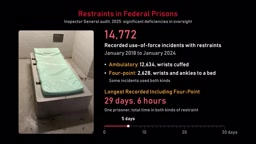
To stay sane, he read a book a day, talked to the inmate next door through the vent, and even built a fire and boiled water with the limited means available. He called these methods "MacGyver in prison." But loneliness and uncertainty remained the greatest enemies.
Long-term solitary confinement has been confirmed by extensive research to cause severe psychological deterioration, including anxiety, depression, hallucinations, paranoia, cognitive decline, and self-harm. These symptoms are academically termed "SHU syndrome," first systematically described by psychologist Stuart Grassian in the 1980s. Due to the lack of social stimulation, inmates may lose their sense of time, become unable to concentrate, and even exhibit psychosis-like symptoms. Lawton's account of tearing bedsheets to attempt suicide and talking through the vent are typical coping mechanisms, and the prison system often lacks effective intervention for such psychological crises.
A Fellow Inmate's Death and a Voice Heard
Lawton recounted the suicide of his friend Jack. Before the count, Jack told him he was going to "check out," and Lawton urged him to wait until after the count so they could talk. However, during the count, a guard stopped in front of Jack's cell, pressed "deuces" (the emergency call button), and then carried him away on a stretcher. Lawton witnessed all of this, lay on his bunk crying, repeatedly asking himself "why me?" Just then, he clearly heard a voice say: "I have a plan for you." He does not believe it was a hallucination, but to this day he cannot explain it.

Corruption and Injustice in the Prison System
Lawton pointed out that the U.S. prison system suffers from structural corruption. He mentioned that wardens receive bonuses for cutting food and programs, and that private prisons build their profits on incarcerating more people. He criticized the United States for holding the largest prison population in the world—about 1.9 million—compared with about 1.69 million in China, despite the U.S. population being far smaller. He also noted that only about 7% of inmates are incarcerated for violent crimes, and that many non-violent drug offenders are held for long periods.
He compared prison systems in Switzerland, Sweden, and Germany, noting that these countries have lower crime rates, lower recidivism rates, and smaller incarcerated populations, proving that rehabilitative justice is feasible. The U.S. prison system, by contrast, focuses more on punishment and profit while neglecting rehabilitation.
Private prisons are correctional facilities run by for-profit companies under contract with the government. In the United States, the two largest private prison companies are CoreCivic (formerly CCA) and GEO Group. Critics point out that the private prison business model relies on "bed guarantee" clauses—the government must guarantee a certain occupancy rate of inmates or still pay for empty beds—creating an economic incentive to incarcerate more people. At the same time, private prisons often cut costs by reducing medical care, education, and rehabilitation programs, leading to worsening conditions for inmate rehabilitation. Research shows that private prisons do not outperform public prisons in terms of violence or recidivism, and their profit orientation fundamentally conflicts with rehabilitative goals.
Rehabilitative justice emphasizes helping inmates reintegrate into society through education, vocational training, psychological treatment, and community support, rather than mere punishment. Nordic countries such as Norway, Sweden, and Germany are representatives of this model, with prison systems that emphasize humane environments, a high ratio of staff-to-inmate interaction, and social transition support after release. Data show that Norway's recidivism rate is about 20%, compared with over 60% in the United States. This difference is often attributed to the more comprehensive social welfare systems and the lighter sentencing for non-violent crimes in Nordic countries, though critics note that direct transplantation must take into account structural factors such as the higher violent crime rate and widespread gun ownership in the United States.
Psychological Resilience: From Victim to Advocate
Lawton emphasized that the strongest part of prison is the mind, not the body. He had been a boxer, but when facing violence from multiple guards, physical resistance was meaningless. He fought the system through legal action, media exposure, and psychological adjustment. He said: "They hate that I sued them, they hate that I went to the media. But the more you mess with me, the more I won't give up."
Today, Lawton is dedicated to helping inmates and former prisoners and calls for reform of the prison system. He admits that he lost the prime years of his life from age 34 to 46, but hopes to use his experience to warn others and to push society to pay attention to this forgotten group.
Related articles

Gemini 4 Neon: Six Hands-On Tests — Wins Benchmarks, But Independent Leaderboards Aren't Convinced
Full record of six hands-on tests of Gemini 4 Neon: from BrowserOS, C++ games, and 3D printing to photo-to-fighting-game, visual-spatial ability stands out but doesn't top independent leaderboards. Analysis of Neon's positioning between Hydrogen and Carbon, pricing misalignment, and why benchmarks diverge from reputation.

Hands-On Comparison: Astra 6.2 vs Neon — Which Is Stronger? A Full Breakdown of Token Consumption and Interaction Details
Bilibili host tests Astra 6.2 vs Neon generating a crocodile-riding-bicycle animation, comparing Token use, time, and interaction. Astra is 3.3x slower and burns 2.7x more Tokens; Neon wins on speed, cost, and playability, though Astra's picture-book style is more durable.

Amy Poehler's Pizza Interview: From Cooking Fears to Healing Pizza Trauma
Amy Poehler and Geraldine Viswanathan make pizza on the New York Times Cooking channel, discussing cooking fears, hometown flavors, and kitchen confidence—from pizza peel trauma to sourdough starter.