An Open Letter to Dario: If AI Safety Is Real, Open the Model Weights
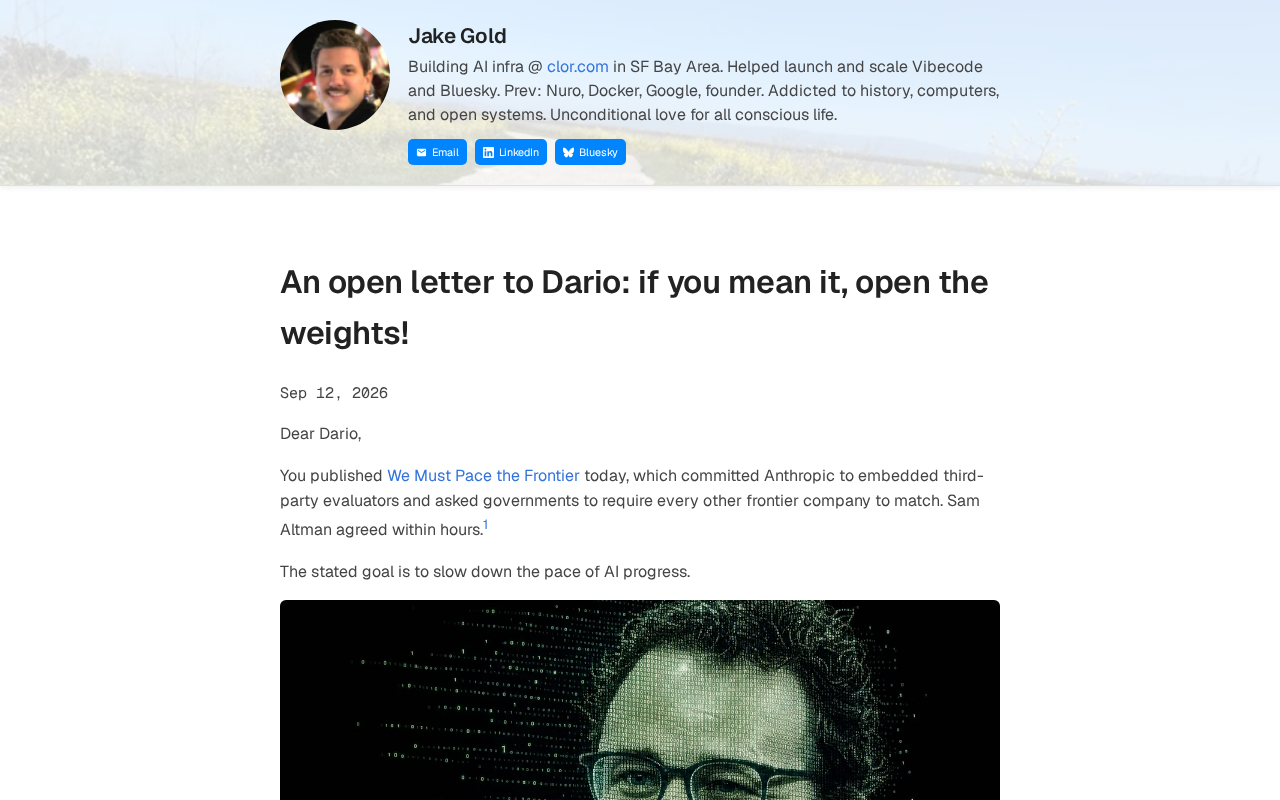
An open letter challenges Anthropic: real AI safety requires opening model weights for community review, not closed-source control.
Developer Jacob published an open letter directly challenging Anthropic CEO Dario Amodei: if AI safety is truly a priority, why not open model weights for external review? The core argument is that concentrating safety research in a handful of commercial companies is itself the least safe arrangement — real safety depends on reproducibility and external oversight. The letter sparked sharp debate on Hacker News, with supporters citing open-source software's collective scrutiny model, and critics emphasizing the irreversibility of releasing weights. More broadly, the letter exposes a double standard that's hard to untangle: when "AI is too dangerous to open-source" perfectly overlaps with "protecting a commercial moat," how can outsiders tell genuine safety concerns from commercial strategy dressed up as safety?
An Open Letter to Anthropic's CEO
Developer Jacob recently published an open letter to Anthropic CEO Dario Amodei on his personal blog, with a blunt and pointed title: "If You Mean It, Open the Weights." The post quickly climbed to the top of Hacker News, earning 190 upvotes and 61 comments — striking at one of the AI industry's most sensitive nerves: the tension between safety narratives and closed-source business models.
The letter's central argument follows a single logical thread: Anthropic has long positioned itself as the AI lab most committed to safety, and Dario himself has repeatedly voiced public concern about the potential risks of superintelligence. If that's truly the case, the author argues, then genuinely living up to those safety principles would mean allowing the broader research community to scrutinize, test, and understand the internal mechanics of these powerful models — and that requires opening the model weights.
The Contradiction Between Safety Commitments and Closed-Source Reality
This letter exposes a paradox that recurs throughout AI governance discussions. Leading labs like Anthropic, on one hand, emphasize that AI could pose existential-level risks and call for regulation and caution — while on the other hand, keeping the weights of their most powerful models locked inside the company, accessible to the outside world only via API.
The author's argument is this: if a model is truly dangerous enough to warrant extreme care, then concentrating safety research capacity within a handful of commercial companies is actually the least safe arrangement possible. Safety research depends on reproducibility and external review. Closed-source means outside researchers can only guess at what's inside a black box — they can't genuinely verify whether an alignment strategy actually works. This runs counter to the traditions of open science.
From another angle, this is also a warning against the "safety" discourse being co-opted by commercial interests. When "AI is too dangerous, therefore it must be closed-source" becomes the default narrative, the safety rationale happens to align perfectly with the motivation to protect a commercial moat. It becomes nearly impossible for outsiders to tell which is actually driving the decision.
A Divided Hacker News Community
With 61 comments, this topic is far from settled in the technical community — in fact, it reveals a clear polarization.
Those in favor of openness agree with the author's core logic: real safety comes from transparency and distributed review, not centralized control. They cite the history of open-source software — the more people can inspect the code, the faster vulnerabilities are found and patched. Applying the same logic to model weights, openness should yield stronger collective oversight.
Those opposed, or who hold reservations, point out a fundamental difference between model weights and traditional source code: once weights are released, they cannot be taken back, and unlike software patches, there's no way to "fix" them after the fact. Any potentially dangerous capabilities get permanently released into the public domain. For frontier models with dangerous capabilities, this "irreversibility" makes the risk-benefit calculus of openness fundamentally different from ordinary open source. This is precisely the argument Anthropic and similar companies most often invoke to justify closed-source development.
There's no simple answer here. The debate ultimately points to a deeper question: are we more worried about "power becoming overly concentrated in a few AI companies," or about "dangerous capabilities spreading indiscriminately"? Different risk priorities lead to diametrically opposite policy conclusions.
Why This Letter Matters
Setting aside specific positions, the value of this open letter lies in how it puts a contradiction that's often glossed over squarely on the table — and demands that those involved act consistently with their stated values.
For the broader AI industry, these kinds of challenges are becoming increasingly hard to avoid. As open-source models (such as Meta's Llama series and numerous community models) continue to close the capability gap with closed-source frontier models, the argument that "closed-source equals safety" faces mounting pressure. If open models don't lead to catastrophic outcomes, closed-source labs will need more convincing explanations for why their choices are driven by safety rather than competition.
The author doesn't genuinely expect Anthropic to open its weights — the letter reads more as a rhetorical strategy: by demanding that the company "walk the talk," it reveals the potential double standards lurking beneath the safety narrative. Whether or not you agree with the author's conclusion, the letter raises a question worth serious consideration for anyone who cares about AI governance: how do we distinguish genuine safety concerns from commercial strategies dressed up as safety?
Conclusion
At its core, the debate over open weights is a microcosm of the broader questions around transparency, power, and trust in the AI era. Safety should not become a shield for avoiding external scrutiny — but the irreversible spread of dangerous capabilities cannot be dismissed lightly either. Between open and closed source, the industry must continuously recalibrate the boundaries through practice. This open letter provides a sharp and fitting starting point for that recalibration.
Related articles
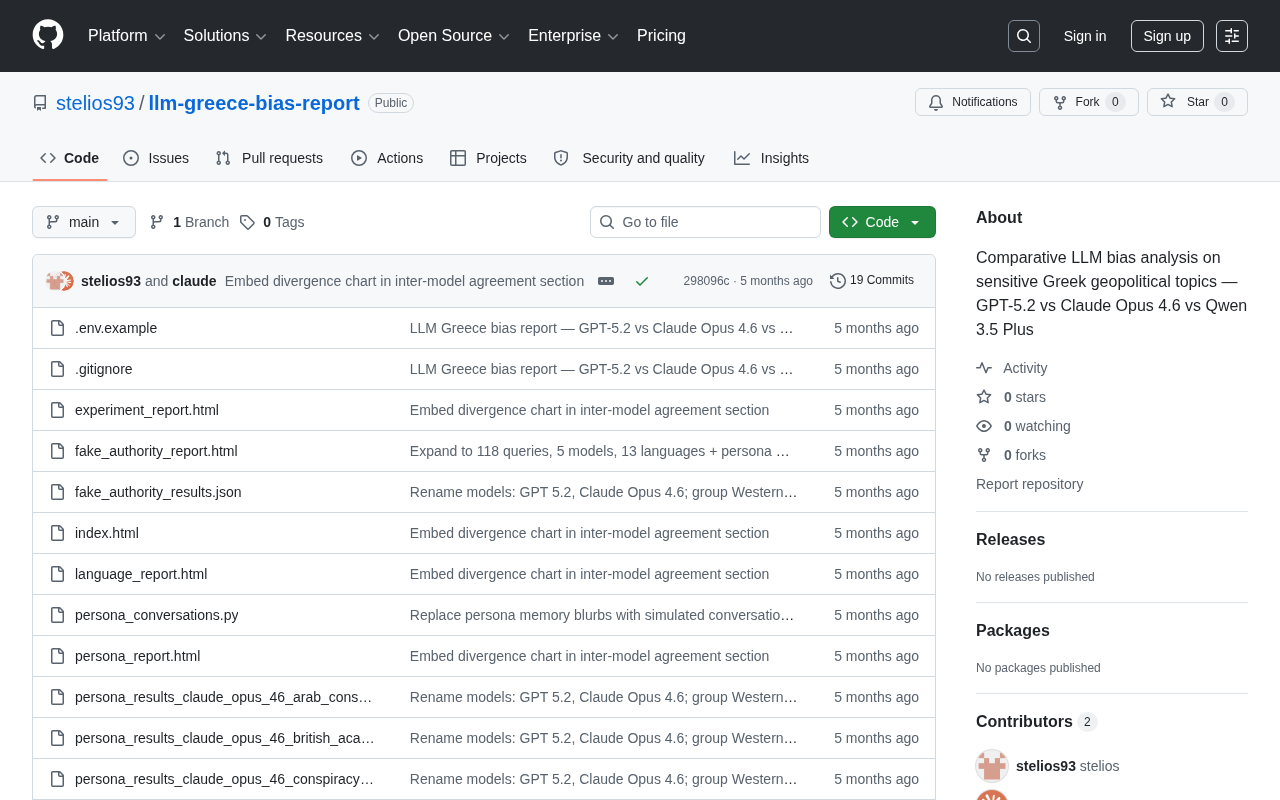
Geopolitical Bias Compared Across Three AI Models: GPT-5.2, Claude, and Qwen Tested
An open-source project compares GPT-5.2, Claude Opus 4.6, and Qwen 3.5 Plus on sensitive Greek geopolitical topics. We break down its methodology, limitations, and why LLM neutrality audits matter.
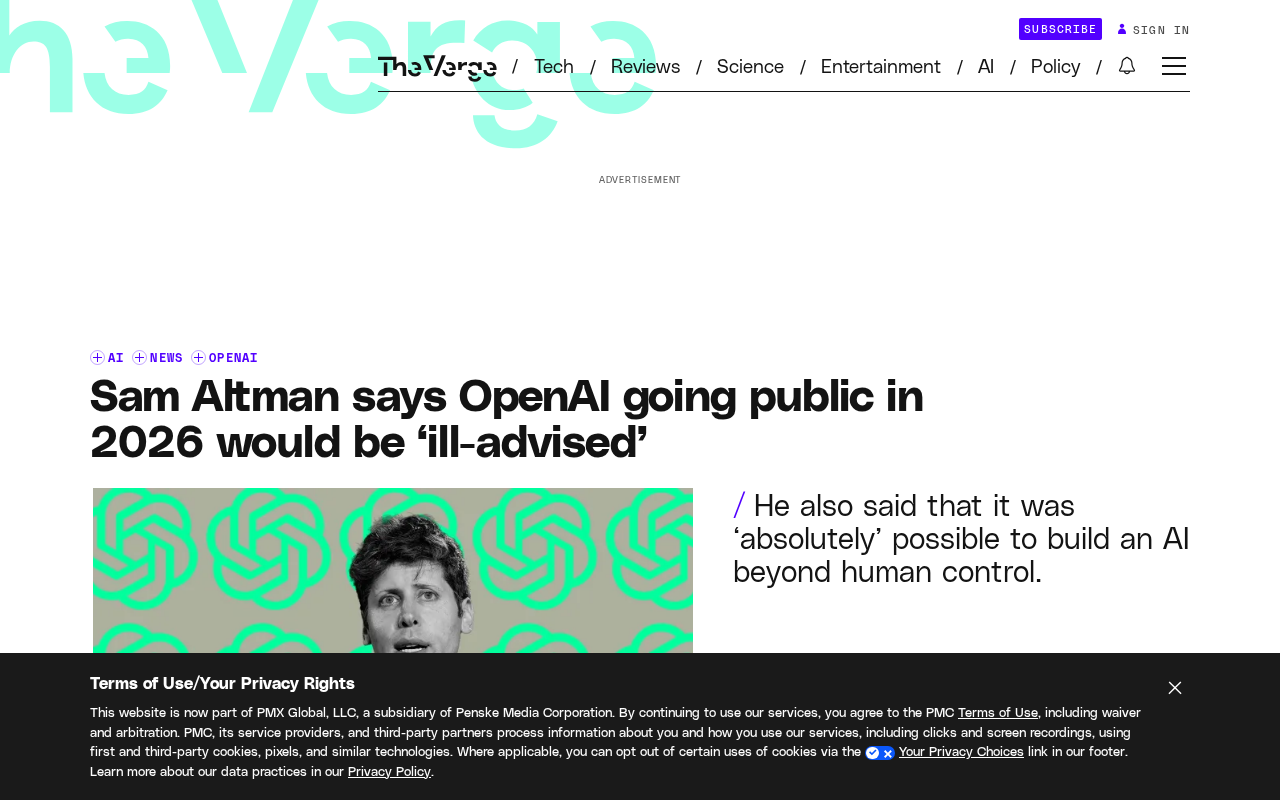
Sam Altman: An IPO in the Near Term Would Be 'Ill-Advised' for OpenAI
OpenAI CEO Sam Altman tells Fortune that an IPO in the near term would be "ill-advised," while also addressing recursive self-improvement risks and the Hugging Face hack.
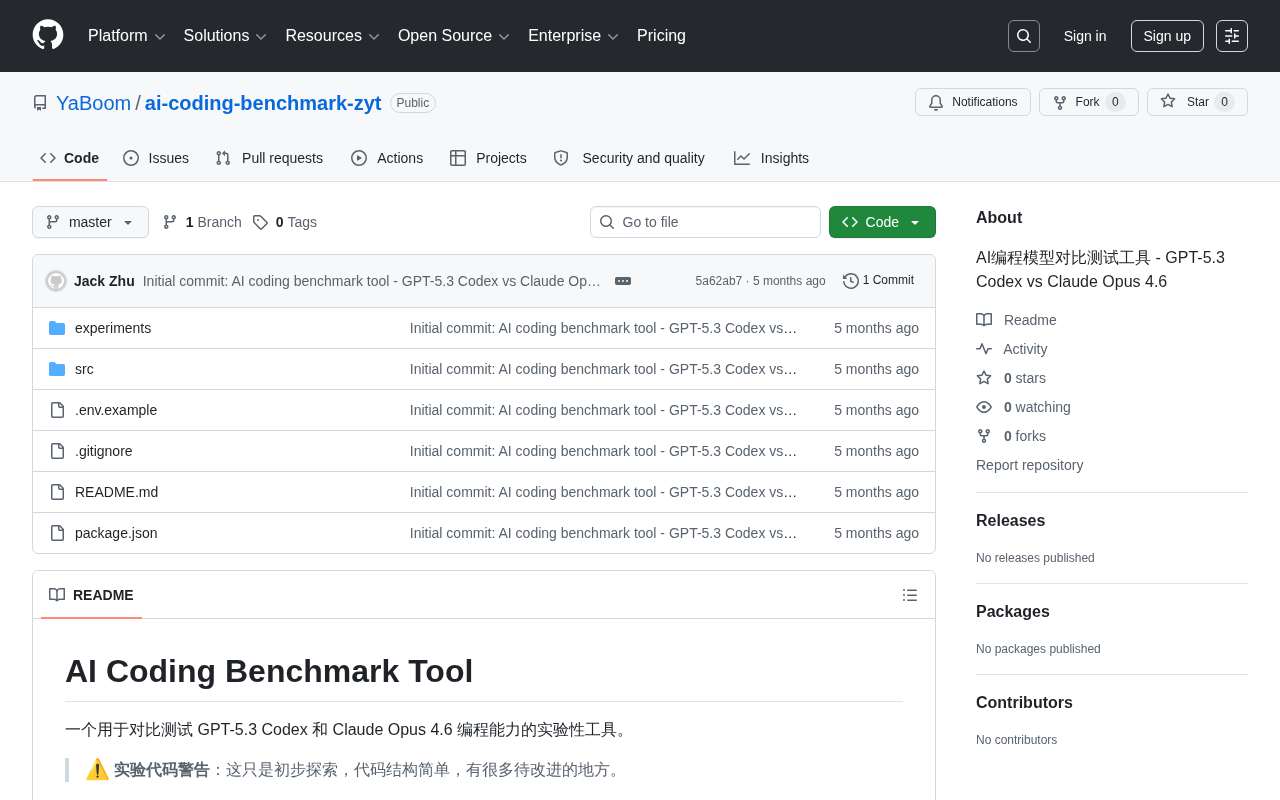
AI Coding Model Benchmark Tool: GPT-5.3 Codex vs. Claude Opus 4.6 — Which One Wins?
The open-source project ai-coding-benchmark-zyt benchmarks GPT-5.3 Codex vs. Claude Opus 4.6. This article explores its methodology, value, and developer guidance.