Android Developer Verification Program Sparks Controversy: Why Developers Are Pushing Back Hard

Google's Android developer verification plan triggers community fears over eroding platform openness.
Google's new Android Developer Verification Program requires developers to complete identity verification before distributing apps, triggering strong backlash in the tech community. A critical post on X quickly reached the top of Hacker News with 249 upvotes and nearly a hundred comments. Opponents argue the requirement raises the bar for independent and open-source developers, further centralizes distribution control in Google's hands, and creates discriminatory barriers for privacy-conscious developers or those in certain regions. At its core, the dispute is a classic platform-level trade-off between security and freedom — and with full official documentation still absent, the program's final shape and real-world impact remain to be seen.
A Debate Over Android's Openness
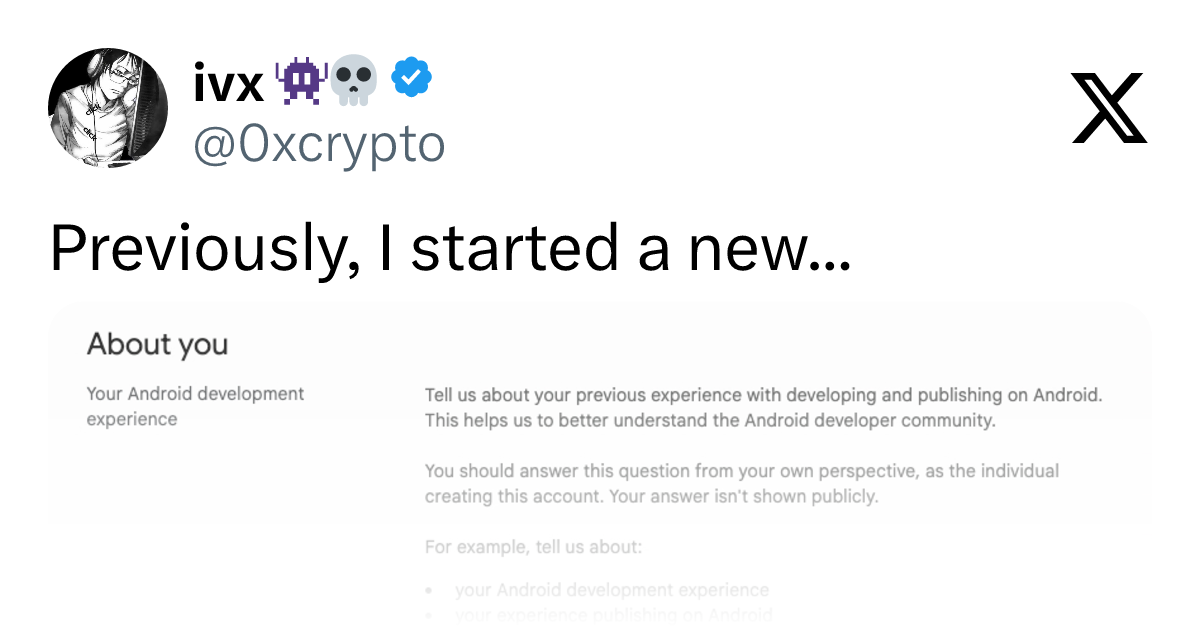
The tech community has been buzzing with strong opposition to Google's Android Developer Verification Program. A post on X (formerly Twitter) expressing blunt — even scathing — criticism of the program quickly made it to the front page of Hacker News, racking up 249 upvotes and nearly a hundred comments. Behind the noise lies a deeper anxiety among developers about the future openness of the Android platform.
It's worth noting upfront that the source material for this article is primarily a social media post and its associated Hacker News discussion thread — not a complete official explanation or detailed technical documentation of the program. The analysis below is therefore more of a look at the controversy itself and its context, rather than a clause-by-clause breakdown of policy terms.
What the Developer Verification Program Actually Changes
Android has long distinguished itself from iOS's closed ecosystem through its openness — users can install APK files directly via sideloading, and developers can distribute apps without going through the official app store. This freedom has been one of the core reasons many power users, independent developers, and open-source communities have chosen Android.
The central change introduced by the developer verification program is a requirement for the developer behind an app to complete some form of identity verification before that app can be normally installed or run on a device. From Google's perspective, such measures are typically framed as ways to improve security, combat malware, and protect end users. But for opponents, this signals a gradual tightening of the very openness that Android has prided itself on — with sideloading, the free-distribution channel, potentially facing new barriers or meaningful restrictions.
What is sideloading? Sideloading refers to the practice of downloading an APK installer and installing it directly on a device without going through an official app store. APK (Android Package) is the standard packaging format for Android apps — essentially a compressed archive containing the app's code, resources, and configuration files. In the iOS ecosystem, this is blocked by default (unless using enterprise certificates or jailbreaking), while Android has long required nothing more than enabling "Allow installation from unknown sources" in settings. This mechanism is what allows independent open-source app stores like F-Droid to exist, and lets developers distribute software without paying Google Play's annual fee or navigating store review policies. This relatively low-barrier distribution freedom represents one of the most substantive differences between Android's open ecosystem and iOS's closed one.
Why Developers Are Reacting So Strongly
The high-volume discussion on Hacker News makes clear that sentiment within the developer community is running hot. The objections can broadly be grouped into several categories.
Erosion of the Open Ecosystem
Once verification becomes a mandatory requirement, independent developers, hobbyist project authors, and creators who prefer not to tie their identity to a major platform may find themselves locked out of mainstream distribution channels. For open-source projects and niche tools, mandatory verification raises both the cost of publishing and the risk of privacy exposure.
Concerns About Centralized Control
Opponents worry that this effectively concentrates final control over app distribution even further in Google's hands. When a platform holder controls who gets to publish apps, they hold a potential switch for censorship and bans. This stands in sharp contrast to the open philosophy Android originally championed.
The "gatekeeper" problem has become a focal point for regulators around the world in recent years. The EU's Digital Markets Act (DMA) was specifically designed to address this, forcing large platforms like Apple and Google to open up third-party app stores and sideloading capabilities. The irony isn't lost on observers: just as regulatory pressure is forcing iOS to open up sideloading in EU markets, Google is advancing a verification mechanism on Android that could effectively restrict it. Some commentators see this contrast as a signal that the two companies are converging strategically on platform control — regardless of their starting positions, once a platform reaches sufficient scale, the business logic of centralized management tends to win out.
Privacy and Accessibility Concerns
Identity verification typically means developers must submit personal or business information. For privacy-conscious developers, or those in certain regions who can't easily meet verification requirements, this creates a direct barrier to participation.
The Same Old Question: Security vs. Freedom
At its core, this debate is a classic tension that plays out repeatedly on computing platforms: the trade-off between security and freedom. Platform holders tend to tighten controls to reduce malware and fraud risks and protect everyday users; the technical community, meanwhile, is wary of any move that uses security as a justification for eroding user and developer autonomy.
iOS chose a highly closed approach and achieved a relatively controlled security environment — at the cost of developer freedom. Android has long been seen as proof that another path is possible. When Google's policies begin tilting toward closure, the community's fierce reaction is easy to understand: what people fear losing isn't just a feature, but a choice.
Why This Is Worth Watching
Based on a single social media post, it's hard to judge what the program will ultimately look like or how far its impact will reach. But the heat of the discussion around it is itself a signal: developers' sensitivity to platform control is rising.
For independent developers, open-source maintainers, and privacy advocates who depend on Android's openness, it's worth keeping a close eye on official details as Google releases them — including the specific verification requirements, whether any exemptions exist, and what sideloading will actually look like under the new rules. Only once the full policy text is available can a more accurate assessment of its long-term implications be made.
Until then, this controversy reminds us of a useful long-term benchmark for evaluating any platform policy: don't just look at what it claims to protect — look at what it quietly takes away.
Related articles

The Chaotic Aesthetics of Apple's HomeView Ad: A Marketing Code Only Parents Can Read
Apple's HomeView smart display ad ditches minimalist style for chaotic family mornings to win over parents. We analyze why it confuses most viewers but resonates instantly with families — and the trade-offs and risks of Apple's targeted marketing.

Cerebras CEO Pushes Back on AI Doomerism: Stop Spreading Panic
Cerebras CEO Andrew Feldman publicly pushes back on AI doomerism at TechCrunch Disrupt, arguing excessive risk focus drowns out AI's real opportunities.

Retooling in Minutes: Industrial Next Redefines Factory Robot Flexibility
Industrial Next aims to let factory robots retool in minutes instead of weeks, automating complex delicate tasks and advancing flexible manufacturing and small-batch production.