Anthropic IPO Roadshow Revealed: Multi-Chip Strategy and AI Self-Improvement
Anthropic's roadshow disclosed its multi-chip strategy and outlined Claude autonomously discovering compute multipliers toward recursive self-improvement.
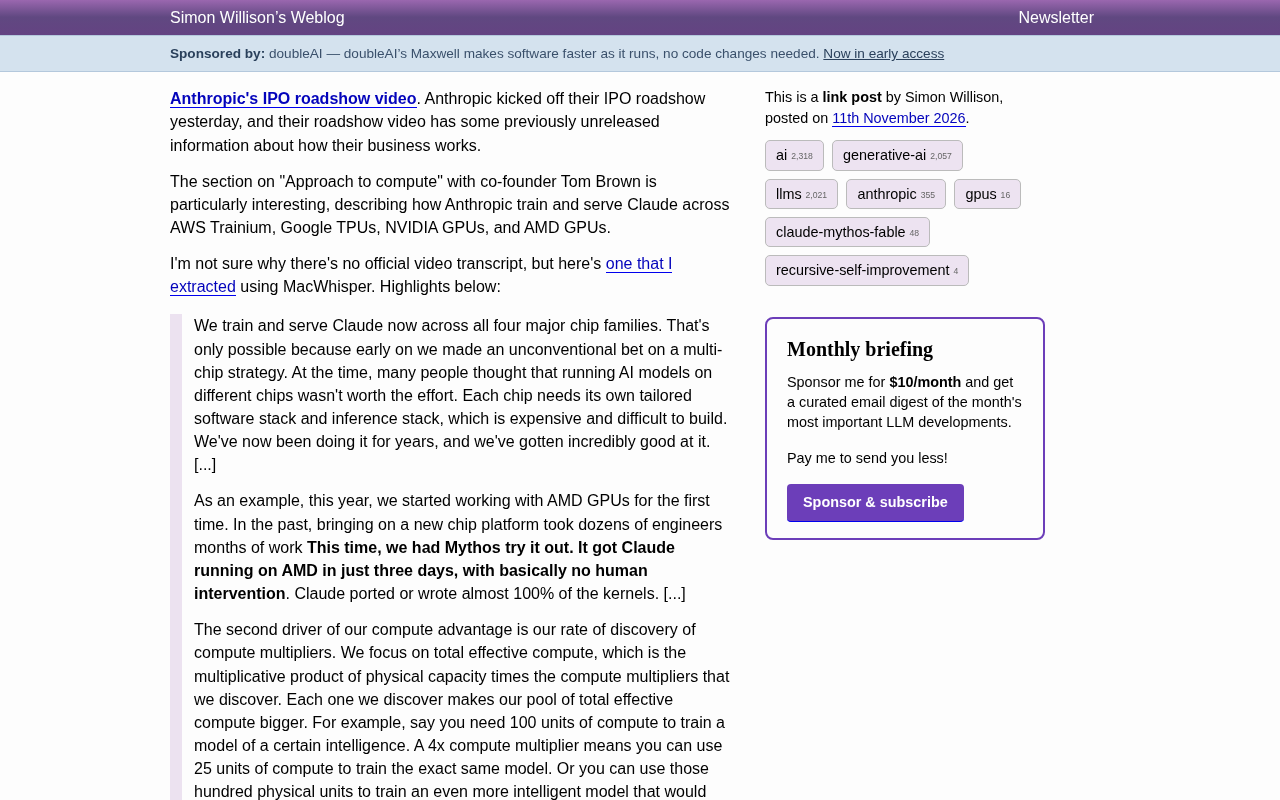
In Anthropic's IPO roadshow video, co-founder Tom Brown disclosed previously unreleased business details. Claude is trained and served on AWS Trainium, Google TPUs, NVIDIA GPUs, and AMD GPUs, a layout stemming from an early "unconventional bet" that has become a core advantage. With the Mythos system, Claude completed AMD GPU adaptation in three days with almost no human intervention, porting or writing nearly 100% of the kernels. Brown attributes the compute advantage to the rate of discovering compute multipliers, emphasizing that multipliers can stack and form a difficult-to-replicate moat. He further outlined recursive self-improvement: in the future, Claude could fully autonomously discover compute multipliers and accelerate compute efficiency gains. Simon Willison noted that the video contains unreleased information and extracted the transcript himself to cross-check it against Anthropic's past technical documents.
Anthropic's IPO roadshow recently kicked off, and its roadshow video disclosed some previously unreleased business details. In the "Compute Strategy" section, co-founder Tom Brown explained in detail how Anthropic trains and serves Claude across AWS Trainium, Google TPUs, NVIDIA GPUs, and AMD GPUs. This content not only reveals its infrastructure layout but also hints at a more ambitious technical goal: letting AI discover compute multipliers on its own and move toward recursive self-improvement.
Multi-Chip Strategy: From an "unconventional bet" to a core advantage
According to Tom Brown, Anthropic now trains and serves Claude on all four major chip families. This capability stems from an early "unconventional" bet—at the time, many believed that running AI models on different chips was not worth the investment, because each chip requires a tailor-made software stack and inference stack, making it costly and difficult to build.
But Anthropic persisted for years and claims to have "become extremely good at it." A recent example: this year they worked with AMD GPUs for the first time. In the past, bringing in a new chip platform required dozens of engineers and months of work; this time, they had a system called Mythos try it, and Claude was running on AMD in just three days, with almost no human intervention. Claude ported or wrote nearly 100% of the kernels.
This detail echoes the "postmortem on three recent issues" published by Anthropic last September—at that time they described bugs that only affected their TPU deployment, hinting at the operational complexity in a multi-chip environment, but also indirectly confirming the reality of their multi-platform deployment.
Differences among AWS Trainium, Google TPUs, NVIDIA GPUs, and AMD GPUs: These four chip types fall under two architectural routes. NVIDIA GPUs and AMD GPUs are general-purpose graphics processors, relying on the CUDA (NVIDIA) or ROCm (AMD) software stacks, with mature ecosystems and high flexibility; AWS Trainium and Google TPU are custom ASICs developed by cloud vendors, designed specifically for matrix operations, usually offering better energy efficiency and cost per unit of compute, but with relatively closed software stacks and high migration costs. For this reason, training the same model across chips requires rewriting operators and communication libraries for each chip, which is precisely the technical root of the article's statement that "each chip requires a tailor-made software stack," and also the reason the multi-chip strategy is regarded as an "unconventional bet."
Compute Multipliers: Stackable competitive advantages
Tom Brown attributes Anthropic's compute advantage to a second driver: the rate of discovering compute multipliers. They focus on "total effective compute," that is, the product of physical capacity and the discovered compute multipliers.
He gave an example: suppose training a model of a certain intelligence level requires 100 units of compute; a 4x compute multiplier means only 25 units of compute are needed to train exactly the same model; or, you can use those 100 units of physical compute to train a smarter model that would otherwise require 400 units of compute.
More critically, these multipliers can stack with one another. Each new multiplier discovered has a positive effect on previous multipliers. Anthropic believes this stacking effect constitutes a competitive advantage that is difficult to replicate.
The meaning of compute multiplier: In the context of AI training, it refers to any technical improvement that, without increasing physical compute, allows the same compute to produce a stronger model or the same model to consume less compute. Common sources include better model architectures (such as attention mechanism optimizations), more efficient data mixing and curriculum learning, more accurate low-precision training (FP8/FP4), better parallelism strategies and communication compression, and smarter training scheduling. The article uses the example of "100 units of compute vs. a 4x multiplier" to illustrate its economic significance: multipliers directly change the compute threshold required to reach a certain intelligence level, and are therefore as important as physical compute. The so-called "stackable" nature means that these improvements often act on different parts of the training pipeline, do not conflict with one another, and produce a multiplier effect when combined.
Recursive Self-Improvement: Letting Claude discover multipliers on its own
The most forward-looking part of the roadshow video is Tom Brown's outlook on recursive self-improvement. He said that as we approach recursive self-improvement, this process may accelerate further—Claude will be able to discover compute multipliers fully autonomously, causing the number of multipliers to grow faster and faster.
This is not a distant fantasy. The case of Mythos completing adaptation on AMD GPUs within three days has already demonstrated Claude's automation capability on specific engineering tasks. If this capability extends to the discovery of compute multipliers, it means AI systems can partially participate in optimizing their own infrastructure, forming a positive feedback loop.
Conceptual background of recursive self-improvement: This idea can be traced back to the "intelligence explosion" hypothesis proposed by I. J. Good in 1965, namely that a superintelligent machine can design even smarter successors, thereby triggering self-accelerating capability growth. In the contemporary AI context, it usually refers to models participating in improving the next generation of models or their own training infrastructure, forming a feedback loop of "improved capability → stronger models → stronger improvement capability." It is important to distinguish that automation in current engineering practice (such as Claude autonomously completing AMD chip adaptation) belongs to "AI-assisted engineering," whose loop still requires humans to set goals and verify results; full recursive self-improvement, by contrast, requires the system to autonomously set and evaluate improvement directions. The article describes it as a "theoretical framework" rather than an established fact, which is precisely a reflection of this distinction.
Multi-source corroboration and industry implications
Well-known developer Simon Willison noted in his blog that this roadshow video contains "previously unreleased information," and he personally used MacWhisper to extract the transcript (the official video did not provide subtitles). Willison paid special attention to the "Compute Strategy" section, considering it the most valuable. Combined with Anthropic's postmortem documents from last year, the authenticity of its multi-chip deployment can be cross-validated.
From an industry perspective, Anthropic's multi-chip strategy and its vision of recursive self-improvement point to a broader trend: competition among leading AI labs is expanding from pure model capability to the elasticity and automated optimization capability of infrastructure. Whether they can efficiently use diverse compute and let AI participate in improving their own compute efficiency may become a key differentiating factor in the next stage.
However, recursive self-improvement is still a theoretical framework at present, and Anthropic has not given a timeline. But the engineering practice revealed in the roadshow video—letting Claude autonomously complete chip adaptation—at least shows that they are paving the way for it.
Technical implications of the Mythos system and kernel porting: Mythos is the name of Anthropic's internal system for automated chip adaptation, whose core task is to let Claude generate or port compute kernels for new hardware platforms—that is, the low-level parallel computing functions that run on GPUs/TPUs. Kernel porting has traditionally been the most labor-intensive part of heterogeneous computing, requiring deep understanding of memory hierarchies, thread scheduling, and instruction set characteristics. Claude's ability to port or write nearly 100% of kernels within three days shows that it has reached a level where it can replace part of engineers' work in code understanding and low-level performance optimization tasks. This also explains why Tom Brown juxtaposes this engineering case with the vision of "autonomously discovering compute multipliers": the two are essentially the same type of capability—automatically searching for efficient implementations under unfamiliar technical constraints.
One-line Summary
Anthropic's roadshow disclosed its multi-chip strategy and outlined a vision of Claude autonomously discovering compute multipliers toward recursive self-improvement.
Paragraph Summary
In its IPO roadshow video, Anthropic co-founder Tom Brown disclosed previously unreleased business details. Claude has been trained and served on four major chip families: AWS Trainium, Google TPUs, NVIDIA GPUs, and AMD GPUs. This layout, which originated from an early "unconventional bet," has become a core advantage. With the Mythos system, Claude completed AMD GPU adaptation within three days with almost no human intervention, porting or writing nearly 100% of the kernels. Brown attributes the compute advantage to the rate of discovering compute multipliers, emphasizing that multipliers can stack with one another and form a difficult-to-replicate competitive moat. He further outlined recursive self-improvement: in the future, Claude could fully autonomously discover compute multipliers and accelerate improvements in compute efficiency. Simon Willison noted that the video contains unreleased information and extracted the transcript himself to cross-check it against Anthropic's past technical documents.
Related articles
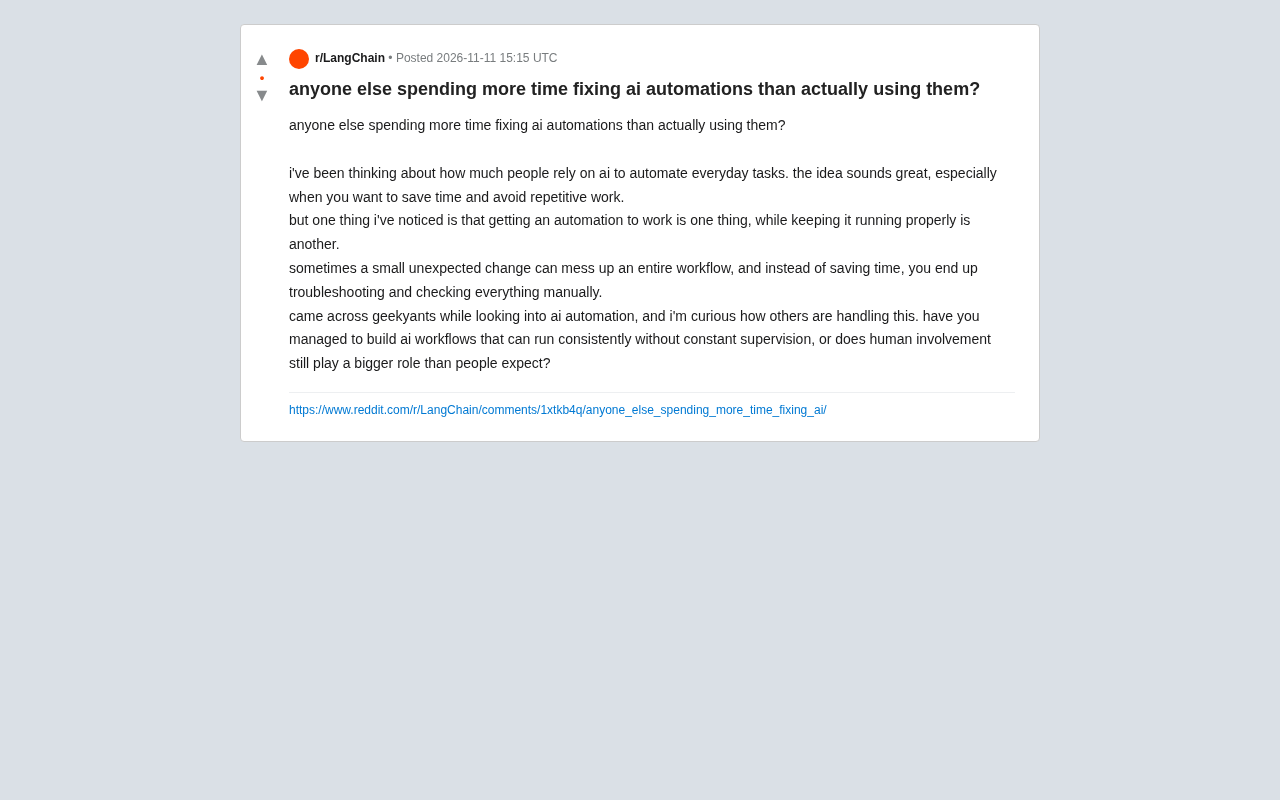
AI Automation Wearing You Down? The Underestimated Maintenance Cost
Reddit discussion: AI automation is easy to build but hard to maintain. This article analyzes sources of workflow fragility, three levels of maintenance cost, and pragmatic approaches to human-machine collaboration and expectation management.
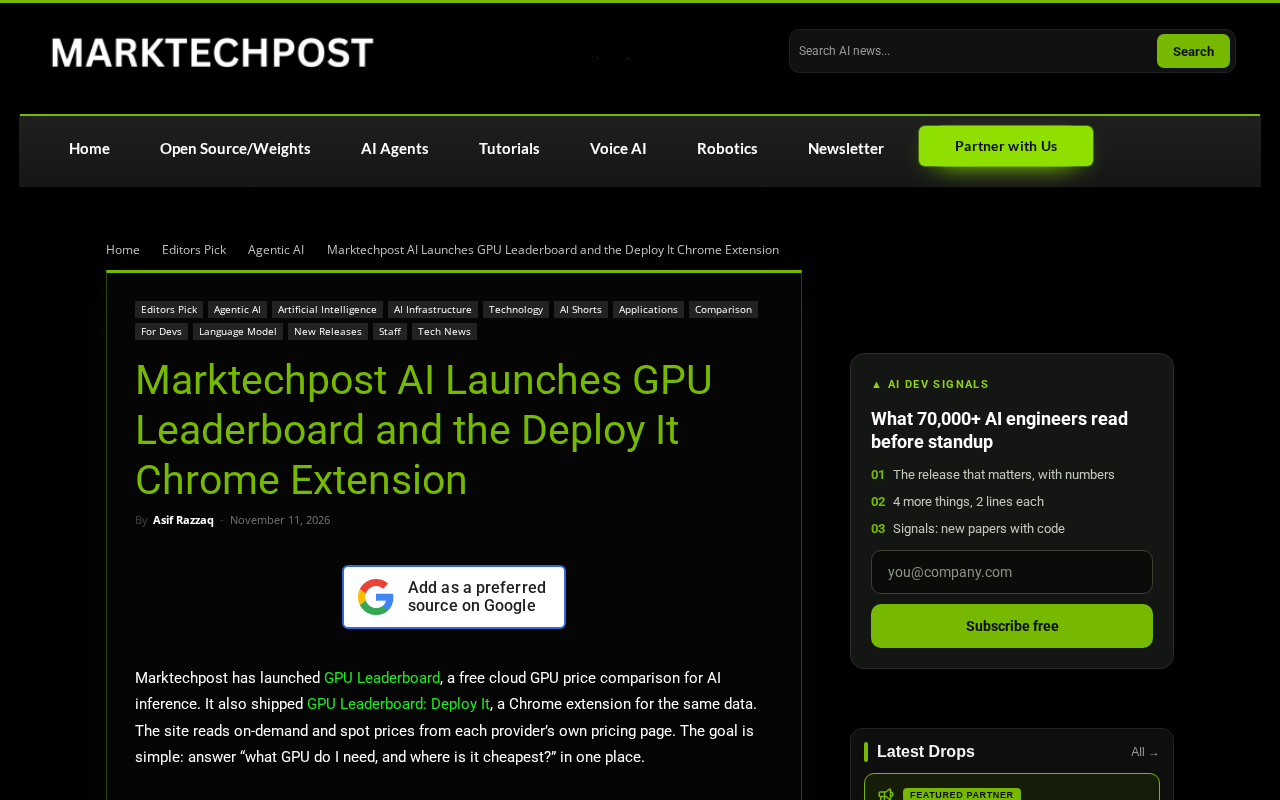
Marktechpost Launches GPU Leaderboard and Deployment Tool Extension
Marktechpost launches a GPU Leaderboard and the Deploy It Chrome extension—the former aggregates GPU performance comparisons under AI workloads, the latter attempts to simplify model deployment in the browser. This article reviews both tools' positioning, information gaps, and practical value for developers.

Where Should AI Photo Editing Draw the Line? How E-commerce Sellers Can Avoid Misleading Customers with Product Photos
How can e-commerce sellers draw the line for AI product photo editing? Cleaning backgrounds and optimizing lighting are acceptable, but altering product shape, texture, and size may be misleading. This article summarizes Reddit sellers' practical experience and tool selection advice.