Marktechpost Launches GPU Leaderboard and Deployment Tool Extension
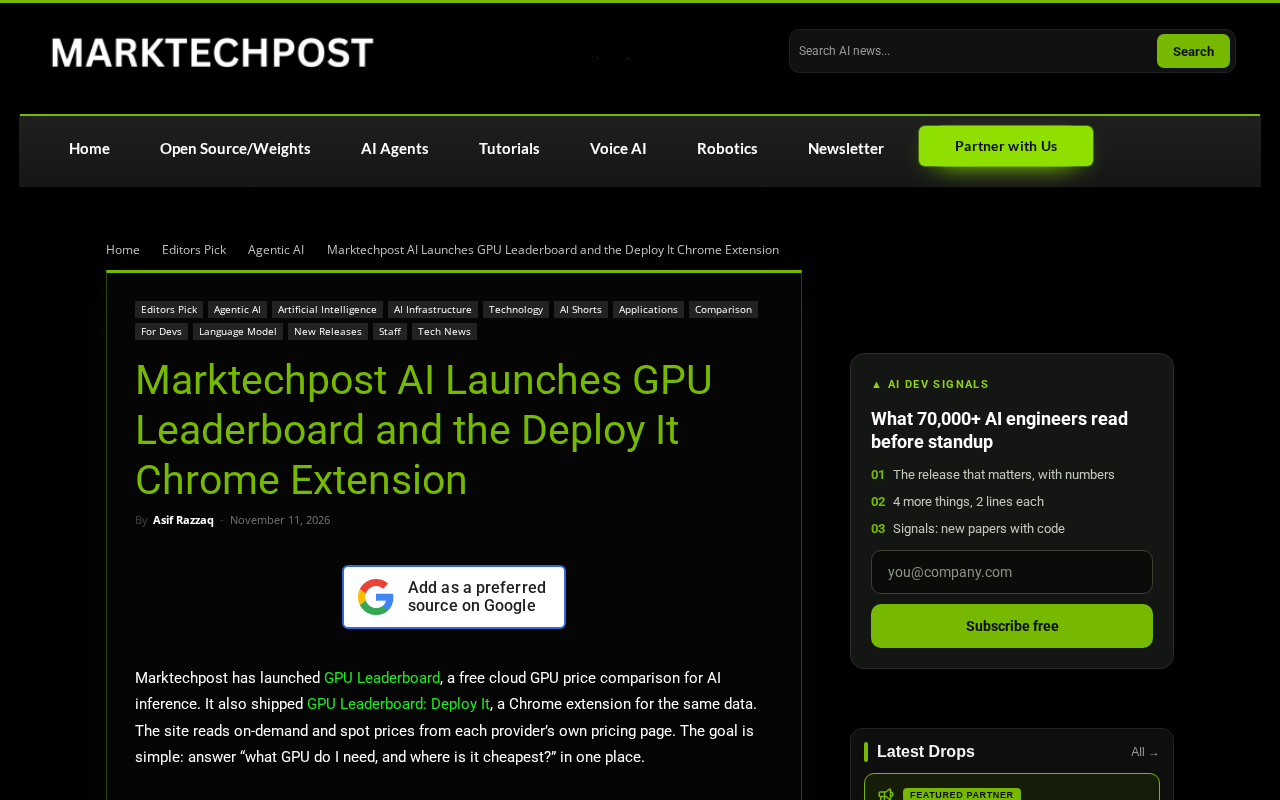
Marktechpost launches a GPU leaderboard and Deploy It extension, extending into tool services.
Tech media outlet Marktechpost has launched two tools for AI developers: the GPU Leaderboard aggregates performance data of different GPUs under AI workloads, aiming to reduce the research cost of hardware selection; Deploy It is a Chrome extension positioned as a lightweight deployment entry point within the browser. The article notes that these two releases reflect the trend of tech media extending from content toward servitization. However, the official announcement has not disclosed the leaderboard's testing methodology, covered models, or update frequency, nor the extension's supported deployment targets, account system, or free/paid boundaries—practical value awaits verification through subsequent documentation. Developers can use the leaderboard as a starting point for research but should cross-check with official specs and independent benchmarks; the extension is suitable for trying out, but permission scope and data security policies should be confirmed before production deployment.
Tech media outlet Marktechpost has recently rolled out two tools aimed at AI developers: a GPU performance leaderboard and a Chrome browser extension called "Deploy It." Both releases point to the same need—developers require more transparent reference information and more convenient entry points when it comes to hardware selection and model deployment.
GPU Leaderboard: A Reference Point for Hardware Selection
According to Marktechpost's official announcement, the GPU Leaderboard aims to consolidate performance data for different GPUs under AI workloads. For teams that need to procure compute or set up training/inference environments, this kind of side-by-side comparison information has long been scattered across vendor whitepapers, third-party benchmarks, and community discussions, lacking a unified standard. The value of a leaderboard isn't in providing a single answer, but in aggregating disparate test results into a single view, reducing the upfront research cost.
Public information has not yet disclosed the leaderboard's specific testing methodology, the range of GPU models covered, or the data update frequency. These details determine how practical the rankings are—whether the benchmarks reflect real training scenarios, whether inference and training workloads are distinguished, and whether cost-effectiveness is factored in will all affect developers' willingness to trust it. Only if transparent methodology documentation is added later can this tool potentially evolve from an "information aggregation page" into a "decision-making basis."
Benchmarks and testing methodology are core concepts when evaluating GPU performance. Common industry AI benchmarks include MLPerf (a standardized suite covering training and inference), various throughput/latency tests, and specialized evaluations for specific models (such as ResNet, BERT, and LLM inference). Differences between leaderboards often lie not in the hardware itself but in the testing methodology: batch size, precision (FP32/FP16/INT8), whether tensor cores are enabled, power limits, and cooling conditions can all significantly change results. Additionally, training workloads typically focus on throughput and multi-GPU scaling efficiency, while inference workloads place more emphasis on first-token latency and throughput per unit cost. Therefore, when looking at any GPU leaderboard, one should first confirm the benchmarks, precision, and scenarios it specifies before judging whether the data can be transferred to one's own actual workloads.
Deploy It Extension: Bringing Deployment Actions into the Browser
The other release is the Chrome extension "Deploy It." Judging from its name and form factor, its positioning is to simplify the deployment process of models or applications within the browser. Traditionally, going from a local prototype to an online service requires switching between multiple platforms, configuring environments, and handling credentials—the idea behind extension-type tools is to compress these steps into completion within the current page.
Marktechpost did not elaborate in its announcement on which deployment targets the extension supports (cloud platforms, container services, or edge nodes), whether it requires binding to an account system, or where the boundary lies between free and paid features. These information gaps make it difficult for outsiders to assess its actual coverage. What is certain is that the browser extension distribution format has low barriers to entry and fast installation, making it suitable as a lightweight entry point for deployment workflows—but complex configuration scenarios still need to be handled back in professional consoles.
The permission model of browser extensions is key to evaluating the security of such tools. Chrome extensions declare required permissions through the manifest, such as reading and modifying user data on all websites, accessing the clipboard, and making network requests; the broader the permissions, the greater the potential risk. If deployment-type extensions need to access cloud platform consoles or hold API credentials, this typically involves OAuth authorization or token storage, and users should confirm whether credentials are stored locally or passed through third-party servers. Furthermore, the browser environment is inherently unsuited for handling long-running tasks and complex configurations—extensions are better suited as triggers and wizards, while the actual building, orchestration, and rollback still need to rely on CI/CD pipelines or cloud platform consoles.
A Media Outlet Building Tools: An Extension Attempt by a Content Platform
Marktechpost has long focused on AI paper explanations and technical news. The simultaneous launch of a data-type tool (leaderboard) and an action-type tool (extension) reflects the trend of tech media extending toward "servitization." For readers, news stops at reading, while tools bring retention and reuse; for the platform, tools can accumulate usage behavior data that feeds back into content topic selection.
This path also comes with challenges. Leaderboards require continuous maintenance of testing environments, and extensions need to keep up with interface changes across deployment platforms—both are long-term investments. If updates lag, the tools' credibility will quickly erode. Judging from the amount of information currently public, both products appear to be early versions, and their functional boundaries and operational cadence remain to be seen.
What Developers Should Watch For
In the short term, the GPU Leaderboard can serve as a starting point for hardware research, but it's advisable to cross-check with official vendor specifications and independent benchmarks before making procurement decisions. The Deploy It extension is suitable for trying out, but before actual production deployment, its permission scope and data security policies should be confirmed. For readers interested in AI engineering toolchains, these two releases are worth adding to a watchlist, awaiting subsequent methodology documentation and version update notes.
Original publication information can be found in the announcement on the Marktechpost official website.
Background Notes
The servitization extension of tech media has precedents in the industry. Hugging Face expanded from a model community into inference endpoints and Spaces; Papers with Code formed research infrastructure through the aggregation of papers—code—leaderboards; and some media outlets have also enhanced user stickiness through leaderboards, dataset indexes, or API directories. The common thread in these transformations is: content accumulation brings traffic, tools precipitate usage behavior, and the two form a data flywheel. However, the tool business demands far more in engineering maintenance, version iteration, and operational investment than content production. Whether methodology and compatibility can be continuously updated often determines whether it becomes long-term infrastructure or a short-term brand exposure exercise.
Related articles
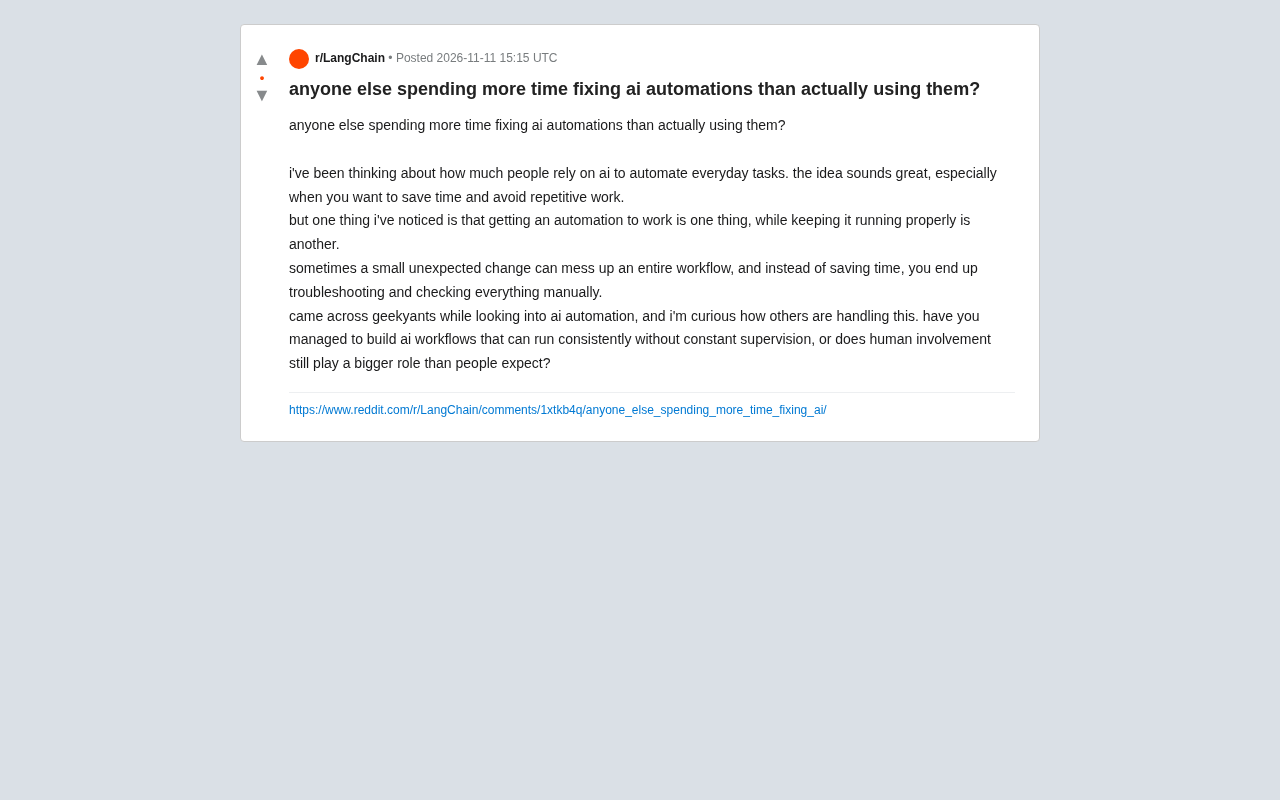
AI Automation Wearing You Down? The Underestimated Maintenance Cost
Reddit discussion: AI automation is easy to build but hard to maintain. This article analyzes sources of workflow fragility, three levels of maintenance cost, and pragmatic approaches to human-machine collaboration and expectation management.
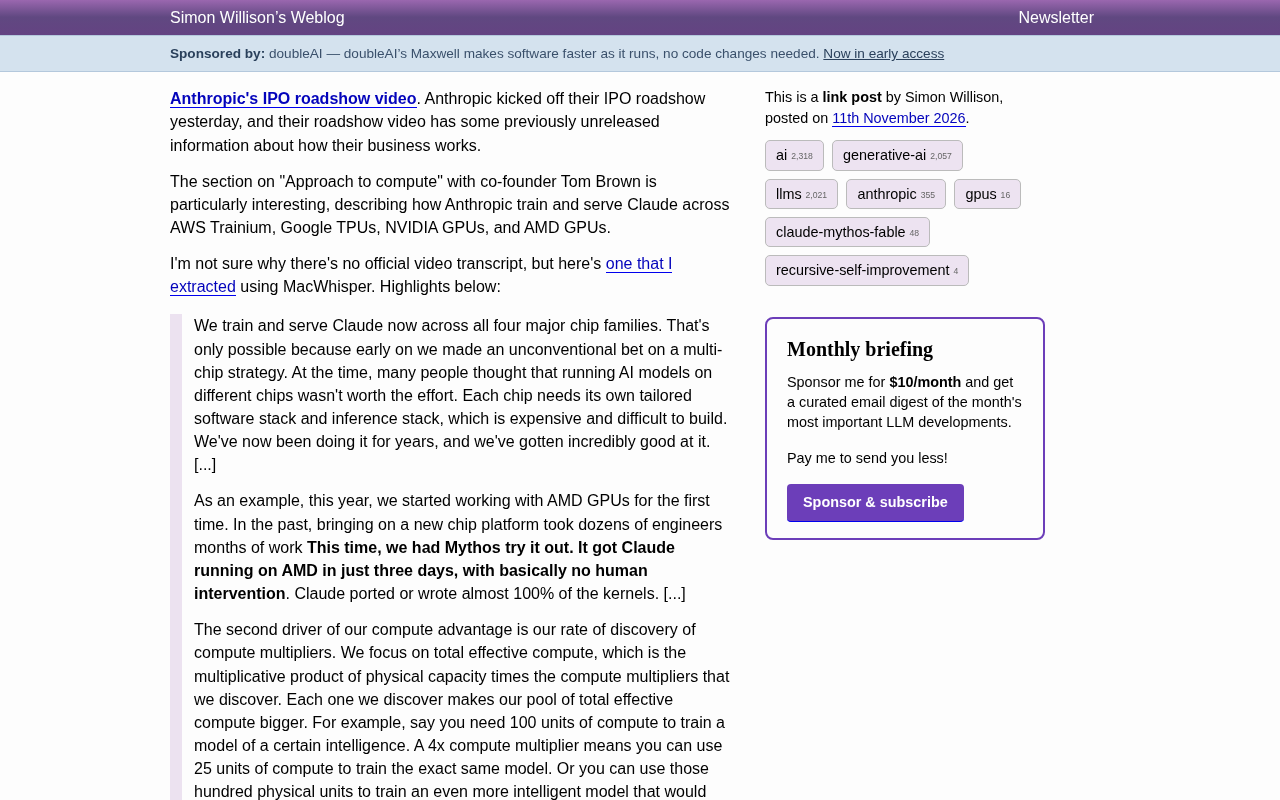
Anthropic IPO Roadshow Revealed: Multi-Chip Strategy and AI Self-Improvement
Anthropic's IPO roadshow video reveals its multi-chip strategy: Claude is trained across AWS, Google, NVIDIA, and AMD chips, and Mythos completed AMD adaptation in three days. Co-founder Tom Brown also discussed compute multipliers and recursive self-improvement, letting AI autonomously discover compute optimization solutions.

Where Should AI Photo Editing Draw the Line? How E-commerce Sellers Can Avoid Misleading Customers with Product Photos
How can e-commerce sellers draw the line for AI product photo editing? Cleaning backgrounds and optimizing lighting are acceptable, but altering product shape, texture, and size may be misleading. This article summarizes Reddit sellers' practical experience and tool selection advice.