Where Should AI Photo Editing Draw the Line? How E-commerce Sellers Can Avoid Misleading Customers with Product Photos
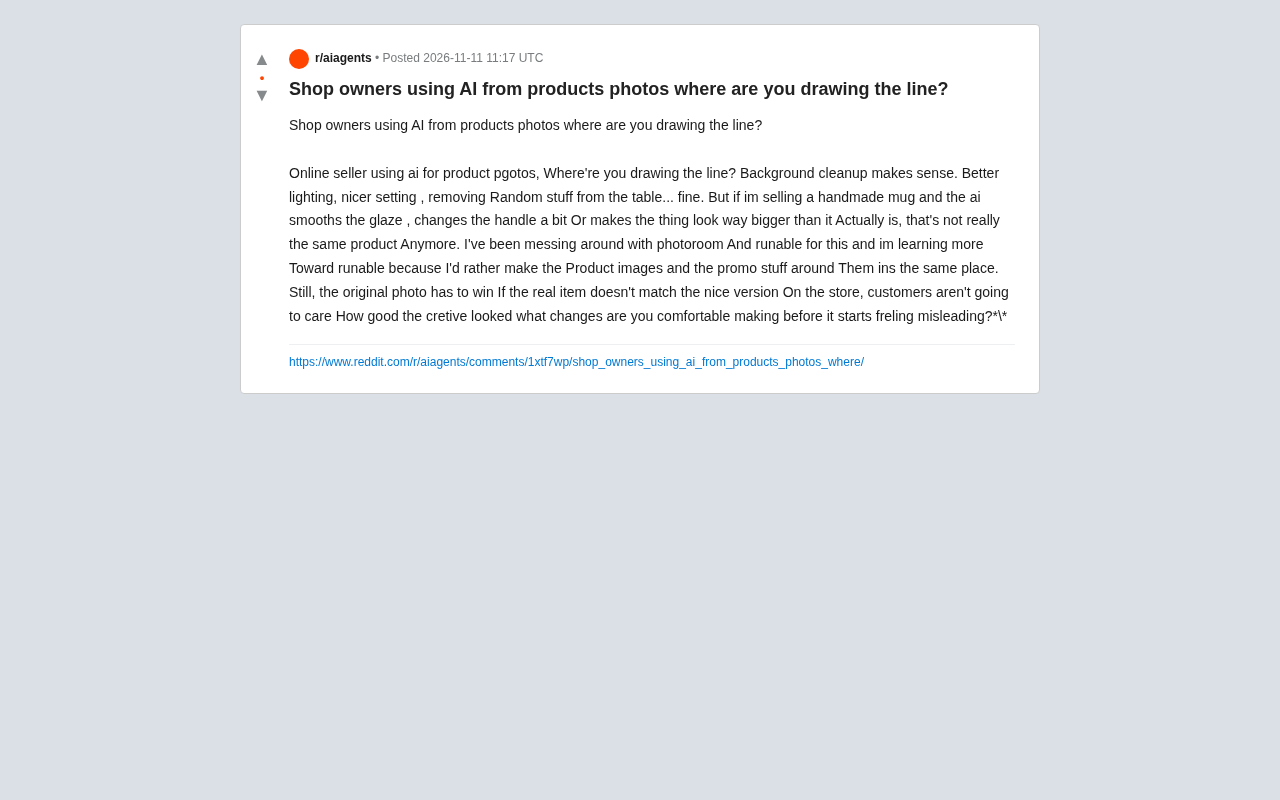
How e-commerce sellers draw the line for AI editing: enhance but don't alter; the original image must win.
An online seller posted on Reddit, sparking discussion about the boundaries of AI photo editing. Sellers generally accept adjustments that don't change the product's essence—background cleanup, lighting optimization, scene enhancement, and removing distractions—but consider altering product shape, texture, size proportions, or smoothing out handmade uniqueness as overstepping. The poster compared Photoroom and Runable, leaning toward the latter's all-in-one workflow. The core consensus: product images should primarily convey accurate product information; over-retouching can lead to higher return rates and lost trust, and AI editing should help real products be seen better, not create another product.
From Real Photos to "Photo Fakes": The AI Editing Dilemma for E-commerce Sellers
An online seller posted on Reddit, voicing what many peers feel: when using AI to process product photos, where exactly is the line that shouldn't be crossed? Cleaning up the background, improving lighting, removing desktop clutter—all of that he could accept. But when he sells handmade mugs and AI smooths out the glaze, alters the shape of the handle, or enlarges the product far beyond its actual size—that's no longer the same product.
The post sparked quite a discussion, with the core conflict being clear: the tension between efficiency tools and authenticity. Sellers want to use AI to quickly produce appealing images, but worry that over-retouching will lead to a gap between what customers see and what they receive.
Acceptable Touch-ups vs. Overstepping Alterations
From the post and discussion, sellers generally accept adjustments that "don't change the essence of the product":
- Background cleanup: removing a cluttered desktop, switching to a clean background
- Lighting optimization: making the image brighter and colors more accurate
- Scene enhancement: giving the product a more appealing placement environment
- Removing distractions: taking out random objects in the frame unrelated to the product
These operations essentially "better present the existing product" rather than "create another product."
Signals of overstepping include: changing the product's shape, texture, size proportions, or having AI smooth out the uniqueness of handmade items (like the unevenness of glaze). The poster specifically mentioned that after AI "optimized" the glaze and handle of handmade mugs, the product had lost its character.
Tool Choices: Trade-offs Between Photoroom and Runable
The poster mentioned he had been trying two tools, Photoroom and Runable, and currently leans toward Runable because he wants to complete product images and promotional materials around the product in one place.
This reflects a practical need: sellers don't want to switch back and forth between multiple tools. Runable can handle both product images and promotional materials, reducing workflow friction. However, the tool itself doesn't solve the boundary issue—no matter which software is used, it's ultimately the seller who decides "to what extent to modify."
This also points to a noteworthy trend: AI image tools are evolving from single functions (background removal) to full-process creation platforms. The choice sellers face is no longer "whether to use AI" but "at which step and to what extent."
Photoroom is a mobile/web tool focused on AI background removal and product image optimization, often used by small and medium e-commerce sellers to quickly generate white-background or scene images; Runable positions itself more as an integrated creation platform, covering not only product image processing but also promotional materials and social media graphics. The difference between the two is essentially that between a "point tool" and a "workflow platform": the former has mature experience for specific tasks, while the latter emphasizes reducing the cost of switching between tools. When choosing, sellers should not only consider feature coverage but also pay attention to export resolution, whether original layers are preserved, batch processing capabilities, and the platform's copyright terms for generated content—these details directly affect long-term compliance and efficiency.
The Long-term Game Between Authenticity and Conversion
The poster's final question is crucial: if the real item doesn't match the pretty picture in the store, customers won't care how creative it looks.
This points to a basic fact of e-commerce: the primary function of product images is to accurately convey product information, and only secondarily to attract clicks. Short-term conversion gains from over-retouching may be offset by increased return rates, more negative reviews, and loss of trust. For non-standard products like handmade goods and custom items, authenticity itself is a selling point—customers are buying that uniqueness.
The consensus that can be drawn from the discussion is: AI editing should serve "to help the real product be seen better," not "to make the product look like something else." Where to draw this line depends on each seller's category and customer base, but the poster's principle is worth referencing—the original image must win.
Non-standard products refer to goods without uniform specifications, where each item has individual differences, such as handmade ceramics, custom jewelry, hand-painted works, etc. Unlike standardized industrial products, the "uniqueness" of non-standard products is their core value, so product images must not only show appearance but also convey texture and craftsmanship characteristics. AI editing carries higher risks for non-standard products: once uneven glaze, wood grain differences, or handmade traces are smoothed out, the probability of returns and negative reviews rises significantly when customers receive items that differ from the pictures. For such sellers, appropriately preserving flaws and individual differences actually helps build trust, and the image strategy should prioritize "what you see is what you get."
Related articles
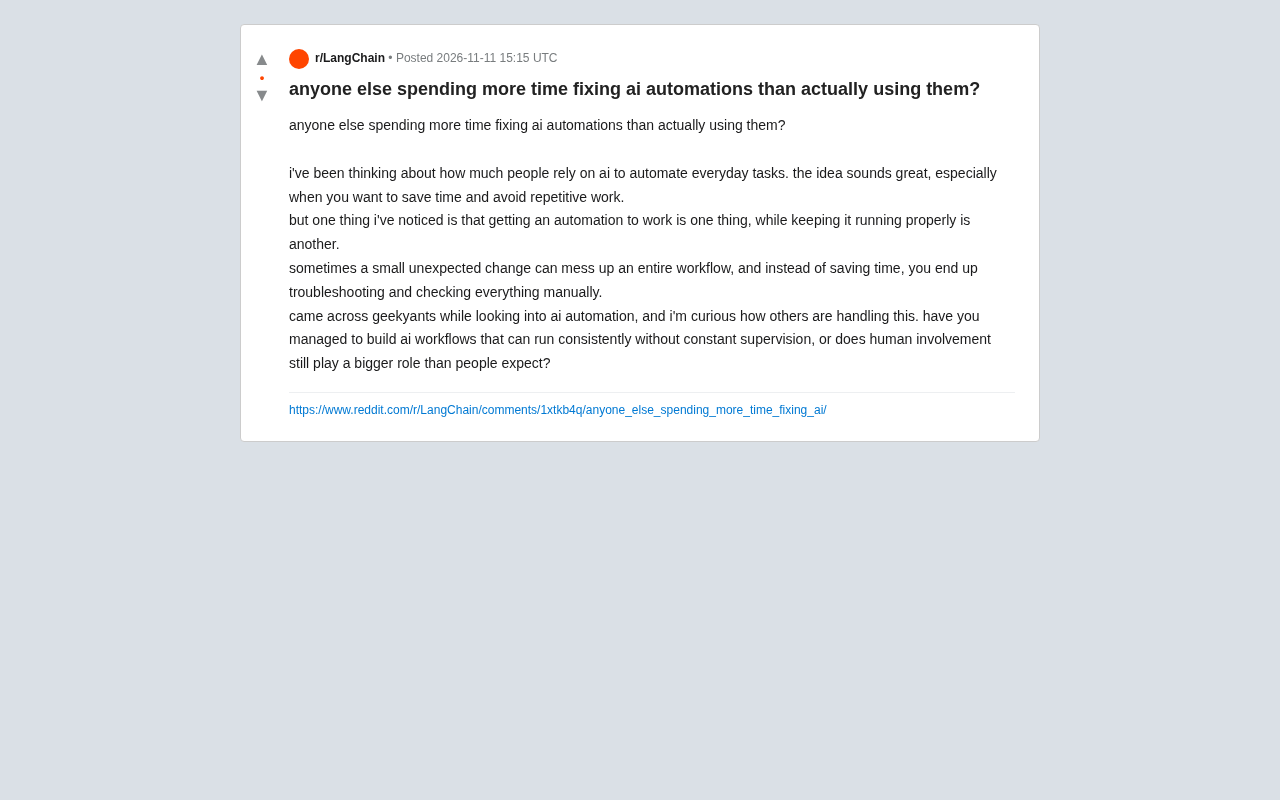
AI Automation Wearing You Down? The Underestimated Maintenance Cost
Reddit discussion: AI automation is easy to build but hard to maintain. This article analyzes sources of workflow fragility, three levels of maintenance cost, and pragmatic approaches to human-machine collaboration and expectation management.
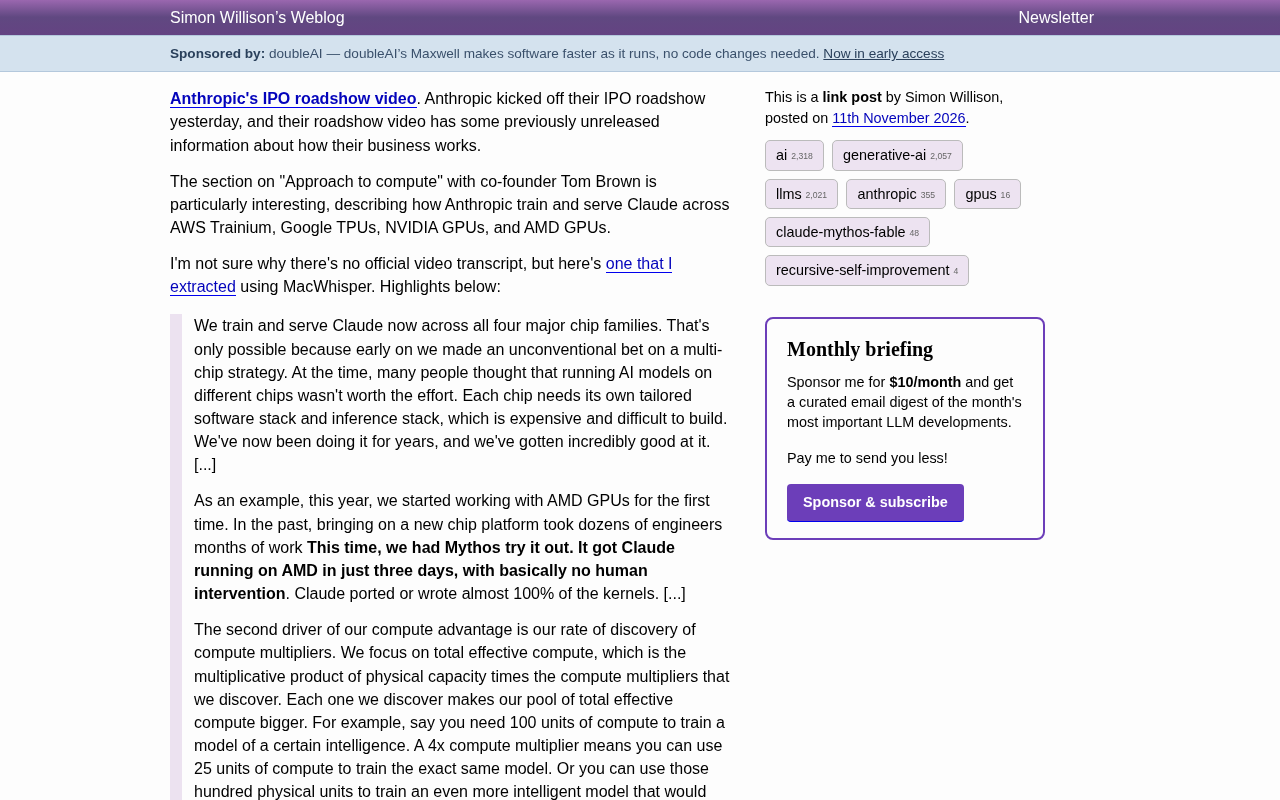
Anthropic IPO Roadshow Revealed: Multi-Chip Strategy and AI Self-Improvement
Anthropic's IPO roadshow video reveals its multi-chip strategy: Claude is trained across AWS, Google, NVIDIA, and AMD chips, and Mythos completed AMD adaptation in three days. Co-founder Tom Brown also discussed compute multipliers and recursive self-improvement, letting AI autonomously discover compute optimization solutions.

Marktechpost Launches GPU Leaderboard and Deployment Tool Extension
Marktechpost launches a GPU Leaderboard and the Deploy It Chrome extension—the former aggregates GPU performance comparisons under AI workloads, the latter attempts to simplify model deployment in the browser. This article reviews both tools' positioning, information gaps, and practical value for developers.