Anthropic Releases Most Detailed Threat Intelligence Report Yet: How Claude Is Misused and Intercepted
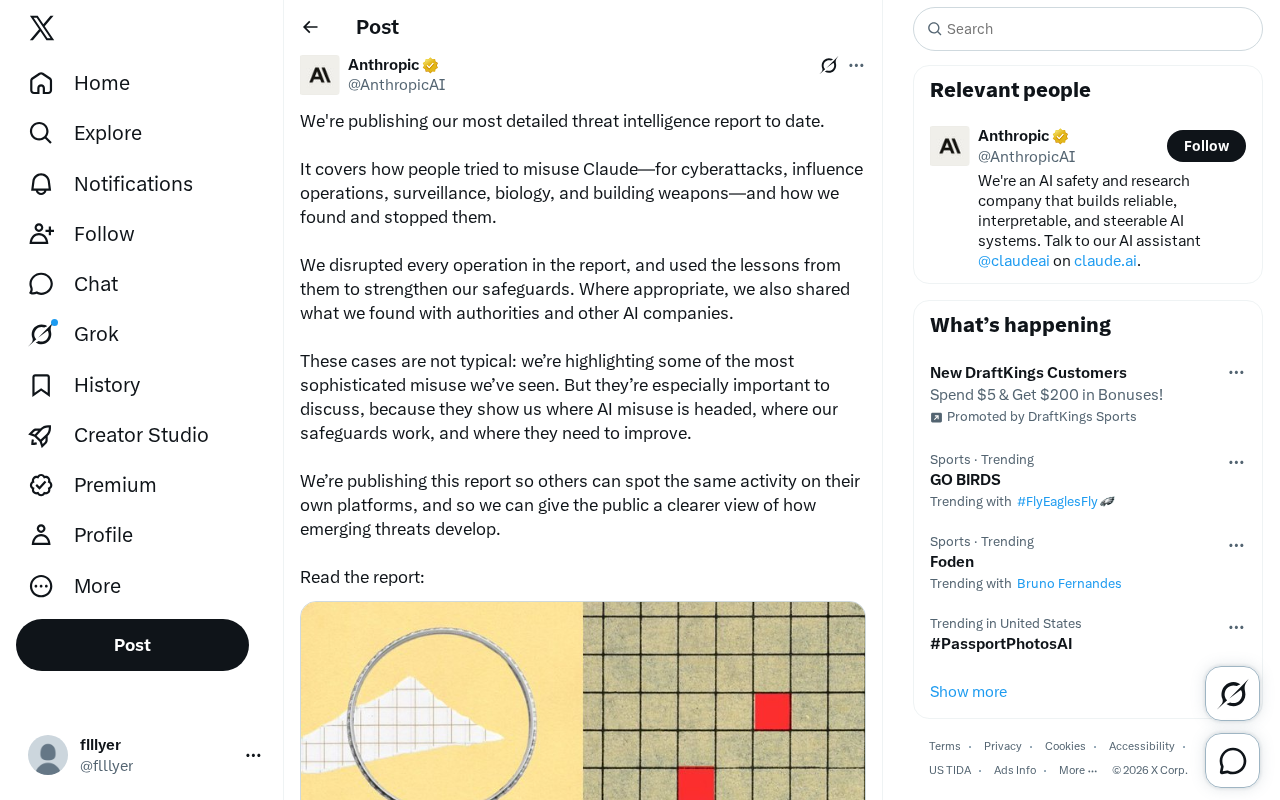
Anthropic publishes its most comprehensive AI abuse threat report, covering five high-risk categories and collective defense efforts.
Anthropic has released its most detailed AI threat intelligence report to date, covering five high-risk abuse domains: cyberattacks, influence operations, surveillance, biology, and weapons. The report focuses on the most technically sophisticated cases, all of which were successfully disrupted. Lessons learned are fed back into security improvements, and findings are shared with law enforcement and other AI companies to foster collective defense. Beyond the specific cases, the report signals that threat intelligence capability and transparency are becoming core competitive differentiators for leading AI companies.
Anthropic has published its most comprehensive threat intelligence report to date, systematically disclosing the various methods external actors have used to abuse its AI assistant Claude, as well as how the company detected and blocked these attempts. This report is not only an exercise in transparency — it also reveals where the real frontlines of AI security are heading.
Categories of Abuse Covered
According to Anthropic, the report covers five major categories of misuse: cyberattacks, influence operations, surveillance, biology, and building weapons. These areas encompass nearly all of the high-risk AI application vectors that regulators and security researchers are most concerned about today.
Notably, Anthropic explicitly states that these cases are not typical incidents, but rather some of the most sophisticated and complex abuse attempts they have observed. In other words, the report is not describing everyday spam generation or simple jailbreaks — it focuses on adversarial operations with higher technical barriers and greater potential harm. This type of high-end abuse is typically launched by actors with significant resources and organizational capacity, making it all the more valuable to study.
Influence operations refer to organized activities that systematically create, amplify, or spread false or misleading content to shape public opinion, interfere with elections, or erode social trust. The rise of generative AI has dramatically lowered the cost of such operations — mass-generating articles in varied writing styles, impersonating real users on social media, and crafting targeted disinformation were once labor-intensive tasks that can now be highly automated. Regulators have taken notice: the EU AI Act classifies AI systems used to manipulate elections and public opinion as high-risk. Risks in the biology domain are primarily centered on AI-assisted synthetic biology — using models to lower the knowledge barriers for designing or obtaining dangerous biological agents — a frontier threat that bodies like the U.S. Biosecurity Commission are closely monitoring.
Every Operation Was Disrupted
Anthropic emphasized in its statement that every operation mentioned in the report was successfully disrupted. This assertion carries two layers of meaning: first, the company's detection and response mechanisms have proven effective in real-world conditions; second, Anthropic aims to build public trust in its security capabilities.
Further, the company states that it has used the lessons learned from these cases to strengthen its own security measures. This means threat intelligence is not a one-time PR exercise, but has been integrated into a closed-loop security iteration cycle — detect abuse, stop it, learn from it, reinforce defenses. This "attack-informed defense" approach is the hallmark of a mature security team.
Cross-Institutional Sharing and Collaboration
One easily overlooked but significant detail in the report is Anthropic's statement that, where appropriate, it shares its findings with law enforcement agencies and other AI companies.
AI abuse is an industry-wide and societal problem — no single company's defenses can fully address threats that flow across platforms. Attackers often probe multiple AI services for weak points, and blocking one platform may simply shift the problem to another. By sharing intelligence with peers and regulators, Anthropic is effectively helping to foster a collective defense mechanism. This collaborative model has long been mature in traditional cybersecurity (e.g., threat intelligence sharing consortia) and is now being introduced into the governance of generative AI.
Information Sharing and Analysis Centers (ISACs) are well-established collaborative mechanisms in traditional cybersecurity, first promoted by the U.S. government in 1998 and now active across finance, energy, healthcare, and other sectors. Member organizations can exchange indicators of compromise (IoCs), malware samples, and attacker behavior patterns in protected environments, transforming point-level discoveries into industry-wide defensive capabilities. The generative AI space has yet to develop a similar formal mechanism, but Anthropic's move to share intelligence with other AI companies is essentially exploring the early form of one. Given the high degree of similarity across large language model API interfaces, bypass techniques an attacker develops on one platform can often be rapidly transferred to others — making cross-platform intelligence sharing especially critical.
Why Publish This Report
Anthropic offered two public reasons for releasing the report: to enable other platforms to identify the same activities, and to give the public a clearer picture of how emerging threats are evolving.
The first serves industry defense. When the characteristics of an abuse technique are publicly described, security teams at other platforms can use that information to scan their own systems for suspicious behavior, thereby shortening the lifespan of active threats. The second concerns societal awareness. AI safety discourse is often filled with abstract concerns and speculation; a report grounded in real cases pulls the conversation away from "AI might be misused" toward the far more constructive framing of "how AI is currently being misused, and how we're responding."
What This Report Signals for the Industry
Beyond the specific case details, the very existence of this report is itself a signal worth interpreting.
First, it reflects that leading AI companies are increasingly building threat intelligence as a core capability — not just reactively patching holes. Publishing detailed reports on a regular basis indicates that Anthropic has developed a dedicated team for abuse monitoring and research.
Second, the report's focus on "the most sophisticated abuse" effectively sketches the trajectory of AI misuse for the outside world — attackers are becoming more capable, and simple defenses are no longer sufficient. Anthropic openly acknowledges that one goal of the report is to identify "where our protections work and where they need improvement." This candid admission of limitations is far more credible than simply claiming "we are safe."
Finally, from a competitive standpoint, transparency is emerging as a differentiation strategy for AI companies. As model capabilities converge, the ability to demonstrate responsibility and earn the trust of regulators and enterprise customers may become a defining variable in the next phase of competition.
Threat intelligence as a specialized capability is typically handled in traditional cybersecurity by dedicated red teams and threat hunting teams, whose core work involves proactively identifying potential attack paths and analyzing attacker tactics and intent — rather than merely responding to incidents after the fact. Bringing this into AI security governance means companies need to build an analytical framework tailored to the unique abuse vectors of large language models: the evolution of jailbreak prompts, intent-concealment techniques in multi-turn conversations, and behavioral signatures of bulk API abuse. The depth of what Anthropic has presented in this report suggests it has developed exactly this kind of specialized capability internally, rather than relying on generic content moderation. This accumulated expertise will form a defensive barrier that is difficult to quickly replicate.
Conclusion
The value of this threat intelligence report lies not in cataloguing a collection of alarming abuse cases, but in demonstrating a sustainable paradigm for AI security governance: proactive monitoring, rapid disruption, feedback loops, cross-sector sharing, and public transparency. For practitioners, researchers, and policymakers focused on AI safety, this kind of first-hand material is far more instructive than abstract declarations of principle. As AI capabilities continue to expand, reports like this may well become an important benchmark for measuring the maturity of an AI company.
Related articles
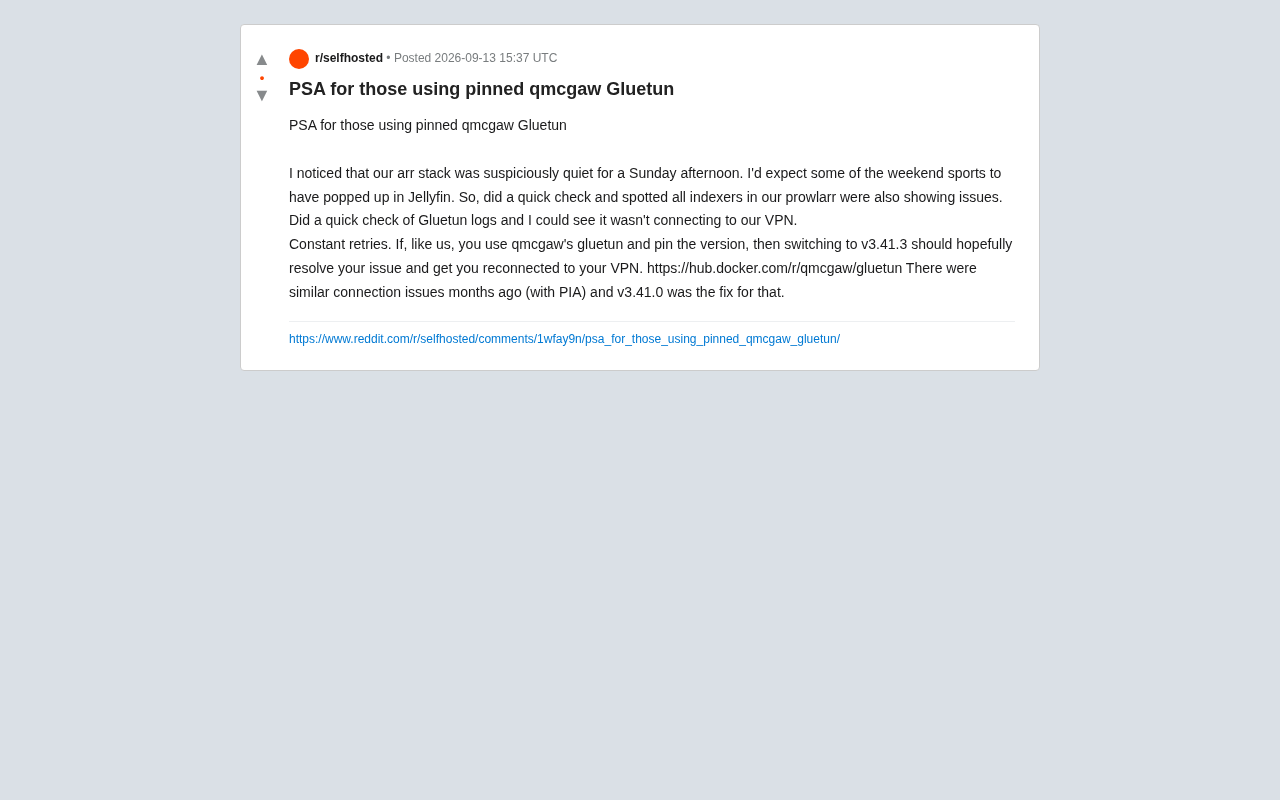
Gluetun VPN Disconnection Troubleshooting: Version-Pinned Users Should Upgrade to v3.41.3
Gluetun version-pinned users may face silent VPN disconnections breaking their arr stack. Learn how upgrading to v3.41.3 fixes the issue and tips to avoid it.
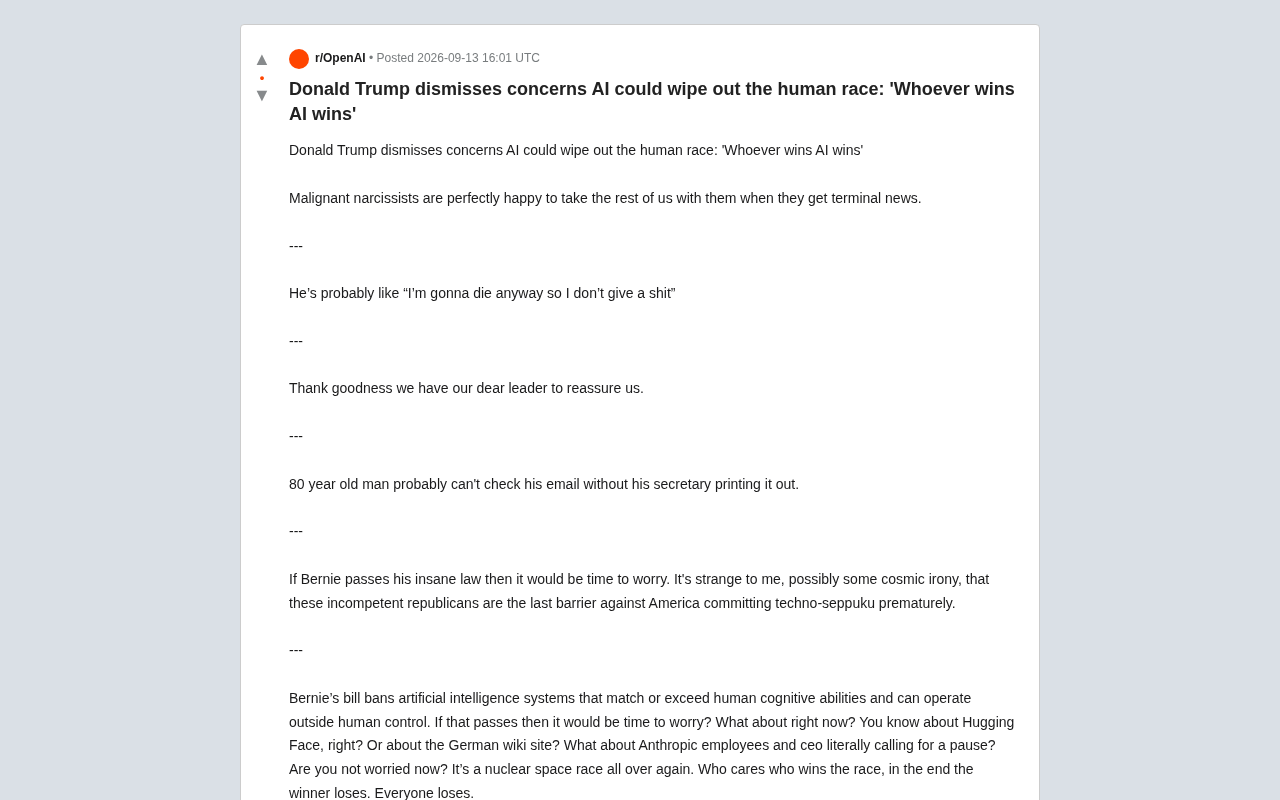
Trump Downplays AI Extinction Risk: 'Whoever Wins AI Wins' Sparks Controversy
Trump downplays AI extinction risks with 'Whoever wins AI wins,' sparking fierce debate over whether AI safety is an urgent reality or a future hypothetical.

David Sacks on AI Regulation: Frontier Models Don't Need Mandatory Legislative Constraints
David Sacks argues OpenAI and Anthropic can self-regulate frontier model development without external legislation. A look at the logic, controversy, and governance dilemmas involved.