Gluetun VPN Disconnection Troubleshooting: Version-Pinned Users Should Upgrade to v3.41.3
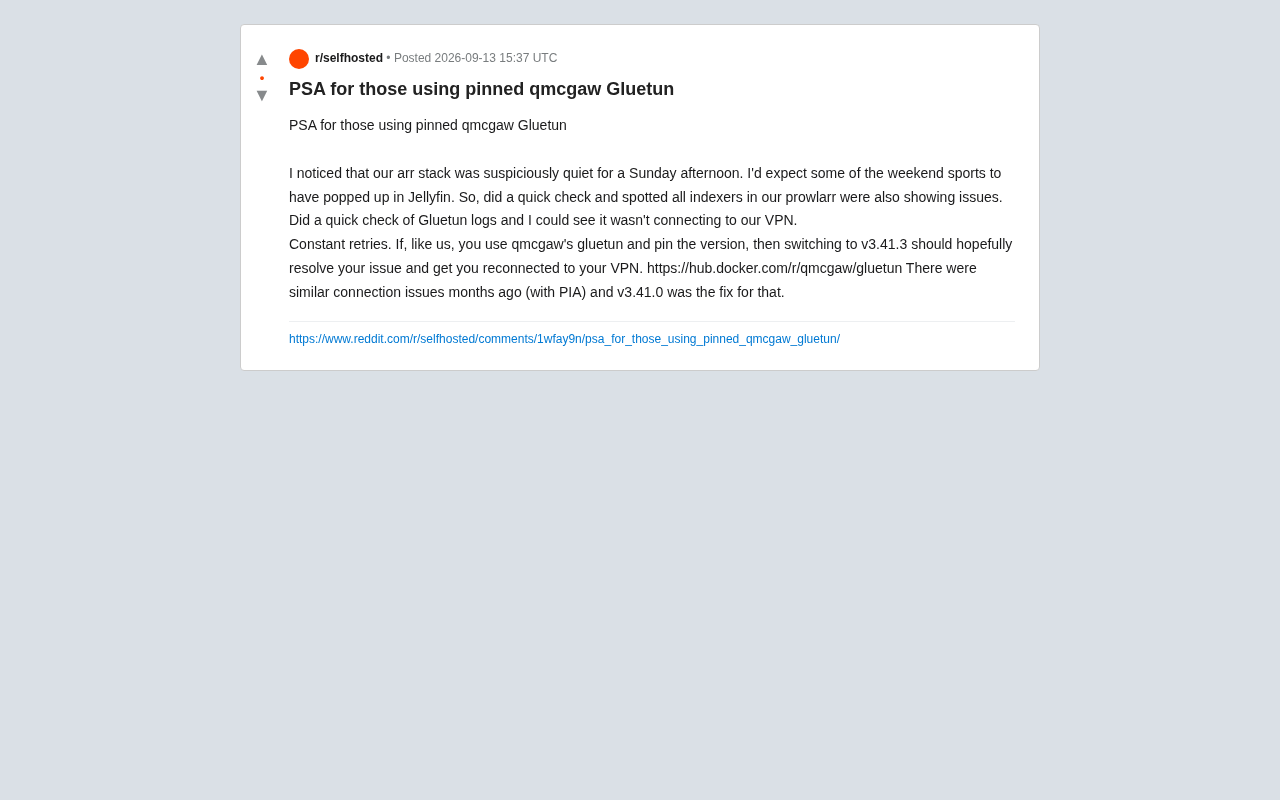
Gluetun version-pinned users hit silent VPN failures — upgrading to v3.41.3 restores connectivity.
Users running qmcgaw's Gluetun with a pinned version may encounter silent VPN disconnection failures — containers keep running but logs show endless retries, causing Prowlarr indexer errors and Jellyfin content to stop updating. The root cause is VPN providers changing endpoint or authentication configurations, which invalidates built-in templates in older Gluetun builds. The fix is straightforward: switch to v3.41.3 and rebuild the container. This incident highlights two recurring risks in containerized media pipelines: silent failure of a core network component cascades to all dependent services, and version pinning — while stabilizing — can cause users to miss critical upstream compatibility fixes.
If you're running qmcgaw's Gluetun container in a self-hosted media server setup (arr stack) with a pinned version, you may have recently run into VPN connectivity issues. A Reddit user's troubleshooting write-up offers a straightforward fix for anyone experiencing the same symptoms.
The Problem: Silent VPN Disconnection
The user noticed their arr stack had gone unusually quiet on a Sunday afternoon — weekend sports content should have appeared in Jellyfin, but nothing was updating. Digging deeper, they found all indexers in Prowlarr were throwing errors.
The real culprit turned up in the Gluetun logs: the container couldn't connect to the VPN, with the logs full of constant retries. Since download and indexing traffic in an arr stack typically routes through the VPN tunnel provided by Gluetun, once that link goes down, the entire chain — Prowlarr, download clients, Jellyfin content updates — grinds to a halt.
This kind of "silent failure" is one of the hardest to catch quickly in a self-hosted environment: no service crashes, the containers keep running, but core functionality quietly stops working — and you often don't notice until content stops updating.
An arr stack is an automated media management system built around the open-source *arr application suite, typically including Sonarr (TV shows), Radarr (movies), Prowlarr (indexer aggregation), a download client (e.g., qBittorrent), and a media server (e.g., Jellyfin/Plex). Gluetun acts as the VPN gateway — other containers route all outbound traffic through the encrypted tunnel Gluetun establishes via
network_mode: service:gluetun, anonymizing download traffic. The upside of this architecture is having a single VPN connection point to maintain; the downside is that Gluetun becomes a single point of failure for the entire chain. If it goes down, every container that depends on it loses internet access simultaneously — yet none of those containers exit or throw errors, making the failure extremely difficult to detect immediately.
The Fix: Upgrade to v3.41.3
The author's recommendation is clear: if you're using qmcgaw's Gluetun with a pinned version, switching to v3.41.3 should resolve the issue and get the container reconnected to the VPN.
The image is available on the official Docker Hub repository: hub.docker.com/r/qmcgaw/gluetun.
For Docker Compose users, the fix typically just means updating the image tag to the target version, then re-pulling and rebuilding the container:
services:
  gluetun:
    image: qmcgaw/gluetun:v3.41.3
    # rest of config unchanged
Then run docker compose pull gluetun followed by docker compose up -d gluetun.
Why Pinning Versions Makes You More Prone to This
Version pinning is a common stability strategy in production environments — it prevents unexpected changes from automatic updates. But VPN connectivity is highly dependent on ongoing compatibility with upstream providers (WireGuard/OpenVPN endpoints, authentication methods, etc.). When a VPN provider changes their protocol or endpoint configuration, older versions of Gluetun may no longer be able to establish a connection — and pinning a version means you miss the newer release that contains the fix.
The author also noted that a similar connectivity issue happened a few months prior (involving PIA at the time), where v3.41.0 was the fix. This suggests that "upstream changes breaking older versions" isn't an isolated event in the Gluetun ecosystem — it's an ongoing maintenance concern that deserves regular attention.
Gluetun supports both WireGuard and OpenVPN protocols and ships with built-in configuration templates for dozens of VPN providers (PIA, Mullvad, NordVPN, etc.). These templates hardcode provider endpoint addresses, authentication methods, and certificate fingerprints. When a provider migrates infrastructure — changing IP ranges, rotating certificates, or deprecating older TLS versions — the templates in older Gluetun builds become invalid, manifesting as connection handshake timeouts or authentication rejections, which appear in logs as an endless retry loop. Since these changes are made unilaterally by the VPN provider with no advance notice and no client-side workaround, the only path forward is upgrading to a newer Gluetun version with updated templates. This is why pinning versions carries higher risk here than with typical web services — the software itself has no bug, but its external dependencies have quietly shifted.
Recommendations for Self-Hosters
Based on this incident, users running arr stacks or relying on Gluetun may want to consider the following:
- Set up monitoring and alerts: Add health checks for VPN connection status or your download pipeline, so silent failures don't go unnoticed for days.
- Pin versions carefully: Pinning improves predictability, but make it a habit to periodically review Gluetun's changelog — especially when you notice connectivity issues, check whether a corresponding fix version exists.
- Check logs before touching anything else: The key to resolving this issue was reading the Gluetun logs, which quickly surfaced the "constant retries" signal and avoided wasted time troubleshooting downstream services (Prowlarr, Jellyfin) that were actually fine.
The lesson here isn't complicated, but it's instructive: in a containerized self-hosted media pipeline, when the lowest-level networking component fails, every service above it fails along with it. Staying on top of version updates for core components almost always saves more time than diagnosing failures layer by layer after the fact.
Note: The information above is sourced from a single Reddit post. Whether it applies to your specific environment should be verified against the official repository's release notes.
Related articles

Trump Downplays AI Extinction Risk: 'Whoever Wins AI Wins' Sparks Controversy
Trump downplays AI extinction risks with 'Whoever wins AI wins,' sparking fierce debate over whether AI safety is an urgent reality or a future hypothetical.

David Sacks on AI Regulation: Frontier Models Don't Need Mandatory Legislative Constraints
David Sacks argues OpenAI and Anthropic can self-regulate frontier model development without external legislation. A look at the logic, controversy, and governance dilemmas involved.

Obama Calls on Democrats to Develop a Clear Plan for AI Safety Regulation
Obama urges Democrats to make AI a core agenda item and develop a clear plan addressing economic disruption and safety risks. A look at the AI governance challenge.