David Sacks on AI Regulation: Frontier Models Don't Need Mandatory Legislative Constraints

David Sacks argues frontier AI labs like OpenAI can self-regulate their development pace without government intervention.
David Sacks has argued that frontier model developers like OpenAI and Anthropic have inherent incentives to self-regulate their development pace, making external regulation unnecessary. His core logic: leading labs already act as their own brake through commercial reputation and safety considerations, letting market mechanisms substitute for institutional constraints. Critics counter that competitive pressure to ship first could create a prisoner's dilemma where any single lab's restraint is undermined by rivals — the very rationale for external oversight. The debate also touches on whether regulation might entrench incumbent giants and suppress innovation, leaving the question unresolved.
David Sacks's Core Argument
According to a discussion circulating on Hacker News, prominent U.S. tech figure David Sacks has put forward a controversial position: developers of frontier models like OpenAI and Anthropic don't need external regulation to control their own development pace. This statement cuts to one of the most central questions in current AI policy debates — should the development of large-scale models be governed by industry self-regulation, or should governments intervene through legislation?
Sacks's argument rests on a key premise: leading labs already have inherent incentives to proceed cautiously. Whether driven by commercial reputation, safety considerations, or long-term risk assessment, OpenAI and Anthropic have in practice already slowed or adjusted how they release models. In his view, this organic pacing already fulfills, to a meaningful degree, the role that regulation is supposed to play.
Self-Regulation or Regulatory Void?
The underlying logic here is that market and reputational mechanisms are capable of self-correction. If a top lab causes a safety incident or loses public trust through aggressive releases, its commercial value takes a direct hit. Rational corporate behavior, therefore, acts as a kind of built-in brake.
However, this position leaves plenty of room for pushback. Critics typically argue that relying on corporate self-discipline assumes corporate interests are closely aligned with public safety — and in the intensely competitive frontier model race, the commercial pressure to "ship first" may well override safety prudence. Once an arms-race dynamic takes hold, any single lab's willingness to slow down can be undermined by its competitors. This is precisely the fundamental rationale many policymakers cite when calling for external regulation.
The Governance Dilemma for Frontier Models
The industry has long been caught in a dilemma over governing frontier models: regulation that comes too early or bears down too hard risks stifling innovation and entrenching the advantages of existing giants, while a hands-off approach may leave safety, misuse, and alignment risks to fester.
Sacks's stance effectively lands on the "light-touch regulation" side, emphasizing corporate capability and willingness. This aligns with the views of some in the industry who worry that burdensome compliance requirements could serve as a moat for large companies, making it harder for resource-constrained startups and the open-source community to compete. From this angle, the "no regulation needed" argument isn't just about safety — it also implicates market competition dynamics and the broader innovation ecosystem.
It's worth noting that both OpenAI and Anthropic have publicly expressed support for some form of safety framework or regulatory dialogue, which sits in tension with a reading of Sacks's position as "no regulation whatsoever." Exactly where the line falls between "pace control" and "institutional constraint" remains one of the unresolved cruxes of this debate.
Limitations of the Discussion and What to Watch
It should be noted that this content currently appears on Hacker News only as a brief headline, with limited comments and context, making it difficult to fully reconstruct the complete basis and framing of Sacks's argument. As such, this article represents more of an interpretation of the direction of his position than a faithful summary of his full reasoning.
For readers following AI governance, the value of this topic lies in the enduring core question it raises: in an era of rapidly advancing technical capabilities, who should decide the pace of frontier model development, and by what means? Whether the ultimate answer leans toward self-regulation or legislation, this debate will profoundly shape the competitive and regulatory trajectory of the AI industry for years to come.
Related articles
Gluetun VPN Disconnection Troubleshooting: Version-Pinned Users Should Upgrade to v3.41.3
Gluetun version-pinned users may face silent VPN disconnections breaking their arr stack. Learn how upgrading to v3.41.3 fixes the issue and tips to avoid it.
Trump Downplays AI Extinction Risk: 'Whoever Wins AI Wins' Sparks Controversy
Trump downplays AI extinction risks with 'Whoever wins AI wins,' sparking fierce debate over whether AI safety is an urgent reality or a future hypothetical.
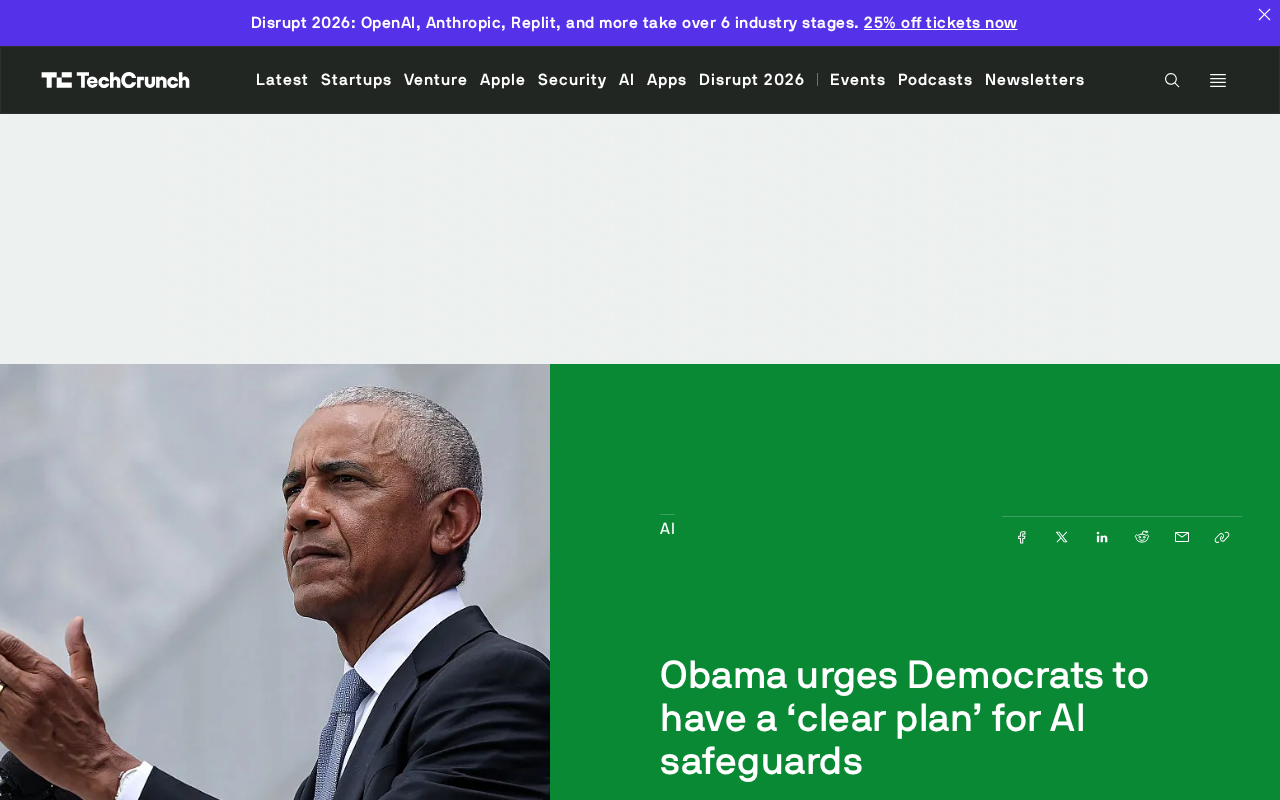
Obama Calls on Democrats to Develop a Clear Plan for AI Safety Regulation
Obama urges Democrats to make AI a core agenda item and develop a clear plan addressing economic disruption and safety risks. A look at the AI governance challenge.