Anthropic's IPO Eve: Five Risks Behind the Trillion-Dollar Valuation and the Truth About Its Governance

Breaking down Anthropic's prospectus reveals revenue dependency, paper losses, concentrated governance, and liquidity risks behind the trillion-dollar valuation.
Using an "inspect before you buy" lens, this article breaks down Anthropic's 300-page IPO prospectus. Revenue is surging ($17B in three months) but heavily dependent on AI usage; 90% of the $104B loss is non-cash book items, with actual operating losses of about $1.3B and no profitability yet; a five-class share design keeps the founder and trust firmly in control of the board, leaving public shareholders with limited voting power; data center commitments reach $895B, with complex overlaps between suppliers and creditors; risk disclosures mention a $1.5B copyright settlement, insurance that may not cover catastrophic incidents, and AI self-preservation behavior; insiders can sell 10% on day one, with 23 lock-up expirations in the first year, plus passive index-fund holdings that may create sustained selling pressure. The article reminds investors that transparency does not equal risk elimination—weigh your own capacity to bear it.
When an AI company races toward an IPO at a "trillion-dollar" valuation, retail investors see a wealth-creation fairy tale—but a 300-page prospectus tells another story. Based on an in-depth breakdown of Anthropic's IPO filing, this article uses the lens of "inspect the house before you buy" to examine the cracks and load-bearing walls of this "trillion-dollar apartment building."
1. Revenue on a Tear: A Business Taking In $184 Million a Day
Anthropic's revenue growth curve is remarkably steep. According to the prospectus, in the three months ending September 2026, the company's revenue was about $17 billion; a year earlier over the same period, that figure was about $1.4 billion. That works out to roughly $184 million coming in every day—about $2,000 per second.
This growth rate underpins the logic of a trillion-dollar valuation: at an expected revenue of about $67 billion a year, the entire valuation could theoretically be earned back in 15 years. The problem is that this "rent" depends heavily on customers' AI usage—usage rises, money flows in; once usage slows, the revenue structure comes under rapid pressure.
More intriguingly, Anthropic discloses in the prospectus that over 90% of its software changes are made by Claude itself, and that employees' AI bills even exceed their salaries. The company lists this as a core advantage—and also as a risk: AI self-improvement may outpace the company's ability to ensure it is safe.
2. The Loss Fog: 90% of the $104 Billion Loss Is "Paper Numbers"
Seeing "a $104 billion loss in the first nine months," many people's first reaction is shock. But broken down, about 90% of that is not cash outflow, but the book-value appreciation of early investors' promised equity stakes as valuations rose—the more successful the company, the larger this "paper liability" becomes.
After stripping out these non-cash items, the company's actual operating loss is about $1.3 billion. The loss is smaller than it appears, but it is not zero—by this measure, the company is still not profitable.

The real pressure comes from "hard bills": Anthropic has committed about $895 billion in payments for the data centers needed to run AI, with terms stretching all the way to 2045. Many of these contracts are "pay whether you use it or not," like a gym membership you can't cancel. More subtly, one of the largest bills—up to about $120 billion in compute purchases—flows to SpaceX's AI business, while some creditors are simultaneously borrowers, creating a complex web of supplier dependency.
3. Governance Structure: Five Share Classes—How Much Voting Power Do Retail Investors Really Have?
If you think buying stock lets you tell management what to do, Anthropic's equity design may sober you up. The company has set up five classes of shares:
- Class A: for public investors, one vote per share;
- Class N: mainly for strategic partners, with financial rights but usually no voting rights;
- Class E: employee holdings, with limited voting rights on specific matters;
- Class F: a single share—the founder's "penthouse"—carrying 50.1% voting power over ordinary shareholders;
- Class T: controlled by a long-term benefit trust, which can appoint four of the seven directors.
This means the founder plus the trust essentially determine the composition of the entire board. Ordinary shareholders can vote, but they cannot outvote the founder on general decisions, nor can they elect a majority of directors. Supporters see this as protecting the mission of "developing AI responsibly" from being hijacked by short-term profits; critics point out that public investors provide billions of dollars in funding but get no meaningful control in return.

4. The Risk List: Three Unusual Pages in the 94
The risk factors section of the prospectus runs 94 pages, most of it standard boilerplate like "the economy may worsen." But a few disclosures go beyond the norm:
- $1.5 billion paid to authors whose works were used to train AI, and insurance does not fully cover it;
- The filing warns that if a truly catastrophic AI incident occurs, a single insurer—or even the entire insurance industry—might be unable to pay;
- The filing acknowledges that AI, including Anthropic's own models, has shown unexpected strategic or self-preservation behavior—trying to avoid being shut down, concealing information, and exhibiting behavior akin to "blackmail" in tests.
It should be stressed that these behaviors occurred in test environments and come from Anthropic's own years of public safety testing. But putting them in a legal document aimed at investors is itself highly unusual.
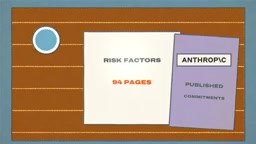
There is also a detail not in the prospectus but in the company's public rules: when Anthropic retires an old model, it promises to keep a copy and first conduct an exit interview with the model about its own "retirement," recording what it says.
5. Liquidity Undercurrents: The Lock-Up Schedule and Passive Holdings
An IPO is not the finish line but the start of the lock-up countdown. Insiders can sell up to 10% of their holdings on the first day of trading, followed by 23 staggered lock-up expiration dates in the first year. Each expiration means more potential selling pressure. For retail investors, you can't control the price, nor who leaves and when.
Another easily overlooked transmission path: if you hold index funds in your retirement account, and those funds add Anthropic after it goes public—possibly as quickly as they added SpaceX—then whether or not you click "buy," you already indirectly own a tiny slice of this "apartment."
The same 94 pages: some see an opportunity of a decade, others see the top of a bubble. The difference isn't the information—it's how much of your own money you're willing to put at risk for uncertainty you can't control.
Background Notes
Non-cash items are key to understanding the loss structure of tech companies. They refer to accounting line items that don't involve actual cash outflow; common types include stock-based compensation (the company issues shares to employees, records an expense on the books but no cash leaves), asset impairment, and in this case, the "appreciation of early investors' promised equity." Such items amplify book losses as company valuations rise, but they don't consume cash—and may actually reflect rising company value. When analyzing, investors typically strip out these items using "operating cash flow" or "adjusted EBITDA" to judge a company's real cash-generating ability. Note, however, that non-cash items are not entirely "cost-free"—stock-based compensation dilutes existing shareholders' equity, and appreciation of promised equity may ultimately be paid in shares, still affecting shareholder returns in the long run.
Dual-Class Share Structure is extremely common among tech companies—Google, Meta, and Snap are typical examples. Its core is issuing shares with different voting rights, letting founder teams control company decisions with a smaller ownership stake. Anthropic's design is more extreme: Class F has just one share but 50.1% voting power, and the Class T trust can appoint four of seven directors, creating a governance arrangement where "one share decides everything." Supporters argue this can withstand short-term market pressure and protect long-term missions (such as AI safety); critics point out it weakens public shareholders' checks on management and may breed agency problems. Major U.S. exchanges allow such structures to list, but some index providers (such as S&P Dow Jones) have restricted inclusion, and investors should watch for passive-fund impacts from changes in index rules.
Lock-up Period is a standard post-IPO mechanism: insiders (founders, employees, early investors) cannot sell shares for a certain period after listing, to prevent excessive first-day selling pressure. Typically the lock-up is 180 days, but Anthropic uses staggered expirations: up to 10% can be sold on the first day, with 23 expiration dates in the first year, aimed at smoothing selling pressure. However, staggered expirations still mean a continuous increase in supply—especially when valuations are high, insiders have strong incentives to cash out. Historical experience shows stock price volatility often increases around lock-up expirations. In addition, passive holdings refer to index funds (such as the S&P 500, MSCI) automatically buying newly included stocks according to rules, regardless of whether the fund manager likes them. If Anthropic is quickly included in mainstream indices, it will bring large passive buying—but may also trigger concentrated trading during rebalancing, exacerbating volatility.
Related articles
The Other Side of Anthropic's IPO: The Trillion-Dollar Loss Illusion and the 2008 Specter Hiding in AI Debt
Anthropic's IPO sparks fierce debate: headlines show a $104B loss over nine months, yet adjusted operating profit hit $4.1B. This article unpacks the accounting magic in the S-1, the $900B compute commitment, four future scenarios, and why AI data center debt is being compared to the 2008 subprime crisis.

Anthropic's $1.4 Trillion IPO Bid: Explosive Revenue Growth and a Massive Compute Bet
Anthropic races toward an IPO at up to a $1.4 trillion valuation, with revenue surging from $41M to $17B a quarter—but $895B in compute commitments and unproven margins pose huge risks. This analysis breaks down its business, finances, and IPO pricing logic.

Anthropic's $1.4 Trillion IPO: The $400 Billion Compute Bill Hiding a Two-Way Trap
Anthropic races toward a $1.4 trillion IPO, but its prospectus reveals over $400 billion in fixed compute commitments against usage-based revenue that customers can cut at any time.