Anti-Terrorism Laws Used to Ban Encrypted Email Services: The Battle Between Privacy Rights and National Security

Anti-terrorism laws target encrypted email services, raising concerns about privacy rights erosion
The use of anti-terrorism legislation to ban encrypted email services highlights the escalating tension between privacy rights and national security. This precedent threatens all strong encryption tools with a chilling effect, while the tech community advocates for decentralized, open-source alternatives as more resilient solutions against government overreach.
Event Overview
Recently, news that U.S. Secretary of State Rubio invoked anti-terrorism laws to ban a certain encrypted email service has sparked widespread attention in the tech community. While the discussion around this event remains limited, the underlying struggle between privacy rights, encryption technology, and national security has far-reaching implications for the entire encrypted communications industry.
Given the limited source material available, this article will analyze the core facts of the incident, focusing on the universal challenges encrypted email services face in today's regulatory environment.
Core Value and Regulatory Controversy of Encrypted Email Services
Why End-to-End Encryption is Indispensable
Encrypted email services (such as ProtonMail, Tutanota, etc.) use end-to-end encryption to ensure that only the communicating parties can read the email content—even the service provider itself cannot decrypt messages. These services play an irreplaceable role in protecting journalist sources, political dissidents, corporate trade secrets, and the everyday privacy of ordinary users.
End-to-End Encryption Explained: End-to-End Encryption (E2EE) is a communication encryption method where messages are encrypted on the sender's device and can only be decrypted on the recipient's device. This means all intermediate nodes during transmission—including the service provider's servers, network operators, and even government surveillance systems—can only see unreadable ciphertext. Technically, E2EE typically uses asymmetric encryption (such as RSA, elliptic curve cryptography) to generate public-private key pairs: the sender encrypts the message with the recipient's public key, and only the recipient with the corresponding private key can decrypt it. The private key never leaves the user's device, which is the fundamental guarantee of E2EE security. Famous E2EE implementations include the Signal protocol (used by WhatsApp and Signal), PGP (email encryption standard), and others.
The core concept of end-to-end encryption is a "zero knowledge" architecture—even if servers are compromised or governments demand data access, attackers or regulators can only obtain unreadable ciphertext. This is the fundamental reason why encrypted email services are highly praised by privacy advocates worldwide.
Zero Knowledge Architecture Principles: Zero Knowledge architecture is a service design philosophy where the service provider is technically unable to access users' sensitive data. In encrypted email services, this means users' encryption keys, email content, and even passwords are not stored in plain text on servers. Specific implementation methods include: client-side encryption (all encryption and decryption operations are performed locally on the user's device), key derivation functions (user passwords are hashed multiple times to generate encryption keys, with servers only storing authentication information), and encrypted metadata (email subjects, sender/recipient information are also encrypted). Even if the server database is completely leaked or requisitioned by the government, attackers cannot reconstruct the original information. Services like ProtonMail and Tresorit employ this architecture.
A Double-Edged Sword in Regulators' Eyes
However, the characteristic of being "unreadable by third parties" keeps encrypted services perpetually under regulatory scrutiny. Law enforcement worries that terrorists and criminal organizations use encrypted communications to evade surveillance, making "anti-terrorism" the most common legal justification for restricting encryption technology across countries.
This tension dates back to the "Crypto Wars" of the 1990s. From the U.S. government's attempt to mandate the Clipper Chip to recent "backdoor" legislation pushed by Australia and the UK, encryption technology has remained at the center of the tug-of-war between security and freedom.
Crypto Wars Historical Background: The Crypto Wars refer to the ongoing conflict between governments and privacy advocates over encryption technology control from the 1990s to present. The first Crypto War began in 1991 when the U.S. government tried to mandate the Clipper Chip—an encryption chip with a built-in government backdoor—which was ultimately abandoned after strong opposition from the tech community. Following the 2013 Snowden revelations of NSA mass surveillance programs, the Crypto Wars entered a second phase. Governments worldwide, citing anti-terrorism, have demanded tech companies provide encryption backdoors: in 2016, the FBI demanded Apple unlock the San Bernardino shooter's iPhone; in 2018, Australia passed the Assistance and Access Act forcing companies to cooperate with decryption; in 2020, the U.S. introduced the EARN IT Act attempting to weaken E2EE protections. This war is essentially a perpetual struggle between privacy rights and surveillance powers.
Using Anti-Terrorism Laws to Ban Encrypted Services: A Dangerous Precedent of Legal Expansion
The Boundary Problem of Discretionary Powers
When anti-terrorism laws are used to ban an encrypted communications service designed for ordinary users, the most alarming concern is the "expansive use" of legal tools. Anti-terrorism legislation typically grants administrative agencies enormous discretionary powers, often lacking transparent judicial review procedures.
The tech community's core concern is this: if an encrypted service can be banned because it "might be used by terrorists," then virtually all strong encryption tools face similar risks. If this logic takes hold, it could produce a severe chilling effect, deterring developers from building truly secure communication products.
The Strategic Significance of Decentralization and Open-Source Architecture
Such incidents once again highlight the value of decentralized and open-source encryption tools. Centralized services are naturally vulnerable as single-point ban targets, while communication solutions based on open-source protocols and decentralized architectures are more resilient:
- Open-source Signal Protocol implementations: Anyone can build independent instances based on public code
- Blockchain-based communication networks: No single control node, difficult to completely prohibit through administrative orders
- Federated architectures (like Matrix protocol): Distributed server operation with strong anti-censorship capabilities
Decentralized Communication Protocol Analysis: Decentralized communication architectures eliminate dependence on a single service provider, achieving censorship resistance through distributed networks. The Matrix protocol is a典型 example: it's an open-source federated communication standard where anyone can run their own Matrix server, and these servers interoperate through standard protocols, forming a federated network similar to email. Blockchain-based communication solutions like Status and Session go further, with message routing handled through decentralized node networks without central servers that can be shut down. Projects like BitMessage and Briar use P2P (peer-to-peer) architecture, with messages transmitted directly between user devices. The common feature of these solutions is that no single government or institution can paralyze the entire network by banning a specific entity, though this typically comes at the cost of some user experience and performance.
For developers concerned with technological freedom, this provides a clear direction: truly censorship-resistant communication infrastructure should architecturally eliminate dependence on any single entity.
Real-World Challenges Facing the Encrypted Services Industry
Service Providers' Compliance Dilemma
Encrypted email service providers face a fundamental contradiction: they must uphold their product's privacy protection promises while complying with local laws across different jurisdictions. When legal requirements directly conflict with product philosophy, companies often can only choose to exit the market or relocate their operations to jurisdictions with more robust privacy laws.
This explains why ProtonMail chose Switzerland and Tutanota chose Germany as their headquarters—the choice of geographic location and legal environment is itself a core component of product security strategy.
Jurisdiction Selection Strategy: The registration location of encrypted service providers directly affects the legal obligations they face. Switzerland, with its strong privacy protection laws (Federal Data Protection Act) and independent status outside the EU/Five Eyes alliance, has become the preferred choice for services like ProtonMail and Threema. Germany, though part of the EU, has become home to services like Tutanota and Posteo due to its constitutional court's strong privacy rights protection tradition. In contrast, Five Eyes alliance countries (United States, United Kingdom, Canada, Australia, New Zealand) share intelligence, and service providers in these countries face greater government data access pressure. Iceland, the Netherlands, and other Nordic countries are also favored for their digital rights protection records. It's worth noting that regardless of which jurisdiction is chosen, technical architecture (such as zero-knowledge encryption) is the true last line of defense—even when faced with legal compulsion, providers have no data to hand over.
User-Level Response Strategies
For ordinary users and enterprises, this incident brings the following practical insights:
- Diversify communication channels: Don't concentrate all sensitive communications on a single encrypted service to reduce single-point-of-failure risk
- Assess jurisdiction risks: Understand the legal environment and government data access history of the country where the service provider is located
- Prioritize open-source solutions: Tools with independent security audits and fully open-source code have more verifiable security promises
- Master self-hosting capabilities: For highly sensitive scenarios, consider building your own encrypted communication infrastructure
Conclusion: Finding Balance Between Security and Freedom
The use of anti-terrorism laws to ban encrypted email services touches on one of the most fundamental contradictions of the digital age: how to balance national security needs with individual privacy rights.
Encryption technology itself is a neutral tool that both protects innocent people's communication freedom and can potentially be misused by a few. But historical experience repeatedly shows that systematically weakening encryption infrastructure in the name of security ultimately damages everyone's digital rights. The tech community, policymakers, and the public need continuous, in-depth dialogue to find sustainable solutions that both ensure public safety and don't sacrifice fundamental freedoms.
Key Takeaways
- End-to-end encryption ensures communication content is readable only by sender and recipient; zero-knowledge architecture makes user data inaccessible even to service providers
- The Crypto Wars have continued since the 1990s, reflecting the ongoing struggle between privacy rights and state surveillance powers
- Banning encrypted services in the name of anti-terrorism may produce a chilling effect, threatening the survival space of all strong encryption tools
- Decentralized and open-source architectures provide stronger censorship resistance and represent an important direction for future communication infrastructure
- Jurisdiction selection, technical architecture design, and user risk diversification strategies together constitute the security defense line for encrypted services
Related articles

Micron's $10 Billion R&D Center in Boise: A Deep Dive into Its Strategic Significance
Micron announces a $10B R&D center in Boise focused on HBM and next-gen memory tech. We analyze the strategy, policy drivers, and impact on AI-era chip competition.

Chrome Updates Every Two Weeks: How AI is Reshaping Browser Security Strategy
Google Chrome shifts to biweekly updates to combat AI-accelerated cyberattacks. Deep dive into how AI is transforming security dynamics and the impact of faster release cycles.
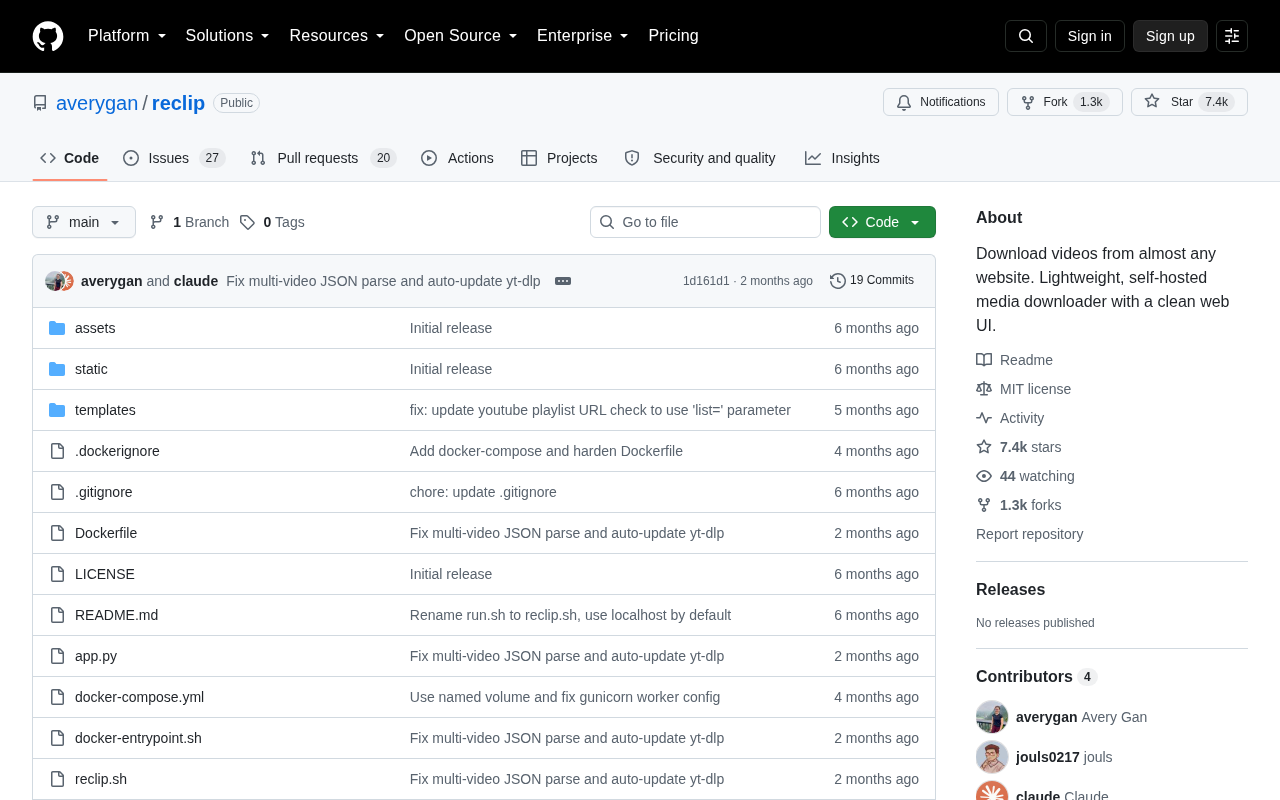
reclip: Self-Hosted Video Downloader with Clean Web UI as Command-Line Alternative
reclip is a lightweight self-hosted video downloader with a clean Web UI, built on yt-dlp to support downloads from almost any website. Easy deployment, privacy control, ad-free, ideal for NAS and VPS users.