Apple Siri May Soon Support Switching Between Claude and ChatGPT: Code Reveals the Clues
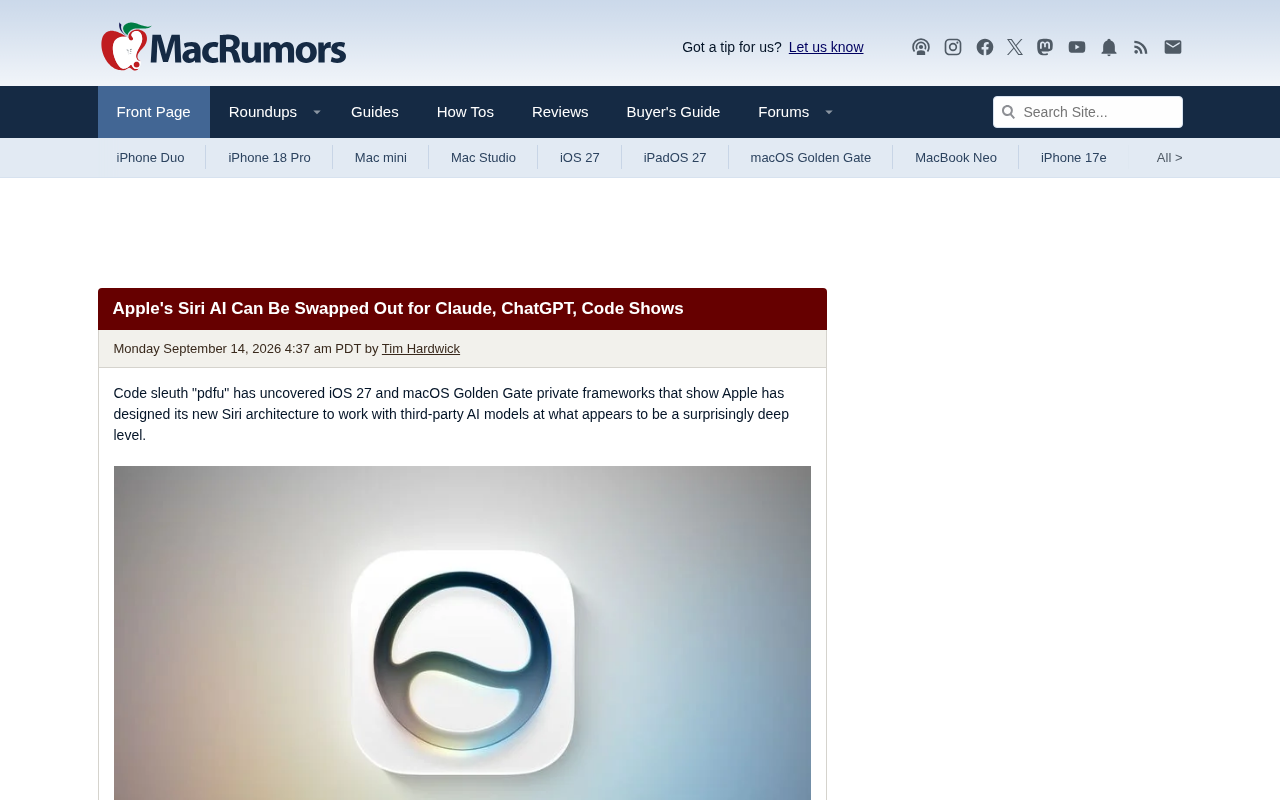
Apple code hints Siri may support switching between Claude, ChatGPT, and other third-party AI models.
Developers analyzing Apple's system code have discovered that Siri's AI backend appears designed to switch between multiple large language models, potentially enabling connections to Anthropic's Claude and OpenAI's ChatGPT. This extends Apple's existing ChatGPT integration in Apple Intelligence and could help offset gaps in its own models while preserving leverage over multiple AI vendors. Industry-wide, it signals a shift toward model commoditization, with Apple positioning itself as the AI distribution layer rather than betting on a single proprietary model. The finding remains code-level only and unconfirmed by Apple.
Siri's AI Engine Is No Longer a Single Fixed Choice
Developers have found evidence in Apple's code suggesting that Siri's AI backend is not a monolithic system, but rather an architecture designed to switch between different large language models. This means Siri may no longer rely exclusively on Apple's own models — it could potentially connect to third-party models like Anthropic's Claude or OpenAI's ChatGPT to power its responses.
The discovery comes from an analysis of system-level code. While it remains a technical clue rather than a user-facing feature, it points to an important direction in Apple's AI strategy: building Siri into a "pluggable" intelligent assistant platform, rather than locking it into a single model.
Why Apple Wants a "Switchable" Siri
Apple was widely seen as slow to respond to the generative AI wave, with its own models lagging behind those from OpenAI, Anthropic, and Google in terms of capability. A switchable architecture allows Apple to maintain its own AI development efforts while leveraging the industry's strongest third-party models to close the gap — quickly improving the real-world Siri experience.
This design also aligns with Apple's longstanding strategy. The company has already integrated ChatGPT into Apple Intelligence, allowing Siri to hand off complex queries to OpenAI for processing. If the direction hinted at in the code comes to fruition, this "handoff" mechanism could expand further to include Claude and other model options.
For Apple, avoiding dependence on a single vendor preserves bargaining power in commercial negotiations and enables flexible model assignment based on task performance — without being led around by any one AI company.
Apple Intelligence is Apple's AI feature suite announced at WWDC 2024, integrated into iOS 18, iPadOS 18, and macOS Sequoia. It covers capabilities like text refinement, image generation, and notification prioritization. The ChatGPT integration is a key component: when Siri determines a query exceeds the local model's capabilities, it forwards the request to OpenAI's servers with user consent, while Apple claims it does not log the content of those requests. This mechanism is essentially a "fallback" strategy — Apple's own models handle everyday tasks, while third-party models take on complex reasoning, with the two complementing rather than fully replacing each other. The multi-model switching architecture found in the code can be seen as a natural extension of this approach.
What It Means for Users and the Industry
If Siri eventually opens up model selection, users may be able to choose the AI engine powering their assistant based on personal preference. Those who favor Claude's long-form reasoning could choose Claude, while users who prefer ChatGPT's interaction style could stick with that experience. This kind of flexibility is uncommon among consumer-grade voice assistants.
From an industry perspective, this signals a shift in which large language models are evolving from "products" into "infrastructure." When a company of Apple's scale treats the underlying model as a replaceable component, it suggests that model differentiation is being abstracted away and modularized — and that the real competitive battleground is shifting toward integration capabilities, privacy protection, and on-device experience.
For Anthropic and OpenAI, becoming a candidate supplier in the Apple ecosystem represents enormous distribution potential, but also means competing under Apple's stringent privacy and performance requirements.
The trend of large models shifting from "products" to "infrastructure" is referred to in the tech industry as "model commoditization." The core logic is this: as capability gaps between top models narrow, the interfaces for calling models, the platforms for deploying them, and the application ecosystems built around them will hold more long-term competitive value than the models themselves. If Apple achieves a pluggable multi-model architecture, it is effectively positioning itself as the "distribution layer" for AI capabilities — controlling the user entry point and data privacy strategy, while pushing model providers further downstream. This dynamic closely resembles the relationship between AWS and underlying hardware vendors in the cloud computing era: platform players tend to hold more stable bargaining leverage than providers of foundational capabilities.
A Reason for Caution
It's worth emphasizing that this information is currently based solely on findings at the code level — a technical observation from the developer community. Apple has not officially confirmed any related features. Capabilities present in code do not guarantee a public release; Apple could be testing a multi-model architecture internally without ever opening it up for end users to freely switch between models.
The report generated limited discussion on Hacker News, suggesting the details have yet to be broadly verified. Until Apple makes an official announcement, it's more prudent to treat this as a strong signal about future product direction rather than an established fact.
Regardless, the possibility of Siri moving toward a switchable multi-model architecture sketches out a pragmatic stance for Apple in the AI era: not insisting that its own models must be the best, but focusing on integrating the finest available resources to serve the user experience.
Related articles

The Hidden Risks of Culvert Failure: An Overlooked Infrastructure Hazard
Culverts are hidden drainage structures buried beneath roads. Their failure can silently hollow out road beds, cause localized flooding, and trigger deadly collapses — yet they remain chronically overlooked.

Naoma AI Demo Agent V2: Turning Website Traffic into Booked Meetings with AI Sales
Naoma AI Demo Agent V2 replaces demo request forms with an AI sales rep that demos products, qualifies leads, and books meetings in real time. 50K+ demos run.
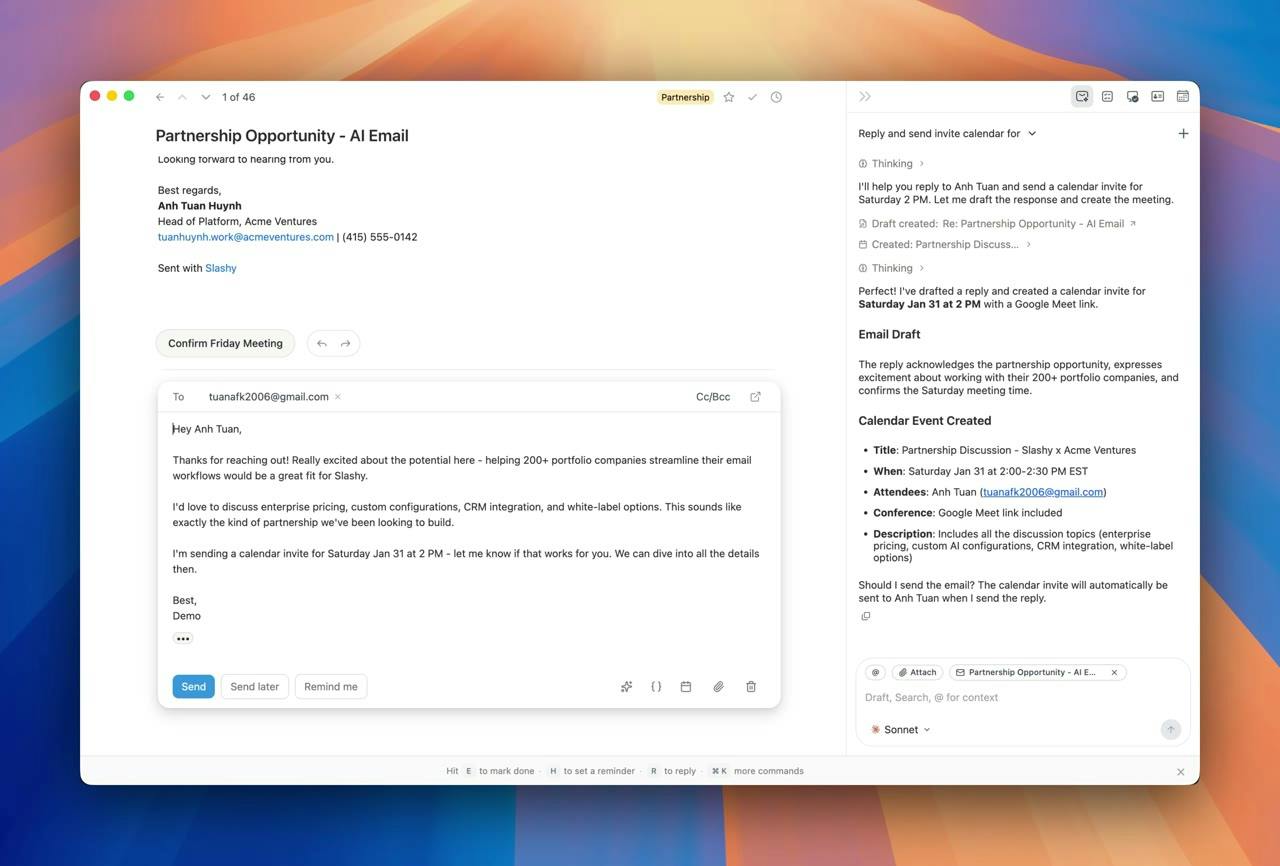
Slashy Assistant: The AI Email Assistant That Handles Your Inbox for You
Slashy Assistant is an AI-native email client with a built-in smart assistant that drafts replies in your voice, organizes email, schedules meetings, and tracks follow-ups. Accessible via iMessage, Slack, and phone — set up in five minutes.