Asimov 1: Billed as the Most Customizable Humanoid Robot, Already Used by Developers to Build Startups

Open-source customizable humanoid robot Asimov 1 targets founders and researchers with secondary development.
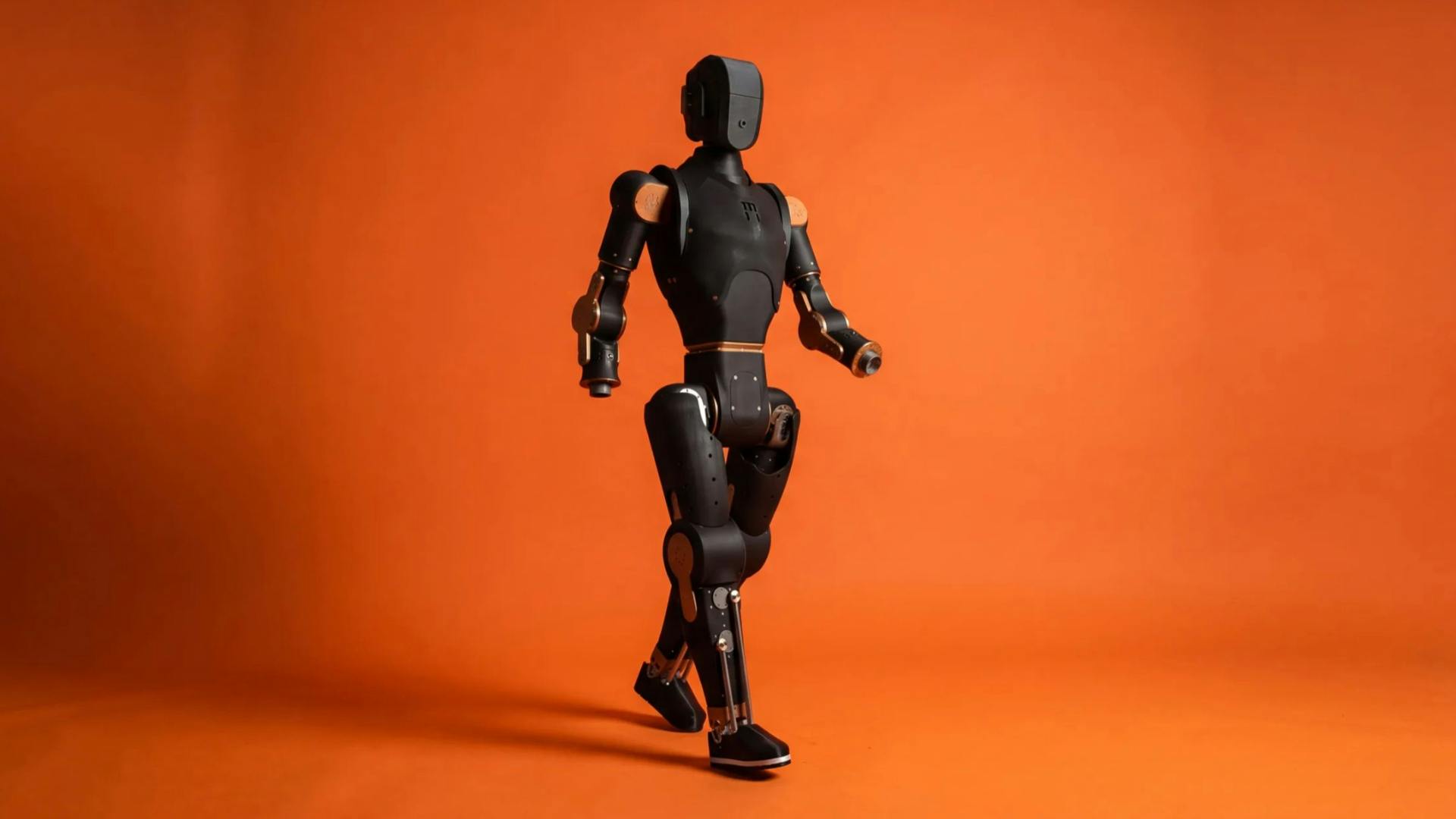
Asimov 1 is an open-source humanoid robot gaining attention on Product Hunt, positioned as a development platform "you can use to start a company," not a toy or expensive lab experiment. It emphasizes high customizability and has been purchased by founders, researchers, and developers in over 20 countries for training and modification.
In the open-source robotics space, a humanoid robot project called Asimov 1 has recently gained attention on Product Hunt. Its positioning is straightforward: it's not a toy, nor an expensive lab experiment for research institutions, but a humanoid robot that "you can use to start a company." According to the official description, the product has been purchased by founders, researchers, and developers in over 20 countries, who use it for training and modification to suit their own application scenarios.
Why "customizable" became a selling point
The humanoid robot market has long faced an awkward situation: hardware performance keeps improving, but there aren't many platforms that truly allow people to modify freely and develop on top of. Most commercial products are either closed systems or priced so high that only large labs can afford them. Asimov 1 puts "most customizable" as its core label, targeting exactly those developers who have hands-on skills but lack suitable hardware foundations.
Looking at Product Hunt's categories, Asimov 1 is tagged with Open Source, Robots, and Artificial Intelligence. Open source means there's a certain level of intervention possible at the software layer, while the humanoid form allows it to adapt to tasks in human environments—something wheeled or specialized robotic arms struggle to cover.
Humanoid robots generally refer to robots with a human-like torso, dual arms, and in some models legs and a head, capable of simulating human movement and manipulation. The core challenges lie in bipedal balance control, whole-body dynamics coordination, and multi-joint motion planning—technologies long concentrated in a handful of university labs and leading companies. By use case, they can be roughly divided into research validation, industrial operation, and general-purpose platform types; Asimov 1 belongs to the last category. Compared to wheeled robots, the advantage of a humanoid structure is that it can directly use environments and tools designed for humans—such as stairs, door handles, and standard workstations; the disadvantages are high cost, complex control, and limited battery life and payload. Understanding this classification helps judge whether a humanoid robot is better suited as a research vehicle or a ready-to-use product.
What buyers are doing with it
The official user profiles are quite specific: founders, researchers, developers. These three groups share one thing in common—they don't need an out-of-the-box finished product, but a vehicle that can be continuously trained and modified.
Founders are attracted by the ability to quickly validate prototypes. Rather than building a humanoid hardware set from scratch, it's better to develop applications on a platform with existing locomotion capabilities and basic interfaces. Researchers need reproducible, modifiable experimental equipment; here, open-source attributes matter more than peak performance. Developers are even more direct: they treat it as a "large development board" that requires writing code, tuning parameters, and connecting sensors.
The coverage across over 20 countries indicates this isn't a concept product stuck at the demo video stage—at least a small-scale cross-regional user base has formed. However, the data on Product Hunt—81 upvotes and 9 comments—also shows that it's still at an early community-driven stage, with a distance to go before reaching the mass market.
In robotics, open source usually doesn't mean fully public hardware blueprints, but rather an accessible, modifiable software stack, commonly in the form of SDKs, ROS/ROS 2 interfaces, motion control APIs, and simulation environment support. ROS (Robot Operating System) is a widely used middleware framework in robot development, providing communication, sensor drivers, and algorithm package management, on which developers can integrate their own perception and planning modules. For platforms like Asimov 1, the open-source attribute determines whether users can replace gait algorithms, integrate custom vision models, or connect external computing units. But the degree of openness varies greatly—some only open upper-level application interfaces, while others open low-level firmware. Buyers need to confirm the specific boundaries before purchasing, as this directly affects the depth and workload of secondary development.
Points to consider calmly
"Most customizable" is a powerful marketing phrase, but it also means users need to bear considerable integration work. The higher the customizability, the weaker the out-of-the-box experience tends to be. For teams without a robotics background, every step—from hardware assembly to motion control debugging—can be a hurdle.
Another point to watch is ecosystem maturity. The long-term value of an open-source robotics platform depends on whether the community is active, documentation is complete, and key components are easily accessible. This information is limited on the current product page, and potential buyers should verify further before ordering.
Product Hunt is a community platform for new product launches, where users can upvote and comment on products; vote and comment counts are often used as reference indicators of early popularity. However, the platform's audience is mainly tech enthusiasts and early adopters, and voting behavior reflects topic attention rather than actual sales or product maturity. A product getting dozens of votes represents small-scale exposure, fundamentally different from large-scale market validation. Therefore, when considering Product Hunt data alongside information like "purchased by users in over 20 countries," one should distinguish community buzz from commercial traction—the latter usually requires longer-term user feedback and third-party reviews to support.
Who should pay attention to this robot
If you're looking for humanoid robot hardware that can host your own algorithms and be iterated repeatedly, and your team has some mechanical and software engineering capabilities, Asimov 1 is worth adding to your candidate list. It's more of a development platform for professional users than a consumer product.
Conversely, if you're expecting an out-of-the-box "home assistant" with smooth voice interaction, current humanoid robot products generally can't meet that expectation, and Asimov 1 is no exception. Its value lies in returning customization power to the user—and that freedom requires corresponding technical skills to realize.
Related articles
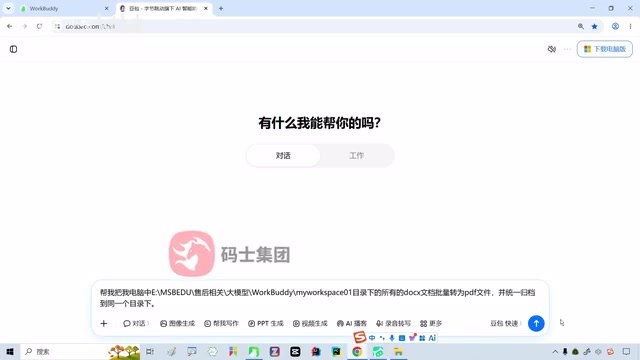
WorkBuddy in Action: How AI Agents Automate Batch File Conversion and Archiving
Bilibili creator Teacher Shanyao tests WorkBuddy vs. Doubao on batch file conversion, showing how AI Agents move from "giving solutions" to "direct execution," with a full workflow and credit cost reference.
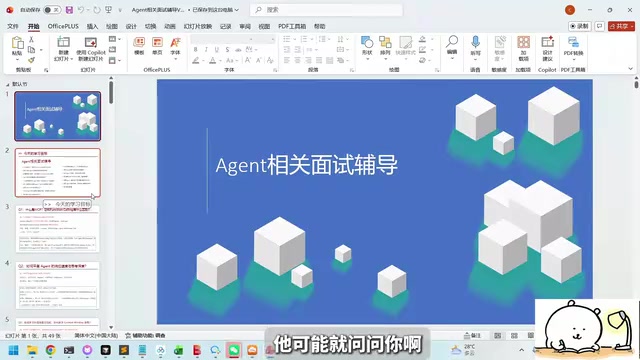
High-Frequency AI Agent Interview Topics: RAG, Multi-Agent Systems, and Token Optimization
Based on a Bilibili Agent interview video, this article covers high-frequency AI Agent interview topics: RAG evaluation, single vs. multi-agent selection, token cost control, infinite loop troubleshooting, and project presentation techniques.

The Complete AI Agent Development Workflow: From Technical Build to Compliant Launch
A full AI agent development workflow for education: architecture, four teaching modules, deep synthesis and large model filings, high-concurrency deployment, and operations.