The Complete AI Agent Development Workflow: From Technical Build to Compliant Launch

Landing an education AI agent in three phases: 2-3 months dev, 2-4 months compliance, long-term ops—run compliance and dev in parallel.
Based on Beijing Muqi Technology's experience landing multiple vertical education agents, this three-phase process covers architecture and four teaching modules (2-3 months), compliance filings including deep synthesis and large model launch (2-4 months, runnable in parallel), and deployment plus long-term operations. The moat lies in embedded teaching paradigms and structured knowledge base quality, with compliance planned from day one.
Title
AI Agent Development Full Workflow: From Technical Build to Compliant Launch
Meta Description
A detailed walkthrough of the full AI agent development workflow: the underlying architecture for an education/tutoring agent, four core teaching function modules, deep synthesis algorithm and large model launch filings, high-concurrency deployment, and long-term operations—plus the three-phase standardized process and timeline breakdown.
Article Content
Developing an AI agent for education and tutoring scenarios is far more than plugging in a large model API. From the underlying architecture and teaching function modules to compliance filings and high-concurrency deployment, every stage carries clear engineering requirements and time costs. Based on hands-on experience taking multiple vertical education agents from zero to one, Beijing Muqi Technology (also written as "Muji Technology" in the original text) presents a three-phase standardized process, with the overall project timeline controllable to the order of several months when work is advanced in parallel.
Phase 1: Product R&D and Technical Development (2-3 months)
This phase determines the ceiling of the agent's core capabilities and proceeds on two levels: building the underlying architecture and developing the teaching function modules.
Underlying Architecture: A Teaching Paradigm, Not Generic Output
The agent's core logic hub needs customized orchestration of multi-turn dialogue flow rules and must handle switching logic across teaching scenarios—for example, when switching from practice-partner mode to correction mode, how the dialogue context continues and how the teaching strategy adjusts.
The more critical step is deeply embedding mature teaching paradigms such as the Socratic method and tiered error correction into the system, so that the agent's output provides guidance consistent with pedagogical principles rather than the indiscriminate content answers of a general-purpose large model. This is essentially "engineering pedagogy"—translating the tacit experience of excellent teachers into executable dialogue strategies.
At the knowledge base level, structured import of graded vocabulary lists, grammar rules, standardized teaching scripts, and licensed textbooks is required to build a dedicated domain knowledge base. This step technically avoids the risk of the agent outputting factual teaching errors, and it is also where education products differentiate themselves from general-purpose chatbots. On the multimodal link, industrial-grade speech recognition and synthesis are integrated, the real-time audio stream transmission path is optimized, and end-side interaction latency is compressed into a range imperceptible to users.

The Socratic method is a teaching approach that uses questioning instead of direct instruction: the teacher does not give the answer but guides students through continuous, progressive questions to discover contradictions themselves, revise their understanding, and ultimately reach the correct conclusion. Its engineering difficulty lies in the agent needing to dynamically judge the student's cognitive state based on their answers and then generate the next layer of questions, rather than applying fixed scripts. Tiered error correction handles errors in layers according to severity—minor slips of the tongue can be ignored to maintain fluency, while only hard grammatical errors are clearly flagged—thereby balancing correction with protecting the willingness to express.
Four Core Teaching Function Modules
- Practice & Improvement Module: Supports custom teaching personas, real-time two-way interaction, and allows users to interrupt at any time with no delayed response; the goal is to recreate real offline conversation scenarios.
- Low-Perception Real-Time Correction Module: Identifies grammatical, tense, and collocation deviations and generates non-intrusive implicit correction hints without interrupting the user's speaking rhythm, reducing the awkwardness of speaking practice.
- Read-Aloud Pronunciation Assessment Module: Provides quantitative scoring across dimensions such as phonetic accuracy, intonation and prosody, and fluency of expression. The original text claims its coverage exceeds most offline human-taught scenarios—this judgment lacks third-party evaluation data and is better treated as a product design goal than a settled conclusion.
- Intelligent Teaching Assistant Module: One-click generation of customized exercises, automatic homework grading, and personalized learning reports, reducing repetitive labor for education practitioners.

Read-aloud pronunciation assessment quantitative scoring typically relies on speech recognition and pronunciation evaluation models, scoring dimensions such as phoneme-level accuracy, stress and intonation patterns, and speaking rate and pauses, then mapping them to levels of comprehensibility or near-native proficiency. Note that the correlation between machine scores and human teacher evaluations depends on how well the evaluation model matches the corpus; learners with different accents and ages vary considerably, so scores are better used as reference feedback for practice rather than absolute determinations of ability.
Phase 2: Compliance Preparation and Launch Approval (2-4 months)
This is the most easily underestimated stage in landing AI applications in China. For the agent to enter major app stores, WeChat Mini Programs, and web platforms, a series of qualifications and filings must be completed: basic qualification and filing preparation, deep synthesis algorithm filing, large model launch filing, and platform launch review. Only when all four are covered can the qualification obstacles to commercial operation be cleared.
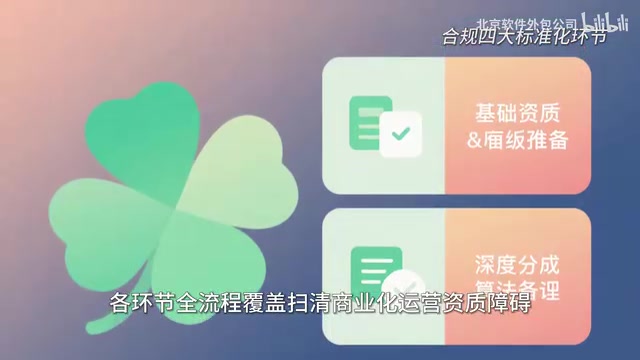
You may not have noticed that the compliance phase and the development phase can proceed in parallel—this is the key to compressing the overall project timeline. If executed serially, the two phases combined could approach half a year or more; in parallel, launch time can be significantly shortened. For teams planning to enter the education sector, compliance scheduling should be incorporated into planning from day one of the project, not patched in after the product is finished.
Deep synthesis algorithm filing: Under the Provisions on the Administration of Deep Synthesis of Internet Information Services, services that provide functions to generate or significantly alter information content shall complete algorithm filing procedures, reporting algorithm information, application scenarios, and other details in the designated system. Large model launch filing: Before generative AI services are provided to the public, security assessments and filings must be completed in accordance with the Interim Measures for the Administration of Generative Artificial Intelligence Services, submitting materials such as model corpus sources and security measures. These two filings are the prerequisite thresholds for an education agent to enter app stores and mini programs; material preparation and review feedback typically take months, so they should be launched in parallel early in development.
Phase 3: Deployment, Launch, and Long-Term Operations
Product launch is only the beginning. On the deployment side, a load-balancing plus distributed high-concurrency architecture is adopted, combining voice stream processing and text computation in layers to support stable operation under thousand-level concurrency scenarios. On the security side, a pre-filtering system for sensitive words and a dedicated security firewall are built to intercept non-compliant input and output content across the entire chain.
On the operations side, real user behavior logs must be continuously collected, prompt instructions iteratively optimized, and knowledge base content and teaching corpora regularly updated, so that the agent's teaching capabilities keep aligning with users' learning needs. Investment at this stage is often underestimated—agent performance decay is real, and without continuous operations, the engineering investment of the first two phases rapidly depreciates.
Several Engineering Judgments Worth Noting
A few judgments of reference value for practitioners can be distilled from this process. First, the moat of an education agent lies not in the model itself but in the depth of embedded teaching paradigms and the structured quality of the domain knowledge base. Second, voice interaction latency is the watershed for experience; engineering must compress end-side latency to the point where users cannot perceive it. Third, compliance is not a wrap-up action after the product is complete but an independent engineering track running in parallel with development—scheduling mistakes directly determine whether launch happens on time. Fourth, log-driven iteration after launch is the only path for the agent to maintain its effectiveness.
It should be noted that the process description in this article comes from a service provider's one-sided project experience summary; specific timelines and performance metrics may differ across projects, and readers should evaluate them against their own scenarios.
One-line Summary
Landing an education AI agent has three phases: technical development 2-3 months, compliance approval 2-4 months, and long-term deployment and operations—compliance and development can run in parallel to compress the timeline.
Paragraph Summary
Based on Beijing Muqi Technology's experience landing multiple vertical education agents, the article proposes a three-phase standardized process. Phase 1 uses 2-3 months to complete the underlying architecture and four core teaching function modules, with the core being the engineering of teaching paradigms such as the Socratic method and tiered error correction, structured import of a domain knowledge base, and optimization of voice multimodal latency. Phase 2 uses 2-4 months to complete four compliance tasks including deep synthesis algorithm filing and large model launch filing, which can run in parallel with development to shorten the total timeline. Phase 3 covers deployment, launch, and long-term operations, including high-concurrency architecture, content security filtering, and log-driven continuous iteration. The article emphasizes that the moat lies in embedding teaching paradigms and knowledge base quality, and that compliance scheduling should be planned from day one of the project.
Related articles
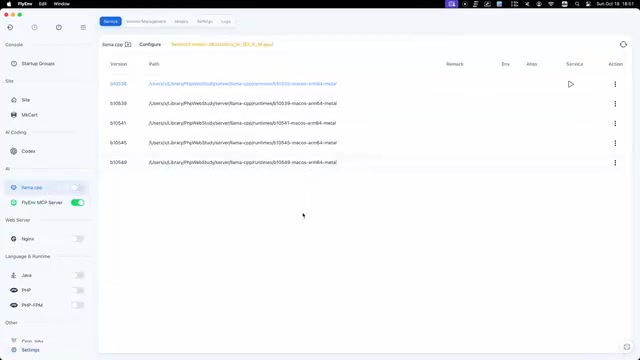
FlyEnv Plugin Review: Visually Running llama.cpp and Managing GGUF Models
FlyEnv launches the official llama.cpp plugin with side-by-side Metal runtime management, public GGUF repository indexing with file type labels, and visual configuration of context, threads, and GPU layers—saving templates and speculative decoding with each model for one-click local LLM inference.
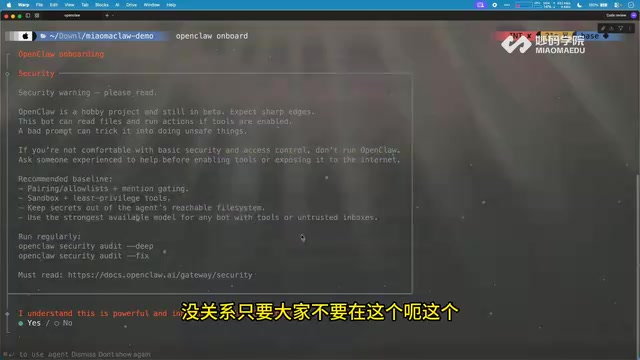
How Can Frontend Developers Advance into AI Agent Development? Deconstructing System-Level Agent Architecture from OpenClaw
Starting from the OpenClaw demo in a Bilibili open class, this article breaks down the three-layer architecture and universal formula of system-level AI agents, and analyzes the path for frontend developers to enter agent development based on TypeScript, including plugin-based design and security/memory layer challenges, with an interview answer framework.
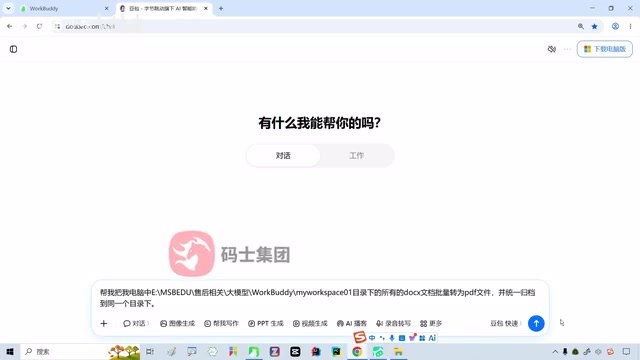
WorkBuddy in Action: How AI Agents Automate Batch File Conversion and Archiving
Bilibili creator Teacher Shanyao tests WorkBuddy vs. Doubao on batch file conversion, showing how AI Agents move from "giving solutions" to "direct execution," with a full workflow and credit cost reference.