Audible Launches AI Voice Previews, Upgrading the Audiobook Discovery Experience
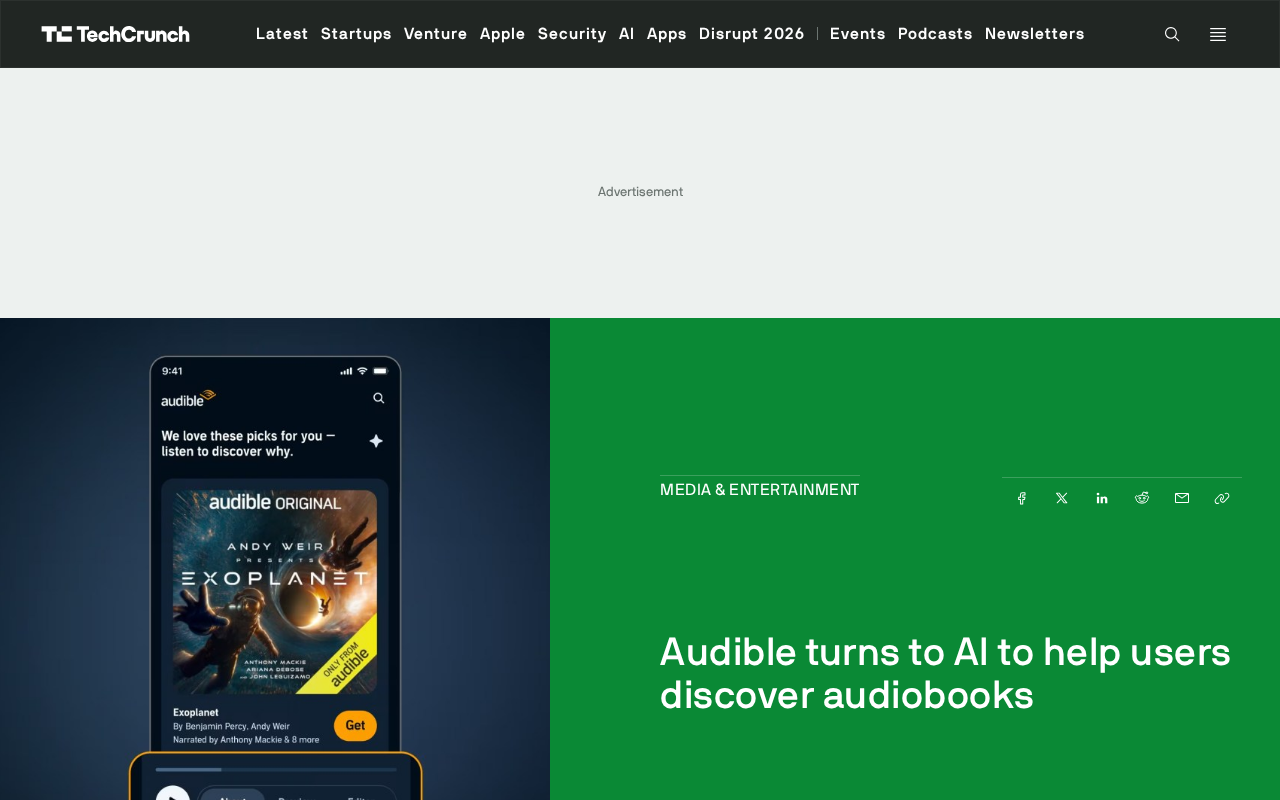
Audible launches AI audio previews that use synthesized voice to summarize book themes and reader highlights, revolutionizing audiobook discovery.
Audible has launched an AI-generated audio preview feature that, beyond narrator samples, uses synthesized voice to summarize book themes and review highlights, addressing the discovery pain point of insufficient sample information. It integrates descriptions, reviews, and samples into a listenable guide, reflecting a shift from passive sampling to proactive information distillation. Summary quality is undisclosed, making accuracy key to trust.
Audible is redefining audiobook discovery with AI. Its newly launched AI-generated audio preview feature, in addition to playing the original narrator samples, uses a synthesized voice to summarize a book's themes and the highlights readers enjoy. For audiobook users facing a massive library with no idea where to start, this is essentially a "spoken content summary" delivered before they even hit play.
What Problem Does the AI Preview Solve
Audiobook discovery has always been an awkward step: with a print book you can flip through a few pages to gauge the writing style and content, but with an audiobook you can only rely on a few dozen seconds of narrator sample and hope for the best. The sample often covers only the opening stretch and can't represent the book's overall themes or real reader feedback.
Audible's new feature merges two things into a single listening experience: it keeps the original narrator sample so users can get a feel for the narrator's style, while using AI to generate a summary audio that distills the book's core themes and the common highlights from reader reviews. Before deciding whether to buy or listen, users get a more well-rounded basis for judgment than "listening to the opening."
The essence of this approach is to reorganize information previously scattered across book descriptions, user reviews, and listening samples into a single listenable guide. For typical audiobook use cases like commuting or working out, a voice summary fits the medium users are in far better than a text description.
The Product Logic Shift from "Sample" to "Guide"
The traditional audiobook platform sample feature is linear and passive: users tap on the sample, listen for a few dozen seconds, and then decide for themselves whether to continue. Audible's AI preview adds a proactive information-distillation layer—it doesn't just play content, it explains what the book is "about" and "why it's worth listening to."
According to the original report, this AI audio summarizes the book's themes while also distilling why readers like the book. This means the preview content carries both a content dimension and a social dimension: the former answers "what is this book about," and the latter answers "why do others recommend it."
This design is especially valuable for two types of users. One is new users who are completely unfamiliar with a book's content and need to filter quickly; the other is veteran users who already have a large to-listen list and need to efficiently decide what to listen to next. The former lowers the barrier to entry, and the latter improves consumption efficiency.
The Trade-offs Behind AI Voice Summaries
Making the summary audio rather than text is a notable product decision. Text summaries are easier to skim and search, but audio summaries naturally fit the audiobook use case—users don't need to switch between "listening" and "reading."
The cost is information density and controllability. The pace of an audio summary is determined by the system, and users can't skip ahead or go back the way they can with text; the accuracy and tone of the summary also directly shape users' first impression of the book. If the themes the AI distills deviate from the book's actual focus, or if the extraction of reader reviews carries bias, the preview could instead mislead the decision.
The source material doesn't disclose details of how the summaries are generated—such as whether they're based on real user reviews, how summary length is controlled, or whether all titles are covered. These are the key variables that set the ceiling on the experience at the implementation level, and they're worth watching going forward.
Generating audio summaries typically relies on large language models to distill book metadata (descriptions, reviews, etc.), which is then synthesized via text-to-speech (TTS) technology. The naturalness, emotional expression, and pacing control of TTS directly affect the listening experience, while the accuracy of the summary depends on the quality of the input data and the model's comprehension ability. If generated from user reviews, the bias and noise in reviews also need to be handled to avoid overgeneralization.
The Direction of AI Competition Among Audiobook Platforms
Recommendation accuracy is becoming a core competitive edge for content platforms. Audible has chosen to enter at the front end of the decision chain—"preview"—using AI to lower users' filtering costs, rather than directly overhauling recommendation rankings or search ordering.
The advantage of this direction is that the change is relatively restrained: AI summaries exist as a supplement to the sampling step, not a replacement for the original samples and user reviews, so users can still use the platform the way they're used to. The risk is that if summary quality is inconsistent, users may lose trust in the preview feature itself and fall back to the traditional path of only looking at ratings and reviews.
The competition between audiobooks and print books and podcasts is fundamentally a competition for attention. Helping users find the book "worth listening to" faster has more long-term value than keeping users lingering in the library for a few extra minutes. Whether AI voice previews can achieve this depends on whether the summaries are truly more efficient and credible than users flipping through reviews themselves.
Recommendation systems typically consist of two stages, recall and ranking, while the preview step sits before users make an active decision and falls under the category of "explanatory recommendation." By entering at the preview point, Audible is in effect adding a layer of explainable guidance at the front end of the recommendation chain, helping users understand the reasons behind recommendations and thereby boosting conversion and trust. This differs from directly optimizing ranking algorithms—it focuses more on reducing users' cognitive costs.
One-line Summary
Audible launches AI audio previews that use synthesized voice to summarize book themes and reader highlights, revolutionizing the audiobook discovery experience.
Paragraph Summary
Audible has launched an AI-generated audio preview feature that, beyond the original narrator samples, uses synthesized voice to summarize book themes and review highlights, solving the discovery pain point of insufficient information in audiobook samples. The feature integrates book descriptions, reviews, and samples into a listenable guide that fits scenarios like commuting and reflects a product logic shift from passive sampling to proactive information distillation. The generation method and summary quality are undisclosed, making accuracy the key to trust. The move represents the platform entering AI competition at the preview stage to lower users' filtering costs.
Related articles
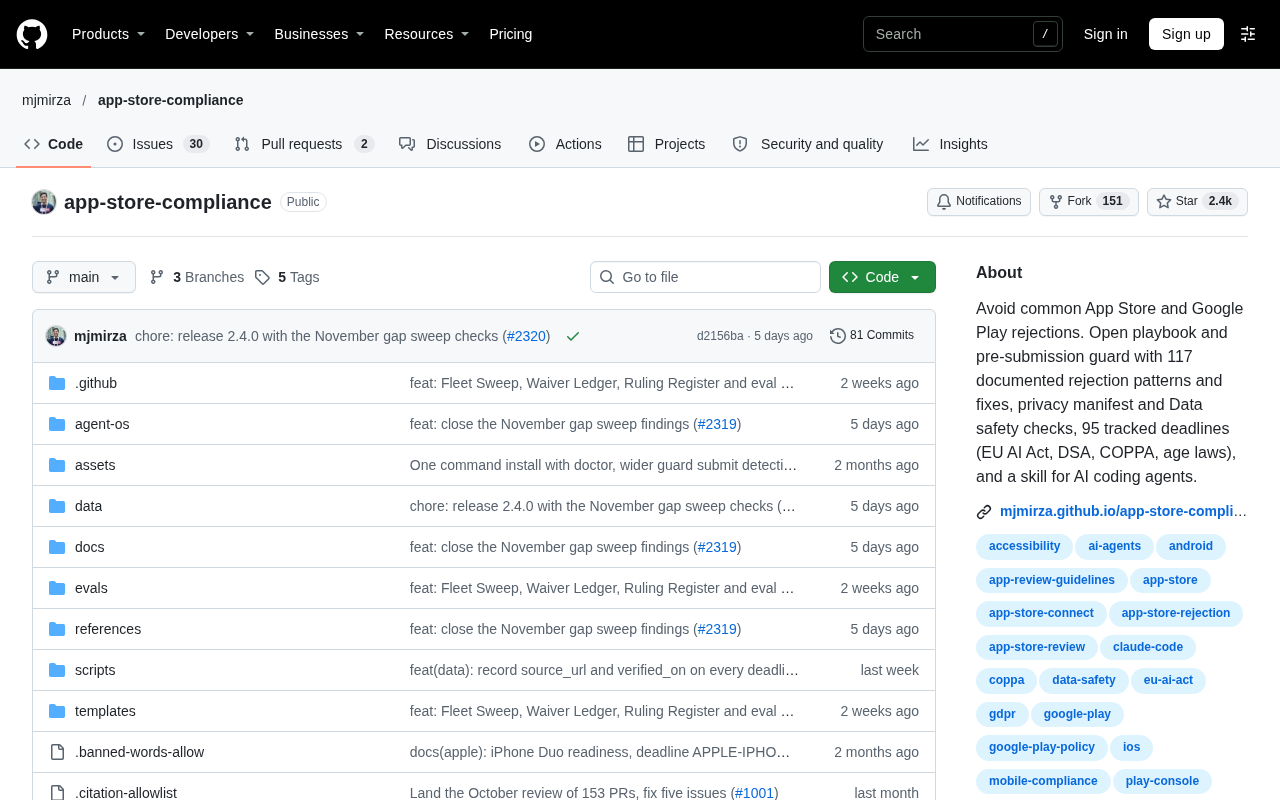
GitHub Daily · November 21: Compliance and Editing — AI Implementation Starts Sweating the Details
GitHub Daily Nov 21: app-store-compliance surges 377 stars with 117 real rejection cases, AFFiNE hits 75K stars, autoclip covers full short-video pipeline across Douyin, TikTok, and more.

Graphify: The 151K-Star Open-Source Sensation That Turns Your Entire Codebase into an AI Knowledge Graph
Graphify, a 151K-star open-source tool, turns your entire codebase into a knowledge graph for AI Agents to query directly. Supports 40+ languages, 20+ AI assistants, local 30-second interactive code maps, zero-token builds, and unified Markdown, PDF, image, and audio ingestion.
When Stochastic Parrots Claim to Have …
When Stochastic Parrots Claim to Have Proven the Riemann Hypothesis
Scott Aaronson's 'stochastic parrots prove the Riemann Hypothesis' quip highlights the trust crisis in AI-generated math proofs and the promise of formal verification.