AuthKit Custom Subdomains Go Free: Product Identity Starts at the Login Entry

WorkOS launches free, zero-config custom subdomains for AuthKit, bringing the login entry back to the brand.
WorkOS launched custom subdomains for AuthKit, letting teams replace system-generated random strings with product-matched authkit.app addresses—free, no DNS configuration, effective on save. The article notes the login domain is the first visual cue for building trust; random addresses harm brand recognition and invite phishing suspicion, and custom subdomains also fix multi-brand entry confusion. Technically, zero DNS means the platform hosts resolution and certificates—naming rights without domain sovereignty—suited to early-stage products, while finance and healthcare still need proprietary domains. This reflects authentication infrastructure productization: branded login entries are becoming baseline configuration.
The login page is often the first touchpoint users have with a product, yet most developers settle for an auto-generated random address at this very first step. WorkOS recently rolled out custom subdomains for AuthKit, letting teams swap that system-generated string of characters for an address matching their product name—free of charge, no DNS configuration required, effective upon saving. This change may look like mere URL beautification, but it actually touches on brand consistency, user trust, and the productization trend in authentication infrastructure.
From Random String to Product Name: What AuthKit Did
AuthKit is the hosted authentication solution offered by WorkOS; once developers integrate it, they get login, signup, multi-factor authentication, and more. Previously, each tenant received an auto-generated authkit.app subdomain, with the access address assigned by the system. The problem: this address typically had nothing to do with the product name, so users clicking to log in would see an unrecognizable domain—bad for brand recognition and prone to raising the suspicion of "is this a phishing page?"
The new custom subdomain feature targets this pain point directly: teams can pick an authkit.app address matching their product and replace the system-generated one. The official description emphasizes three points—free, no DNS setup required, and effective immediately upon saving. In other words, the branding action that once required domain hosting and certificate configuration is now reduced to a single form submission.
Multi-factor authentication (MFA) is a security mechanism that adds a verification factor beyond the password, commonly including one-time codes, push confirmations, and hardware security keys. In hosted authentication solutions, MFA enrollment, challenge, and recovery flows are all implemented by the provider, and tenants decide through configuration which factors to enable and which users to enforce them for. This means the login entry domain is not just a visual facade—it also carries sensitive interactions like credential submission, verification code entry, and device trust. Every verification code users enter on these pages is built on their judgment of which domain currently owns the page, so the recognizability of the entry domain directly affects how much the entire authentication chain is trusted.
Why the Login Address Deserves Serious Attention
The domain of the authentication entry is the first visual cue users rely on to build trust. The security research community has long emphasized the role of "domain recognizability" in anti-phishing: when users see a domain in the address bar that matches the product name and has a clean structure, the cost of judgment drops significantly; conversely, an unfamiliar random domain triggers alertness, or even outright abandonment of login. For SaaS products targeting enterprise customers, this is especially critical—buyers will notice during evaluation whether login links look professional and align with compliance instincts.
From a product experience perspective, custom subdomains also solve the attribution confusion of multiple product lines. When a team operates several brands at once, a unified authkit.app suffix plus each product's own name keeps the authentication infrastructure centralized while giving each brand's login entry an independent identity. This "unified backend, separated frontend" structure is exactly the typical approach of today's authentication infrastructure productization.
One typical phishing tactic is to lure users into entering credentials on domains that look visually similar but are actually different—such attacks are known as homograph attacks or visual impersonation. The first layer of defense isn't technical but lies in users actively inspecting the address bar—when the legitimate login address itself is a hard-to-remember random string, users lose the reference point for judging "does this address belong to the product I trust," making them more easily persuaded by any equally unfamiliar domain. Conversely, a clean domain matching the product name gives users a memorable, verifiable anchor, making anomalous addresses easier to expose. This is why security guidelines generally recommend placing authentication entries under domains with clear structure consistent with the main site's brand, rather than scattered across multiple third-party addresses.
The Engineering Trade-offs Behind Zero DNS Configuration
"No DNS setup required" is the most noteworthy technical selling point of this feature. Traditionally, connecting a custom domain to an authentication service requires adding CNAME records, waiting for resolution to propagate, and configuring TLS certificates—any misstep breaks login. AuthKit pulls this entire process inside the platform: subdomains remain under authkit.app, with resolution and certificates managed centrally by the provider, while tenants only choose a name.
The cost is that domain sovereignty doesn't truly transfer—teams get a "nameable hosted subdomain," not a domain of their own. For most early- and mid-stage products, this is a reasonable trade-off: operational burden is eliminated in exchange for a branding effect close to a proprietary domain. But when products enter a stage requiring strict domain control (such as finance and healthcare, where domain ownership has hard requirements), proprietary domain integration remains irreplaceable. Fortunately, the two modes don't conflict, and teams can evolve by stage.
A CNAME record is a type of DNS resource record that maps a domain alias to another canonical domain name. In the traditional custom domain integration flow, teams need to add a CNAME record for the login subdomain at their own DNS provider, pointing to the target address provided by the authentication service, while waiting for the TTL to expire so resolution propagates globally. This process usually takes minutes to hours, and once the record is misconfigured (e.g., a typo in the target address or a conflict with an existing A record), the login entry becomes directly unavailable. TLS certificate issuance likewise depends on domain resolution being ready, typically requested automatically via the ACME protocol, but both first issuance and renewal can fail due to resolution issues. By keeping subdomains under authkit.app, AuthKit leaves resolution and certificates entirely under platform control, so the tenant's "configuration" degrades to a single database write—this is the engineering essence of "effective upon saving."
Signals for the Developer Tools Market
WorkOS started with enterprise SSO and directory sync, and AuthKit is its entry product extending toward a broader developer audience. Making custom subdomains a free, zero-configuration feature points to a clear strategy: lower the friction of integrating the authentication layer, let developers first gain a sense of control—"this is my system"—at the experience level, then gradually introduce deeper platform capabilities.
This puts some pressure on similar products. Authentication services are highly commoditized, with differentiation often showing in fine-grained experience—how customizable the login page is, how hassle-free domain management is, how short the configuration chain is. When one player makes "branded login entry" a default free capability, others at the same price point lack a reason to refuse. For developers, the direct benefit of this round of competition is that authentication branding capabilities once requiring extra payment or self-building are becoming baseline configuration.
Practical Recommendations
For teams planning to enable this feature, it's advisable to confirm before saving that the subdomain is consistent with the main brand and trademark, avoiding a second migration later due to a product rename; also check whether login links in email templates and help documentation need synchronous updates. Since changes take effect immediately, it's best to operate during off-peak hours and keep redirect notices on the old address to reduce confusion for existing users.
For teams not yet using AuthKit, this feature can serve as a concrete dimension when evaluating authentication solutions: the brand controllability of the login entry, configuration cost, and whether the path to migrating to a proprietary domain in the future is smooth. Authentication is the foundation of a product, and users will notice every identifier on that foundation.
One-line Summary
WorkOS launches free, zero-configuration custom subdomains for AuthKit, bringing the login entry back to the brand.
Paragraph Summary
WorkOS launched custom subdomains for AuthKit, letting teams replace the system-generated random string with an authkit.app address matching their product—free, no DNS configuration required, and effective upon saving. The article notes that the login domain is the first visual cue for building user trust; a random address both harms brand recognition and is easily mistaken for a phishing page, and custom subdomains also solve the entry attribution confusion for multi-brand teams. Technically, zero DNS configuration essentially means the platform hosts resolution and certificates, so teams gain naming rights but not domain sovereignty—suitable for early- and mid-stage products, while finance, healthcare, and similar scenarios still need proprietary domain integration. The article argues this reflects the productization trend in authentication infrastructure: branded login entries are shifting from a value-added item to baseline configuration, putting competitive pressure on similar authentication services.
Related articles
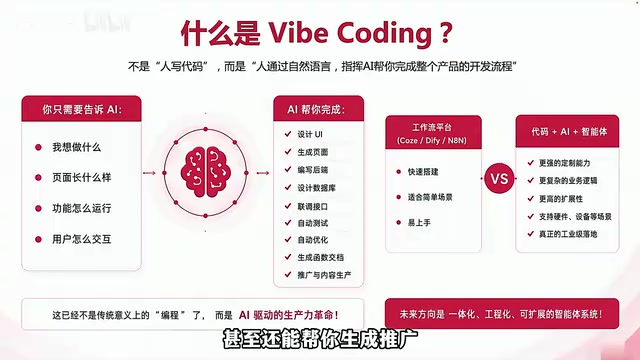
Vibe Coding for Absolute Beginners: A Practical Guide to AI-Assisted Programming
A beginner's practical guide to Vibe Coding: how AI-assisted programming lets people direct AI to write code, covering tools like Claude Code and Cursor, AI collaboration, multi-platform development, and automated operations for the full-chain one-person company.
Gemini 4 Neon Hands-On: Google's Mid-Size Model Takes On Opus 5.5
Hands-on with Gemini 4 Neon: Google's mid-size model rivals Opus 5.5 on coding tasks with strong coherence and long-task performance at lower cost, though 3D generation and architecture analysis remain weak.

Police Transcription Firm Data Leak: Naked Cloud Server Exposes Law Enforcement Sensitive Information
A transcription firm serving police, prosecutors, and tech giants exposed sensitive data like interrogation recordings and bodycam videos due to an unprotected cloud server. This article analyzes the third-party risks and recurring cloud security issues behind the incident.