Gemini 4 Neon Hands-On: Google's Mid-Size Model Takes On Opus 5.5
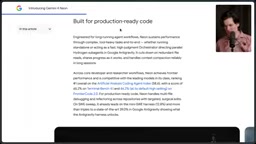
Gemini 4 Neon matches flagships in coherence and long tasks as a mid-size model, but weaknesses remain.
Google DeepMind's Gemini 4 Neon is a mid-size model that a long-time Google critic calls a "generational leap." It ranks third on the Artificial Analysis Intelligence Index and sits on the Pareto frontier. Hands-on testing shows it leads peers in coherence, autonomously diagnoses VPS disk issues, completes full machine setups unsupervised, and delivers self-rendered screenshot results with fix PRs. It achieved TypeScript rewrite optimizations in under ten hours that others couldn't in ten days. Weaknesses: poor 3D generation and architecture analysis hallucinations. Likely an engineer-driven experiment released early due to strong internal reception.
Google DeepMind's recent release of Gemini 4 Neon has sparked a lot of discussion. One developer and YouTube creator who has long been critical of Google's models gave rare praise after deep use: this may be the best model for coding right now, even surpassing Opus 5.5 and Fable 5.2 on multiple dimensions.
In his video, he admitted he had been deeply dissatisfied with previous Gemini models like Argon and Carbon, but the Neon experience is completely different—in his words, this is a "generational leap," and the first time Google has genuinely delivered a competitive answer to Opus 5.5.
Why a Mid-Size Model Can Challenge Flagships
According to Google's official announcement, Gemini 4 Neon is positioned as a mid-size model focused on "frontier-level intelligence with fast end-to-end task completion," covering complex software engineering, knowledge work, and scientific workflows. On the Artificial Analysis Intelligence Index, Neon ranks third with a score of 61 (x-high thinking tier), behind only larger and slower models; it ranks second on the valves index and sits on the Pareto frontier. Google also emphasized that Neon ranks second on steerability and on the new agent arena index.
The creator believes Google's announcement actually "severely undersells" the model. After hands-on testing, he found that Neon isn't just "another decent mid-size model"—it leads its peers by a wide margin in coherence. He noted that Neon comprehensively beats Opus 5.5 on multiple benchmarks at a lower price, and is neck-and-neck with Fable 5; switching to code mode narrows the gap even further.
Pareto frontier is a concept from economics and multi-objective optimization, referring to the set of solutions where no objective can be improved without harming another under given constraints. In model evaluation contexts, it's usually plotted with "intelligence level vs. inference cost/latency" as axes: a model on the frontier offers the highest intelligence at equal cost, or the lowest cost at equal intelligence. Gemini 4 Neon being on the Pareto frontier means it delivers near-flagship intelligence within the cost range of mid-size models—this is the quantitative basis for the "mid-size model challenging flagships" claim.
Artificial Analysis Intelligence Index is a third-party composite benchmark that normalizes and weights scores from multiple public evaluations (such as reasoning, coding, and math) into a single score, distinguishing between different "thinking tiers" (e.g., x-high indicates the model is allowed longer internal reasoning). It's commonly used to compare models across vendors, but note that its weighting design affects rankings—a single index cannot fully represent real development experience.
Performance in Real Development Scenarios
An Unexpected Diagnosis
The creator shared a case that had been under test for three weeks: he was troubleshooting disk speed issues on a VPS for a worktree creation operation, and the Astra model had repeatedly given irrelevant suggestions. With the same prompt, Neon accurately identified three compounding factors, the largest being that the VM's filesystem had been formatted with settings meant for mechanical hard drives—accounting for most of the latency. This configuration error, which he himself hadn't noticed, was pinpointed on the spot by a mid-size model.
He particularly praised Neon's responses as reading "naturally, clearly, and with rhythm," requiring no repeated wording corrections.
From "Wouldn't Trust It" to "Let It Run"
In the past, he never felt comfortable handing system configuration tasks to Gemini models because they tended to get lost in details and make basic mistakes. But Neon completed a full machine setup: installing the relevant toolchain on a Windows game development machine, injecting authentication, connecting to t3 code, verifying functionality, and then automatically posting a message to a designated thread to notify "environment ready." The entire process required no human intervention.

Coherence Over Long Tasks
In a visualization task, the model discovered that the HTML dashboard it generated wasn't displaying in the frontend due to a toolchain issue. Instead of spinning in place, it rendered the output itself, took a screenshot, delivered the result as a screenshot, and then submitted a PR to fix the issue. The creator believes this approach—"identify the problem, deliver a usable result, and fix the root cause along the way"—is Neon's most outstanding capability.
Performance Test: Accelerating a TypeScript Rewrite Project
He ran a comparative test on his own ts-rust project. Previously, Astra spent over seven days reducing bundle size but actually made it slower; Opus and Fable later only achieved about 20% speedup over the original version. Starting from the same baseline, Neon—leveraging anti-gravity's swarm feature—completed significant optimization in under ten hours: bundle size was dramatically reduced compared to the previous version, warm-start scenarios saw up to a twentyfold speedup, and overall benchmark scores improved markedly.
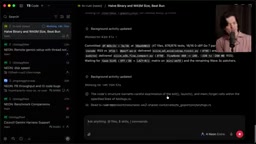
He emphasized that no model had previously achieved this kind of speed improvement over a window of more than ten days consuming massive tokens, while Neon did it in under ten hours.
Swarm feature (as provided by platforms like anti-gravity) refers to a mechanism where multiple model instances or sub-agents collaborate in parallel, dividing work on the same task. A typical approach decomposes a large task into sub-goals, with different agents exploring, implementing, and reviewing each other, and a main agent aggregating results. Compared to single-threaded long-context reasoning, swarm can significantly reduce wall-clock time but introduces coordination overhead and consistency risks. Neon completing optimization in under ten hours largely benefited from this parallel architecture rather than relying solely on single-pass reasoning capability.
Warm start refers to a process or build system starting with existing caches and dependencies already in place, as opposed to a cold start loading from scratch. Warm-start speedup multiples are typically much higher than cold-start because extensive initialization and repeated compilation overhead are eliminated. When interpreting figures like "twentyfold," it's important to distinguish warm-start from cold-start scenarios, otherwise the actual improvement in user experience may be overestimated.
Remaining Weaknesses
Neon isn't without flaws. On 3D generation tasks, its performance is notably weak—poor handling of details like fonts, roughly at the level of earlier models, with a gap versus the latest Opus series. In architecture analysis accuracy tests, 10 of its 72 statements were wrong, slightly behind Fable 5.2 and slightly ahead of Fable 5.1, but with half as many hallucinations as Carbon.
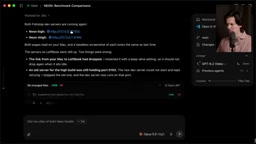
Interestingly, despite not ranking high on "understanding repository architecture," it actually delivered the largest and fastest improvements. The creator thus raises a point: whether a model can accurately describe a codebase and whether it can actually get the work done well are not entirely the same thing.
Hallucination refers to a model generating plausible-sounding content that is factually incorrect or unsupported. In tasks like codebase architecture analysis, hallucinations manifest as inventing non-existent modules, misdescribing call relationships, or fabricating configuration items. The article quantifies this as "10 errors out of 72 statements," which is a manual spot-check evaluation: it's more reproducible than subjective impressions, but the sample size is limited and error severity isn't differentiated—a single incorrect key architectural judgment may matter far more than ten trivial descriptive deviations. Therefore, halving the hallucination count does not equate to doubling reliability.
Where the Model Came From: An Engineer-Driven "Head Start"
Regarding Neon's origins, the creator offered speculation based on conversations with people inside DeepMind: the research team had doubts about the value of engineering team feedback, so they decided to experiment with the direction engineers wanted on a mid-size model. He explicitly stated this part is speculation.
But he also confirmed one fact: this model wasn't originally intended to be released this soon. Google and DeepMind engineers tried it and liked it so much that they strongly requested an early release—hoping to stop the negative commentary on the Gemini series and to verify whether this wasn't just their own illusion. Ultimately, Google deliberately kept the announcement low-key, with the CEO only calling it "a new mid-size model, great for coding."
The creator's assessment: Google didn't dare call it Gemini 5, but in his view, this is a Gemini 5-level leap. He also suggests that the frontier of model competition is shifting from "capability" to "coherence"—the ability to maintain focus over long periods, understand user intent, and reliably explain what it's doing—which is precisely where OpenAI currently lags behind.
Who Should Use It
If you mainly do real project development and need to run complex tasks over long periods, Neon's current experience stands out among its peers; if you rely on 3D generation or need high-precision static analysis of codebases, caution is still warranted. The creator recommends using Neon through t3 code with anti-gravity, and suggests the nightly build for the latest fixes. As for subscription pricing and API billing, he notes Neon is significantly cheaper than Opus with increased cash discounts, though Google's actual discount rates still lag behind other labs.
In one sentence: this is Google's most hands-on-worthy model in recent memory, and a signal that in developers' evaluation framework, "works well" is finally overtaking "benchmark scores."
One-line Summary
Gemini 4 Neon matches flagships in coherence and long-task performance as a mid-size model, though weaknesses remain.
Paragraph Summary
Google DeepMind's Gemini 4 Neon is positioned as a mid-size model, yet a developer long critical of Google calls it a "generational leap." Official data shows it ranks third on the Artificial Analysis Intelligence Index and sits on the Pareto frontier, while the creator's hands-on testing suggests the announcement severely undersells it: Neon leads peers by a wide margin in coherence, can autonomously diagnose VPS disk configuration issues, complete full machine environment setup without human intervention, and in visualization tasks render and deliver screenshots on its own while submitting a fix PR. In a TypeScript rewrite project, using swarm it achieved in under ten hours performance optimizations other models couldn't reach in over ten days. Weaknesses include poor 3D generation and lingering hallucinations in architecture analysis. The author speculates the model was originally an experiment in engineering feedback, released early due to strong internal reception.
Related articles

Vibe Coding for Absolute Beginners: A Practical Guide to AI-Assisted Programming
A beginner's practical guide to Vibe Coding: how AI-assisted programming lets people direct AI to write code, covering tools like Claude Code and Cursor, AI collaboration, multi-platform development, and automated operations for the full-chain one-person company.

Police Transcription Firm Data Leak: Naked Cloud Server Exposes Law Enforcement Sensitive Information
A transcription firm serving police, prosecutors, and tech giants exposed sensitive data like interrogation recordings and bodycam videos due to an unprotected cloud server. This article analyzes the third-party risks and recurring cloud security issues behind the incident.

AuthKit Custom Subdomains Go Free: Product Identity Starts at the Login Entry
WorkOS launches free custom subdomains for AuthKit, letting developers replace system-generated domains with product-matched authkit.app addresses—no DNS configuration, effective on save. We analyze the impact on brand trust, authentication infrastructure productization, and developer tool competition.