Authorizing MCP Tool Calls Without Surrendering Credentials: How Keydris Works
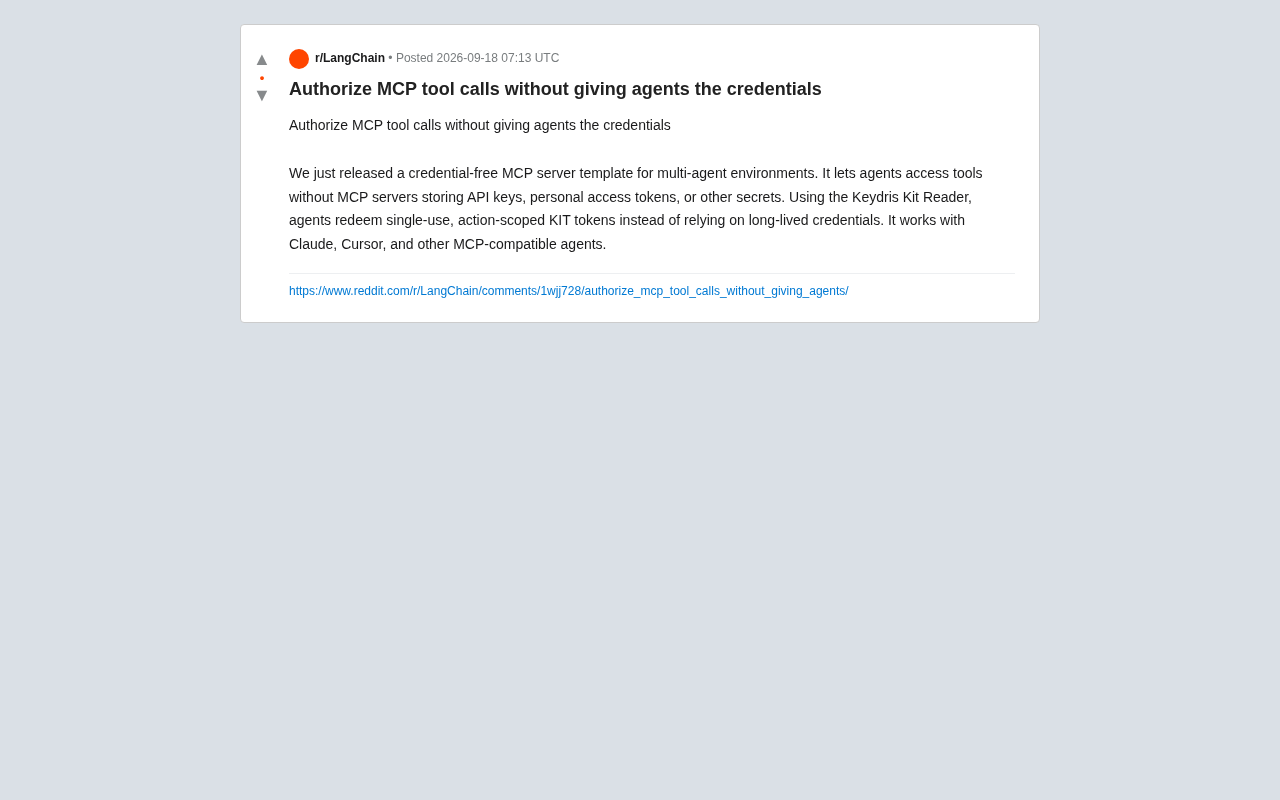
Credential-free MCP template replaces long-lived secrets with single-use action tokens, minimizing blast radius in multi-agent systems.
As MCP drives large-scale AI Agent tool calls, the security risk of MCP servers storing API keys grows critical. An open-source credential-free MCP server template uses Keydris Kit Reader to replace long-lived credentials with single-use, action-scoped KIT tokens — each expires immediately after use and is bound only to the current action. In multi-agent scenarios, this limits the impact of a hijacked agent to a single action. The template is compatible with Claude and Cursor, though it still lacks third-party security audits and the trust assumptions around its token issuer warrant careful evaluation before production deployment.
The Credential Problem in MCP Tool Calls
As multi-agent systems built on MCP (Model Context Protocol) become increasingly widespread, a subtle yet serious security issue has come to light: when agents need to call external tools, MCP servers are often forced to store API keys, personal access tokens (PATs), or other long-lived secrets. Once credentials land on an MCP server, they become the most valuable target for attackers.
A recent open-source project that surfaced on Reddit addresses exactly this pain point — it provides a "credential-free" MCP server template that allows agents to complete tool calls without ever touching sensitive secrets. This approach is directly relevant to developers building AI Agent infrastructure.
Core Mechanism: Replacing Long-Lived Credentials with One-Time KIT Tokens
The key to this solution is the Keydris Kit Reader. In the traditional model, agents rely on long-lived credentials with broad permissions and extended lifespans — a single leak can be catastrophic. In this approach, agents no longer hold any long-lived secrets. Instead, they redeem single-use, action-scoped KIT tokens through the Kit Reader.
Two design principles are worth highlighting:
Single-Use
Each KIT token can only be used once and is immediately invalidated after use. Even if a token is intercepted during transmission or use, an attacker cannot reuse it for a second call — fundamentally compressing the exploitable window of a credential leak.
Action-Scoped
A token's permissions are precisely bound to a specific action, rather than granting broad access to an entire tool or account. This aligns with the security principle of least privilege — the agent receives only the minimum permissions needed to complete the current task, nothing more.
Together, these two properties allow the MCP server to fully step out of its role as a "secret keeper." The server no longer stores API keys, PATs, or other secrets, and therefore ceases to be a high-value attack surface requiring heavy protection.
MCP (Model Context Protocol) is an open protocol proposed by Anthropic to provide AI models with a standardized tool-calling interface. Its design philosophy resembles USB-C as a "universal connector" — any MCP-compatible agent can use the same protocol to access file systems, databases, external APIs, and other resources without writing custom integration code for each tool. The MCP server acts as a middleware layer that receives agent requests and forwards them to downstream services. This is precisely why it naturally becomes a credential aggregation point: to allow agents to access GitHub, Slack, cloud storage, and other third-party services, the MCP server must hold the corresponding API keys or access tokens. This architectural characteristic makes "how to securely manage credentials on MCP servers" an unavoidable challenge in building Agent infrastructure.
The Principle of Least Privilege (PoLP) is a foundational design principle in information security, systematically articulated by Jerome Saltzer and Michael Schroeder in their 1975 paper. Its core idea: any program, user, or system component should be granted only the minimum set of permissions necessary to complete the current task — no excess permissions beyond what is needed. In traditional software systems, this principle is typically enforced through database role segmentation and OS-level user isolation. In AI Agent scenarios, the dynamic and less predictable nature of agent behavior makes enforcing least privilege significantly harder — statically configured broad permissions often become a breeding ground for over-authorization. Action-scoped token design refines the principle of least privilege from the "account level" down to the "single-action level," representing a concrete engineering application of this principle in the Agent authorization context.
Why This Matters Especially in Multi-Agent Environments
In single-agent scenarios, credential management can be partially mitigated through environment isolation. But in multi-agent environments, where multiple agents may concurrently call the same set of tools, the sharing and passing of credentials causes the attack surface to expand exponentially. Any single compromised agent can become the entry point for leaking an entire set of credentials.
This is where the value of the credential-free model becomes clear: since agents don't hold any reusable long-lived secrets, even if an agent is hijacked, the attacker can only obtain a soon-to-expire, action-scoped one-time token — the blast radius is firmly contained to a single action. This "minimize the blast radius" design is one of the core principles for building trustworthy Agent systems.
Compatibility and Adoption
According to the project documentation, the template is compatible with Claude, Cursor, and other agents that support the MCP protocol. This means developers don't need to refactor existing Agent workflows — simply replacing the MCP server with this template preserves all existing tool-calling capabilities while gaining credential-free security benefits.
For teams evaluating AI Agent production deployments, credential management is often the hardest part to pass in a security audit. A ready-to-use template that's compatible with mainstream MCP clients can significantly lower the barrier to incorporating secure credential handling into an architecture.
A Note of Caution
It's worth noting that the information currently available comes primarily from the project authors themselves, and independent third-party security audits and real-world stress test data are still lacking. Whether the KIT token redemption process itself introduces new trust dependencies, and how the token issuer (the Keydris service) holds up in terms of availability and security, are all questions worth investigating before adoption. Any solution that moves credential boundaries outward is fundamentally transferring trust from one place to another — not eliminating it.
That said, the direction of "letting MCP servers stop storing long-lived secrets" is undeniably correct. As the MCP ecosystem expands rapidly, tools focused on Agent authorization and credential isolation will continue to emerge, and templates like this provide a useful reference point for the industry. Developers interested in this approach are advised to validate it in a non-production environment first before deciding whether to incorporate it into a production architecture.
"Transferring trust from one place to another" is the central question when evaluating any credential delegation scheme. In this solution, the trust anchor shifts from the MCP server to Keydris's token issuance service (Kit Reader). This means the security, availability, and business continuity of the Keydris platform directly determines the reliability ceiling of the entire solution. Similar trust-transfer models are common in mature systems like OAuth 2.0 authorization servers and AWS IAM temporary credentials (STS) — this architecture is not inherently flawed, but when introducing an external token issuer, you should evaluate: whether the token issuance endpoint is a single point of failure, whether the issuer can perform fine-grained auditing of token requests, and whether the issuer can effectively revoke already-issued tokens if it is itself compromised. For production deployments, it's advisable to reference the AWS STS or HashiCorp Vault dynamic secrets model and compare the trust assumptions between managed and self-hosted solutions.
Summary
The capability boundaries of AI Agents are being continuously expanded through tool calls — but with greater capability comes greater responsibility for credential security. Replacing long-lived credentials with single-use, action-scoped tokens, and fully removing the MCP server from the role of secret keeper, is a pragmatic design that aligns with the principles of least privilege and minimal blast radius. It's not a silver bullet, but it offers a solution worth seriously evaluating for the authorization challenges of the multi-agent era.
Related articles
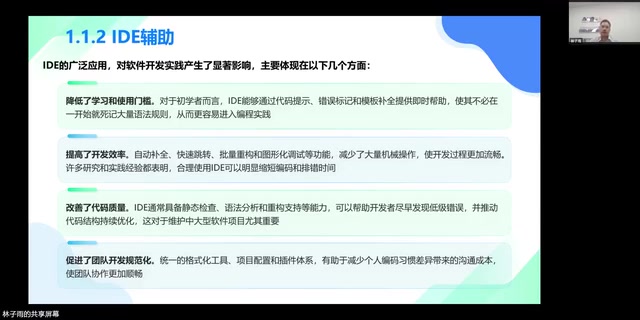
AI Programming at Xiamen University: A Full Breakdown from Textbook to Teaching
Xiamen University's Lin Ziyu shares how he built an AI programming course — covering three coding eras, Claude Code's production-ready milestone, three methodologies, and a fully free, reproducible curriculum design.
A DeepSeek Researcher's Confession: The AI He Trained Is About to Replace Him
DeepSeek V4.1 kernel engineer Liu Shengyu admits the AI he trained will surpass his own skills within a year—yet he keeps pushing forward. Here's why.
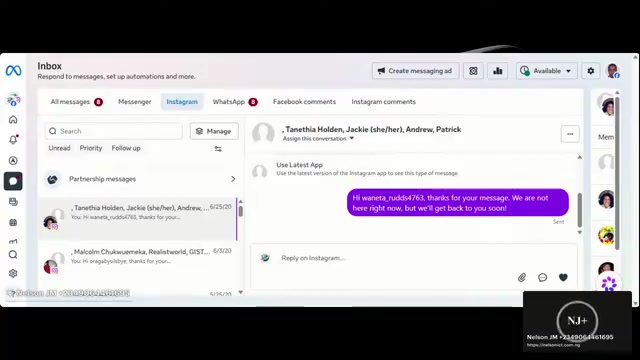
n8n Automation in Practice: How AI Workflows Help SMBs Cut Costs and Boost Efficiency
Learn how SMBs use n8n and AI tools to automate multi-platform messaging, AI customer service replies, and bulk exam data entry — real-world workflows for cutting costs.