Automating GitHub Releases: Design and Practice of a Tag-Triggered Release Action

An experienced open source maintainer builds an opinionated tag-to-release GitHub Action using AI-assisted development.
A developer with a decade of open source experience shares how he distilled a universal tag-to-release GitHub Action from multiple projects. The article explores the opinionated design philosophy of convention over configuration, dogfooding as a reliability signal, and how AI agents can handle CI/CD scripting while humans focus on architecture decisions.
The Perennial Pain Point for Open Source Maintainers: Release Workflows
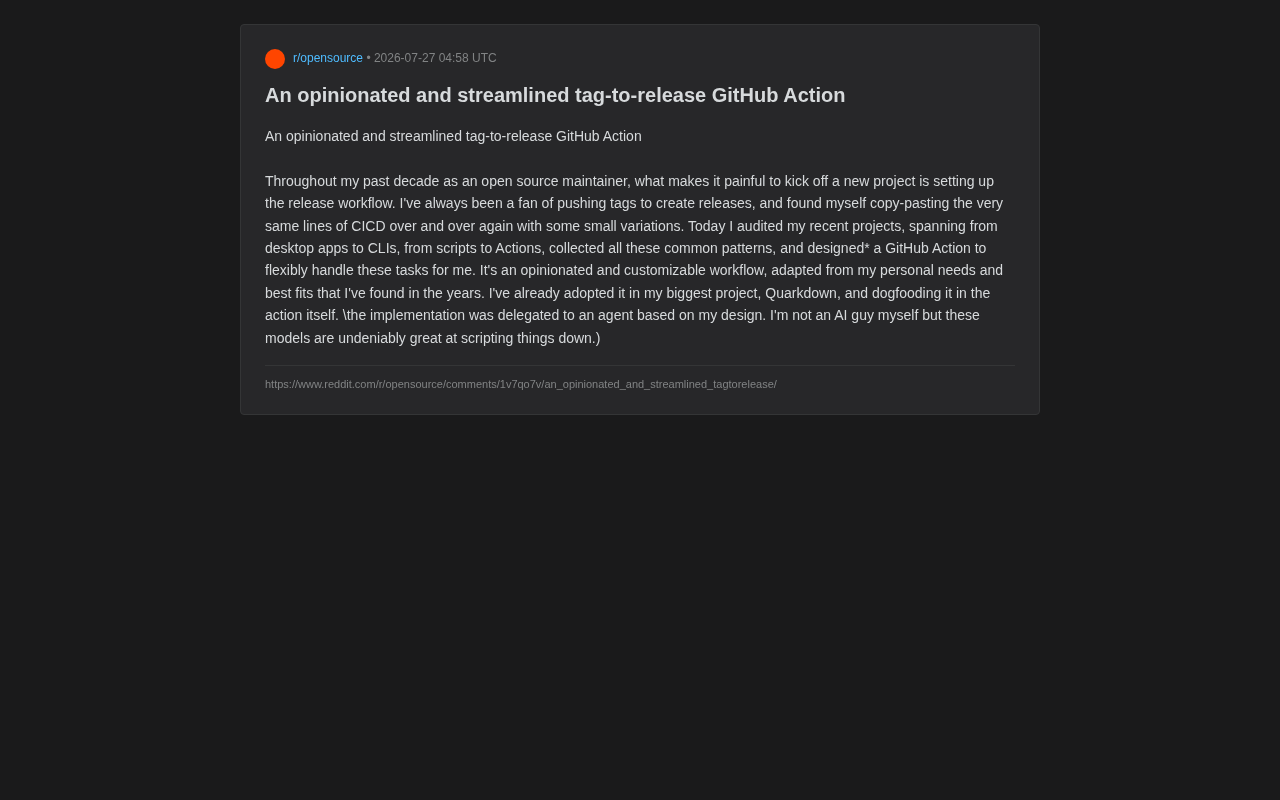
For developers who are long-time active members of the open source community, the biggest headache when starting a new project often isn't the core code—it's the repetitive, tedious "peripheral engineering." Recently, a developer with ten years of open source maintenance experience shared his solution on Reddit: an "opinionated and streamlined" tag-to-release GitHub Action.
The developer candidly admitted that configuring a release workflow every time he starts a new project has always been painful. He's long favored the pattern of triggering version releases by pushing Git tags, but in practice found himself repeatedly copy-pasting nearly identical CI/CD configurations with only minor tweaks. This phenomenon of "copy-paste driven development" is something many engineers can relate to.
Why Tag-Triggered Releases Are So Popular
Using Git tags as release triggers has become a mainstream practice in modern software engineering. When a developer runs git tag v1.2.0 and pushes to the remote repository, the CI system automatically detects this action and executes a series of operations including building, packaging, generating changelogs, and creating GitHub Releases. The advantages of this approach lie in its semantic clarity, strong traceability, and natural alignment with Semantic Versioning (SemVer).
Semantic Versioning (SemVer) is a versioning specification proposed by GitHub co-founder Tom Preston-Werner, following the format MAJOR.MINOR.PATCH (e.g., v2.1.3). MAJOR increments when introducing incompatible API changes, MINOR increments when adding backward-compatible features, and PATCH increments for backward-compatible bug fixes. Annotated tags in Git store complete metadata (including tagger, date, message, etc.), making them the recommended choice for release scenarios. Combining SemVer with Git tags means every release has an immutable version snapshot anchored in the code history, providing a solid foundation for rollbacks, auditing, and dependency management.
However, the specific implementations around this pattern vary widely. Desktop applications need to package multi-platform binaries, CLI tools need to publish to package managers, and script projects might only need to generate simple archive files. It's precisely this diversity that requires separate adjustments to each project's release configuration.
Distilling a Universal Automated Release Solution from Personal Practice
The author's approach carries significant methodological value: he systematically "audited" several of his recent projects, spanning desktop applications, command-line tools, scripts, and even GitHub Actions themselves. By comparing the release processes across these projects horizontally, he extracted the recurring common patterns and consolidated them into a flexible, configurable GitHub Action.
GitHub Actions is a CI/CD platform officially launched by GitHub in 2019 that allows developers to define automated workflows directly in their code repositories through YAML files. A typical workflow consists of trigger events (such as push, pull_request, tag creation, etc.), a runner environment, and execution steps. The core innovation of GitHub Actions lies in its reusable Action ecosystem—developers can encapsulate a set of operations as an Action and publish it to the GitHub Marketplace, where other projects can reuse it simply by referencing it with the uses keyword. This modular mechanism greatly reduces repetitive CI/CD configuration work. However, in practice, differences in release requirements across projects (such as different language build toolchains, cross-compilation requirements for different platforms, and publishing protocols for different package managers) still result in extensive customization work. This is precisely the core pain point that the tag-to-release Action discussed here aims to solve.
This approach of "abstracting from real-world needs" is the classic path through which excellent developer tools are born. Rather than designing an all-encompassing framework from the start, it's better to work from the pitfalls you've personally encountered and the best practices you've accumulated over time, ensuring the tool truly fits real-world scenarios.
The "Opinionated" Design Philosophy: Convention over Configuration
The author specifically emphasizes that this is an "opinionated" tool. In the software design context, "opinionated" means the tool makes a series of default decisions for you, following conventions the author believes are correct, rather than providing endless configuration options for users to build from scratch.
This design philosophy shares the same lineage as Ruby on Rails' "Convention over Configuration." This principle was first systematically popularized by David Heinemeier Hansson (DHH) when he released the Ruby on Rails framework in 2004. Its core idea is that frameworks should provide reasonable default behavior for the most common use cases, and developers only need to configure explicitly when deviating from conventions. This principle profoundly influenced numerous subsequent frameworks and tools, including Spring Boot (Java ecosystem), Next.js (frontend ecosystem), and Cargo (Rust build tool). The opposing philosophy is "configuration over convention," with typical examples being early Ant build tools and the highly customizable Webpack, which offer maximum flexibility but also bring steep learning curves and extensive boilerplate configuration.
In the GitHub Actions ecosystem, an "opinionated" Action typically means it comes with preset changelog generation formats, Release asset naming rules, tag matching patterns, and more—users don't need to configure each item from scratch, dramatically shortening the time from zero to usable. The benefits are obvious: works out of the box, reduces cognitive load, and minimizes configuration errors. Of course, the trade-off is that flexibility is somewhat constrained. However, the author also preserves room for customization, attempting to strike a balance between out-of-the-box usability and flexible extensibility.
Validating Tool Reliability Through Dogfooding
Notably, the author didn't let this tool remain at the theoretical level. He has already applied it to his largest project, Quarkdown, and is "eating his own dog food" (dogfooding) in the Action's own release process—using this Action to release the Action itself.
The term "dogfooding" originates from a 1988 email sent by Microsoft manager Paul Maritz to colleagues with the subject line "Eating our own dog food," meaning a company should internally use the products it develops to validate their quality. This practice later became an important engineering culture in the tech industry. Google extensively uses development versions of its own Chromium browser internally, and Microsoft requires employees to work on the latest Windows preview builds—both are typical examples. In the programming language and compiler domain, there's an even stronger concept called "bootstrapping" (or self-hosting), where a programming language is used to write its own compiler—for example, the Rust compiler rustc is written in Rust, and the Go compiler has been written entirely in Go since version 1.5.
When a CI/CD tool can manage its own build and release process, it effectively creates a recursive validation: any defect that would cause the release process to fail will be exposed first in the tool's own release, forming a natural quality safeguard. This bootstrapping-style validation is an important signal of open source tool reliability. For potential users, this undoubtedly increases trust.
AI-Assisted Development of CI/CD Tools: A Real-World Snapshot
The most intriguing aspect of this case is the author's candid admission about the development process: "The specific implementation was delegated to an agent based on my design. I'm not an AI person myself, but these models are genuinely excellent at scripting things."
This statement reflects an important trend shift in the software development field today. The author clearly delineates two roles: humans are responsible for design and decision-making—distilling architecture and conventions based on a decade of experience; AI is responsible for implementation and scripting—translating designs into concrete YAML configurations and shell scripts.
Restructuring the Division Between Architecture Designers and Code Implementers
The "agent" the author mentions likely refers to a coding assistant based on large language models (LLMs), such as GitHub Copilot, Claude, ChatGPT, or AI Agent modes in tools like Cursor. These agents can autonomously create, modify, and debug code files based on design intent described in natural language. CI/CD configuration files (such as GitHub Actions YAML files and shell scripts) belong to a highly structured domain with clear specification documentation, and LLMs perform well on such tasks for several reasons: First, the syntax rules for YAML and shell scripts are relatively fixed, and the model's training data contains numerous examples of such configurations; Second, GitHub Actions' API and syntax have comprehensive official documentation, allowing models to generate configurations that conform to specifications relatively accurately; Third, correctness in these tasks is relatively easy to verify—passing means success, errors mean failure, creating a clear feedback loop.
However, AI still has limitations in such tasks: for areas involving complex permission management, cross-platform compatibility edge cases, and security considerations (such as key management and supply chain attack prevention), human judgment and review remain indispensable. As an experienced architect, the author firmly retains control over the most critical part—"figuring out what to do"—while delegating the relatively mechanical task of "how to write it out" to AI, which represents a reasonable utilization of these capability boundaries.
This collaborative model perhaps represents the norm for a significant portion of future development work: the value of human engineers increasingly concentrates on requirements judgment, architecture design, and quality assurance, while tedious implementation details are assisted by AI. The fact that a developer who self-identifies as "not an AI person" can naturally incorporate AI into his workflow speaks volumes about the adoption level of these tools.
Conclusion: Discovering Tool-Building Opportunities in Repetitive Work
This tag-to-release GitHub Action might be just an inconspicuous small project in the open source community, but the thinking it embodies is quite representative: excellent automation tools often stem from continuous observation and abstraction of one's own pain points, "opinionated" design effectively lowers the barrier to entry, and human-AI collaboration is quietly changing how code is produced.
For every developer plagued by repetitive CI/CD configurations, this case also serves as a reminder—those workflow configurations you keep copy-pasting might just be the next opportunity worth abstracting into a universal tool.
Related articles
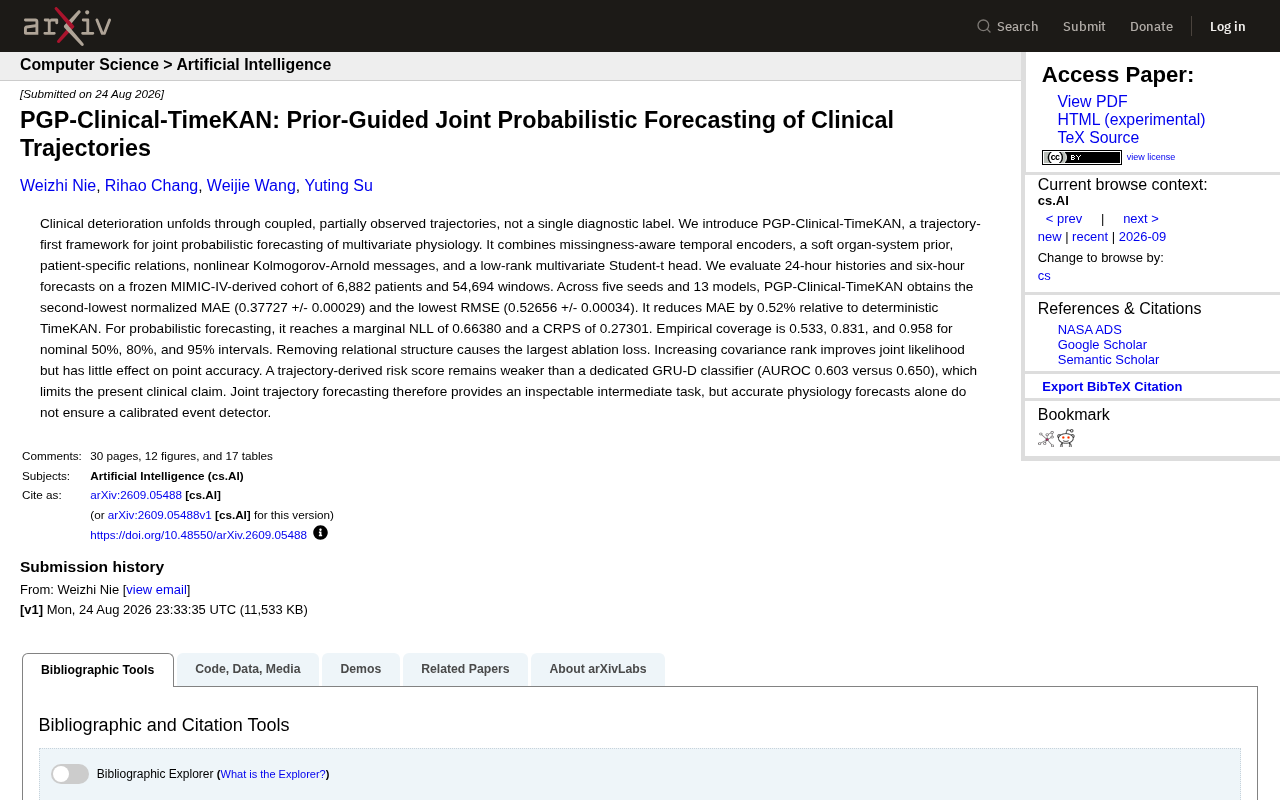
PGP-Clinical-TimeKAN: A Detailed Guide to the Multivariate Physiological Indicator Joint Prediction Framework
An in-depth analysis of the PGP-Clinical-TimeKAN framework for joint probabilistic prediction of multivariate physiological indicators, covering trajectory-first paradigm, KAN message passing, MIMIC-IV validation, and ablation studies.
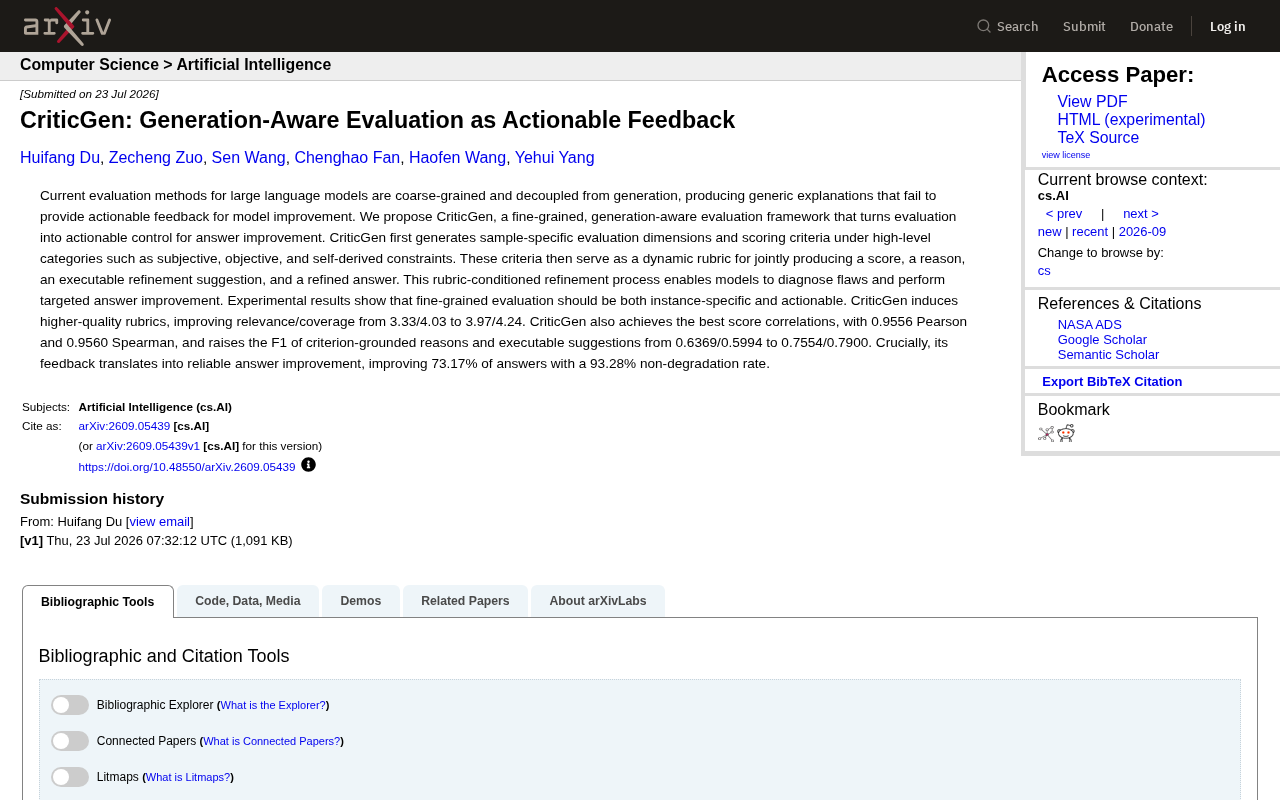
CriticGen: A New Framework That Transforms AI Evaluation into Actionable Improvement Feedback
CriticGen proposes a generation-aware evaluation framework that transforms AI assessment from passive scoring to an active optimization loop, achieving 73.17% answer improvement and 93.28% non-degradation rate.
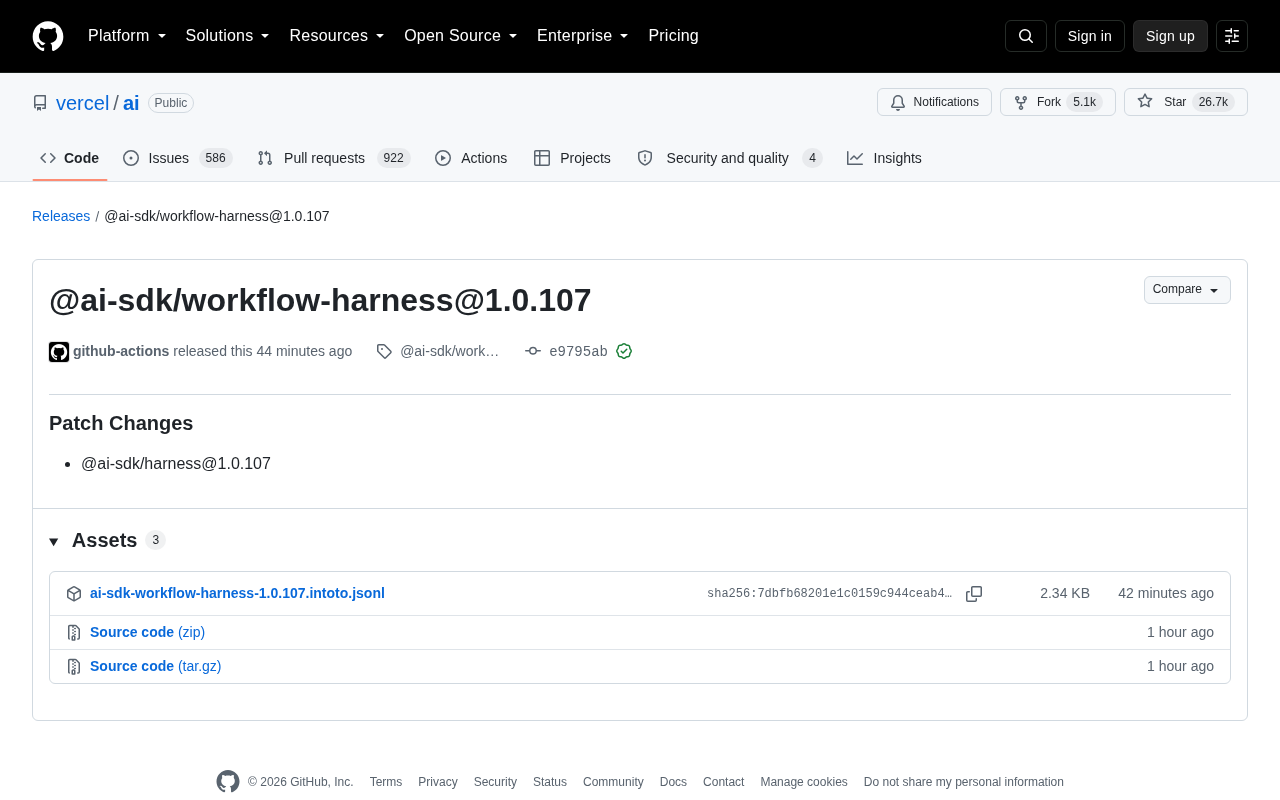
Vercel AI SDK workflow-harness Update Analysis
Deep analysis of Vercel AI SDK workflow-harness 1.0.107 update: architecture design, engineering practices, and developer value for building reliable AI apps.