Backend to AI Agent Engineer: What Are P7 Interviewers Really Testing?

A backend engineer's moat when transitioning to Agent work is engineering stability, not Prompt tricks.
Based on an AI Agent transition course for backend developers, the article argues that LLMs are inherently unreliable components, and backend engineers' fault tolerance, degradation, validation, and cost control are exactly the core of Agent engineering—so transition is a migration of systems thinking. P7 interviews test stability topics like strong validation, fallback, and Semantic Cache, plus Skill and MCP interface abstraction. The recommended path is internal tool-use demos over quitting, with Context Caching, Redis Checkpoints, and Ragas/DeepEval as key skills.
Why Backend Veterans Are More Likely to Get Stuck at "Just Calling APIs"
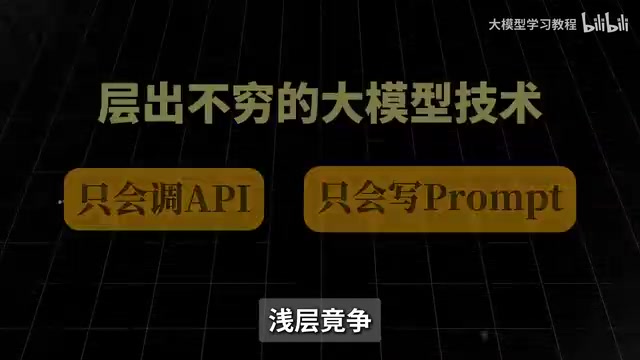
I recently came across a Bilibili course aimed at backend developers transitioning into AI Agents, and the opening hit a widespread anxiety: backend engineers with six to eight years of experience feel their architecture expertise is depreciating, while facing LLMs they easily fall into shallow competition of "just calling APIs and writing Prompts." One backend developer with six years of experience messaged privately saying he doesn't want to backstab his current boss and wants to self-study into an AI Agent role, but most online courses stop at getting a LangChain Demo running—far from what a P7 social recruitment interview demands.
The UP host's judgment was blunt: stop grinding through those videos that teach you to call APIs—it's a pure waste of Token quota. If you could pass a P7 interview by playing "connect-the-dots" with LangChain, big-tech interviewers would be amateurs.
This point deserves elaboration. An LLM is essentially "an unpredictable madman"—unstable output formats, uncontrollable behavior, unpredictable costs. The core competency of backend engineers is precisely taming uncertainty: designing fault tolerance, implementing fallbacks, writing validations, controlling costs. So for a six-year backend developer, transitioning to an Agent engineer isn't about learning a new language from scratch—it's about migrating existing systems thinking to the model invocation chain. Obsessing over how to write Prompts and neglecting the fundamentals means throwing away your biggest筹码 (chip/advantage).
What P7 Interviews Really Discuss: Engineering Stability, Not Prompt Tricks
The UP host summarized P7 interview assessment points into several hardcore topics, each pointing in the same direction: how do you make an unreliable model work reliably in a business system.
Strong validation and structured output. What if the JSON the model spits out has an extra comma? Saying "optimize the prompt" is a rookie answer—what the interviewer wants to hear is how to use strong validation tools like Pydantic to hard-enforce boundaries, keeping unstructured output outside business logic.
Logical degradation and fallback. If the model fails three times to produce the correct format, do you have a deterministic Fallback logic to catch the business? This is a classic backend fault-tolerance approach reused in Agent scenarios.
Semantic Cache. Hearing "RAG" and only knowing vector databases is a common weakness. If two users ask semantically similar questions and you still burn money re-running inference, that's a dereliction of duty in architecture design. Semantic caching is a must-test item.

Looking at these questions together, the logic is very clear: what interviewers are screening for is not "people who can use AI tools" but "people who can run AI systems stably." The former is abundantly supplied; the latter is scarce.
Semantic Cache differs from traditional key-value caching: it doesn't require two requests to have identical text—instead, it first converts the user query into a vector via an Embedding model, then performs similarity search in a vector database (commonly cosine similarity, with thresholds typically 0.85–0.95). If a historical question is hit, the cached answer or cached raw model response is returned directly, skipping the entire inference chain. Its engineering value: LLM inference is the most expensive and slowest link in an Agent system, and semantic caching can compress the cost of high-frequency similar questions to near zero while significantly reducing P99 latency. The difficulty in implementation lies in threshold tuning—too low a threshold returns semantically deviated answers, too high yields insufficient hit rates; additionally, multi-turn context and cache non-reusability due to user permission isolation are edge cases that must be handled.
Pydantic is a data validation library in the Python ecosystem based on type annotations; version 2 was rewritten in Rust for significantly improved validation performance. In Agent scenarios, the typical usage is to define BaseModel subclasses describing the expected output structure, then use model_validate_json to strictly parse the model-returned string—missing fields, type mismatches, and extra fields all raise structured exceptions. Combined with model_json_schema(), the schema can be directly injected into the prompt or used as function calling parameter declarations, creating a closed loop of "validation" and "constrained generation." Its significance lies in keeping model output uncertainty outside business logic—a direct mapping of backend thinking into LLM engineering.
Two Key Levers in the Anthropic Ecosystem: Skill and MCP
The UP host specifically emphasized checking Anthropic's Claude Code documentation, because it reveals two core abstractions of Agent engineering.
Skill mechanism. A Skill is essentially an atomic execution script with a Schema. Your value isn't teaching AI to write poetry—it's writing "hands" for AI. For example, developing a customized static analysis Skill for the company's internal codebase, while ensuring the model doesn't delete all the code due to improper permission control during invocation.
MCP (Model Context Protocol). Although this protocol isn't fully finalized and its adaptation under Windows isn't ideal, the direction is worth betting on: encapsulating the company's private data into standardized MCP Servers and connecting them to Agents using "slot thinking." The UP host believes this interface abstraction capability is the hallmark of a backend master.

It should be noted that MCP's maturity is still a point of industry divergence—protocol evolution and platform adaptation both carry variables, and whether to treat it as a mandatory path or an optional solution depends on your team's tech stack. But the idea of "encapsulating capabilities into standard interfaces" itself is model-vendor-agnostic and effective long-term.
MCP (Model Context Protocol) is a communication protocol open-sourced by Anthropic in late 2024, used to establish a unified interface between LLM applications (Client) and external capabilities (Server). It uses JSON-RPC 2.0 as the message format, defines three primitives—Resources (readable data), Tools (callable functions), and Prompts (reusable prompt templates)—and supports both stdio and HTTP+SSE transports. Its engineering value lies in decoupling: the same MCP Server can be reused by Claude Desktop, IDE plugins, custom Agents, and other Clients without re-adapting for each host. Compared to function calling, MCP solves the problem of "how capabilities are discovered and distributed," not just "how to declare parameters for a single call." Ecosystem maturity, authentication models, and security boundaries (such as tool privilege escalation and prompt injection via tool responses) are still areas requiring careful evaluation in current implementations.
The Optimal Internal Transition Path: Don't Backstab Your Boss—Use AI to Solve Dirty Work
Regarding the transition path, the UP host gave very pragmatic advice: since your boss treats you well, don't secretly self-study and then slam down a resignation letter—the circle is small. A better approach is to find the most tedious old logic in the company full of if-else statements, change not a single character of the original code, and encapsulate it as a Skill via tool use, then build a Demo.
This is called giving your boss the political achievement of "embracing AI"—if you pull it off, he'll actually beg you to lead the exploration of new projects. Compared to quitting for social recruitment, this path has low risk, strong endorsement, and gives you a solid implementation case on your resume.

A Few Life-Saving Hardcore Skill Points
If the goal is P7, the UP host listed three capabilities you must be able to answer:
- Context Caching: Anthropic's context is expensive; you need to set cache break points at the API call layer. The UP host claims this can save the company about 90% in inference costs.
- Persistent state machine: What if a task execution breaks halfway? Don't use sleep to wait—make the context into a Checkpoint stored in Redis to achieve resumable execution.
- Automated evaluation: Don't rely on manual clicking for acceptance testing—use Ragas or DeepEval to set KPIs for every step of the Agent.
The common denominator of these three remains backend engineering capability: caching, state, and observability.
Context Caching works by: precomputing and caching the KV state of long, stable prefixes (system prompts, documents, codebase context) on the server side; subsequent requests that hit the prefix only pay for and compute the new portion. Anthropic marks breakpoint positions via cache_control in the request body; the cached read token price after a hit is far lower than regular input tokens, yielding considerable savings in long-context and multi-turn scenarios—"saving 90%" is an upper bound under specific workloads, not a universal figure. Design points include placing stable content first and volatile content last, and noting cache TTL and minimum cacheable length limits.
Ragas and DeepEval are two evaluation frameworks for LLM applications. Ragas focuses on RAG and generation quality, providing metrics such as faithfulness (whether the answer is faithful to retrieved content), answer relevancy, and context precision/recall, with LLM-as-judge automatic scoring; DeepEval organizes evaluation cases as pytest-style assertions, covering hallucination detection, G-Eval custom scoring, and Agent tool-call trajectories, making it easy to integrate into CI. Together they solve the problem of turning "it feels fine" into regression-testable, comparable quantitative metrics, giving every prompt or model change an objective basis.
A Calm Perspective: 70% of the Work Is Tedious Fault-Tolerance Code
The most valuable judgment in this course is: 70% of an Agent engineer's work today is still writing extremely important but extremely tedious backend fault-tolerance code. People who can truly run systems stably are far scarcer than those who can only call libraries.
For backend developers who are hesitating, this means the moat of transition isn't Prompt tricks—it's your existing engineering intuition. That module that makes you want to smash your keyboard—try encapsulating it into a standard interface. That's more convincing than grinding through ten more Demo courses.
It should be noted that this content is essentially course lead generation, with some statements carrying obvious marketing flavor. The density of viewpoints is concentrated on interview assessment points and skill checklists; specific implementation details still need to be verified against official documentation and hands-on practice.
One-line Summary
A backend engineer's moat when transitioning to Agent work is engineering stability capability, not Prompt tricks.
Paragraph Summary
Based on an AI Agent transition course for backend developers, the article points out that backend engineers with six to eight years of experience are most prone to falling into shallow competition of "just calling APIs and writing Prompts" during transition. The author argues that LLMs are inherently unreliable components, and the fault tolerance, degradation, validation, and cost control that backend developers excel at are precisely the core of Agent engineering—so the transition should be a migration of systems thinking, not learning a new language from scratch. P7 interviews assess stability topics such as strong validation and structured output, logical degradation fallback, and Semantic Cache, as well as interface abstraction capabilities like Anthropic's Skill mechanism and MCP protocol. On the transition path, it's recommended to internally use tool use to encapsulate old if-else logic into a Demo rather than quitting for social recruitment; Context Caching, Redis Checkpoint state machines, and Ragas/DeepEval automated evaluation are three life-saving skills. The article also reminds that this content has a course lead-generation nature, and details need to be verified against official documentation.
Related articles

Free AI API Keys in Practice: A Zero-Cost Guide to Calling GPT, Claude, Gemini, and DeepSeek
Get free API keys for GPT, Claude, Gemini, and DeepSeek without a credit card. This guide covers TokenRouter, Semantic Nova, Hugging Face, Grok, and Token Harbor integrations with VS Code and coding agents, plus a reality check on free quota limits.

Claude Extension Backdoored for Nearly 12 Hours, Cursor Users Should Be Alert
The Claude-related extension on the Cursor platform was implanted with a backdoor for nearly 12 hours, affecting up to about 5,000 developers. The malicious code attempted to install an SSH backdoor and steal cloud credentials, and an official fix has been released. Learn the details and response recommendations.

Add Scripts to Cursor Skills in 45 Seconds: A Three-Step Tutorial
Cursor Skill tutorial: in three steps, add a scripts folder to skill.md, point to scripts with relative paths, and use references and assets to manage docs and templates so the Agent actually runs Python and Bash scripts rather than just describing them.