BackEngine MCP: The Knowledge Integration Layer That Makes Enterprise Private Knowledge Truly Usable by AI

BackEngine MCP pre-aggregates enterprise data into permissioned records so AI models get complete context instead of guessing.
BackEngine MCP addresses a core enterprise AI challenge: models connected to scattered internal tools only see data slices and must guess the rest. By fully reading all sources, aggregating information into one permissioned record per account, and keeping it current, BackEngine creates a knowledge integration layer that reduces errors by 67%, captures 2.4x more key facts, and cuts token consumption by 65% compared to direct connectors.
The Hidden Pain of Enterprise AI Deployment: Scattered Data, Models Left Guessing
Today, more and more enterprises are integrating Claude or ChatGPT into Slack, email, call recordings, ticketing systems, and CRMs, hoping to turn large language models into intelligent team assistants. However, the ideal is appealing while reality is often frustrating.
The core problem lies in the connection method. Most teams use a single MCP (Model Context Protocol) to crudely "pipeline" these tools — essentially exposing raw data scattered across various systems directly to the model. MCP is an open protocol standard released by Anthropic in late 2024, designed with a philosophy similar to a USB-C port: providing a standardized "interface" for AI models to interact with external data sources. Before MCP, every AI application needed custom integration code to connect to different data sources. MCP significantly lowered this barrier by defining a unified client-server architecture. However, "being able to connect" and "connecting well" are two different things. The BackEngine MCP team hits the nail on the head: the current approach essentially "pipes raw, messy system data" directly to the large language model. The result is that the model can only read a slice at a time, and has to "guess" the rest.
This "blind men and an elephant" approach to information retrieval leads directly to two consequences: inaccurate answers and massive token consumption — the model is forced to repeatedly fetch fragmented data to piece together context. Tokens are the basic unit of measurement for large language model text processing (roughly equivalent to 3/4 of an English word or half a Chinese character). Enterprises pay by token count when using models like GPT-4 or Claude. When models need to repeatedly fetch external data to complete context, each call generates additional input token consumption. For enterprises processing thousands of queries daily, the accumulated cost is substantial. For companies relying on AI for customer service, business intelligence, and decision support, this both degrades the experience and drives up costs.
BackEngine MCP's Core Approach: Full Read First, Then Aggregate the Puzzle
BackEngine MCP launched on Product Hunt, positioning itself as a solution to "Make private company knowledge usable for AI." It received approximately 100 votes on launch day, ranking #9, and was categorized under API, Artificial Intelligence, and Business Intelligence.
The tools it connects to are no different from traditional solutions — still Slack, email, calls, tickets, and CRM. But the processing logic is fundamentally different.
Full Read Instead of Slice Read
Traditional connectors follow a "read only when needed, read a little at a time" approach, while BackEngine's method is to read everything first. Rather than passively waiting for the model to initiate queries, it proactively builds a complete information foundation. This "prefetch" strategy isn't a new concept in system architecture — it's similar to materialized views in databases or pre-indexing mechanisms in search engines. The core logic is trading storage for time, using upfront computation and organization to achieve efficiency and completeness at query time.
Aggregate into a Single Permissioned Record per Account
After reading, BackEngine joins all relevant information into one permissioned record per customer account. This means customer information scattered across five or six systems is consolidated into a coherent, traceable, complete profile.
The "permissioned" detail is worth noting — it means access control is preserved during data integration, preventing unauthorized exposure of sensitive information. This is critical for enterprise applications. In enterprise environments, employees in different roles should only see information within their permission scope. RBAC (Role-Based Access Control) is the most common permission model. When AI systems integrate multiple data sources, failing to preserve original permission boundaries at the integration layer can lead to "permission penetration" — where the model inadvertently exposes sensitive information users shouldn't see. BackEngine's built-in permission control at the aggregation layer specifically addresses this common pitfall in enterprise deployments.
Continuous Updates to Ensure Data Freshness
Aggregated records are "kept current," ensuring that Claude and ChatGPT always work with the complete and real-time full picture rather than outdated static snapshots. This incremental update mechanism (similar to CDC — Change Data Capture) monitors data changes in source systems and synchronizes them to the aggregation layer in a timely manner, maintaining data freshness while avoiding the performance overhead of repeated full synchronization.
Performance Comparison: Three Key Metrics
The BackEngine team provides a compelling head-to-head comparison with direct connectors:
- 67% reduction in error rate: The model no longer needs to guess to fill information gaps, significantly improving answer accuracy;
- 2.4x increase in key fact capture: Complete context allows the model to reference more truly important information;
- 65% reduction in token consumption: Since information is pre-integrated, the model doesn't need to repeatedly fetch fragmented data, significantly lowering costs.
These three numbers correspond to the three things enterprises care about most — quality, coverage, and cost. The 65% reduction in token consumption is particularly noteworthy. In an era where LLM API costs remain high, this means direct cost savings for enterprises deploying AI at scale. Consider a mid-sized customer service scenario: if 5,000 queries are processed daily, each averaging 4,000 tokens, calculated at GPT-4's input pricing, a 65% token savings translates to thousands of dollars in reduced monthly API costs — not including the reduced manual review costs from improved answer quality.
A Paradigm Shift from "Data Pipeline" to "Knowledge Layer"
BackEngine MCP's value proposition essentially represents an evolution in enterprise AI integration thinking.
Early MCP integrations solved the "can we connect" problem — giving models the ability to access internal enterprise tools. But as enterprise data sources become more numerous and fragmented, simply "connecting" is no longer enough. "Whether it can be used well after connecting" has become the new bottleneck.
BackEngine attempts to insert a semantic integration layer between raw data sources and the large language model: it doesn't change the underlying data sources but is responsible for processing chaotic raw signals into model-friendly, structured, permissioned, complete records. This aligns with the recent trend in RAG (Retrieval-Augmented Generation) that emphasizes "context engineering" — what determines AI performance is often not the model itself, but the quality of context fed to it.
RAG (Retrieval-Augmented Generation) is one of the most mainstream architecture patterns in enterprise AI applications today. Its core approach is to retrieve relevant document fragments from external knowledge bases as context injected into the prompt before the model generates an answer. However, RAG effectiveness is highly dependent on retrieval quality — if retrieved fragments are incomplete, irrelevant, or too fragmented, answer quality suffers significantly. The industry has therefore proposed the concept of "Context Engineering," emphasizing re-ranking, deduplication, summarization, and structuring of retrieval results. BackEngine's approach can be understood as moving context engineering from "query time" to "data preparation time" — by pre-building high-quality structured records, it fundamentally improves the quality of context delivered to the model.
In other words, if traditional solutions give the model a bunch of water pipes and let it scoop water from each one; BackEngine first purifies, bottles, and labels the water, then hands it to the model.
A Direction Worth Watching, But Still Awaiting Real-World Validation
As an MCP tool focused on enterprise knowledge integration, BackEngine's direction addresses a real pain point in current enterprise AI deployment. Its combination of "full read + account-level aggregation + permission control + real-time updates" can theoretically alleviate the information fragmentation problems of direct connection solutions.
However, the 67%, 2.4x, and 65% figures all come from the vendor's own comparative tests. Specific test scenarios, data scales, and baseline settings have not been publicly detailed, and actual effectiveness still needs validation from third parties and real users. Additionally, the "read everything first" model raises new considerations for enterprises regarding data compliance, privacy boundaries, and initial synchronization costs.
On the data compliance front, enterprises need to pay special attention: GDPR (EU General Data Protection Regulation) stipulates a data minimization principle — only the minimum data necessary to achieve the purpose should be collected and processed; CCPA (California Consumer Privacy Act) grants consumers the right to data deletion. When BackEngine pre-reads and aggregates all customer data, it essentially creates a new data copy, raising compliance questions about data residency, retention periods, and Data Processing Agreements (DPA). For enterprises in heavily regulated industries like finance and healthcare, assessing whether this pre-aggregation model meets industry regulatory requirements is a necessary exercise before adoption.
For teams deeply integrating Claude or ChatGPT into internal systems, BackEngine MCP offers an approach worth evaluating: rather than letting the model guess through a fog of data, build a clear and complete knowledge map for it first.
Related articles
LLaMA-Factory in Practice: A Complete No-Code Guide to Fine-Tuning Large Models
An introduction to LLaMA-Factory, the open-source fine-tuning tool: its 60.1K-star background, supported models and algorithms, local vs. cloud deployment, and CUDA setup steps.

Zeng Ming's Deep Retrospective: Why OpenAI May Not Be the Ultimate Winner — and Why the Corporate System Will Disappear
Zeng Ming's deep retrospective on the AI endgame: model companies are just infrastructure, OpenAI and Anthropic won't be the final winners; the next battle is the Agent entry point standard; the corporate system will disappear as AI restructures collaboration, and only mission-driven companies can survive the cycle.
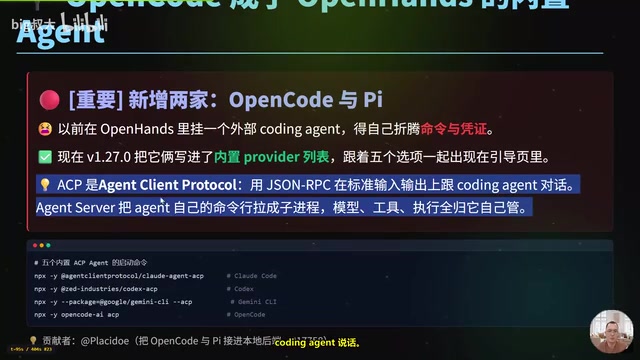
OpenHands v1.28.0: OpenCode and PI Added as Built-in Agents, API Keys Requestable In-Conversation
OpenHands ships 5 releases in 21 days: v1.27.0 adds OpenCode and PI as built-in agents, v1.28.0 enables in-chat key requests. ACP integration, credential reuse, model list changes, and upgrade advice.