Beagle Brigade: From Fruit to GHB — Guarding the Border
The Beagle Brigade and multi-agency partners guard U.S. borders, from fruit detection to GHB and cocaine busts.
Based on To Catch A Smuggler, this article shows how detector dogs and multi-agency teams enforce U.S. border law. The Beagle Brigade screens 800–1,500 bags per shift for fruit and meat to keep out foreign pests. Meanwhile, a St. Louis undercover operation traces GHB from Southeast Asia hidden in lotion bottles, leading to a SWAT raid that seizes GHB, guns, and meth. In a vehicle case, K9s and the Z Portal X-ray find cocaine in a door compartment. The piece highlights coordination from K9s and AT-SET to HSI and SWAT, and notes beagle Phillip's retirement adoption by his handler.
In the United States, a "Beagle Brigade" made up of rescue dogs is guarding the nation's borders with their remarkable sense of smell. They can sniff out fresh fruit and meat from luggage and also help bust GHB (a drug often used in date rape) smuggled in from Southeast Asia. Based on footage from the YouTube show To Catch A Smuggler, this article reveals how these working dogs team up with customs and drug enforcement agencies to cut off drug supply chains in places like St. Louis.
A Beagle's Day: Fruit, Meat, and Insects
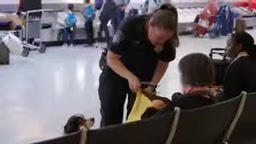
At the airport, agricultural detector dog Phillip is busy weaving between baggage carousels. According to his handler, Phillip is a member of the "Beagle Brigade," specially trained to find fresh fruit, vegetables, plants, seeds, and soil. "If insect pests or plant diseases get into the United States, it would have a major impact on our agriculture," the handler explains.
Beagles are chosen because they are food-driven, and food is exactly what they are looking for. A typical beagle can search 800 to 1,500 pieces of luggage per shift. Phillip can even distinguish smells in each nostril separately, helping him determine direction.
During one inspection, Phillip found apples in the backpack of a traveler from Pakistan, and later found a large quantity of meat and fruit in the luggage of a traveler arriving from Mexico City. While beef from Mexico is permitted, fresh fruit such as squash is prohibited. Because the traveler proactively declared the items, no fine was issued, but the items were confiscated.
From Fruit to Drugs: Tracking the GHB Smuggling Chain
The show also follows another storyline: an undercover operation targeting GHB. GHB is often associated with date rape, sexual assault, and human trafficking cases, and its negative social impact makes it a high priority for law enforcement. Investigations show that the drug originates in Southeast Asia and enters the country through international mail, hidden in lotion bottles.
An undercover agent (UC) conducted a controlled buy in St. Louis. The target location was a residence, and the agent made contact with the target after entering. After the transaction was completed, the agent sent a text message saying the target mentioned another shipment coming from Malaysia, which matched earlier intelligence. The purpose of this operation was not immediate arrest but to build probable cause to apply for a search warrant. All evidence would be submitted to the U.S. Attorney's Office for review in pursuit of prosecution.
Before the search warrant was executed, SWAT and Homeland Security Investigations (HSI) carried out careful preparations. On the day of the operation, SWAT used flashbangs to breach the residence and detained two suspects. Investigators then conducted a systematic search of the home, finding a large number of finished GHB bottles in the office and a revolver and packaged methamphetamine in the bedroom.
"We've never come across this much GHB. Seeing the quantity seized today makes you wonder how many people could have become victims," one agent said afterward.
GHB (gamma-Hydroxybutyric Acid) is a potent central nervous system depressant. It is colorless and odorless and is often mixed into drinks to commit sexual assault, which is why it is called the "date rape drug." Medically, GHB was once used to treat narcolepsy, but because of its extremely high risk of abuse, it is currently classified in the United States as a Schedule I controlled substance—meaning it has no accepted medical use and a high potential for abuse. Its precursors such as GBL (gamma-butyrolactone) and 1,4-BD (1,4-butanediol) are legally used in industry, but once ingested they convert into GHB in the body, so smugglers often disguise shipments as industrial solvents or lotion bottles. Symptoms of GHB poisoning include drowsiness, hallucinations, respiratory depression, and even coma, and the risk multiplies when combined with alcohol. Law enforcement pays close attention to it not only because of the drug itself but also because of its close ties to crimes such as sexual assault and human trafficking.
Drugs Hidden in Vehicles and Tech-Enabled Enforcement
In another scene, a black Jetta failed to wait for the green light while passing through the Z Portal (a vehicle X-ray inspection system), behavior that seemed unusual. The officer directed it to a secondary inspection area. The driver appeared uncooperative and was eventually handcuffed for obstructing a federal inspection. Although the K9 check came back negative, the vehicle was ultimately released, but the driver would face penalties.
A more typical case involved a modified vehicle. The K9 officer noticed the dog was "breathing rapidly, then stopped and froze"—a signal that drugs had been found. The vehicle was sent into the X-ray machine, and the image showed anomalies in areas such as the door and roof. The officer then conducted a seven-point inspection and found powder drugs packaged with vacuum seals and electrical tape inside the door. A field test was positive for cocaine.
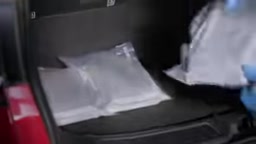
According to officers, smugglers use factory-provided voids and non-factory-modified compartments, and they frequently change hiding places to evade inspection. The quantity seized this time was substantial, and the officer said, "The cartel definitely doesn't like us seizing cocaine, because it's the most expensive drug."
The Z Portal is a non-intrusive vehicle inspection system deployed by U.S. Customs and Border Protection (CBP). It uses high-energy X-rays and gamma rays to rapidly scan trucks, cars, and other vehicles, producing fluoroscopic images similar to X-rays that can reveal hidden compartments, modified voids, and objects of abnormal density inside a vehicle. The system is typically used at ports of entry, border checkpoints, and entrances to key facilities, greatly improving inspection efficiency and reducing the need for manual disassembly. When Z Portal images show suspicious areas, officers direct the vehicle to a secondary inspection area for more detailed checks, including K9 sniffing and the seven-point inspection (a manual search of seven key areas of the vehicle). Combined with K9s, such technologies form a dual line of defense in modern drug enforcement: "technology + biology."
Interagency Coordination and Follow-Up
Whether it is agricultural inspection or drug interdiction, multi-agency coordination is behind it all. At the airport, agricultural specialists make the final determination on food sent for secondary inspection; in drug cases, everyone from the K9 officer and AT-SET (Anti-Terrorism Smuggling Enforcement Team) to the X-ray operator is a link in the chain.
In the GHB case, after the two suspects were taken away, two interview teams questioned them separately, trying to obtain more information to expand the investigation. "Our target is transnational and international crime," the agent emphasized. All seized evidence would be organized and submitted to federal prosecutors in pursuit of charges.
It is worth noting that Phillip the beagle is already seven and a half years old and will undergo a retirement assessment between the ages of eight and ten. The handler said that after retirement, Phillip will live with him, and his daughter has already volunteered to teach him how to be a pet. "He's a working dog, not a pet, but he deserves a warm home."
From fruit to drugs, from the airport to the streets, these law enforcement officers and their canine partners form an invisible line of defense. As one officer put it: "Sometimes you run into people who give you a hard time, but that's the job."
AT-SET (Anti-Terrorism Smuggling Enforcement Team) is an interagency special operations group under U.S. Homeland Security Investigations (HSI), specifically targeting crimes that use smuggling channels for terrorist activities, drug trafficking, weapons proliferation, and more. Its responsibilities include intelligence analysis, undercover operations, raid searches, and coordination with local law enforcement. In vehicle drug cases, AT-SET typically coordinates on-scene operations, working with K9 units, X-ray operators, and SWAT to ensure the integrity of the evidence chain and compliance with federal prosecution standards. The team's involvement reflects the U.S. law enforcement system's full-chain strategy against smuggling crime "from the street to the transnational level," with particular emphasis on cutting off the financial and logistics networks of terrorist organizations or drug cartels.
One-line Summary
Beagle Brigade and multi-agency partners guard U.S. borders, from fruit detection to GHB and cocaine interdiction.
Paragraph Summary
Based on footage from To Catch A Smuggler, this article shows how working dogs and multi-agency coordination carry out drug enforcement at U.S. borders. The Beagle Brigade specializes in detecting agricultural products such as fruit and meat to prevent foreign pests from entering, searching 800 to 1,500 pieces of luggage per shift. Meanwhile, an undercover operation targeting GHB smuggling unfolds in St. Louis: the drug enters from Southeast Asia via international mail hidden in lotion bottles, and agents build evidence through controlled buys before SWAT breaches a residence and seizes large quantities of finished GHB, firearms, and methamphetamine. In a vehicle drug case, K9s combined with the Z Portal X-ray system find cocaine in a door compartment. The article emphasizes chain-style coordination from K9s and AT-SET to HSI and SWAT, and mentions the heartwarming ending in which beagle Phillip is adopted by his handler after retirement.
Related articles
The Secret to High-Yield Tomatoes: How Consistent Watering Makes Container Tomatoes Outperform Ground-Planted Ones
A YouTube growing log shows container tomatoes far outyield ground-planted ones. The grower credits consistent, adequate water—not fertilizer—for the longer fruiting period and higher yield.

Reverse Role-Play: When You Become an LLM's Subagent in a Game
A reverse role-play game appears on Hacker News where players act as an LLM's subagent. This article analyzes its game mechanics, the philosophical implications amid the AI agent boom, and how indie developers use lightweight interaction to explore human-machine power relations.
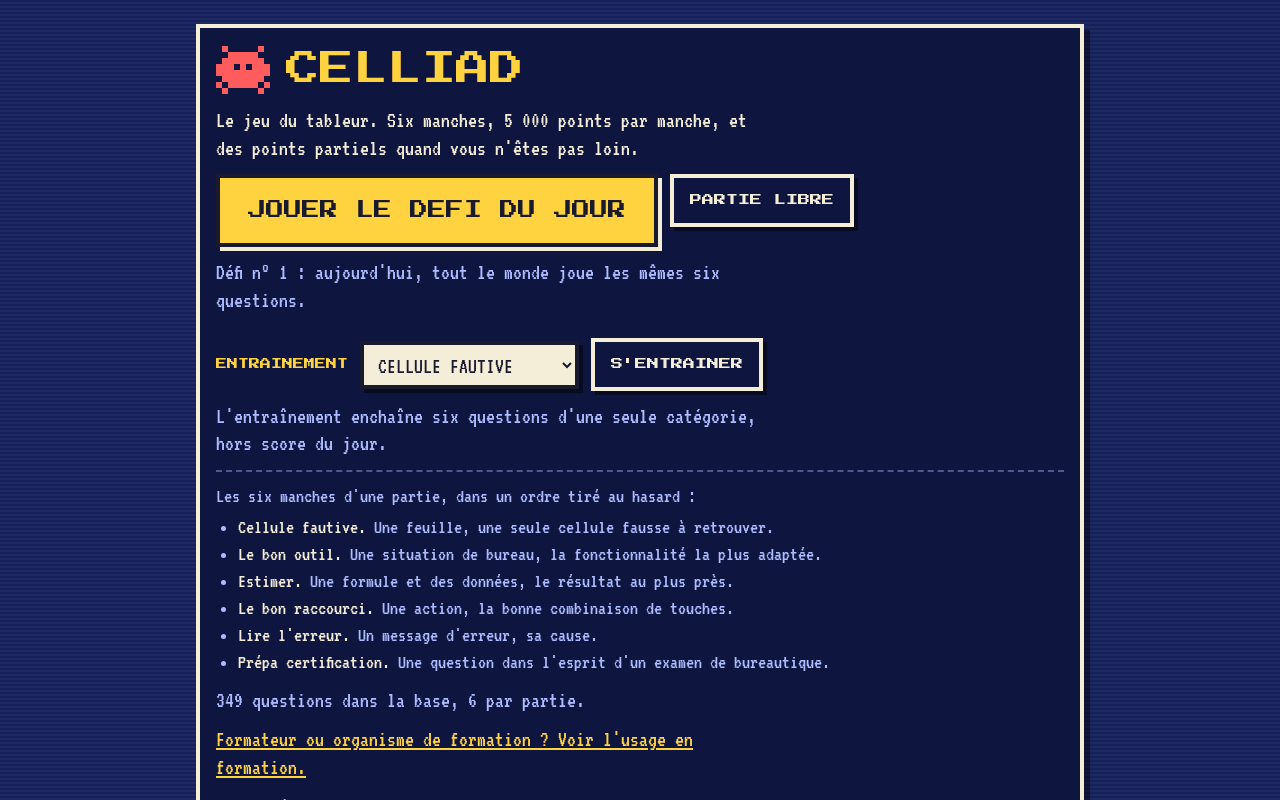
Celliad: A Daily Excel Game — A French Developer Turns Spreadsheets into a Daily Challenge
Celliad is a daily Excel game with a French interface that helps users practice spreadsheet skills through daily challenges. This article analyzes its product logic, the strengths and limits of the daily game model, and development ideas for niche educational tools.