Behind 'A Beautiful Mind': Insulin Shock Therapy and the Dark History of Psychiatric Treatment
How 20th-century "miracle" psychiatric therapies harmed patients like John Nash before science caught up.
Drawing on medical historian Andrew Scull's account, this article traces two dangerous psychiatric treatments promoted as cures in the 20th century: insulin shock therapy, which induced repeated comas at a 1–5% mortality rate yet claimed an "80% cure rate" for nearly two decades, and metrazole convulsion therapy, built on a fundamentally false assumption about epilepsy and schizophrenia, that routinely caused bone fractures and intense near-death terror. Nobel laureate John Nash was among insulin shock therapy's victims and narrowly avoided lobotomy. Both therapies were only debunked after randomized controlled trials in the 1950s — a cautionary tale about what happens when the desire for a cure outpaces the demand for rigorous evidence.
In the annals of 20th-century medicine, the story of insulin is both triumphant and deeply troubling — a tale of lives saved and, in another context, lives damaged in the name of treatment. Medical historian Andrew Scull, in a recent interview, revisited those psychiatric treatments once hailed as "miracle cures" that instead caused profound suffering. Among the most poignant victims was John Nash — Nobel laureate in economics and the real-life inspiration behind the film A Beautiful Mind.
Starting with Insulin's Triumph
Scull deliberately opens with the discovery of insulin, because it offers a compelling point of contrast. Before the 1920s, what we now call Type 1 (juvenile) diabetes was essentially a death sentence — no matter what folk remedies, diets, or other interventions were tried, death was the outcome.
Insulin changed everything. Scull is careful to note that insulin did not cure diabetes — it was a "symptomatic treatment": it allowed patients to live relatively normal lives with significantly extended lifespans. This parallels psychiatric medications, which likewise manage symptoms rather than cure. That distinction is key to understanding the tragedies that followed: it was the obsession with achieving a cure that drove a series of dangerous experiments.
The Birth of Insulin Shock Therapy
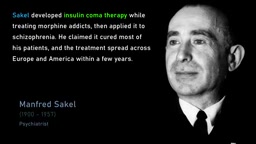
Insulin is naturally produced by the body, but in excess it can induce a coma. A physician named Sakel, working at a drug rehabilitation clinic in Germany, had used mild coma to help patients through withdrawal. After relocating to Austria, he had a bold idea: apply this method to treating schizophrenia.
Sakel began inducing comas in patients, sometimes for hours or even days, before reviving them with intravenous glucose. During the comas, patients frequently convulsed — and Sakel actually took this as a sign that the treatment was working. He claimed his "insulin shock therapy" cured 80% of patients. Scull notes that this "80%" figure recurs repeatedly in the promotion of such therapies, almost like a standard talking point.
Beginning in 1933, the therapy started to spread. In 1936, Sakel was invited to New York to demonstrate the technique at Harlem Valley Psychiatric Center. He eventually settled in the United States, amassing considerable wealth through a private practice — he left roughly $2 million to his partners when he died, a substantial sum in the early 1960s.
A Treatment That Walked the Line Between Life and Death
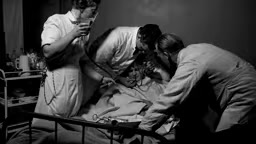
One reason insulin shock therapy never achieved truly widespread adoption was the extraordinary level of intensive nursing and medical supervision it demanded. Patients were, quite literally, hovering between life and death: they risked falling into a permanent coma, or dying outright. Vital signs had to be continuously monitored, with staff ready to revive patients at a moment's notice.

More alarmingly, there was evidence the therapy destroyed brain cells. When this was pointed out to Sakel, his response was staggering: "Yes, that may be true — we are killing the schizophrenic brain cells." Scull calls this utter nonsense, while conceding that it "seemed plausible" within the logical framework of the time.
According to Scull, a full course of treatment could involve up to 60 induced comas. Before losing consciousness, patients would thrash violently, moan, and convulse. The mortality rate ran between 1% and 5%, and the therapy caused significant brain damage and weight gain — yet it was promoted as a "miracle cure" for schizophrenia.
It was not until the 1950s that insulin shock therapy was first subjected to randomized controlled trials. It failed to pass muster and gradually faded from use. Scull remarks that this was a form of scientific progress — "it just took far too long."
John Nash's Ordeal
The intersection of this history with A Beautiful Mind is heartbreaking. John Nash — one of the greatest minds of the 20th century — was himself a victim of this therapy. He received insulin shock treatment at Trenton State Hospital, the very institution where another controversial figure, Henry Cotton, had once operated. The hospital had also considered performing a lobotomy on Nash; fortunately, it was never carried out, but he genuinely faced that risk.
Scull notes that Nash did exhibit delusional symptoms, and that insulin shock therapy was among the treatments he endured — a detail portrayed with reasonable accuracy in the film A Beautiful Mind.
Trenton State Hospital holds a deeply contested place in the history of American psychiatry. Its director, Henry Cotton, believed in the early 20th century that mental illness was caused by "focal infections," and routinely subjected patients to tooth extractions, tonsillectomies, and even organ removal. The mortality rate was staggering, leaving countless patients dead or permanently disabled — yet Cotton remained celebrated by some in the medical establishment during his lifetime. By the time Nash was admitted in the 1960s, Cotton was long dead, but the hospital's treatment culture remained aggressive. Nash was diagnosed with paranoid schizophrenia in 1959 and spent decades cycling through various psychiatric institutions, undergoing both insulin shock therapy and antipsychotic medication. He eventually recovered — aided by the supportive environment around Princeton University and the care of his family — and was awarded the Nobel Prize in Economics in 1994, becoming a rare testament to the possibility of long-term recovery from severe mental illness.
From Convulsive Therapies to Electroconvulsive Therapy
The fixation on inducing convulsions spawned another treatment pathway. Around the same period in the Austro-Hungarian Empire, some psychiatrists believed there was an "antagonistic relationship" between schizophrenia and epilepsy — that having one condition somehow prevented the other. Scull is explicit: this assumption was simply wrong.
Yet within that mistaken framework, the logical treatment seemed clear: if you could artificially induce a seizure, perhaps you could "drive out" schizophrenia. Doctors first tried injecting camphor, a natural substance, which caused abscesses and proved unreliable. They then turned to a drug called cardiazole — or metrazole, as it was known across the Atlantic.

Injections of this drug typically triggered grand mal seizures of violent intensity: patients would arch backward, their legs contracting with tremendous force, risking fractures to the spine, hips, and bones. Scull explains that the thigh muscles would contract so violently that the femur would be driven into the hip socket at tremendous speed, causing fractures.
Perhaps most cruel of all, the physician who developed the technique acknowledged that in the interval between injection and seizure onset, patients felt as though they were "on the verge of death" — and that this terror could last for several minutes. Picture a patient brought in wearing a straitjacket, injected with a large syringe by a white-coated doctor, then experiencing minutes of near-death terror followed by convulsions severe enough to break bones. The process was violent, distressing to witness, and deeply unpredictable.
It was precisely these problems that drove the search for an improvement — ultimately giving rise to electroconvulsive therapy (ECT, originally called electroshock).
ECT (Electroconvulsive Therapy) was first used on a human patient in Rome in 1938 by Italian neurologists Ugo Cerletti and Lucio Bini. Its core principle involves delivering a brief electrical pulse to the brain to artificially induce a generalized seizure — replacing metrazole injections and eliminating the unpredictability and near-death terror the drug produced. Early ECT was itself deeply controversial: patients were treated while conscious, convulsions were severe, and the risk of fractures remained. Modern ECT has been substantially refined: general anesthesia and muscle relaxants have eliminated violent convulsions, and electrical parameters are far more precisely controlled. ECT remains one of the effective treatments for severe depression, bipolar disorder, and some treatment-resistant cases of schizophrenia. Its standing in medicine has undergone a dramatic transformation — from "violent procedure" to "evidence-supported treatment option" — though the negative public image shaped largely by One Flew Over the Cuckoo's Nest has proven stubbornly difficult to dispel.
Reflection: Treatment or Harm?
Scull's account reveals a dilemma that runs through 20th-century psychiatry: the desperate desire for a cure, combined with an absence of rigorous scientific validation, allowed a succession of dangerous therapies to be widely adopted under the halo of "miracles." From insulin shock to metrazole convulsion therapy, each was enthusiastically promoted, each claimed high cure rates, and each was eventually exposed by controlled trials.
Nash's story is so devastating not only because of his genius, but because he represents the countless silent victims who left no such record. This history serves as a warning: any therapy claiming to be a breakthrough must be subjected to rigorous evidential scrutiny — because beneath the banner of good intentions, irreversible harm can lurk.
The Randomized Controlled Trial (RCT) is the gold standard for evaluating the effectiveness of medical interventions. Its core design randomly assigns participants to either a treatment group or a control group (receiving no intervention or a placebo), and compares outcomes between the two to rule out placebo effects, natural disease progression, and researcher bias. Before RCTs were established as the standard of medical evidence, physicians routinely judged treatment efficacy based on clinical observation and subjective impression — making it all too easy to attribute natural remission or placebo effects to the treatment itself. Psychiatric conditions are inherently variable in their prognosis — many disorders, including schizophrenia, have periods of natural remission — making uncontrolled efficacy claims particularly unreliable. The fact that insulin shock therapy persisted in clinical practice for nearly two decades before being subjected to an RCT is itself a portrait of a structural failing in 20th-century medicine.
Related articles

Stop Just Writing Prompts! 9 Steps to Building Safe, Controllable AI Skills
A complete guide to building production-ready, safe, and controllable AI Skills using a 9-step framework covering framing, execution, and safety layers.
Visualizing Neural Network Learning: How ReLU Fits Arbitrary Functions
An interactive demo makes neural network learning visible. See how ReLU networks approximate functions with piecewise linear segments, and why depth beats width.

The Bloody Origins of Electroshock Therapy: A Century of Controversy, from the Slaughterhouse to the Psychiatric Ward
Medical historian Andrew Scull reveals ECT's bloody origins in a Roman slaughterhouse, tracing its evolution from punishment tool to evidence-based therapy — and the deeper crisis of scientific credibility it reflects.