The Bloody Origins of Electroshock Therapy: A Century of Controversy, from the Slaughterhouse to the Psychiatric Ward
ECT's accidental birth in a slaughterhouse mirrors psychiatry's enduring struggle with efficacy, ethics, and trust.
Drawing on Andrew Scull's conversation with Lex Fridman, this article traces electroconvulsive therapy (ECT) from its 1938 origins in a Rome slaughterhouse experiment, through its abuse as a behavioral control tool in early asylums, to its modern modified form. Scull argues ECT has modest evidence for severe depression but remains mired in controversy over memory loss and brain damage. The discussion broadens into a systemic crisis of scientific credibility: psychiatric genetics is dissolving established diagnostic categories, ketamine and psychedelics are being overhyped as miracle cures, and the suppression of negative results and mid-trial funding cuts are quietly eroding the foundations of scientific progress.
Electroconvulsive therapy (ECT) is arguably one of the most controversial treatments in the history of psychiatry. In a conversation with Lex Fridman, medical historian Andrew Scull traced how this therapy evolved from a chance, brutal origin into the clinical tool that is simultaneously celebrated and condemned today. This history is not just about a technique — it reflects the complex tensions between science, trust, and human nature.
From Dead Dogs to the Slaughterhouse: The Accidental Birth of ECT
The story begins with two Italian psychiatrists, Cerletti and Bini (referred to as "Saletti" in the oral account). They initially experimented on animals with electric current — placing one electrode on a dog's head and another on its rectum. The current passed through the body, stopped the heart, and every dog died. It seemed like a dead end.
The turning point came from an unexpected suggestion: go to a Rome slaughterhouse and see how pigs are killed. What they observed was pigs hung upside down, with two electrodes clamped to their heads. The current was applied, the pigs convulsed and lost consciousness, and were then bled out by throat-cutting. The crucial discovery: when current passed only through the brain, the animal did not die.
They then decided to experiment on a human subject. The first was a vagrant found at a Rome train station. The initial current was insufficient and produced almost no response. The two doctors, reportedly pale and shaken, retreated to a corner to deliberate. When they said they would increase the current, the patient — having overheard them — said, "Don't do it again. It's deadly." But they did it anyway. The patient fell into a grand mal seizure and briefly stopped breathing, then spontaneously resumed. When he came to, he had regained contact with reality. "We've found a miracle cure" — and just like that, a cheap, easy-to-administer, injection-free therapy spread rapidly across Europe and across the Atlantic.
Ugo Cerletti and Lucio Bini conducted the first human ECT trial in Rome in 1938. The theoretical basis for "convulsive therapy" at the time came from observations by Hungarian physician Ladislas Meduna, who noted a lower incidence of schizophrenia among epileptic patients and hypothesized that artificially induced seizures might alleviate psychiatric symptoms. Meduna initially used injections of camphor oil and Metrazol to induce convulsions, but these drugs caused patients to experience an overwhelming sense of terror and impending death before each seizure, creating a strong motivation to find a more humane alternative. Electrical current was attractive as an induction method because it worked quickly, was dose-controllable, and required no complex drug preparation — which explains why, once proven "effective," it spread so rapidly. It lowered the technical barrier and made large-scale institutional application possible.
From Treatment to Punishment: The Era of Unmodified ECT
Scull particularly emphasized that early ECT was "unmodified," and this form dominated through the 1950s and even into the 1960s. It came with well-known serious problems: spinal fractures, hip fractures — caused by violent muscular contractions during seizures — and memory loss, the severity of which remained disputed but was widely accepted as an inevitable cost of treatment.
More troubling still, in psychiatric institutions of the 1940s and 1950s, ECT was more often used as a means of behavioral control than as a therapeutic intervention. It carried a punitive character; patients didn't want to go through it again, and so they learned to "self-regulate." This distortion of purpose planted the seeds for ECT's later notoriety.
Interestingly, the original rationale for introducing convulsive therapy rested on an assumed negative correlation between epilepsy and schizophrenia — yet in practice, ECT proved largely ineffective for schizophrenia, while showing genuine benefit for depression, especially suicidal depression. As for why it works, that remains an unsolved mystery to this day.
Insulin Coma Therapy was another widely used somatic treatment of the same era, promoted by Manfred Sakel in the 1930s. Patients were injected with large doses of insulin to cause a sudden drop in blood sugar and induce coma, then revived with glucose. This therapy, alongside ECT, constituted the "active treatment" landscape of psychiatric institutions at the time — both claimed significant efficacy for schizophrenia, and both lacked support from rigorous controlled trials. A 1953 British study eventually showed that insulin coma therapy was no better than controls, but the treatment had already been administered for decades before being fully abandoned. This parallel history helps explain why Scull maintains such strong skepticism toward historical claims of "high cure rates" — the same pattern has repeated itself throughout the history of psychiatry.
Modern Modifications and Persistent Controversy
What truly transformed ECT's profile was the introduction of muscle relaxants. Initially curare was used, later replaced by more modern agents that temporarily paralyze muscles, eliminating the violent convulsions and largely consigning fractures to history. The trade-off was that paralyzing agents also suppress the respiratory muscles, making the entire procedure far more complex — requiring an anesthesiologist and respiratory support.
Even so, ECT continued to be widely disparaged, especially after pharmacological treatments became available. Clinicians preferred to try medications first, but drugs are often only partially effective and frequently fail in cases involving active suicidal ideation. Scull noted that this is precisely where we need to reconsider our approach to suicidal patients and those with profound melancholic depression.
He also presented both sides of the debate honestly. On one hand, modern clinical trials provide reasonably good evidence that ECT is effective for certain patients who are in extreme distress before treatment — it is one of the few evidence-based interventions that genuinely works for severe clinical depression. On the other hand, the opposition is equally forceful: concerns about memory problems and the possibility that passing electrical current through the brain causes neurological damage have forged a determined coalition of psychiatrists, former patients, and scientific skeptics who oppose it. In California and other jurisdictions, ECT can barely be administered to involuntary inpatients — it requires the patient's active, voluntary consent, which is exceptionally rare for a medical procedure.
Furthermore, ECT typically requires repeated sessions administered at intervals; it is a maintenance therapy rather than a cure, and symptoms are likely to recur. The concept of "treatment-resistant depression" is itself worth examining — it generally does not denote a distinct disease entity, but rather patients who have failed to respond to medications.
The Collapse of Trust: A Crisis Deeper Than the Therapy Itself
The conversation extended from ECT to a broader and more urgent topic: the credibility of science and medicine. Scull acknowledged that nearly every topic in psychiatry will anger someone — those who champion medications and those who have been harmed by them, those who trust medicine and those who are deeply suspicious of "Big Pharma." At the extreme end, Scientology even operates a museum in Los Angeles called "Psychiatry: An Industry of Death."
He drew a parallel between this sentiment and contemporary vaccine hesitancy. Trust, once lost, is extraordinarily difficult to rebuild, and distrust can spread from vaccines to science and medicine as a whole. What concerns him even more is the active erosion of science itself: clinical trials halted midway through, with the knowledge they would have generated simply lost; funding cuts leaving scientists unable to conduct research, and no one being trained to replace them — when training a scientist takes at least six or seven years. "The losses are invisible, because they are counterfactual," he noted — we have no way of knowing what the extinguished research might have yielded.
The Question of Psychiatry's Scientific Foundations
Scull also addressed the fundamental question of whether psychiatry is "in crisis." People once expected that decoding the human genome would quickly reveal Mendelian causative genes for schizophrenia — that never happened. Today's genome-wide association studies (GWAS) can explain only about 10% of schizophrenia risk with 300-plus small variants — not a particularly strong result.
More disruptive still, genetics has revealed extensive overlap in genetic abnormalities across bipolar disorder, schizophrenia, and autism, suggesting these may not be distinct disease entities at all, but rather different positions along a continuum. If psychiatry is eventually forced to acknowledge that "schizophrenia and bipolar disorder don't really exist as separate diseases," this would likely further erode public confidence in the field — yet science may be pointing precisely in that direction.
Genome-Wide Association Studies (GWAS) are large-scale scanning techniques that compare the genomes of tens or hundreds of thousands of individuals to identify single nucleotide polymorphisms (SNPs) associated with particular diseases. GWAS research on schizophrenia has so far identified more than 300 associated genetic loci, but each locus has an extremely small effect size, and the cumulative explained genetic risk remains limited. More importantly, these findings challenge the intuitive model of "one disease, one set of specific genes." The highly overlapping genetic architecture between bipolar disorder and schizophrenia is in fundamental tension with clinical classification systems that treat them as categorically distinct. This tension between "genetically blurred boundaries" and "symptom-based categorical classification" is one of the central challenges facing the current psychiatric diagnostic framework (such as DSM-5), and makes the ontological question of "what constitutes a disease" newly urgent.
A Historical Wariness Toward "Miracle Cures"
As a medical historian, Scull's core counsel is: more humility, less hubris; maintain skepticism toward anything proclaimed a "breakthrough." He is particularly critical of science journalism — and even top-tier journals like Science and Nature — for their preference for "big news." Negative results are essential to science, yet they are routinely unpublishable, which means the entire publishing and peer-review system is skewed toward generating sensationalism.
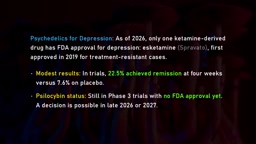
He was direct in stating that current enthusiasm for ketamine and psychedelics as "miracle cures" for depression is supported by "enormously weak" evidence. He has seen too many iterations of this cycle: from the early asylums to insulin shock therapy to Cotton's surgeries, all once claimed 80% cure rates, and all were eventually exposed as gross exaggerations.
Fridman offered a counterpoint: past research lacked rigor, whereas institutions like Johns Hopkins are now studying treatments such as psilocybin with genuine scientific standards. Giving different therapies a fair hearing is a good thing — but it must proceed with caution, and the science journalists who hype everything for clicks should be tuned out.
Scull closed by emphasizing the importance of multi-center, multi-site research as a check on over-enthusiasm and premature claims. The problem with funding institutions is that unconventional "outlier scientists" often struggle to secure support — and only in hindsight do we lament: "Yes, we really should have backed that line of research."
This conversation about electroshock therapy ultimately landed on a proposition that extends far beyond medicine: progress is mostly incremental, genuine breakthroughs are rare and precious, and the trust that sustains scientific progress takes a very long time to build — and can be destroyed in an instant.
Psilocybin is a naturally occurring psychedelic compound found in various species of mushrooms; once metabolized in the body, it acts on 5-HT2A serotonin receptors to produce altered states of consciousness. Ketamine is an NMDA receptor antagonist originally used as an anesthetic; its S-enantiomer, esketamine, received FDA approval in 2019 as a nasal spray for treatment-resistant depression. Proponents note that both can produce antidepressant effects within hours — far faster than the weeks-long onset of traditional SSRIs — which is particularly significant for patients at acute suicide risk. Scull's warning is not a denial of these mechanisms, but rather a caution against the narrative risk of extrapolating early signals into "breakthroughs." Effect sizes from early small-sample studies consistently shrink in larger replication studies, and the amplifying role played by media and capital in this process is precisely what he calls the modern version of "history repeating itself."
Related articles

Stop Just Writing Prompts! 9 Steps to Building Safe, Controllable AI Skills
A complete guide to building production-ready, safe, and controllable AI Skills using a 9-step framework covering framing, execution, and safety layers.
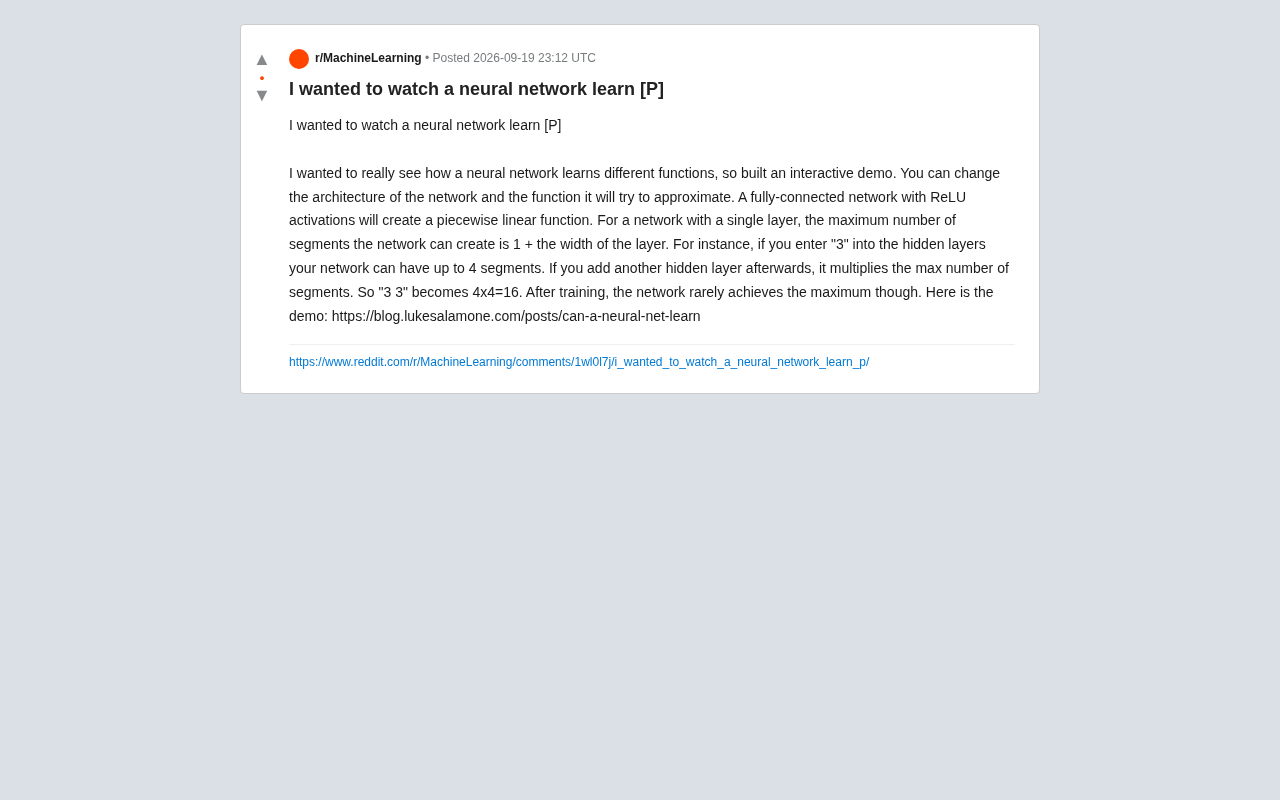
Visualizing Neural Network Learning: How ReLU Fits Arbitrary Functions
An interactive demo makes neural network learning visible. See how ReLU networks approximate functions with piecewise linear segments, and why depth beats width.
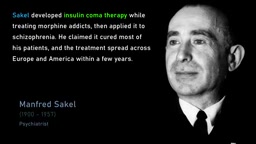
Behind 'A Beautiful Mind': Insulin Shock Therapy and the Dark History of Psychiatric Treatment
Medical historian Andrew Scull revisits the dark history of 20th-century psychiatry: how insulin shock therapy caused harm under the guise of miracle cures, with John Nash — the real man behind A Beautiful Mind — among its victims.