Behind a Million Elevator Maintenance Jobs: How TK Elevator Uses AI to Unlock Decades of Knowledge
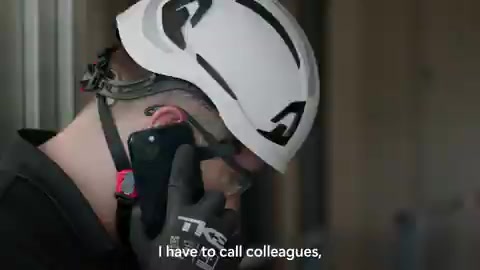
TK Elevator uses technology to unlock decades of maintenance knowledge, letting technicians spend less time finding answers.
Using TK Elevator's case shared at a Cologne event as an entry point, the article explores how the elevator and escalator maintenance industry can use technology to improve knowledge reuse efficiency. With over a million units under maintenance worldwide, technicians on site often must combine drawings, repair records, historical work orders, and technical bulletins to make judgments, and scattered information makes "finding answers" a hidden cost. TK Elevator's approach is to connect decades of shared knowledge into the technical service workflow and reduce the search step. The article notes that the difficulty of knowledge reuse lies not in digital storage but in making information appear at the right time and in the right way, which requires semantic understanding and contextual association. General AI capabilities must be embedded into specific workflows—receiving orders, arriving on site, diagnosis, and resolution—to create real value, and this case offers an observational sample for AI deployment in experience-heavy, site-heavy field service.
More than one million elevators and escalators worldwide require continuous maintenance, underpinned by a vast and complex service system. At an event in Cologne, one case drew attention: TK Elevator is using technology to give frontline maintenance technicians rapid access to shared knowledge accumulated over decades, so they can spend more time solving problems rather than repeatedly searching through documents and systems for answers.
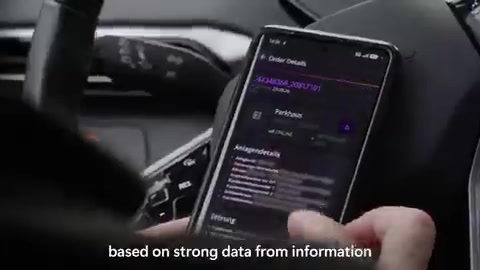

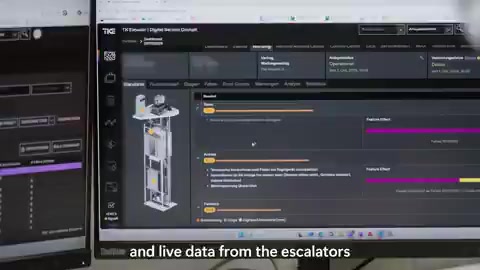
The Hidden Cost of the Maintenance Industry: Finding Answers Takes Longer Than Fixing Equipment
Elevator and escalator maintenance is not standardized assembly-line work. Every unit differs in age, installation environment, and failure history, and technicians on site often need to combine drawings, repair records, historical work orders, and manufacturer technical bulletins to make judgments. In the traditional model, this information is scattered across different systems or even paper archives. Experienced veterans rely on memory and intuition to solve problems, while newcomers easily waste large amounts of time on information retrieval.
According to information shared at the event, TK Elevator's approach is to connect decades of accumulated shared knowledge into the technical service workflow, enabling technicians to directly retrieve relevant knowledge when needed and reducing the search step. This approach targets a long-standing hidden cost in the maintenance industry: the time actually spent on hands-on repairs is often diluted by looking up materials and confirming information.
The elevator maintenance industry generally adopts a service model that combines Preventive Maintenance and Corrective Maintenance. The former involves regular inspections, lubrication, and replacement of wear parts based on regulations and manufacturer recommendations, while the latter responds after a failure occurs. In either model, technicians need to verify a large number of compliance documents (such as local elevator safety codes and inspection reports) and equipment histories (installation dates, retrofit records, part replacement history). This information is often more fragmented than imagined: equipment from different eras may correspond to different versions of drawings, and the same fault code can mean different things on different models. Therefore, the efficiency bottleneck in the maintenance industry is often not physical labor but information integration and judgment. This also explains why "knowledge retrieval time" becomes a hidden cost worth optimizing with technology—it is dispersed across every work order, difficult to quantify, yet genuinely consumes frontline productivity.
The Difficulty of Knowledge Reuse: Not Storing It, but Making It Findable and Usable
Digitizing historical materials is nothing new; the hard part is making knowledge appear at the right time and in the right way. Elevator maintenance scenarios have several special characteristics: technicians often work beside equipment and at the edge of hoistways with limited attention; problem descriptions rely heavily on equipment models and fault codes; and the same symptom may correspond to multiple causes. This means that simple document libraries or keyword searches can hardly deliver real efficiency gains—stronger semantic understanding and contextual association capabilities are needed.
What TK Elevator emphasizes as "accessing decades of shared knowledge" is essentially a transformation of how knowledge is organized: linking scattered repair records, technical documents, and frontline experience, and then presenting them within the service workflow through technical means. For a company with a huge installed base and a global service network, the value of this transformation is not just saving a few minutes for an individual technician, but ensuring that senior experience no longer depends solely on individuals.
Making knowledge "appear at the right time and in the right way" typically involves several key technical capabilities. The first is Semantic Search: no longer relying on exact keyword matching but understanding the meaning of the question—for example, when a technician enters "door lock repeatedly disconnects," the system can associate historical cases such as "door zone contact wear" or "safety circuit loose connection." The second is a Knowledge Graph: structuring entities such as equipment models, fault codes, components, maintenance actions, and technical bulletins along with their relationships, so the system can recommend related information along relationship chains. The third is Retrieval-Augmented Generation (RAG): before a large language model generates an answer, it first retrieves relevant document fragments from the enterprise knowledge base as evidence, thereby reducing the risk of "hallucination" and making answers traceable. Only when these capabilities work together can a "document library" become a "conversational knowledge assistant" that adapts to the realities of maintenance sites—limited attention and brief descriptions.
Implications for AI Deployment: From General Capabilities to Industry Workflows
Another noteworthy aspect of this case is how technology providers collaborate with industry enterprises. General AI capabilities alone do not solve maintenance problems; what truly creates value is embedding them into specific workflows—every step from a technician receiving a work order, arriving on site, diagnosing, and resolving can become an entry point for knowledge retrieval.
From an industry trend perspective, fields such as equipment maintenance and field service—characterized by being "experience-heavy and site-heavy"—are becoming important directions for AI applications. Unlike pure software scenarios, the effectiveness of such applications depends on the quality of the knowledge base, the degree of fit with business processes, and whether frontline personnel are willing to use them and find them easy to use. TK Elevator's practice provides an observational sample: when technology truly serves the simple goal of "letting people spend less time finding answers," the value of AI becomes easy for the frontline to perceive.
"Embedding AI into workflows" typically manifests in engineering as Workflow Orchestration and system integration: knowledge assistants need to connect with work order systems, equipment management systems (such as EAM/CMMS), spare parts inventory, and mobile applications, so that they can automatically push the equipment's historical failures when a technician receives a work order, provide troubleshooting steps during diagnosis, and write back repair records after resolution to form new knowledge. At the same time, a Human-in-the-Loop mechanism is indispensable—technicians' adoption, correction, and feedback on AI suggestions serve both as quality checks and as a source for continuous iteration of the knowledge base. Field service scenarios also have high requirements for offline availability and response speed, because network conditions in locations such as hoistways and machine rooms are often unstable. These engineering details determine whether general AI capabilities can truly translate into efficiency gains perceivable on the frontline.
Conclusion
A maintenance scale of more than one million units means that any efficiency improvement will be amplified. TK Elevator's approach of using technology to unlock decades of shared knowledge points to a deeper change in the maintenance industry: knowledge is no longer locked in the experience of a few senior technicians but becomes an asset that the entire service network can access. Whether this path succeeds depends on knowledge quality and the depth of workflow integration, but the direction is worth continued attention.
Related articles
Email Identity Management for Multiple AI Agents: Aliases, Dedicated Inboxes, or API Solutions?
How should multiple AI agents manage email identities? This article analyzes email aliases, dedicated inboxes, and API on-demand creation, with layered management advice by agent role.

iPhone Duo Crackgate: YouTuber Teardown Reveals Hinge Defect
Apple's iPhone Duo foldable has been hit by Crackgate, with users reporting rapid screen cracking at the hinge. A YouTuber's teardown found a hinge design flaw or foreign object intrusion causing stress concentration. The incident has sparked community debate, Apple has not responded, and foldable reliability is once again under scrutiny.

ChatGPT Is Building a Psychological Profile of You: Privacy Boundaries Under Fire Again
A Reddit thread debates whether ChatGPT builds psychological profiles of users. This article analyzes how chat memory, emotional signals, and behavioral data accumulate into psychological profiles, explores the boundary between personalization and covert surveillance, and offers practical privacy tips.