ChatGPT Is Building a Psychological Profile of You: Privacy Boundaries Under Fire Again

A viral Reddit post warns that long-term ChatGPT conversations may build psychological profiles of users, sparking privacy boundary debates.
Starting from a viral Reddit post, the article explores whether conversational AI is building detailed psychological profiles of users. The author breaks down three layers of data accumulation: cross-session conversation history and memory features, emotional and tonal signals in input text, and behavioral feedback such as likes and rewrites. Each item alone doesn't cross the line, but stacked together they may form a vague outline of personality tendencies and stress sources. The controversy centers on the sensitivity gap between psychological data and ordinary profiles like shopping preferences, and users' lack of awareness about data extraction dimensions and flows. The article argues users aren't refusing to be understood but refusing to be understood without their knowledge, and offers practical tips such as cleaning up memory and avoiding over-sharing sensitive content.
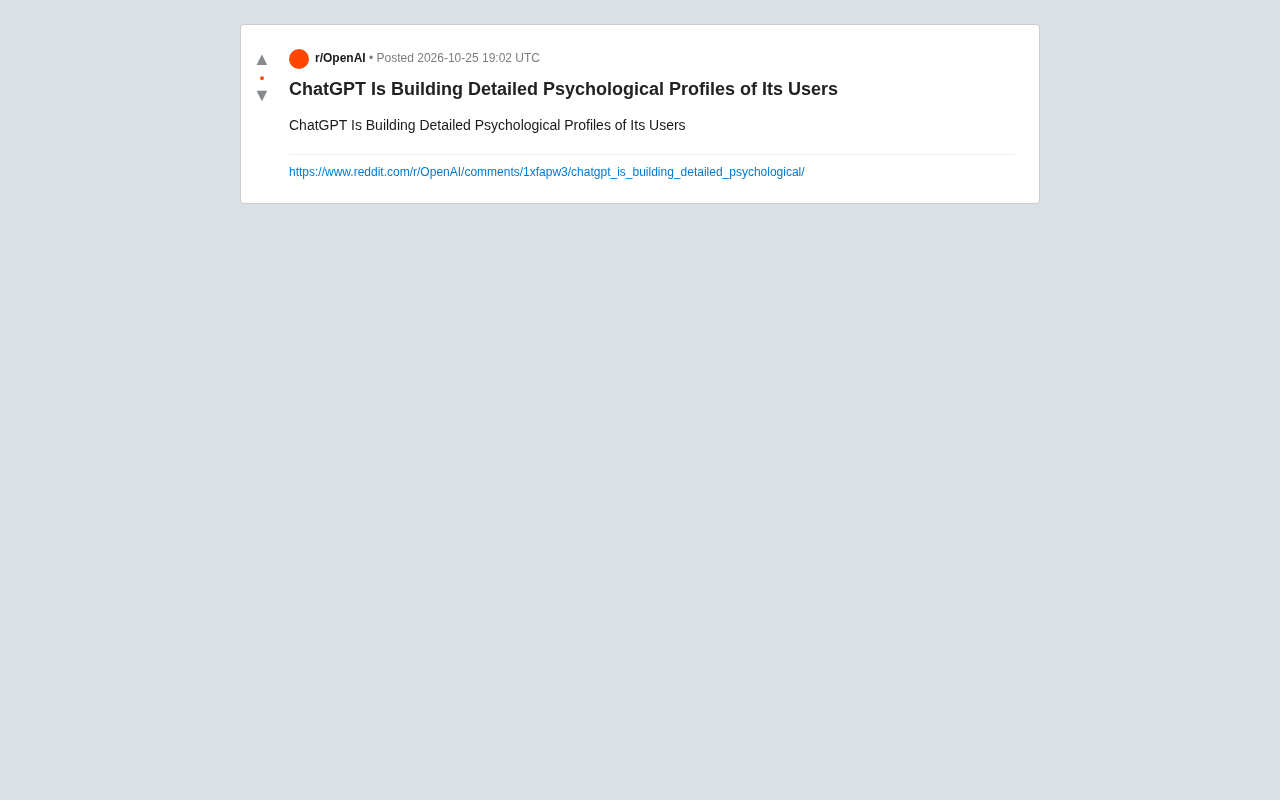
Privacy Anxiety Sparked by a Single Post
A widely discussed post has appeared on Reddit with a blunt, provocative title: "ChatGPT Is Building Detailed Psychological Profiles of Its Users." The post itself doesn't lay out a lengthy argument, but the question its title points to is enough to make anyone who frequently uses AI chat products pause and think—when we pour out our emotions, describe our struggles, or even casually complain about life in the chat box, how is that content actually being handled?
This isn't unfounded technical fantasy. To optimize interaction experiences, large language model products do indeed build an "understanding" of users through conversation history, memory features, and user feedback. The question is how deep that understanding goes on the psychological dimension, and where the boundaries lie.
How a Psychological Profile Gets "Drawn"
To understand why this concern is reasonable, it helps to see the technical mechanisms behind it. Modern conversational AI products generally rely on several layers of information accumulation:
Conversation history and memory features. Most mainstream products allow models to remember user preferences, experiences, and expression habits across sessions. When users repeatedly talk about anxiety, career confusion, or interpersonal relationships, these themes settle into context that can be recalled.
Emotional and tonal signals. When generating responses, models analyze the sentiment of input text. Although this is mainly used to adjust response style, the continuous accumulation of emotional data itself forms a kind of foundation for psychological profiling.
Feedback and behavioral data. User behaviors such as liking responses, rewriting them, and dwell time indirectly reflect psychological preferences, and these signals are likewise fed into the optimization loop.
Each item alone doesn't cross the line, but stacked together, a vague outline of a user's personality tendencies, emotional patterns, and sources of stress may emerge. This "jigsaw puzzle" concern is exactly what many users in the Reddit discussion expressed: it's not that any single conversation leaked something, but that long-term accumulation makes the profile increasingly clear.
The technical boundaries of memory features. Currently, the "memory" of mainstream products is not permanent learning at the model parameter level, but structured information stored as entries (such as "the user prefers concise answers" or "the user mentioned switching jobs"), which is retrieved and inserted into prompts in subsequent sessions. This means the accuracy of memory content depends on judgments made during the extraction stage; erroneous or outdated entries may continue to influence conversations, and users lack intuitive awareness of "what has been remembered about them." Most academic and product documentation emphasizes that memory is controllable and deletable, but what's actually presented to users is often just scattered entry summaries, making it hard to reconstruct which context the model actually invoked when generating a response.
The difference between sentiment analysis and psychological measurement. What conversational systems commonly do is sentiment classification (positive/negative/neutral) and tone adjustment, which falls under shallow text feature processing; psychological profiling in the psychological context usually refers to assessments of personality, emotion, or risk dimensions based on standardized scales. The two differ enormously in methodological rigor and applicable ethics. Part of why the controversy arises is that the public conflates "the model can recognize emotional words" with "the system is conducting a psychological assessment of you," and companies rarely clarify this line proactively.
The Core of the Controversy: The Gray Zone Between Convenience and Surveillance
Discussion around this topic centers mainly on one point—is this personalized service or covert surveillance?
Those who support product optimization argue that remembering user backgrounds and understanding emotional states is precisely the prerequisite for an AI assistant to be useful. An assistant that doesn't remember anything you said last time delivers a fragmented experience. Psychological understanding and recommender-system user profiles are technically homologous, so there's no need for excessive panic.
Those who take a cautious stance point out that psychological data is fundamentally different from shopping preferences. Emotional states and psychological distress are highly sensitive information; once used for ad targeting, insurance assessment, or other commercial purposes, the consequences far exceed "inaccurate recommendations." More tricky is that ordinary users find it very hard to know which dimensions were extracted from their conversations, how long they're retained, and where they flow.
Although the discussion under the Reddit post didn't reach a unified conclusion, the consensus leans clearly in one direction: insufficient transparency is the root of the problem. Users aren't refusing to be understood; they're refusing to be understood without their knowledge.
The regulatory context for sensitive personal data. Under the EU's General Data Protection Regulation (GDPR), information involving mental health, sexual orientation, religious beliefs, and similar matters is classified as "special categories of personal data," and processing requires meeting stricter conditions; China's Personal Information Protection Law likewise lists medical health, movement trajectories, and similar data as sensitive personal information, requiring separate consent and disclosure of necessity and impact. The problem is that whether emotional distress casually revealed during free-form conversation constitutes the processing of "sensitive personal information" is ambiguously defined in practice. Most product terms authorize broadly under "improving services," making it hard for users to judge the scope of psychological-dimension data collection—this is precisely the institutional root of the transparency controversy.
What Users Can Do
Before regulation and product policies become clear, users aren't entirely passive. A few pragmatic approaches are worth considering:
- Regularly check and clean up conversation history and memory entries; most products provide management options in settings;
- For sensitive content involving mental health, family relationships, or financial difficulties, avoid elaborating excessively in conversations;
- Pay attention to updates to product data usage terms, especially the scope of authorization regarding "improving services";
- In enterprise or team settings, prioritize solutions that explicitly commit to data isolation.
These measures can't fundamentally solve the problem, but they can reduce exposure.
Final Thoughts
The reason this Reddit post resonates is that it hits a gray zone that hasn't been adequately discussed: the more your AI assistant understands you, the more you need to know how much it understands and where that's stored. Psychological profiling isn't science fiction; it's a natural extension of data accumulation in conversational products. The real question isn't "can AI understand emotions," but "who controls that understanding and by what rules is it used." Until the answer is clear, staying alert is more rational than staying trusting.
Related articles
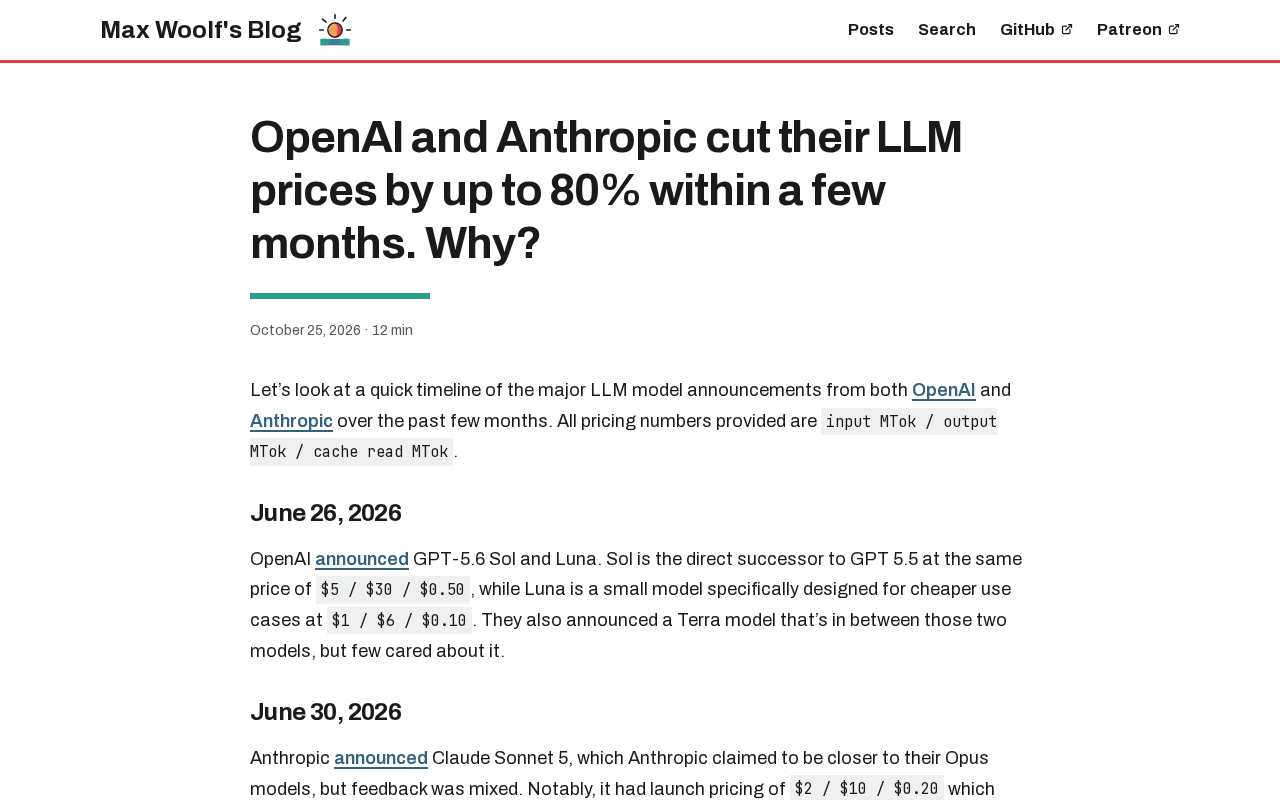
The LLM Price War: Why Did OpenAI and Anthropic Cut Prices by 80%?
OpenAI and Anthropic cut LLM prices by up to 80% in months. This article analyzes the competition, technology costs, business model shifts, and industry impact behind the price war.
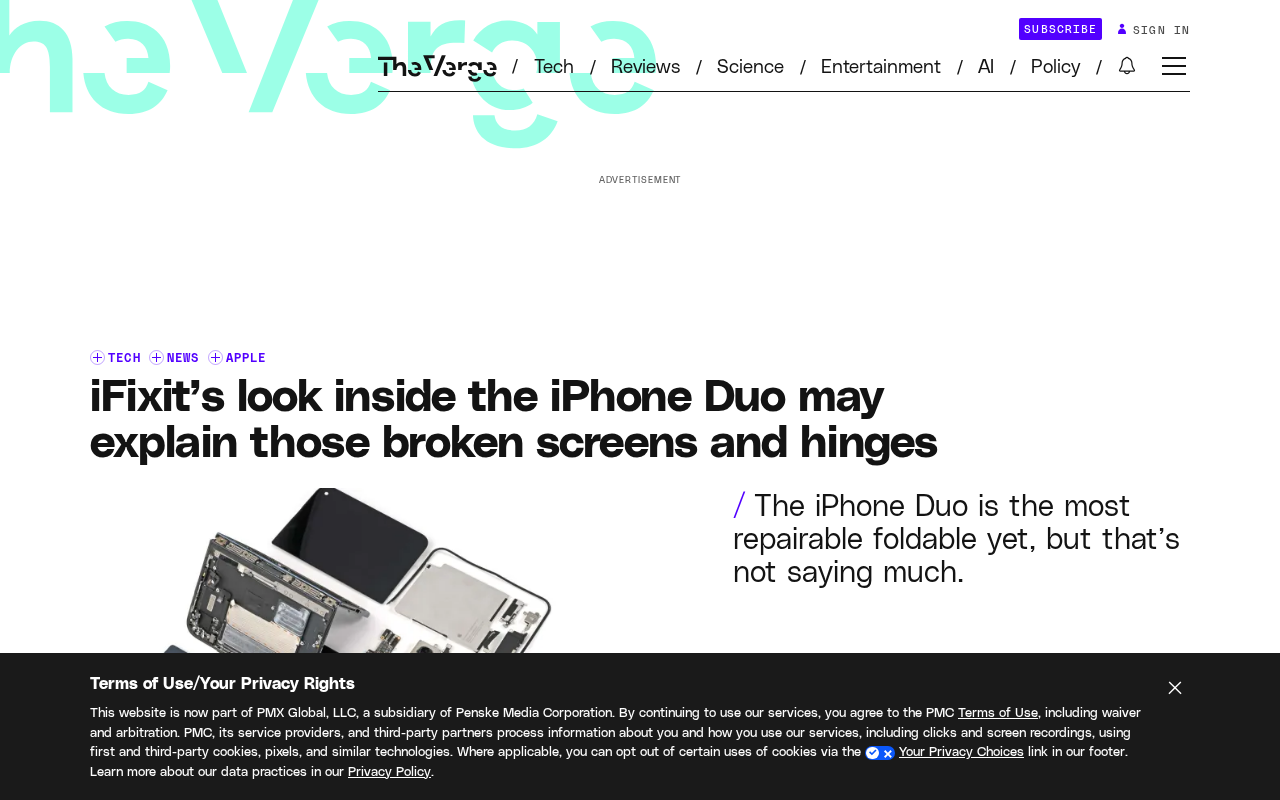
iFixit Teardown of iPhone Duo: Uncovering Foldable Screen Crease and Hinge Flaws
iFixit tears down the iPhone Duo, revealing crease-hiding technology and hinge design, giving a 5/10 repairability score, and analyzing screen and hinge damage causes and impacts on users.
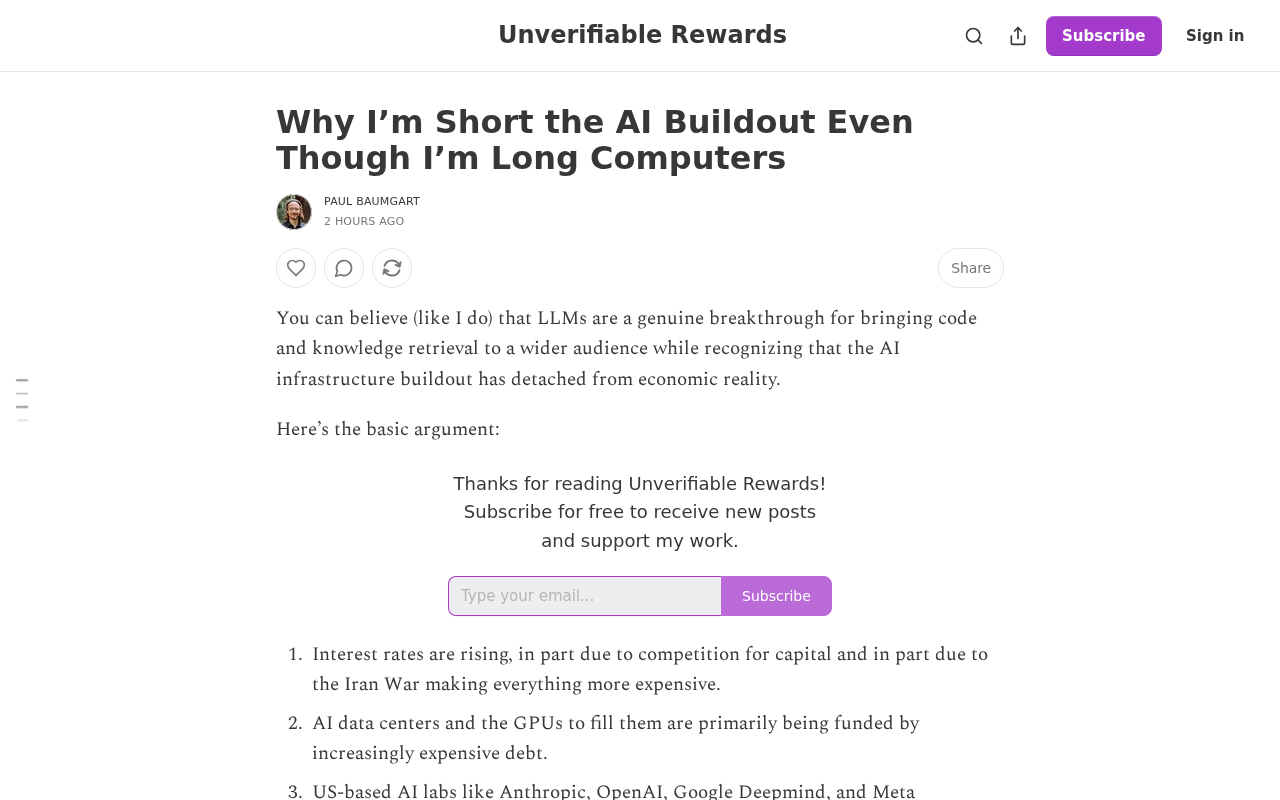
Long Computers, Short AI Infrastructure: One Investor's Contrarian Logic
An investor on Hacker News argues for being long computers but short the AI infrastructure boom. We unpack why technological certainty and capex returns are two different things.