Beware of AI-Branded Stock Tip Scams: How to Spot Market Manipulation Tactics
Four tell-tale flaws that expose AI-branded stock-tip scams on social video platforms.
A wave of stock-promotion videos is exploiting AI buzzwords like DeepSeek and Nvidia to lure viewers, then funneling them into unmonitored private communities. This article exposes four core tactics: survivorship bias in cherry-picked "wins," false authority built on AI hype, traffic redirection to unregulated spaces, and deliberately vague language to dodge moderation. It also explains why short-term stock predictions are inherently unreliable, and offers practical advice on how to identify and report these schemes.
A Stock-Tip Video Riding the DeepSeek Hype
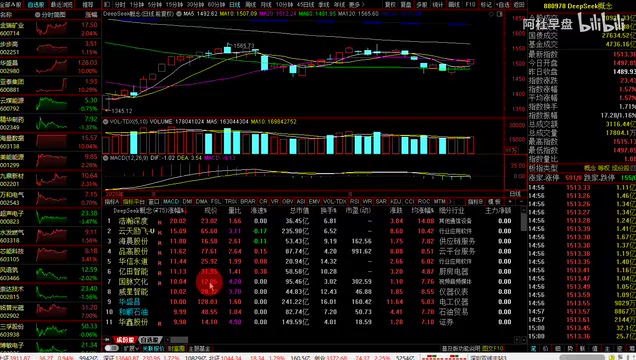
Recently, a surge of stock-promotion content has appeared on video platforms, using headlines like "DeepSeek Dragon Head Stock," "Buffett Buying the Dip," and "Nvidia Acquires Open-Source AI Platform." These videos typically use sensational titles to bait clicks — phrases like "Buy with Your Eyes Closed," "The Money-Picking Era Has Arrived," and "Expected to Skyrocket Next Week" — while claiming to possess some kind of "exclusive stock-picking strategy" capable of precisely identifying limit-up winning stocks.
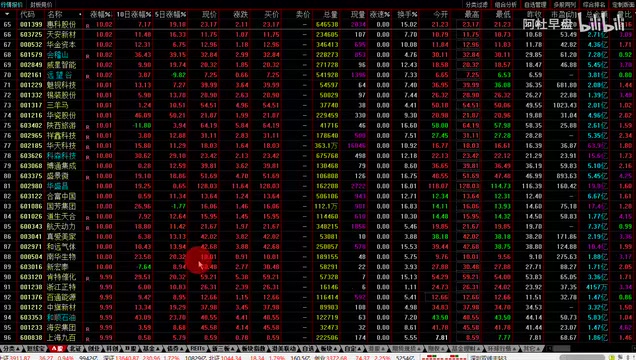
Structurally, these videos follow a predictable formula: first, they showcase supposed "historical wins" (e.g., a stock that gained over 60% or 87% in a matter of days), then they tease a "DeepSeek concept stock about to explode," and finally they funnel viewers into a private "circle," asking them to like, follow, and comment a specific number to receive a "stock code" and "stock-picking strategy guide."
To be absolutely clear: this article does not recommend any stocks. Instead, it breaks down the rhetorical structure of this type of content to help readers develop the ability to identify risk. These videos use the buzz around AI technology as a flashy shell — they have nothing to do with genuine AI industry investment analysis.
Four Tell-Tale Flaws in Common Stock-Tip Tactics
Flaw #1: "Historical Wins" That Only Show the Upside
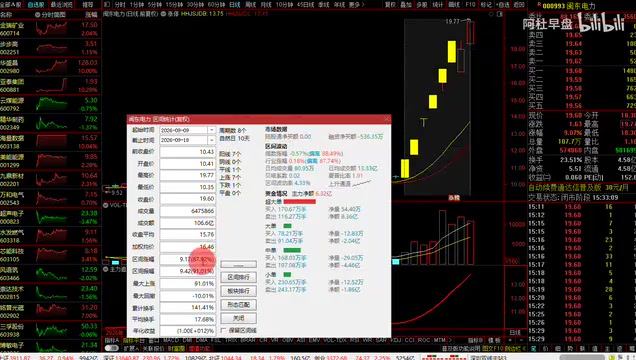
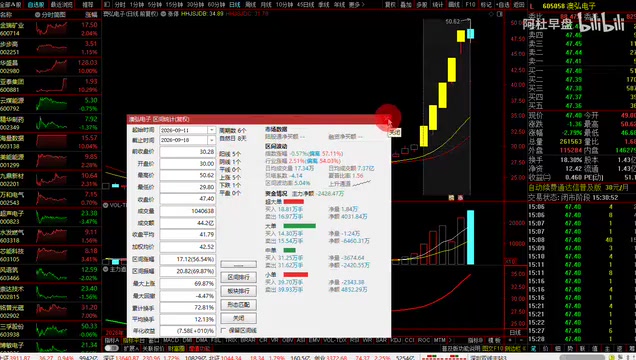
These videos repeatedly highlight how certain stocks "rose 56% in 6 days" or "gained 87% in 8 days," while never showing cases where their picks dropped or got stuck at a loss. This is a textbook example of survivorship bias and selective presentation. Anyone can cherry-pick winning stocks after the fact — but that proves nothing about the ability to predict future price movements.
Survivorship Bias is a classic fallacy in cognitive psychology: people only see the cases that "survived," while ignoring an equal or greater number of failures. During World War II, statistician Abraham Wald studied the bullet hole patterns on returning aircraft and found that the areas that actually needed reinforcing were precisely those with no bullet holes — because planes hit there never made it back. Stock-tip videos operate on exactly the same logic: they only ever show you the planes that returned. To genuinely evaluate a stock-picking method's effectiveness, you need a complete track record — including win rate, loss magnitude, maximum drawdown, and statistically verified excess returns — not a few hand-picked screenshots of gains.
Flaw #2: Piggybacking on AI Hype to Manufacture Authority
Phrases like "DeepSeek's Number One Stock" or "Nvidia Acquires the Largest Open-Source AI Platform" forcibly link the hottest AI concepts to specific stocks, creating the illusion of "catching the wave at exactly the right moment." In reality, genuine industry investment requires rigorous analysis of company fundamentals, financial data, and competitive landscape — not a catchy slogan.
Flaw #3: Funneling Viewers into Private "Circles"
"The stock code has been posted in the circle" or "The strategy guide is in the comments" — all the key information is deliberately placed in private spaces beyond platform moderation. The design goal is to redirect traffic from public platforms into hard-to-trace communities, laying the groundwork for subsequent paid stock tips, group manipulation schemes, or outright fraud.
Driving traffic from public platforms into private communities is the standard operating playbook for online stock-tip scams today. Once users enter a WeChat group, QQ group, or paid knowledge community, the risks escalate dramatically: the platform's content moderation becomes completely ineffective, and scammers are free to spread false information, forge trade confirmations, or impersonate "teachers" and "traders" to build a persona. Common follow-up tactics include charging membership or copy-trading fees ranging from hundreds to tens of thousands of yuan; directing users to open accounts on unregulated platforms and deposit funds, which then become impossible to withdraw; or using "internal leverage" as bait to get victims to transfer money into controlled accounts. Chinese law enforcement classifies these cases as telecommunications fraud, but recovering losses is extremely difficult due to the complexity of the money trail and frequent cross-border elements.
Flaw #4: Deliberately Vague, Suggestive Language
"It's not convenient to say more here — those who know, know" — this calculated coyness simultaneously dodges platform moderation of stock-promotion content while reinforcing the mystique of "insider information," nudging viewers to seek further engagement on their own.
Why "Guaranteed to Skyrocket Next Week" Is Never Credible
Short-term stock market fluctuations are influenced by a vast array of random factors — macroeconomic policy, capital flows, market sentiment — making them highly unpredictable. Extensive financial research has shown that no individual or institution can consistently and accurately predict the short-term price movements of individual stocks.
If someone genuinely had a stock-picking method that guaranteed next-week gains, the rational move would be to quietly make a fortune themselves — not share it for free on a public platform while aggressively building a following. Anyone actively "handing out wealth" to strangers almost certainly has ulterior motives: harvesting attention, selling courses, or luring people into paid groups.
The Efficient Market Hypothesis (EMH), systematically formulated by economist Eugene Fama in 1970, holds that in a market where information flows freely, stock prices already fully reflect all available public information — meaning no analysis based on public information can consistently generate excess returns. While the theory remains debated in academia (particularly around the boundaries between its weak, semi-strong, and strong forms), its core insight has been supported by extensive empirical evidence: the vast majority of actively managed funds, after fees, underperform passive index funds over the long run. Even accepting that markets have some degree of inefficiency, the institutions capable of systematically exploiting that inefficiency typically deploy teams of PhDs, high-frequency data, and millisecond-level trading systems — not someone posting "circle" links on a short video platform.
Thinking Rationally About AI and Investing
AI is genuinely transforming multiple industries and creating real investment opportunities. But authentic AI industry investing means focusing on hard metrics: real-world technology deployment, business models, compute supply chains, and ecosystem moats — alongside a readiness for long-term holding and risk diversification.
Content that uses AI as a stock-tip gimmick actually reveals that its creators have no real understanding of the technology. They were never interested in AI. They're interested in using "AI" as a hot-button word to keep you on screen.
What to Do When You Encounter This Content
- Never trust any promise of "guaranteed returns" or "certain gains" — such language is explicitly prohibited in legitimate financial services.
- Be wary of any attempt to funnel you into third-party communities, especially those requiring payment or personal financial information.
- Verify the credentials of the source. In China, securities investment advisory services require a license; offering stock tips without one is illegal.
- Report suspected scams to the platform. If money has already been lost, file a police report immediately and preserve all evidence.
Investing carries risk. Enter the market with caution. What truly protects your wealth has never been some mysterious "circle" — it's independent thinking and a solid sense of risk.
Related articles
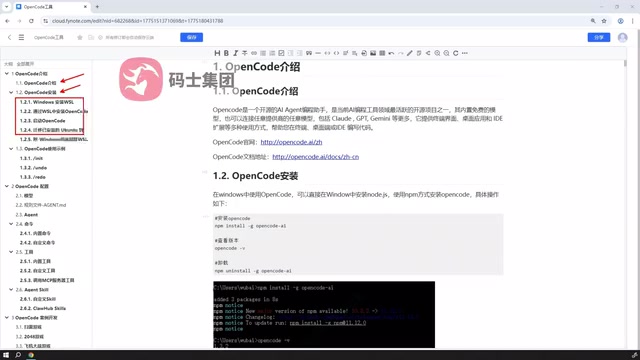
OpenCode Complete Guide: Installation, Configuration & Practical Usage
A complete guide to OpenCode, an open-source AI coding tool: desktop and WSL installation, model and rule configuration, agent types, custom commands, MCP integration, and Agent SQL reuse.
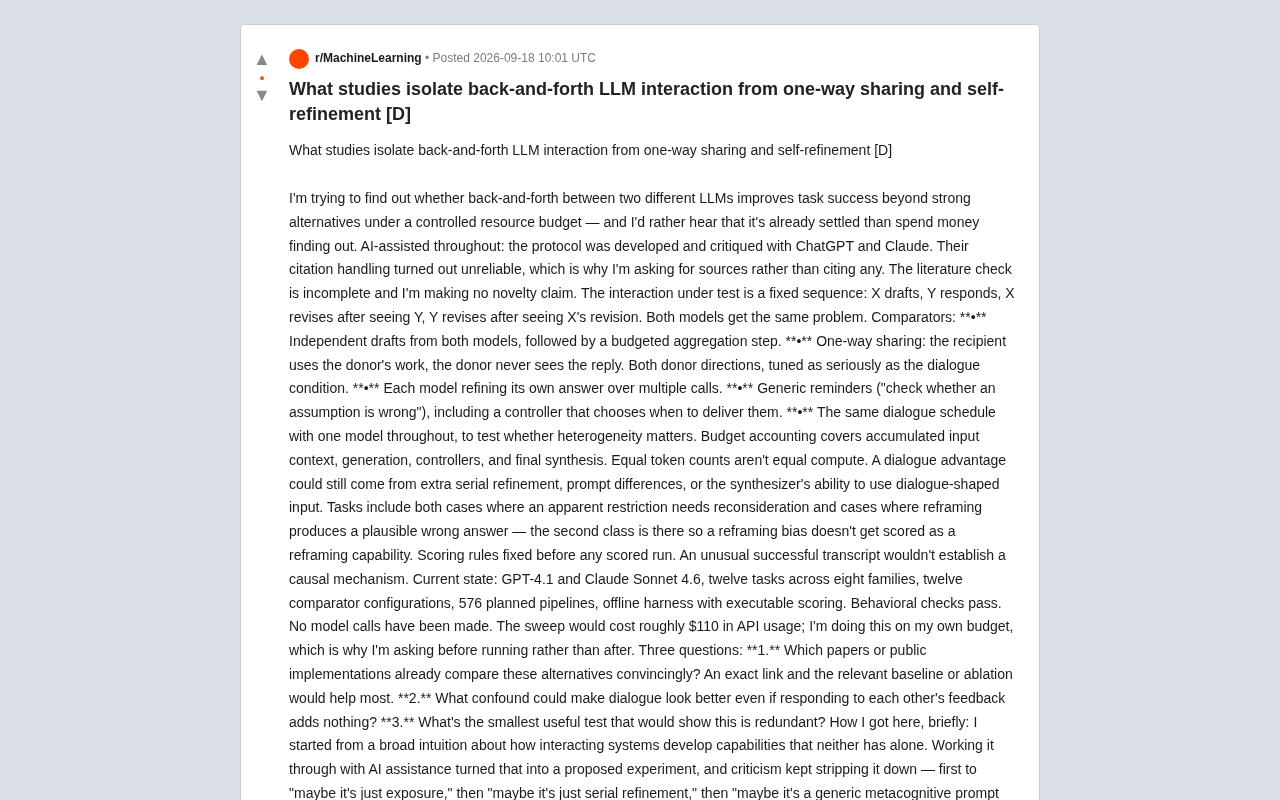
Can Multi-LLM Dialogue Really Improve Task Performance? Lessons from a Rigorous Experimental Design
A researcher designed rigorous controlled experiments to isolate whether multi-LLM back-and-forth dialogue genuinely outperforms simpler baselines like self-refinement and one-way sharing.

Which $10 AI Coding Plan Should You Choose? Go vs. Code Credit Breakdown
After DeepSeek's price hike, should you pick Go or Code for your $10 AI coding plan? We break down credit allocations for Mimo, Qwen, DeepSeek V4, Kimi, and more.