Beware of 'Free GPT' Scams: How to Spot AI Traffic-Baiting Schemes and Their Risks

How to identify 'free GPT' scams on platforms like Bilibili and use AI models safely.
A surge of videos on platforms like Bilibili promise free, unlimited access to GPT-5.6, Claude, and Grok — but these are traffic-farming scams exploiting fake model names and engagement bait. This article breaks down why the claims are technically impossible, exposes risks like phishing and OAuth hijacking, and guides users toward legitimate AI access options.
A Suspicious 'Free AI Model' Promise
Recently, a wave of sensationalized videos has appeared on platforms like Bilibili, claiming to let users "access GPT-5.6, GPT Image 2, Grok, and Claude for free — no VPN needed." These videos tout slogans like "100% working," "permanently free," and "great for students and workers alike." They hook viewers with a casual, meme-style opening, then funnel them into liking, following, and commenting before receiving a so-called "mystery link."
As tech content creators, it's worth taking a sober, technical look at these claims and the risks they carry. From multiple technical standpoints, the idea of "freely accessing the world's top AI models" is riddled with red flags — and may involve outright fraud or malicious traffic harvesting.

Red Flag #1: GPT-5.6 Doesn't Exist
As of now, OpenAI has not released any model called "GPT-5.6." Other names mentioned in these videos — like "GPT-5.5 Sync" and "GPT Image 2" — are equally fictitious. Fabricating unreleased version numbers is a classic clout-chasing tactic, exploiting users' excitement about new models to manufacture a sense of urgency around "getting early access."
OpenAI's model naming follows a publicly traceable release pattern. From GPT-3 (2020) and GPT-3.5 (2022) to GPT-4 (2023) and GPT-4o (2024), every version change has been accompanied by official technical reports, API changelogs, and widespread media coverage. Not only is "GPT-5.6" nowhere to be found in official OpenAI channels — the naming style itself doesn't match OpenAI's conventions. OpenAI tends to use letter suffixes (e.g., 4o, 4-turbo) rather than decimal version numbers to differentiate model variants. Any model name without an official announcement should be treated as fabricated.
When real AI products launch, companies like OpenAI, Anthropic, and xAI announce them through official channels — their websites, official blogs, and verified social accounts. Any third-party site claiming to offer "exclusive early free access" deserves extreme skepticism.
Why 'Free Unlimited Access' Doesn't Hold Up Logically
These videos claim there's an "industry-first and only" site that lets users directly access major AI platforms with zero barriers — and use all models "unlimited times for free." This doesn't hold up technically or commercially.

Compute Costs Don't Vanish Into Thin Air
Running large language models requires enormous GPU resources. A single GPT-4-level API call costs fractions of a dollar; image generation costs even more. OpenAI and Anthropic impose paywalls and usage limits precisely because compute costs are very real.
Understanding this is key to spotting scams: the inference stage of a large language model requires loading trained model weights onto high-end GPUs for real-time computation. A GPT-4-level model has an estimated parameter count in the trillions, and generating each response involves massive matrix operations. The industry typically relies on NVIDIA A100 or H100 GPUs — each costing tens of thousands of dollars — to support inference at scale. According to public API pricing, GPT-4o costs approximately $2.50 per million input tokens and $10 per million output tokens; image generation (e.g., DALL-E 3) runs roughly $0.04–$0.12 per high-resolution image. This means an active user's daily usage could easily cost several to tens of dollars. That's why even OpenAI, backed by billions in Microsoft investment, still enforces strict rate limits on free users — compute consumption is a real, ongoing operating expense.
For a third-party site to truly offer "unlimited free" access to these services, it would have to absorb these enormous costs itself. Unless it has another way to monetize — and that "other way" is almost always the user's own data, accounts, or money.
'Follow and Triple-Tap to Get the Link' Is a Core Traffic Farming Tactic
These videos repeatedly insist that users must "follow, like, and comment" before receiving a link via private message. This is a well-established traffic monetization scheme in online content ecosystems — sometimes called "induced engagement" or "social engineering funneling" in gray-market circles. The commercial logic operates on several levels:
The first level is platform traffic revenue: a flood of engagement data triggers recommendation algorithms, pushing the content to even more users for low-cost follower growth. These accounts themselves have monetary value — they can be sold or used for future promotions. The second level is data monetization: phone numbers, email addresses, and other personal information collected during the "get your link" process are aggregated and sold on data black markets. The third level is downstream conversion: the destination site may embed ad networks, push paid services, or execute outright scams. This complete profit chain explains why this type of content spreads so aggressively — every user who shows up is contributing monetizable value. Specifically:
- Sensational headlines drive clicks and rapidly inflate follower counts and engagement metrics;
- "Free perks" serve as bait, driving users to follow, like, and comment;
- The final "link" destination may be a phishing site, a pay-to-unlock trap, or a prompt to enter personal information or download unknown software.
Common Risks Behind These 'Free AI' Links
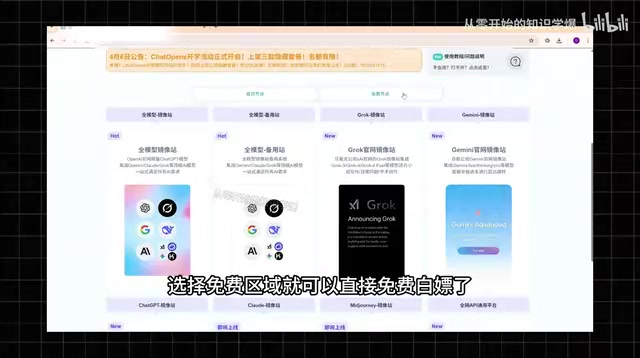
Account Compromise and Privacy Leaks
Some sites ask users to "log in" with their OpenAI or Google accounts — but these are actually disguised phishing pages. The moment you enter your credentials, they're stolen. Others lure you into granting various permissions, quietly harvesting contact lists, payment details, and other sensitive data.
One particularly insidious attack vector worth calling out exploits the OAuth 2.0 authorization protocol. OAuth was designed as a standard protocol to allow third-party applications to gain access permissions without ever knowing the user's password — it's the technology behind "Sign in with Google" and "Sign in with Apple." However, malicious sites can craft fraudulent authorization requests, tricking users into clicking "Allow" on a genuine Google or OpenAI page. This legitimately grants the attacker permission to read emails, access cloud files, or even send messages on the user's behalf — all without ever obtaining the password, and without triggering any standard password-breach alert. The user's account isn't "hacked" in the traditional sense — it's simply been handed over. This type of attack is especially common amid the AI app boom, as users have grown accustomed to granting account access to various AI tools. When you see a "Sign in with Google to access GPT-5 for free" button on an unfamiliar site — even if it redirects to a genuine Google authorization page — always carefully read the exact permissions the app is requesting. Any AI tool asking to read your email or access your cloud documents should trigger immediate alarm.
Pay-to-Unlock Traps and Malware
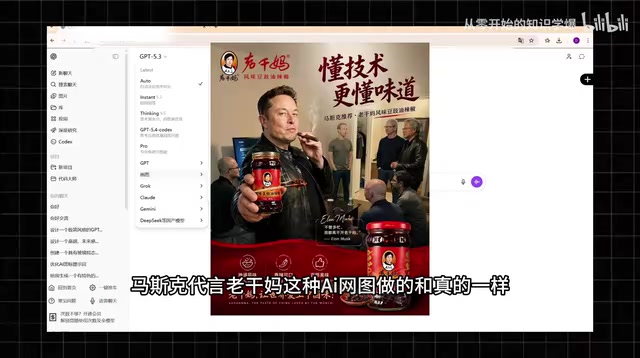
The "permanently free" promise is often just a hook: after a few free uses, you're suddenly asked to deposit funds to unlock continued access; or you're pushed to install a client application containing trojans or cryptomining software. Additionally, some videos' emphasis on "indistinguishable from real" image generation capabilities hints that these tools may be designed for producing disinformation or deepfake celebrity images.
How to Use AI Models Safely and Legitimately
For users in China who want compliant access to large AI models, the following paths are far more reliable.
Start with Domestically Compliant AI Models
China already has several mature large model products — including Tongyi Qianwen, ERNIE Bot, Doubao, DeepSeek, Kimi, and Zhipu Qingyan — all directly accessible, capable, and mostly offering free usage tiers. These products have gone through regulatory compliance filing and provide stable, secure user experiences.
In fact, China's mainstream large models have undergone rapid technical iteration over the past two years, and their capabilities now represent genuine competition with top international models. DeepSeek-R1 gained widespread attention in the global AI community for its innovative reinforcement learning training approach — specifically the GRPO algorithm, which combines Monte Carlo Tree Search with policy optimization — achieving benchmark results on mathematical reasoning and code generation comparable to OpenAI o1, with higher inference efficiency and lower cost. Alibaba's Tongyi Qianwen (Qwen) series has open-sourced multiple versions, excelling in multilingual understanding and long-text processing; its Qwen2.5-72B model has surpassed comparable international open-source models on multiple authoritative benchmarks. Moonshot AI's Kimi is known for its ultra-long context window (up to 2 million tokens), making it well-suited for large documents and complete codebases. These models not only eliminate network access barriers but have also passed domestic data compliance review and often offer better cultural fit for Chinese-language scenarios. For the vast majority of everyday use cases — writing assistance, code generation, information retrieval, image understanding — domestic models are fully capable, with no need to risk using third-party proxy services of unknown origin.
Use International Models Through Official Channels
If you need to use models like GPT or Claude, do so through their official websites or official APIs, at standard pricing. While there is some cost involved, this is the only safe and reliable method. Never trust any "cracked version" or "free mirror site."
Develop Basic Critical Awareness
Raise your guard when you encounter content with these characteristics:
- Claims to provide model versions that haven't been released or simply don't exist;
- Promises of "permanently free, unlimited uses, 100% working";
- Requires following, liking, and commenting before sending a link via private message;
- Directs you to unfamiliar third-party sites or prompts you to download software from unknown sources.
Conclusion
The old saying "there's no such thing as a free lunch" holds just as true in the age of AI. Genuinely valuable technical services either have a clear business model behind them or are backed by a trustworthy institution. When faced with enticing claims of "free, full-power, unlimited" AI access, staying rational and choosing legitimate channels is the only way to make good use of AI tools while truly protecting your accounts, privacy, and financial security.
Key Takeaways
Related articles
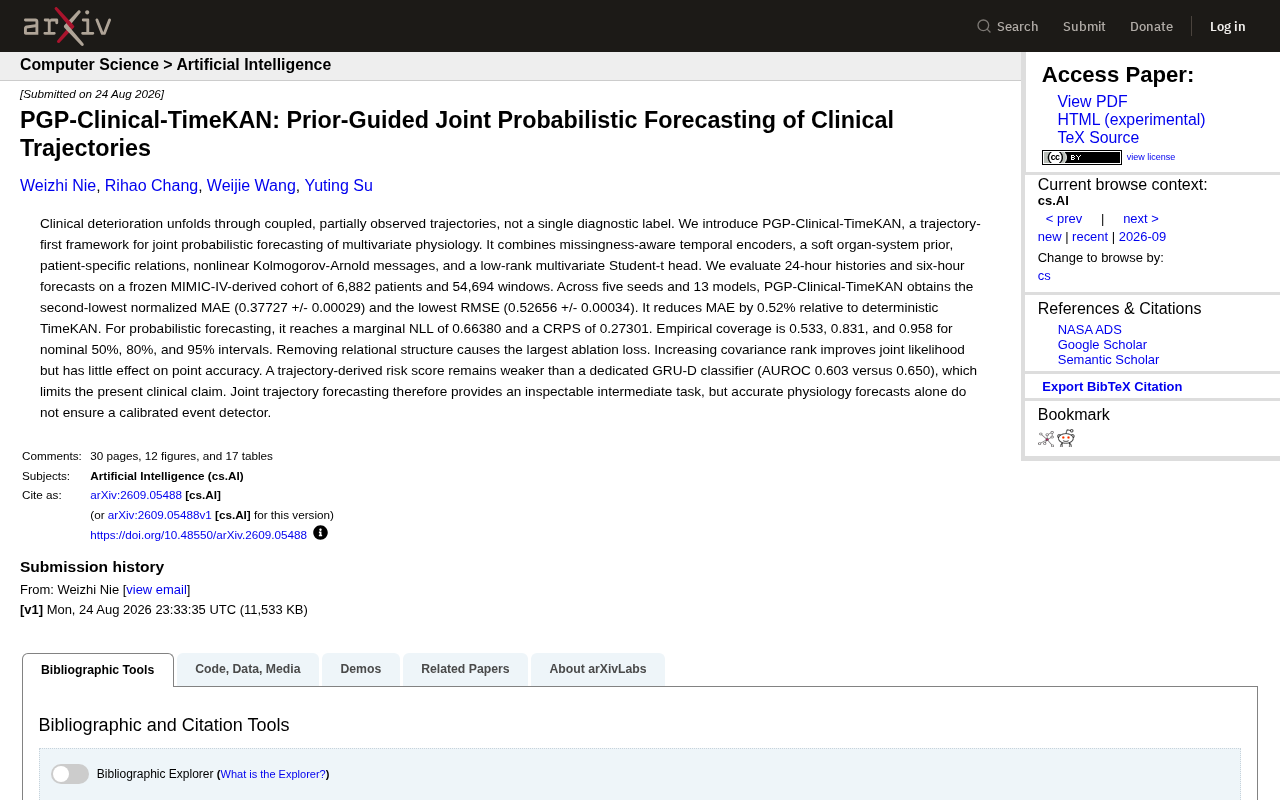
PGP-Clinical-TimeKAN: A Detailed Guide to the Multivariate Physiological Indicator Joint Prediction Framework
An in-depth analysis of the PGP-Clinical-TimeKAN framework for joint probabilistic prediction of multivariate physiological indicators, covering trajectory-first paradigm, KAN message passing, MIMIC-IV validation, and ablation studies.
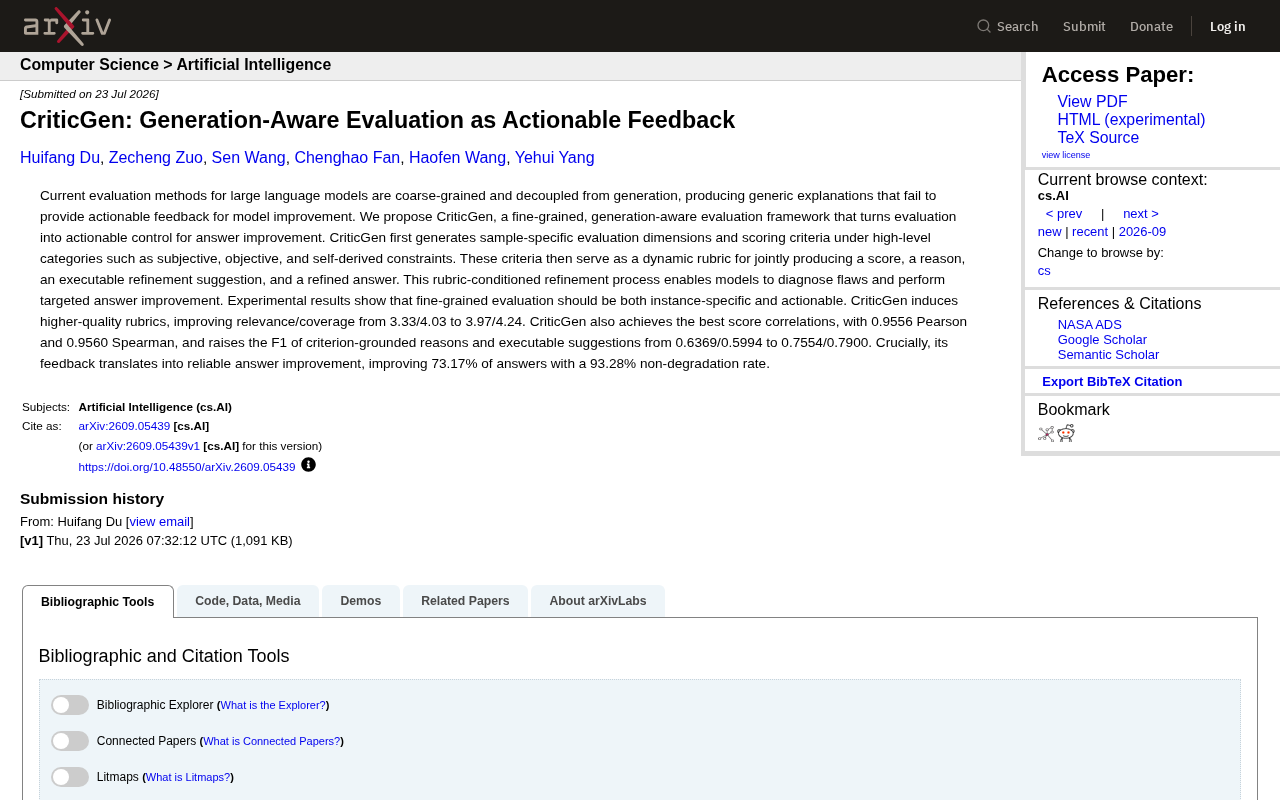
CriticGen: A New Framework That Transforms AI Evaluation into Actionable Improvement Feedback
CriticGen proposes a generation-aware evaluation framework that transforms AI assessment from passive scoring to an active optimization loop, achieving 73.17% answer improvement and 93.28% non-degradation rate.
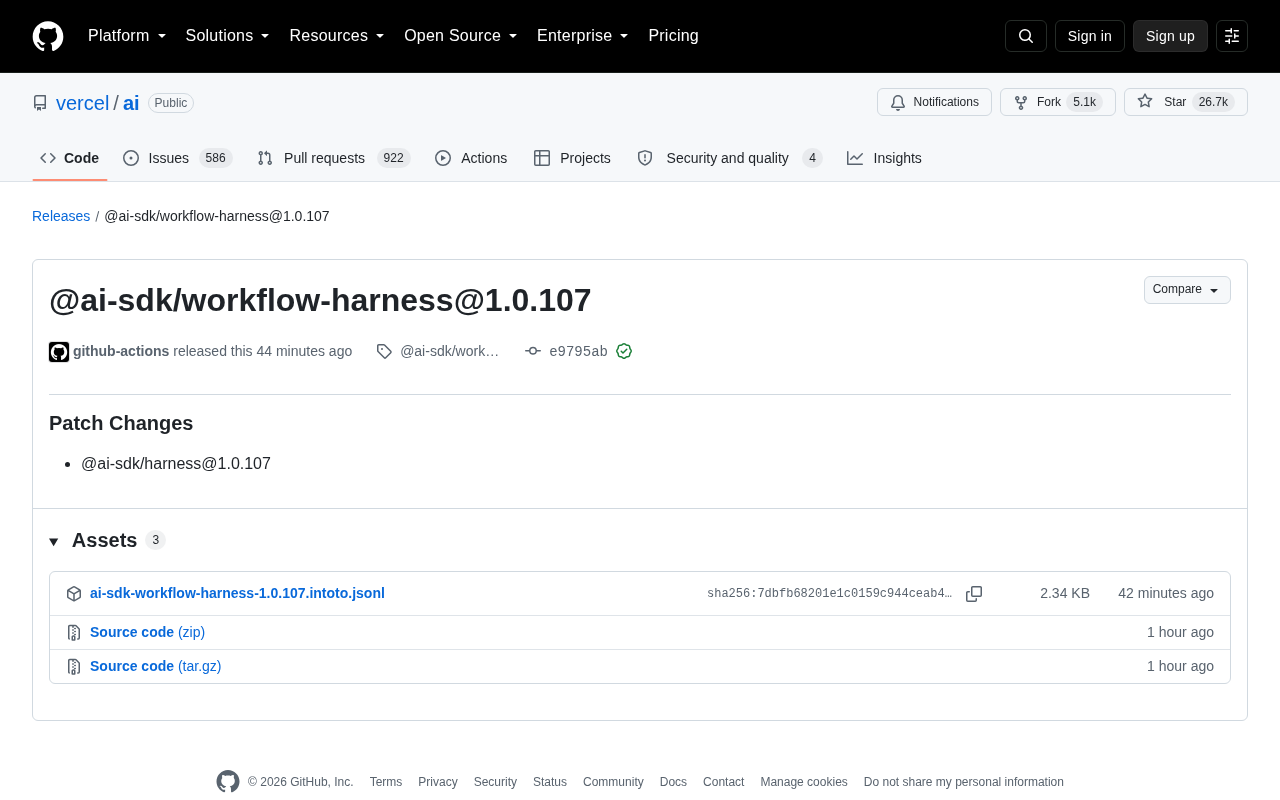
Vercel AI SDK workflow-harness Update Analysis
Deep analysis of Vercel AI SDK workflow-harness 1.0.107 update: architecture design, engineering practices, and developer value for building reliable AI apps.