Beware of Third-Party Top-Up Traps: A Deep Dive into ChatGPT Membership Charging Risks

Third-party ChatGPT card-key top-ups are a scam — handing over a session token gives attackers full account access.
"Self-service ChatGPT top-up" tutorials circulating on Bilibili are promotional content for third-party reseller platforms, not genuine guides. The core risk: the top-up process requires users to copy their session token and paste it into a third-party site — giving that site the equivalent of an active login session, bypassing passwords entirely. The "no password required" pitch is dangerously misleading. References to products like "GPT-6 Astra" — not yet released by OpenAI — are themselves a red flag. Users are advised to subscribe through official channels, where the friction is a feature, not a bug.
It All Starts with a "Self-Service Top-Up Tutorial"
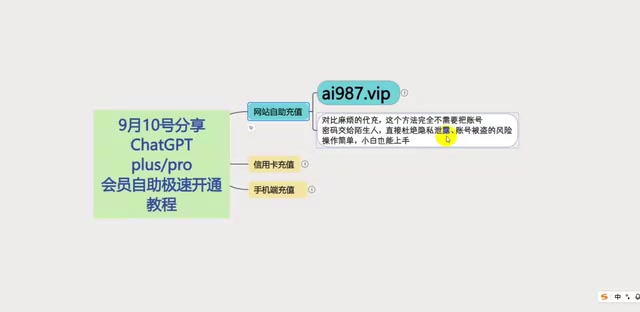
Recently, a wave of so-called "ChatGPT domestic self-service membership top-up tutorials" has been circulating on platforms like Bilibili. These videos claim that by visiting certain third-party websites (such as sites like ai987.vip mentioned in these videos) and entering a "card key," you can activate ChatGPT Plus/Pro — all without a foreign credit card, without handing over your account credentials, and with "automated 24/7 delivery."
On the surface, this looks like helpful guidance for users seeking a convenient top-up method. In reality, it's promotional traffic-driving content for third-party reseller and card-key platforms. This article does not endorse any such services. Instead, we'll take a technical and security-focused look at the real risks hiding behind these "top-up solutions."
One thing worth clarifying: the name "GPT-6 Astra" that appears in some video titles is not an officially released OpenAI product. As of now, OpenAI's official subscription tiers are limited to ChatGPT Plus, Pro, Team, Enterprise, and similar plans. Any channel claiming to unlock an "unreleased model" should be treated with extreme skepticism.
How Third-Party "Card Key Top-Ups" Actually Work
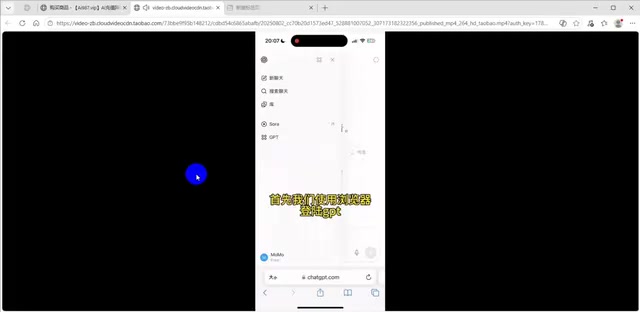
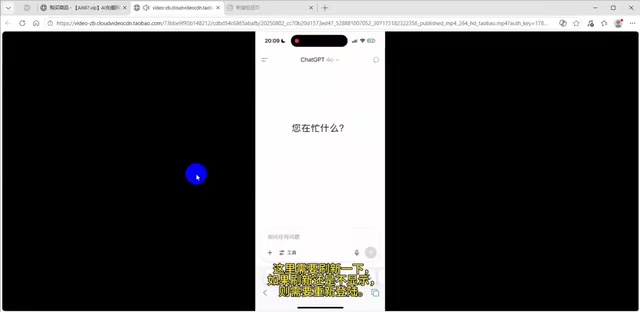
The process demonstrated in these videos typically goes like this: purchase a "card key" on a third-party website → log in to your own ChatGPT account → copy account-related data (such as your login credential or token) → paste it back into the third-party website → click to top up.
The most important technical detail here is the step where you "manually copy all content and paste it into the top-up site." This "fetching data" step typically means copying your account's session token or a similar identity token. Once these credentials are handed to a third party, that party effectively holds the equivalent of an active login session for your account — allowing them to bypass your password and access your account directly.
In other words, the claim that "you don't need to give your password to strangers" is deeply misleading. You're not giving away your password, but you are handing over login credentials that are equivalent to — or even more sensitive than — a password. The security improvement is essentially nonexistent.
A session token is a short-lived identity credential issued by a web application after a user logs in — essentially a randomly generated string with a cryptographic signature. The server uses it to recognize that "this request is coming from a logged-in user," sparing the user from re-entering their password with every action. This mechanism is normal and necessary, but it also means: whoever holds the token has nearly the same level of account control as whoever holds the password — until the token expires. Session tokens in modern web apps like ChatGPT can remain valid for hours or even days. During that window, even if the account owner changes their password, the old token may still work unless the server explicitly revokes it. This is the technical reason why "not giving your password" is still dangerous — an attacker with your token can directly call the account's API, view conversation history, and modify account settings, all while the real account owner remains completely unaware.
Breaking Down the Claimed "Advantages" One by One
These videos typically highlight three key selling points. Let's examine each one honestly.
"No credit card needed — charge directly from China"
It's true that users in mainland China struggle to pay for official subscriptions with foreign credit cards — that's a genuine pain point. But third-party "top-ups" that bypass official payment channels operate with an opaque financial and authorization chain. OpenAI does not recognize this payment method, and accounts topped up this way face real risks of having their membership revoked or being flagged as suspicious.
"Works on Apple, Android, and desktop"
The cross-platform "convenience" comes at a price: handing your account credentials over to an unknown website. As ease of access increases, so does your exposure to risk.
"Fully self-operated — no privacy leaks"
This is the most dangerous claim of all. Yes, you're doing the operation yourself — but the step where you copy and paste your credentials has already handed over the most critical piece of your identity. True account security is only achievable through official channels.
Why Official Channels Are "More Hassle" but Still Worth It
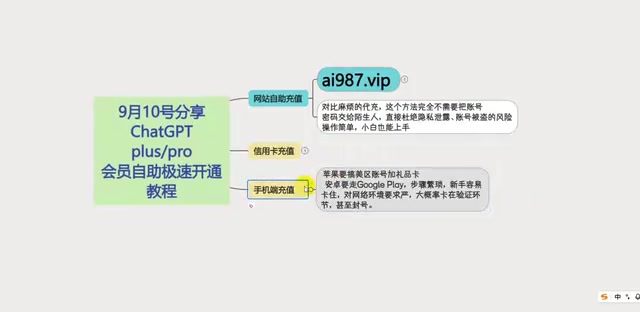
These videos frame the official payment options as overly complicated: foreign credit cards come with high barriers, hidden fees, and region-based fraud detection; the mobile route requires a US Apple ID and gift cards, which carry a price premium, strict network requirements, and frequent CAPTCHA friction.
These obstacles are real — but they are exactly the verification mechanisms OpenAI has put in place to protect account and payment security. The "convenience" of bypassing these checks is, in essence, a transfer of risk from the platform onto the user.
For users in mainland China who genuinely need access, more prudent options include:
- Using an internationally supported virtual credit card or compliant payment method to subscribe directly through OpenAI's official channels;
- Subscribing through the official App Store using a regional account that supports payment, rather than trusting third-party account custodians;
- For business or team use, considering the official Team or Enterprise plans, which come with proper invoicing and customer support.
Thinking Rationally About the Lure of "Cheap Top-Ups"
Videos like these often boost credibility by highlighting perks such as "fast delivery, after-sales support, official invoices, and reimbursable receipts" — then nudge viewers to "save this now before you lose it." This is a classic traffic-farming tactic, and sharing or bookmarking it only amplifies the reach of these risky channels.
The core judgment criterion is straightforward: any top-up channel that requires you to hand over your login credentials, or claims to unlock products that OpenAI hasn't officially released, should be treated as high-risk. Behind the attractive price, you may be walking into account theft, membership revocation, payment information leaks, or outright financial loss.
For everyday users, paying a bit more to go through official channels buys you account security and long-term stability. That trade-off is worth doing the math on.
From the perspective of the grey-market business model, card-key platforms like these typically operate through several monetization paths: collecting users' session tokens to "farm" accounts in bulk and resell API quota during the active membership period; purchasing Plus subscriptions at low cost using stolen credit cards or compromised accounts, then reselling at a markup — with buyers absorbing the loss when OpenAI detects fraudulent payments and revokes membership; or running outright phishing operations where the site has no real top-up capability at all and simply disappears with the payment, or stalls with claims of "processing." Red flags to watch for include: domain registration dates within the past few weeks, no verifiable legal entity information, customer support only through private messages or temporary chat tools, and payment methods limited to cryptocurrency or personal WeChat transfers.
Closing Thoughts
Third-party card-key top-ups are, at their core, a traffic-farming scam. Handing over a session token is equivalent to handing over control of your account. The "hassles" of official channels are, in fact, the security checkpoints protecting you — bypassing them means assuming all the risk yourself.
Related articles

Cursor AI Programming in Practice: Build a Student Management System from Scratch in 30 Minutes
A Bilibili creator demonstrates Cursor AI programming: generating a student management system in 30 minutes with natural language. Details on Agent mode, Claude selection, prompt techniques, and thresholds.

Top 20 AI Coding Tools Ranking: From Rock-Solid to Lackluster, a Scored Matrix
Bilibili creator releases top 20 AI coding tools ranking, tiered T0–T4 from rock-solid to lackluster, with Claude Code and Codex tied at T0. This article details the scoring dimensions (capability, reliability, robustness, durability, cost, domestic availability) and tool performances to help developers choose the right AI coding assistant.

Vibe Coding Systematic Tutorial: Master AI-Assisted Programming from Zero
A three-month Vibe Coding tutorial from a Bilibili creator covering Codex, ClaudeCode, and Cursor, from core logic to commercial project practice for beginners.